250 Years from Mr. freedman, 2026
Historic Navy Yard
North Charleston, South Carolina
July 4 - August 1, 2026
About the Work
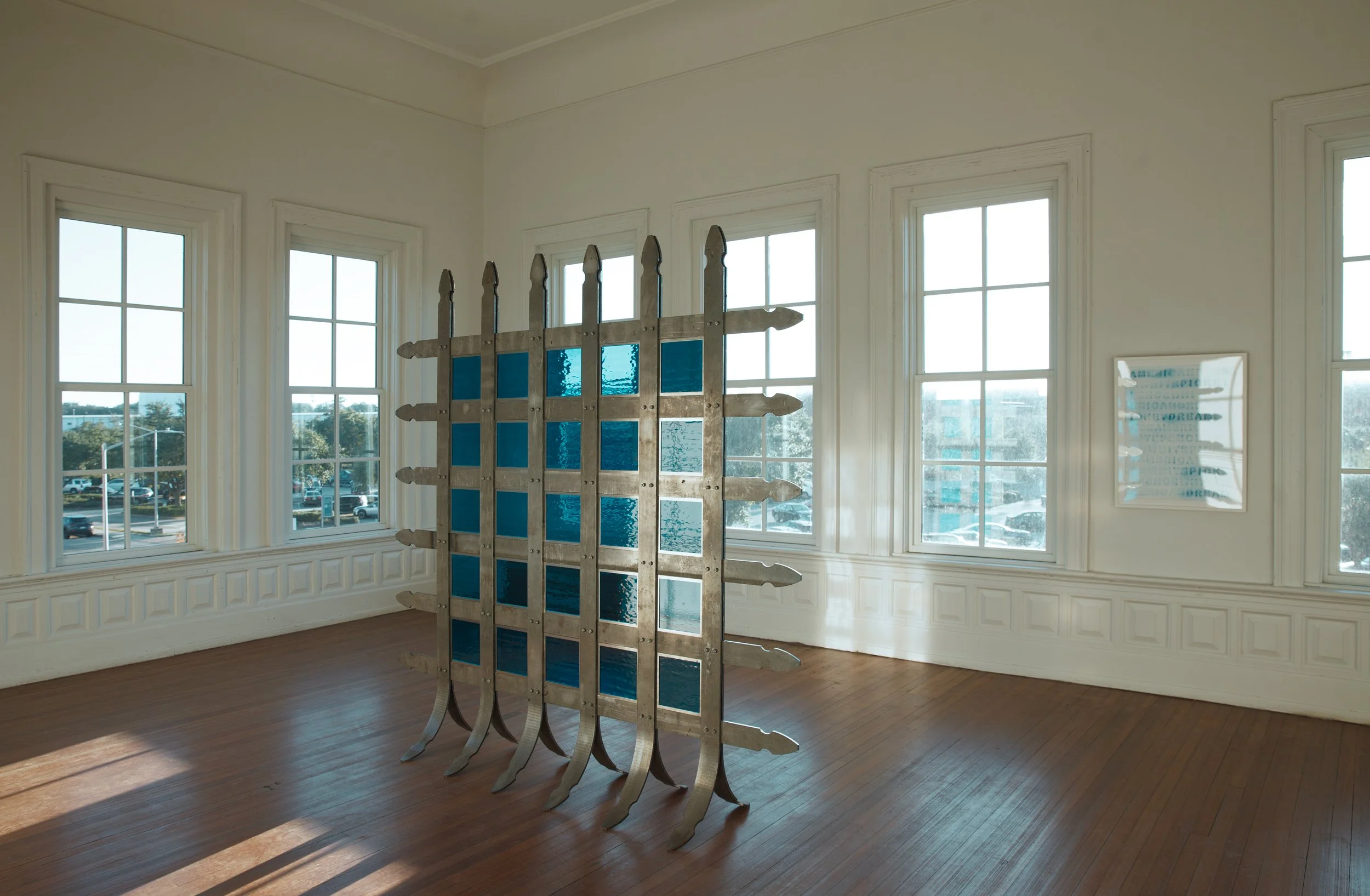
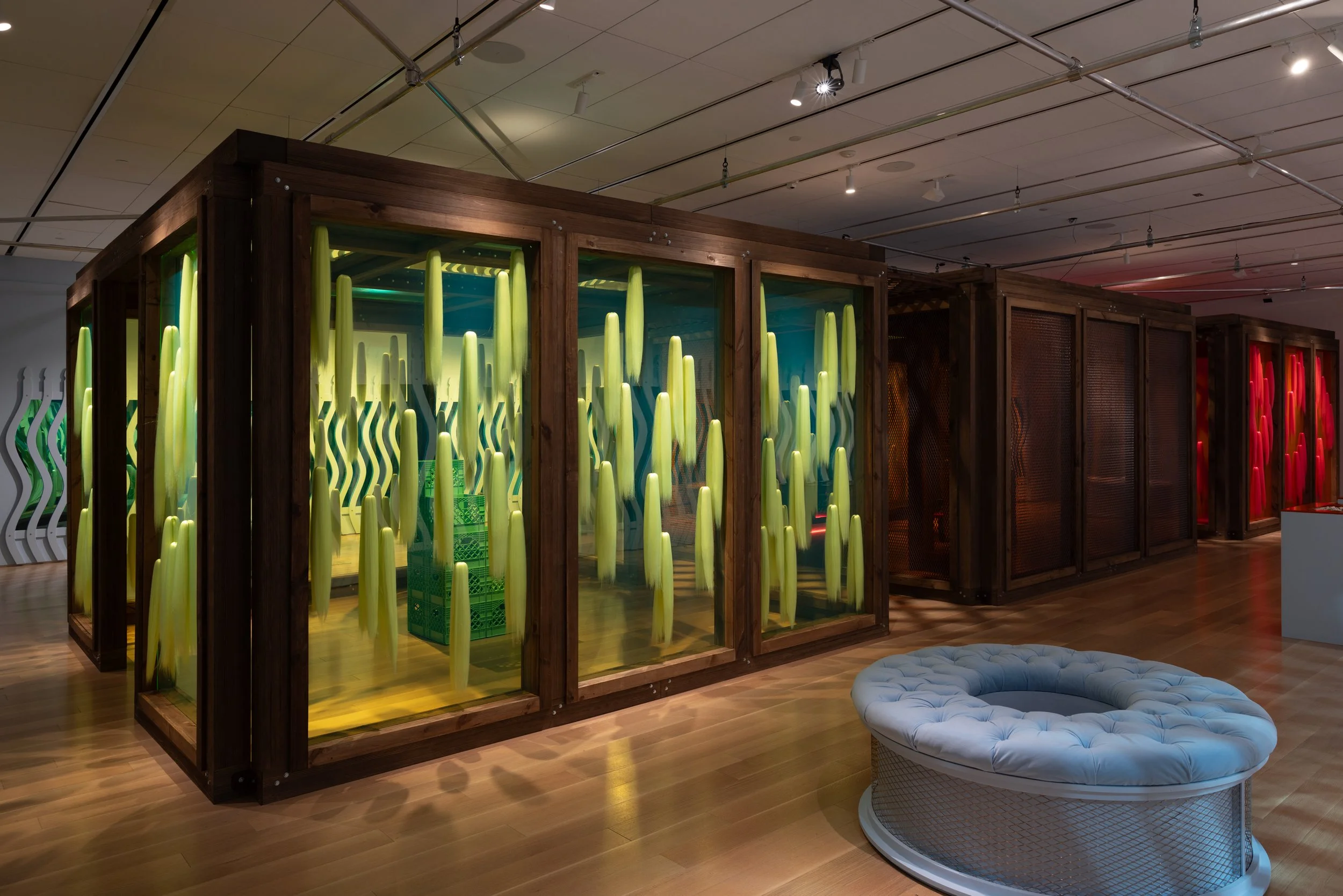
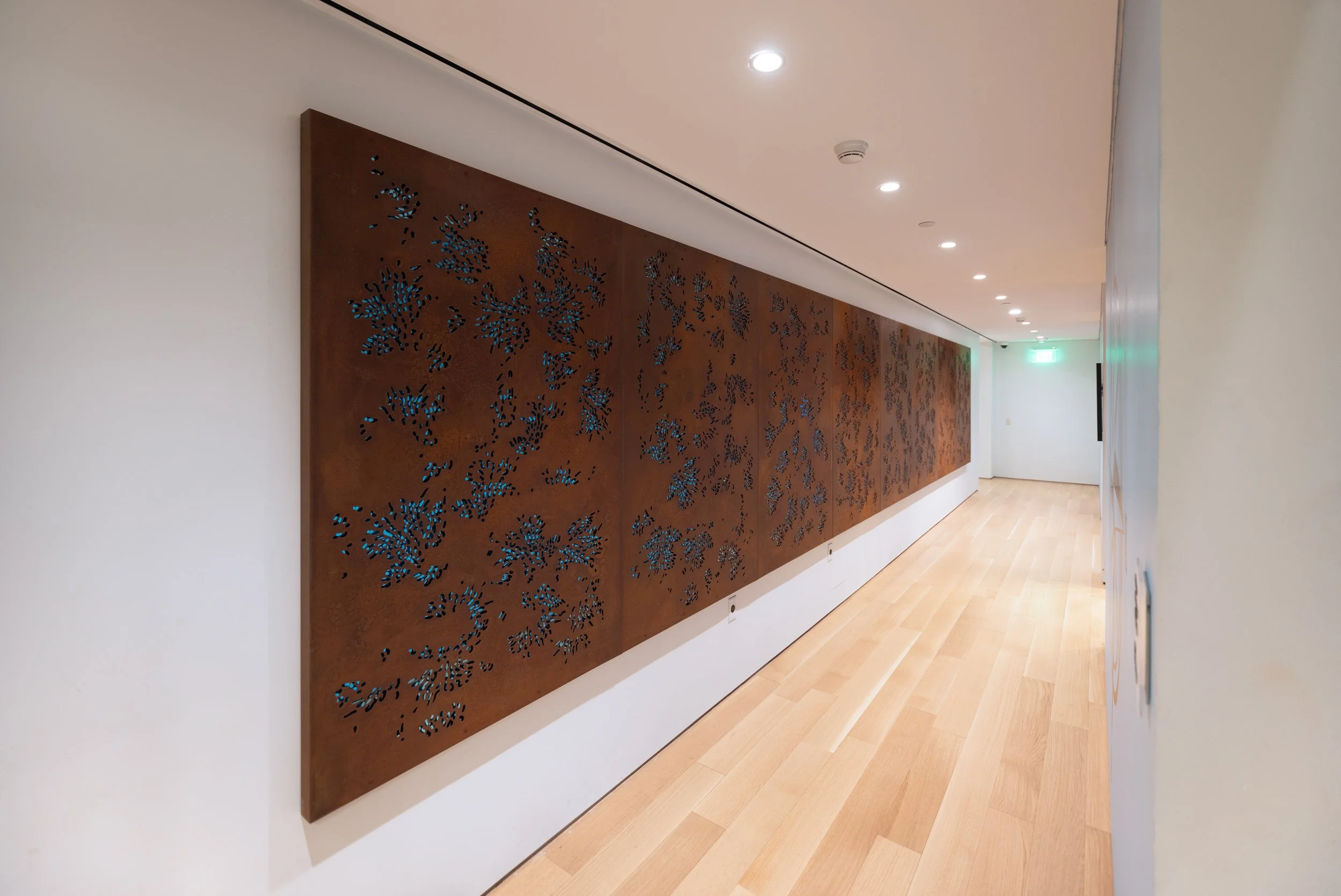
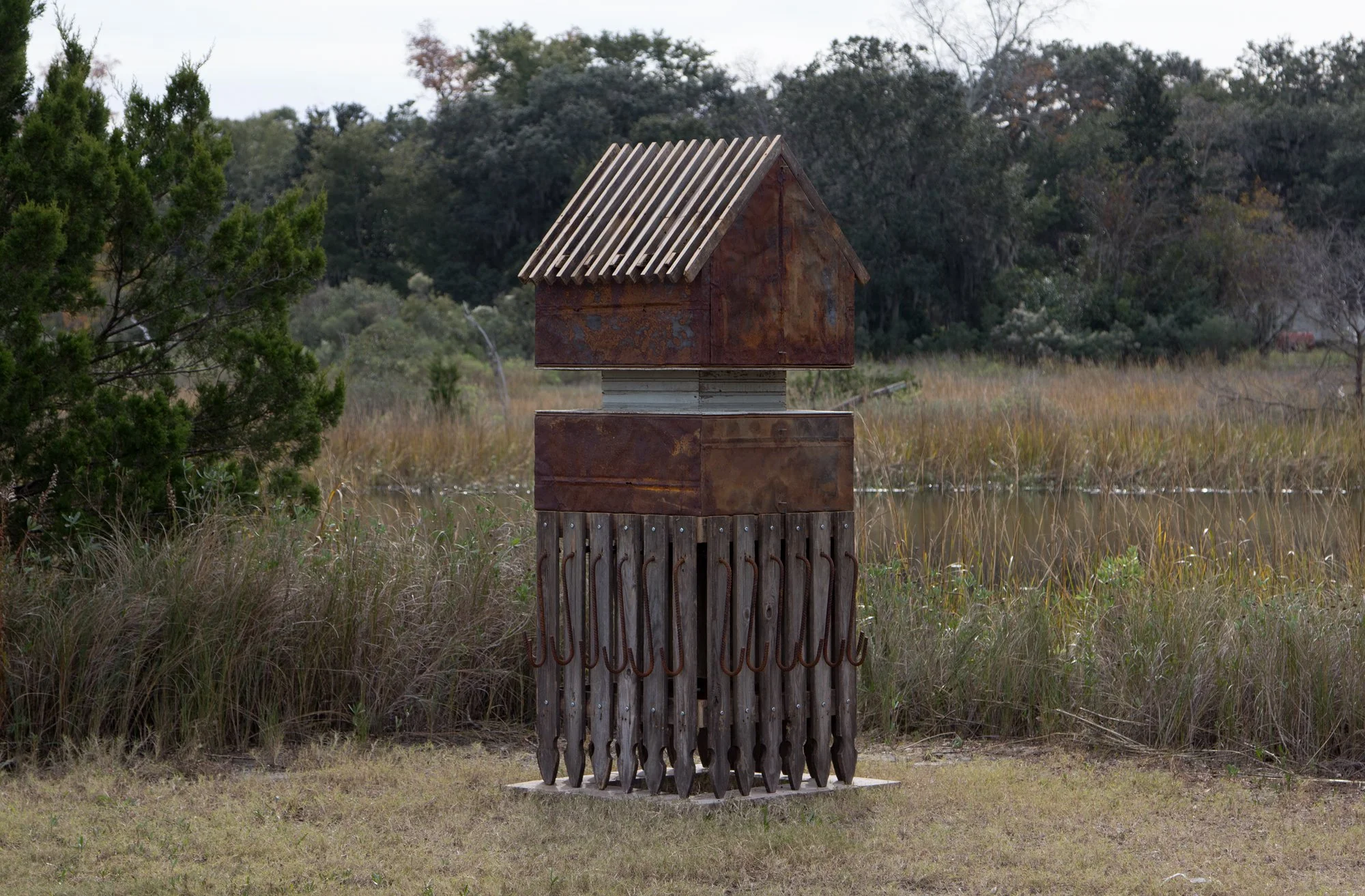
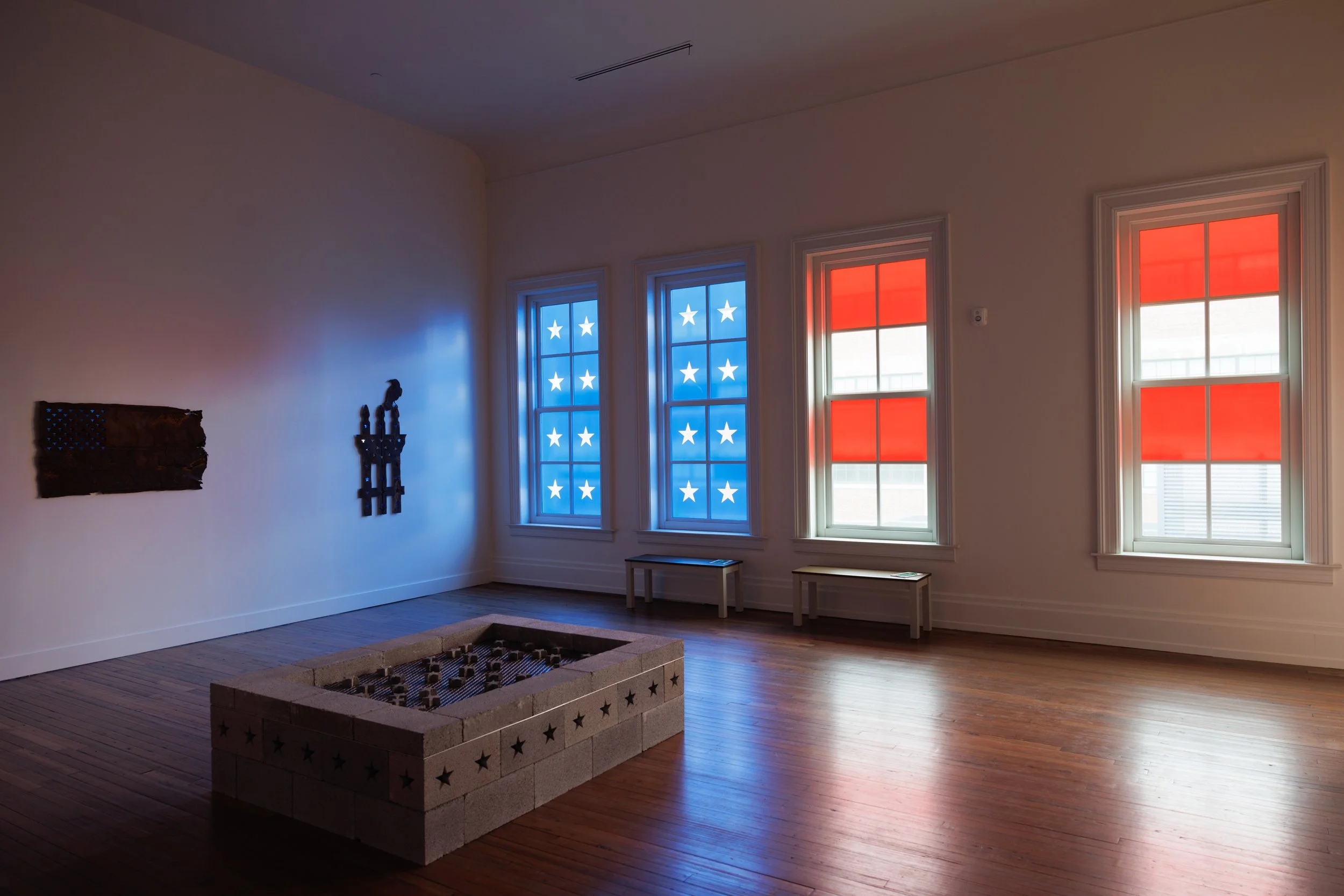
250 Years from Mr. Freedman is a solo exhibition by Fletcher Williams III presented in conjunction with the 250th anniversary of the United States. The exhibition consists of a center floor sculpture and wall reliefs made from the tin roof of a burned Freedom Cottage in Charleston, South Carolina. Across the work, Williams brings together people, places, histories, folklore, and memoreis drawn from his experience of Charleston.
The exhibition begins with a story. Williams wrote Eve of July 4th as a way to express his relationship with the city and to give the exhibition a world of its own. Set on July 3, 2026, the story places Williams inside the fictional world of Mr. Freedman on the eve of the nation’s 250th Fourth of July. Williams walks through Charleston to Mr. Freedman’s house, where the yard is busy preparing for the next day. A hog smokes over hot coals. Flags and stars are being put into place. Eagles circle overhead. A man twists a palmetto frond. Mr. Freedman counts his stars as the sun begins to set. Within that single day, people and histories from different moments in Charleston exist together. Williams uses the story to bring his own memories and experiences into the same place as Revolutionary accounts, local folklore, and patriotic traditions. Mr. Freedman is the central figure in that world.
Many of the images in the exhibition come from things that have stayed with Williams over time: the satirical humor of the Charleston eagle moniker; the unconfirmed story of the Charleston Palmetto Rose reaching back to the Civil War; the crosses scattered across the city’s skyline; the lore of the traveling pit master; the bunting hung from the tall porches of old downtown houses each Fourth of July; and architectural details of the Aiken-Rhett House. The grasshopper comes from Williams’s memory of Robert Smalls, a Charleston palm gatherer and maker whom he knew. Smalls traveled by bicycle collecting palm fronds that he sold to local makers, including Williams. During their final meeting, Smalls showed Williams a grasshopper he had folded from a palm leaf. In that brief exchange, both recognized the other as fellow artists. Smalls died only weeks later. In Eve of July 4th, Williams encounters him again, twisting a palmetto frond in Mr. Freedman’s yard before disappearing from the story as quickly as he appeared. The grasshopper carries that memory into the exhibition.
The sculptures give this fictional world physical form. A sheets of salvaged tin become a rose window informed by Williams’s experience of the Aiken-Rhett House, combining the silhouette of a Palmetto Rose, a band of red, white, and blue stars within an arched window frame . Elsewhere, birds, crosses, fences, and flags appear throughout the wall reliefs, connecting the objects in the gallery back to the people, places, and scenes within the story. Mirror is used throughout the work as an aesthetic treatment connected to nostalgia and celebration. Its reflective surfaces give the sculptures a playful quality and animate them with light and movement. Reflections also create conversations between the individual works. One sculpture can appear inside the mirrored stars or another as the viewer moves through the exhibition. In American Flag, the scale and luminosity of the work recall a chapel window. Red and blue light spills onto the floor, walls, viewers, and nearby sculptures. The flag becomes part of the room and casts its colors across the other works around it.
The Fourth of July gives this world its occasion. Revolutionary history, independence, flags, and national symbols sit alongside porch bunting, church crosses, flowers, makers, food, architecture, neighborhood stories, and personal memories. Together they make up the Charleston Williams chose to bring into Mr. Freedman’s July 4th celebration.
Eve of July 4th preserves that world as a story. The salvaged roof preserves it as material. Williams uses both to hold onto people and places that have become part of his life in Charleston.
250 Years from Mr. Freedman is that personal record, gathered together on the eve of July 4th.
PRODUCTION AND CURATION
250 Years From Mr. Freedman was independently curated, produced, documented, and cataloged by Fletcher Williams III, who also designed the exhibition identity, logo, way-finding, signage, lighting, and site-specific vinyl window installation, American Flag.
Special thanks to Navy Yard Charleston for providing the exhibition space at Storehouse 8 in the Charleston Design District and for supporting the exhibition opening reception.
Collector Viewing Room
Sculptures and works on paper from 250 Years from Mr. Freedman remain available for acquisition. Access to the Collector Viewing Room is available upon request.
Already have a password? Enter Viewing Room
INTERVIEW AND PRESS
My Modern Met - Interview
Artist Transforms Rusted Tin Roof Salvaged From Charleston Fire Into American Iconography By Sage Helene - July 7, 2026
Post & Courier
North Charleston artist salvages tin from burnt Freedman’s cottage for 250th exhibit. By Wyatt Barczak - July 2, 2026
PLAYLIST
Listen to Mr. Freedman’s July 4th Spotify playlist
Acknowledgements
Fabrication Partners:
TTS Studios
Steve Aycock Designs
EVE OF JULY 4TH
If I hadn’t caught a patch of shade, I’d have missed them. Those stone windows, tucked behind a row of palms. It wasn’t that long ago that word of a Northern promise whistled through Charleston.
Some stayed. Some left a rose.
I wasn’t too far from Mr. Freedman’s home. I always knew I was getting close to his home when I’d see the eagles circling above. They followed the smoke. Just as I did.
After a few turns and some cobblestones later, I stepped into Mr. Freedman’s yard. And there it was, in the center of the yard. Splayed. Branded with a star. Smoking for hours. His prized hog.
I always missed the pit master. His work was quick. Precise. In and out. On to the next town. The coals burned bright and hot, tended to by a few of his nephews, while his sisters tidied the flags and shifted the stars into place, careful not to burn their fingers.
The yard was busy. Hog. Coals. Smoke.
Flags. Laughter. Kids chasing.
I got straight to work. I walked over to the porch to grab a few more stars. And there he was, twisting a palmetto frond. Someone hollered my name from the yard. “Three more over here.” When I turned back, he was gone. Hopped away.
The yard was nearly ready. Ready for another Fourth.
Another year. The sun was beginning to set.
From the porch I watched Mr. Freedman, counting his stars. Pointing and counting. Before he could finish, his crow glided in from the trees with the last fallen star. It burned bright. Mr. Freedman took it carefully and set it in place.
The yard sparkled. I left Mr. Freedman to it. I’d see him tomorrow.
by Fletcher Williams III
July 3, 2026
Accompanying Rust Paintings on Paper
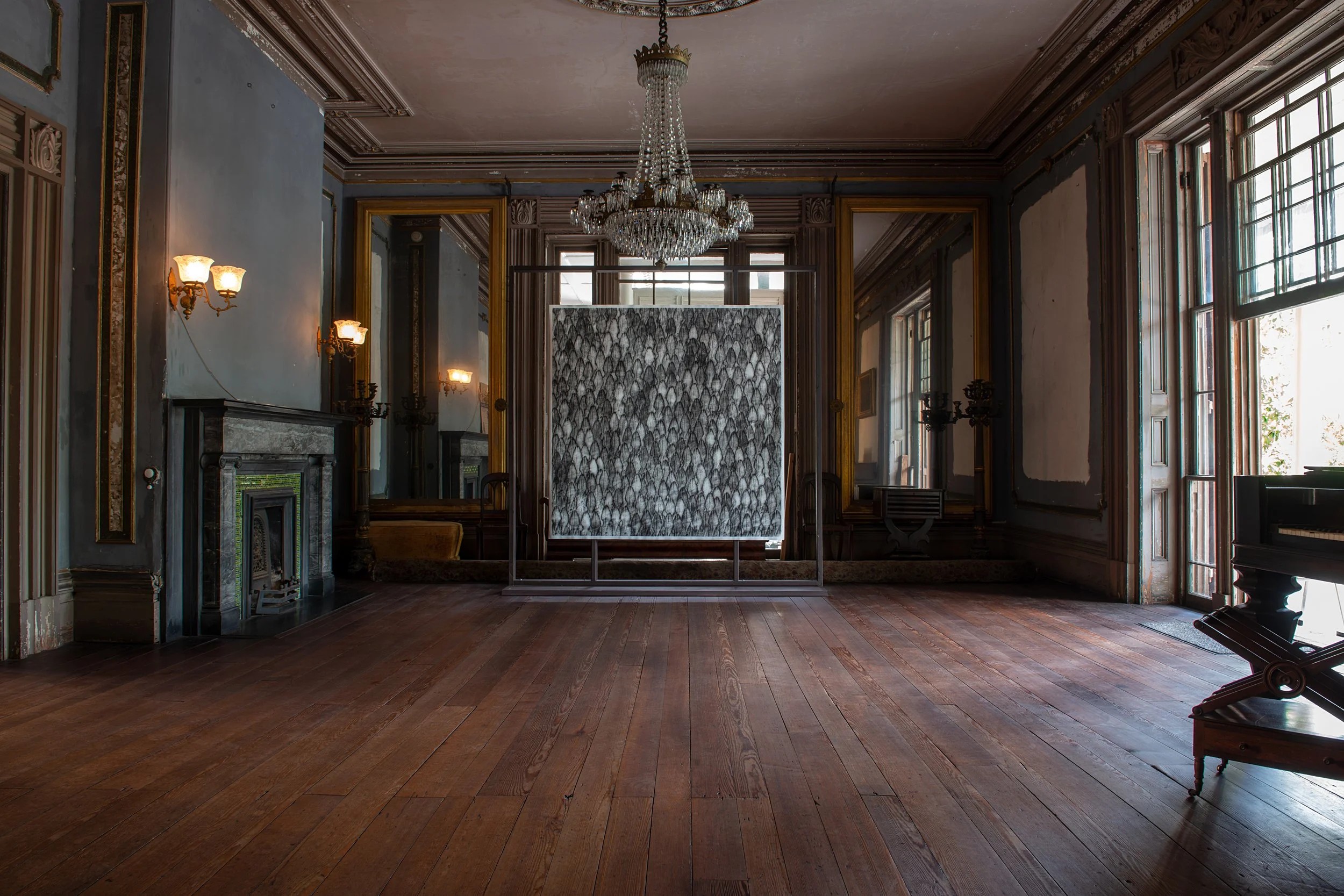
The sculptures are accompanied by a series of works on paper made by painting a rust solution directly onto the surface and allowing it to oxidize over several days. Because the rust develops differently in each work, the process produces tonal shifts, markings, and surface variations that cannot be repeated.
Reading List
Southern History, Public Art, and BBQ
Black Folk Tales and Chronicles of South Carolina
by Damon L Fordham
Denmark Vesey’s Garden
Slavery and Memory in the Cradle of the Confederacy
by Ethan J Kytle and Blain Roberts
Art and Landscape in Charleston and the Low Country
by John Beardsley
Places with a Past: New Site-specific Art at Charleston's Spoleto Festival
by Jacob, Mary Jane; Rosengarten, Theodore; Boltanski, Christian
The Cooking Gene: A Journey Through African American Culinary History in the Old South―A James Beard Award Winner
by Michael W. Twitty
High on the Hog: A Culinary Journey from Africa to America
by Jessica B. Harris
Rodney Scott's World of BBQ: Every Day Is a Good Day: A Cookbook
by Rodney Scott
Black Smoke: African Americans and the United States of Barbecue
by Adrian Miller
Black Smoke: African Americans and the United States of Barbecue
Adrian Miller in conversation with Justin Phillips
Episode 25: The Rise of the Urban Vultures - Charleston Time Machine
by Dr. Nic Butler
Windham Life and Times: Black History In New England
Windham NH History
july 4th Opening Reception | Photography by Jovon Roberts
RELATED WORKS
Homestead, 2018
View Project
Resting Place, 2020
Exhibition - Promiseland, 2020
Revising Divisive Language, 2018
View Project
Heirs To Master Builders, 2019
View Series