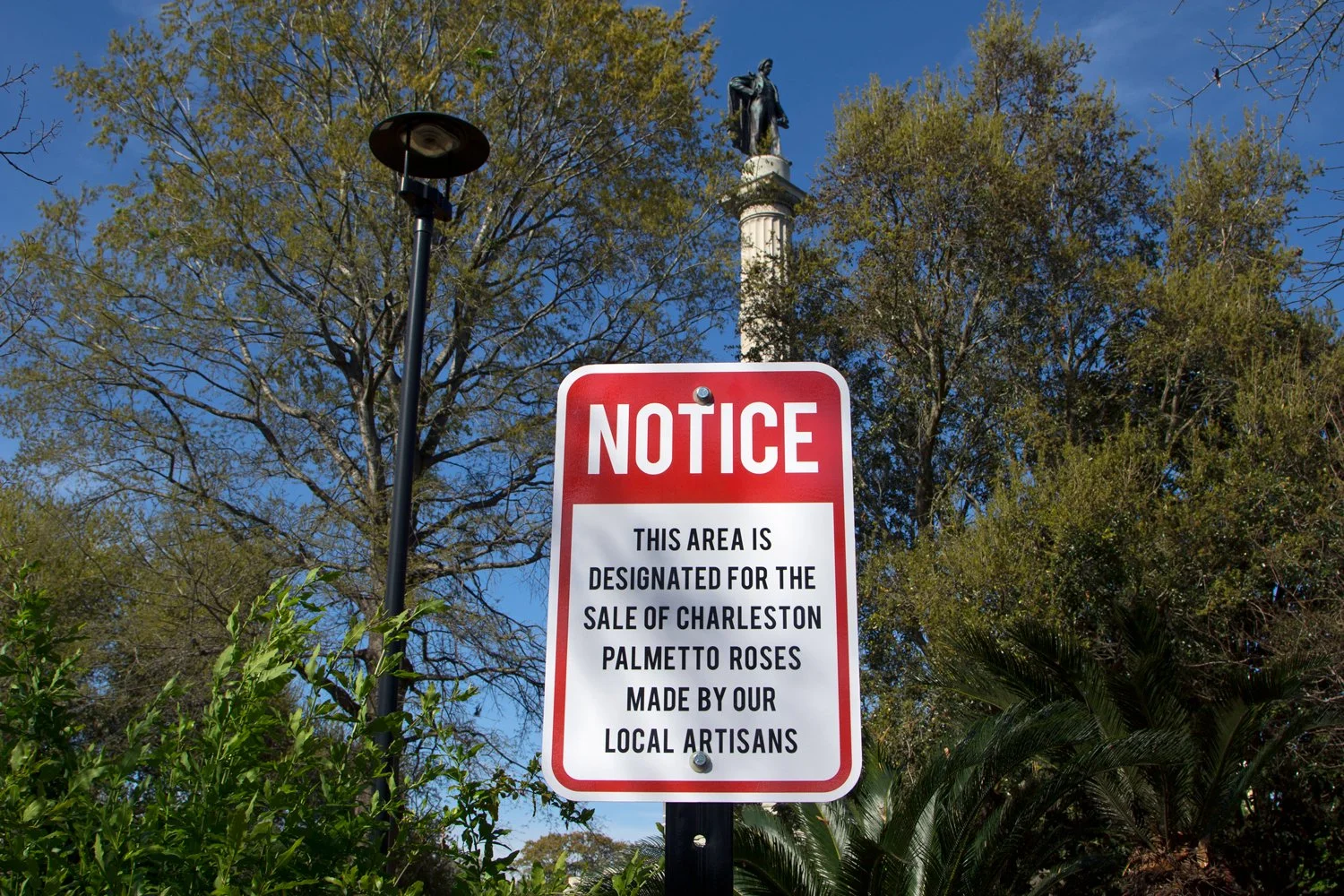
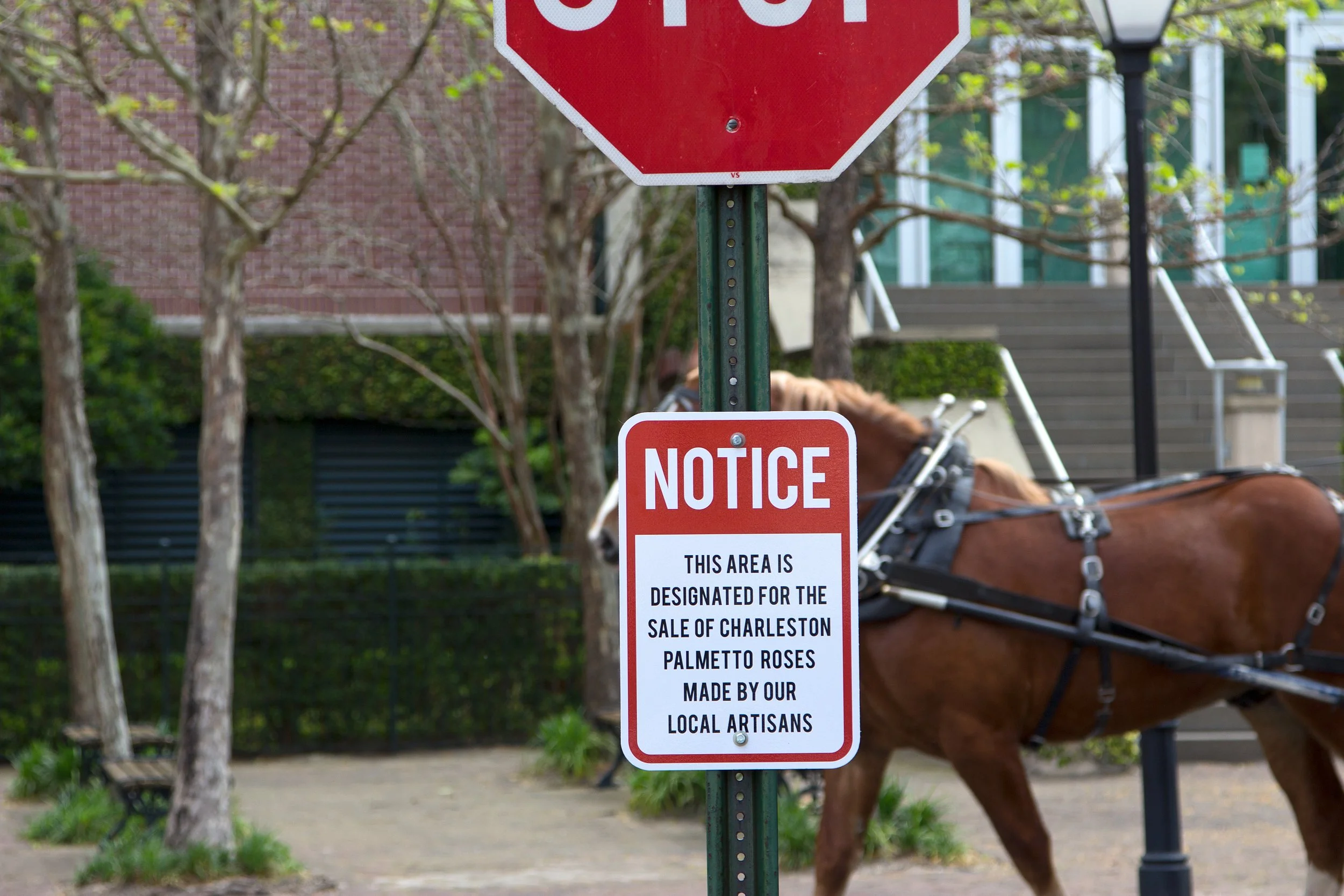
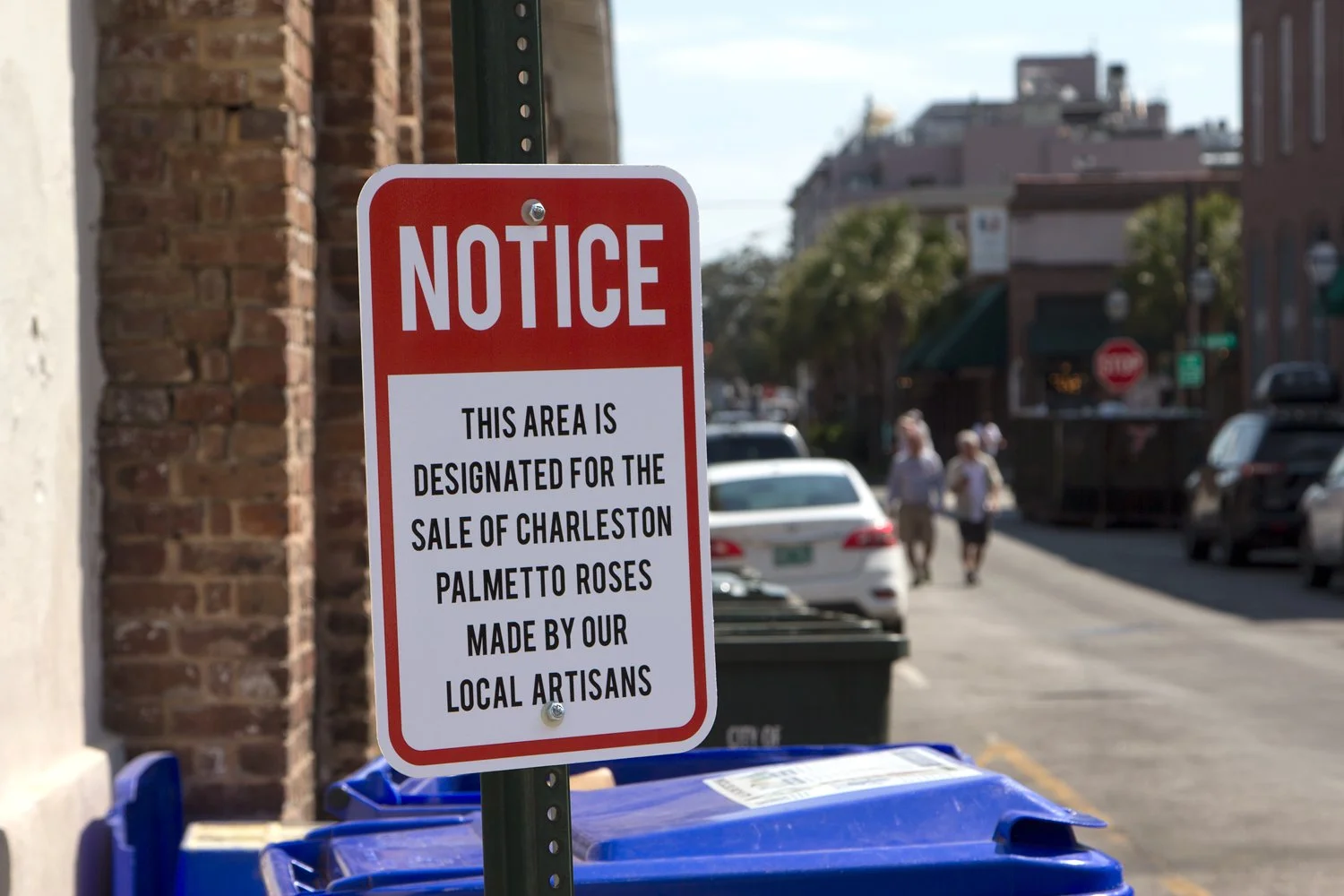
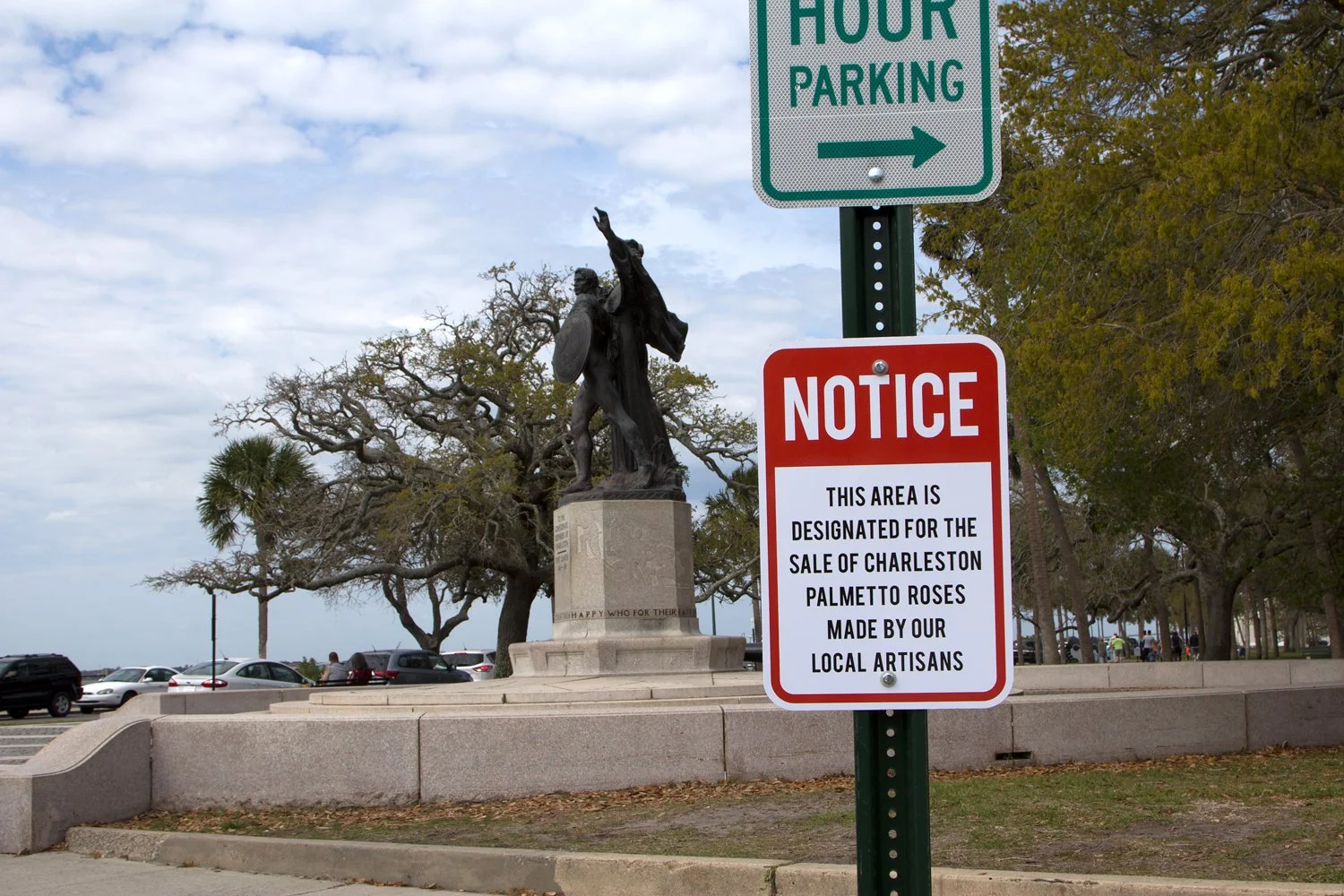
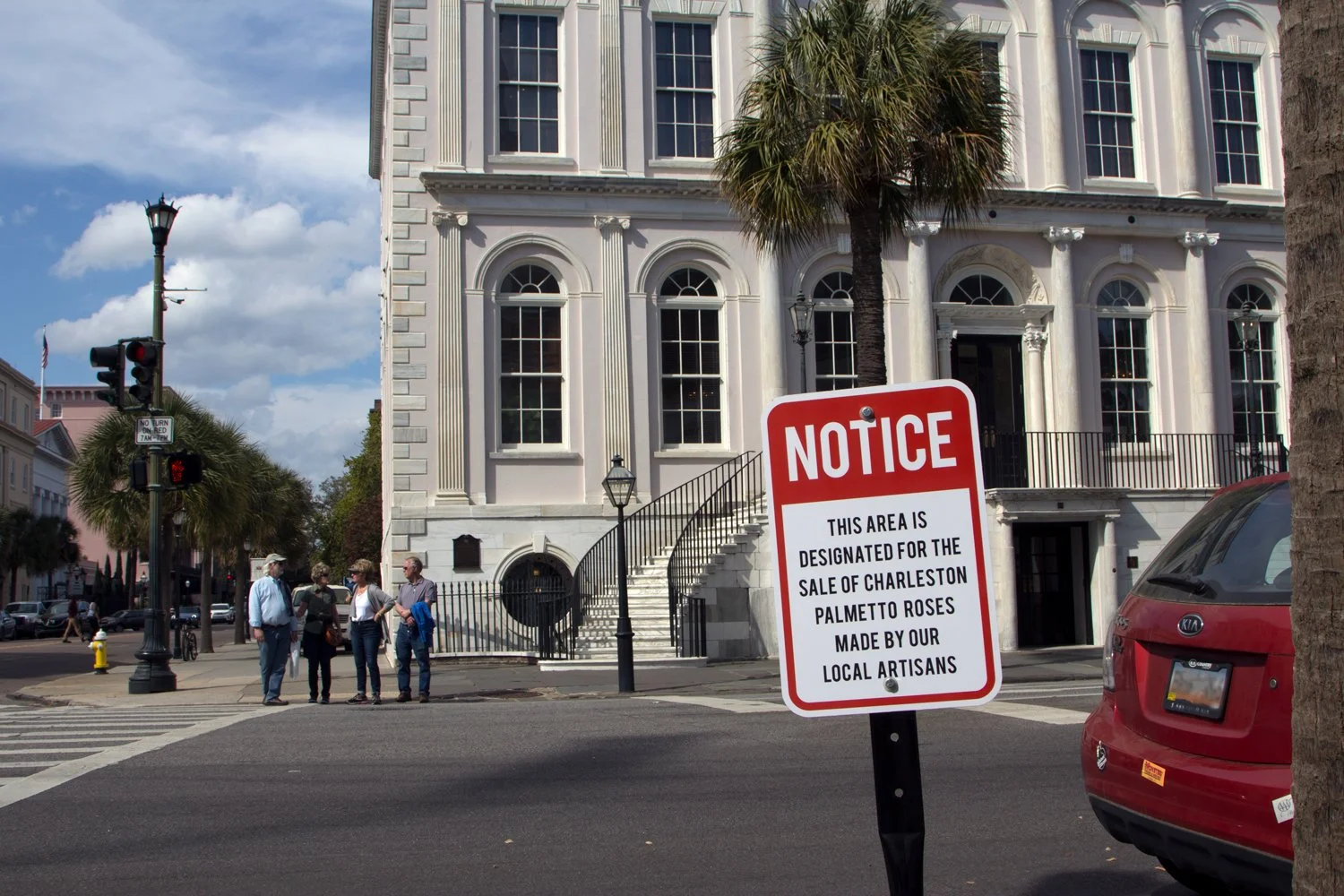
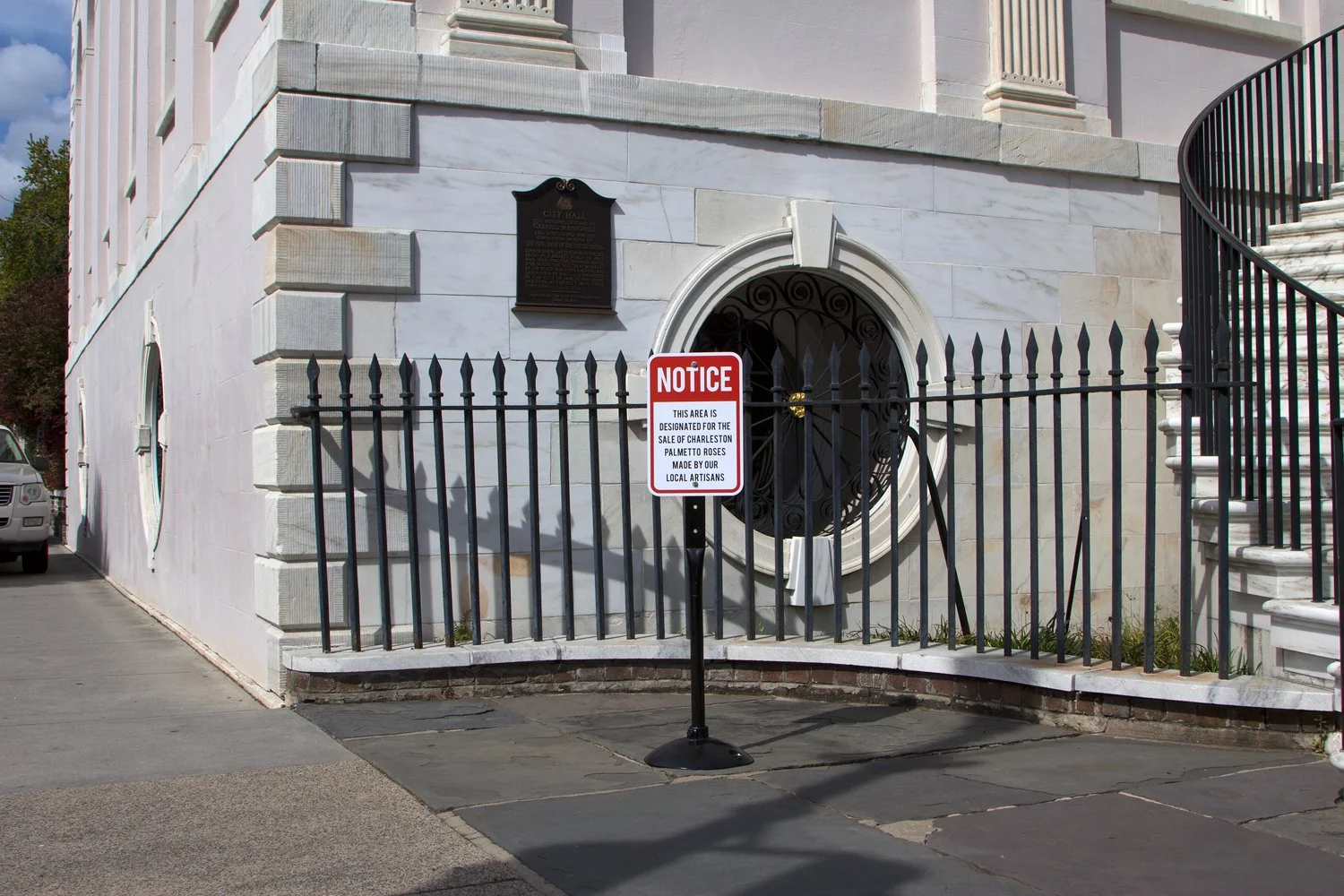
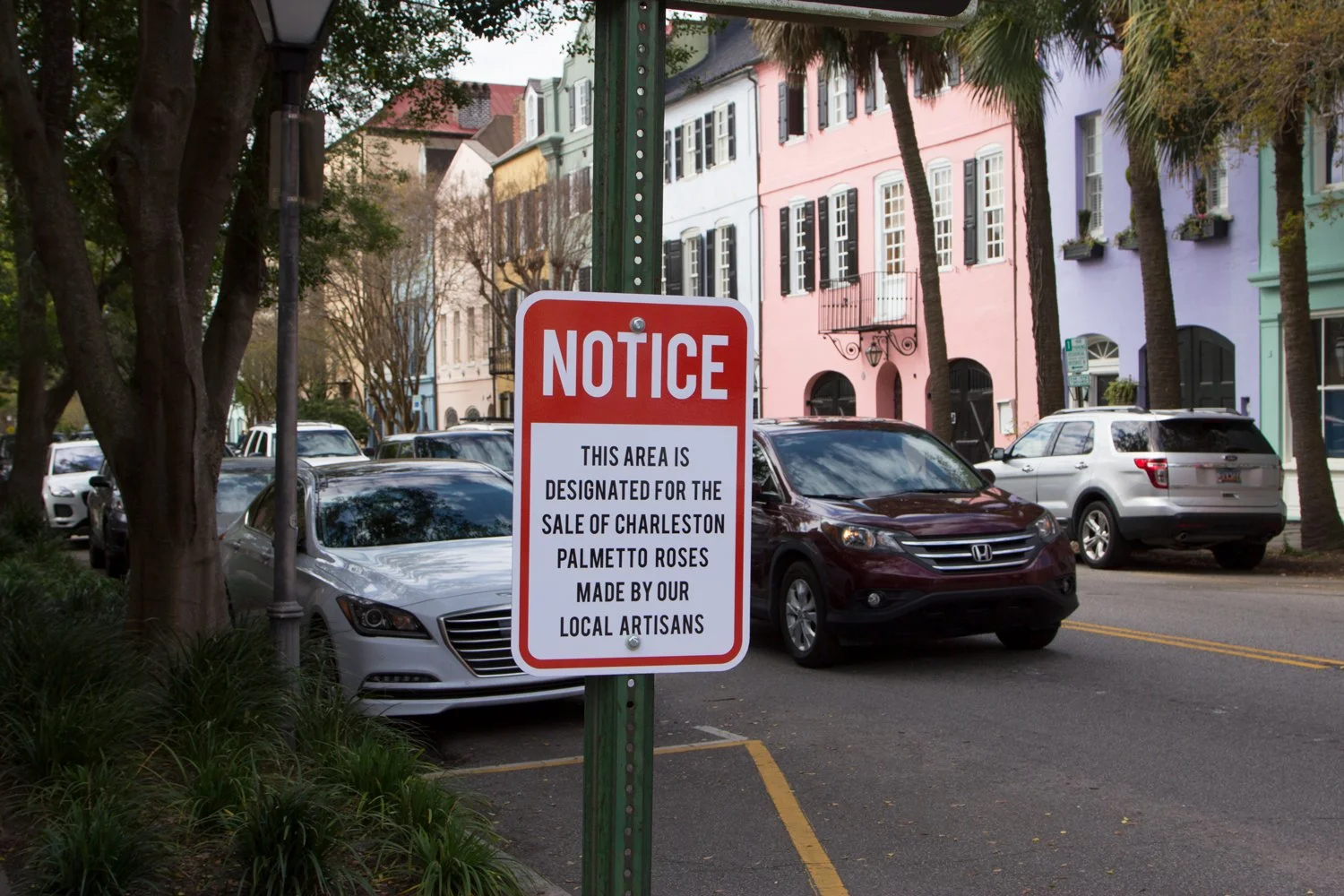
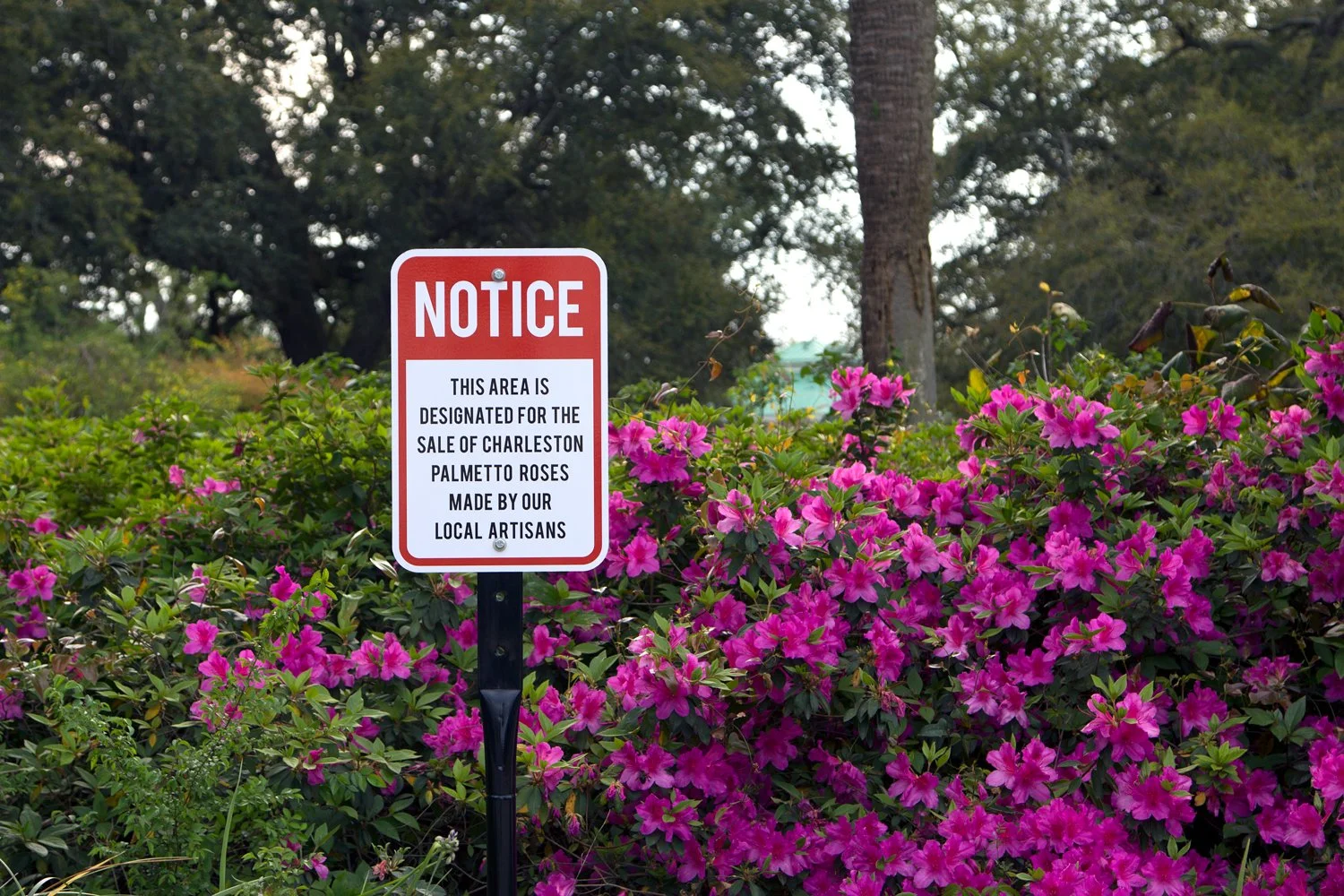
NOTICE, 2018
Historic District
Charleston, South Carolina
About The Work (4 MIN READ)
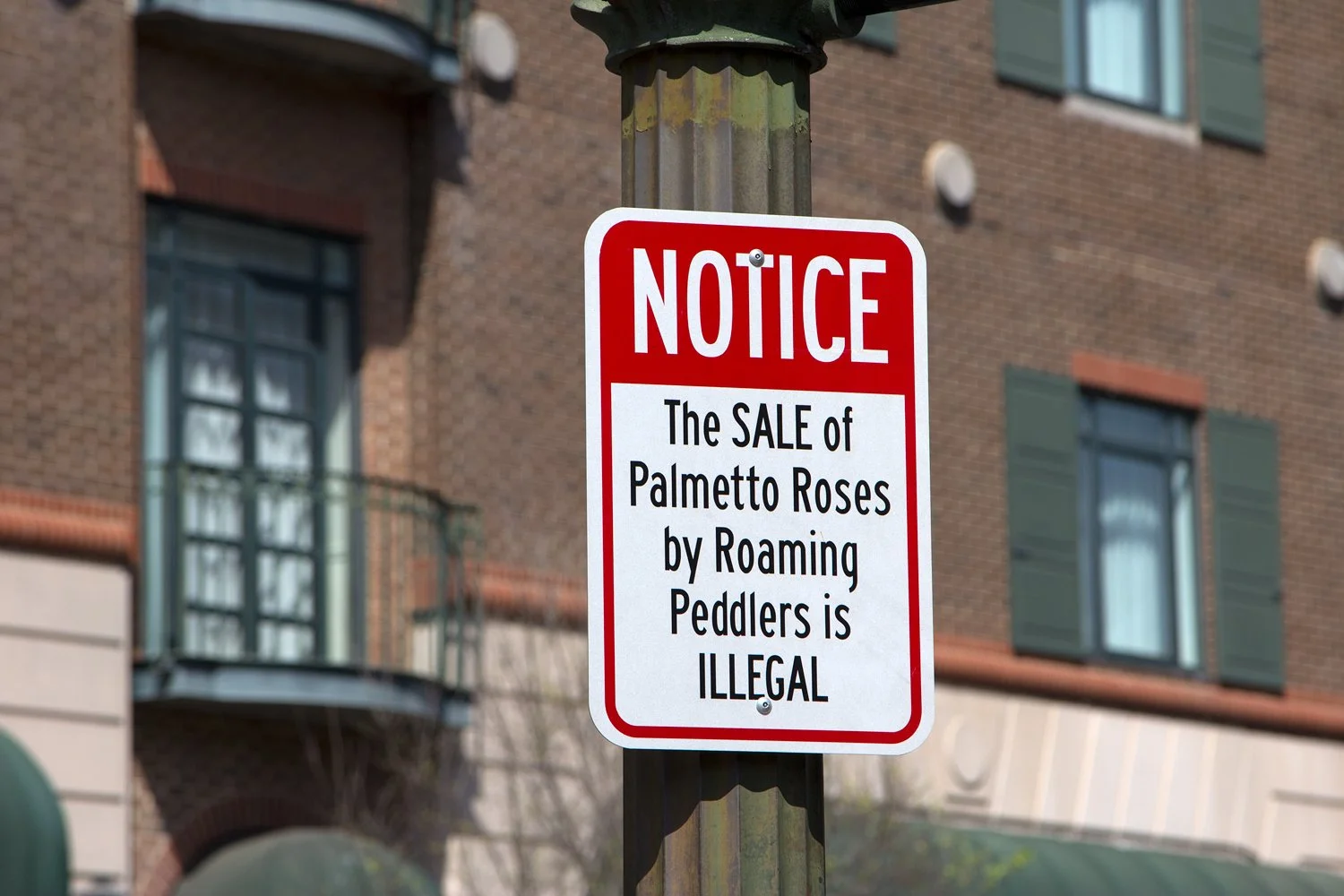
This project engages the intersection of language, spatial control, and racialized labor within the historic landscape of Charleston. It responds to municipal signage that declares: “The sale of Palmetto Roses by roaming peddlers is illegal,” interrogating how ostensibly neutral regulatory language functions as a mechanism of governance that shapes public perception, restricts movement, and disciplines informal economies.
Drawing from frameworks of critical race theory, urban geography, and theories of spatial justice, this work situates the phrase “roaming peddlers” within a longer lineage of racialized control. Such terminology recalls the logic of vagrancy laws and Black Codes, which historically criminalized Black mobility and informal labor in the post-emancipation South. In this context, the contemporary regulation of Palmetto Rose vendors cannot be understood as merely administrative; it participates in an ongoing structuring of who is permitted to occupy, move through, and economically engage with public space.
The Palmetto Rose itself operates as a critical cultural artifact. Constructed from the state tree, it functions simultaneously as a handmade object, a symbol of regional identity, and a globally circulated souvenir. Its production and sale constitute a localized, interdependent economy—one that includes palm harvesters, makers, and street-level vendors. This network reflects a form of cultural labor embedded within community knowledge, generational practice, and adaptive entrepreneurship. Despite its significance, this economy remains precarious, often positioned outside formal recognition and subject to regulation, surveillance, and, at times, criminalization.
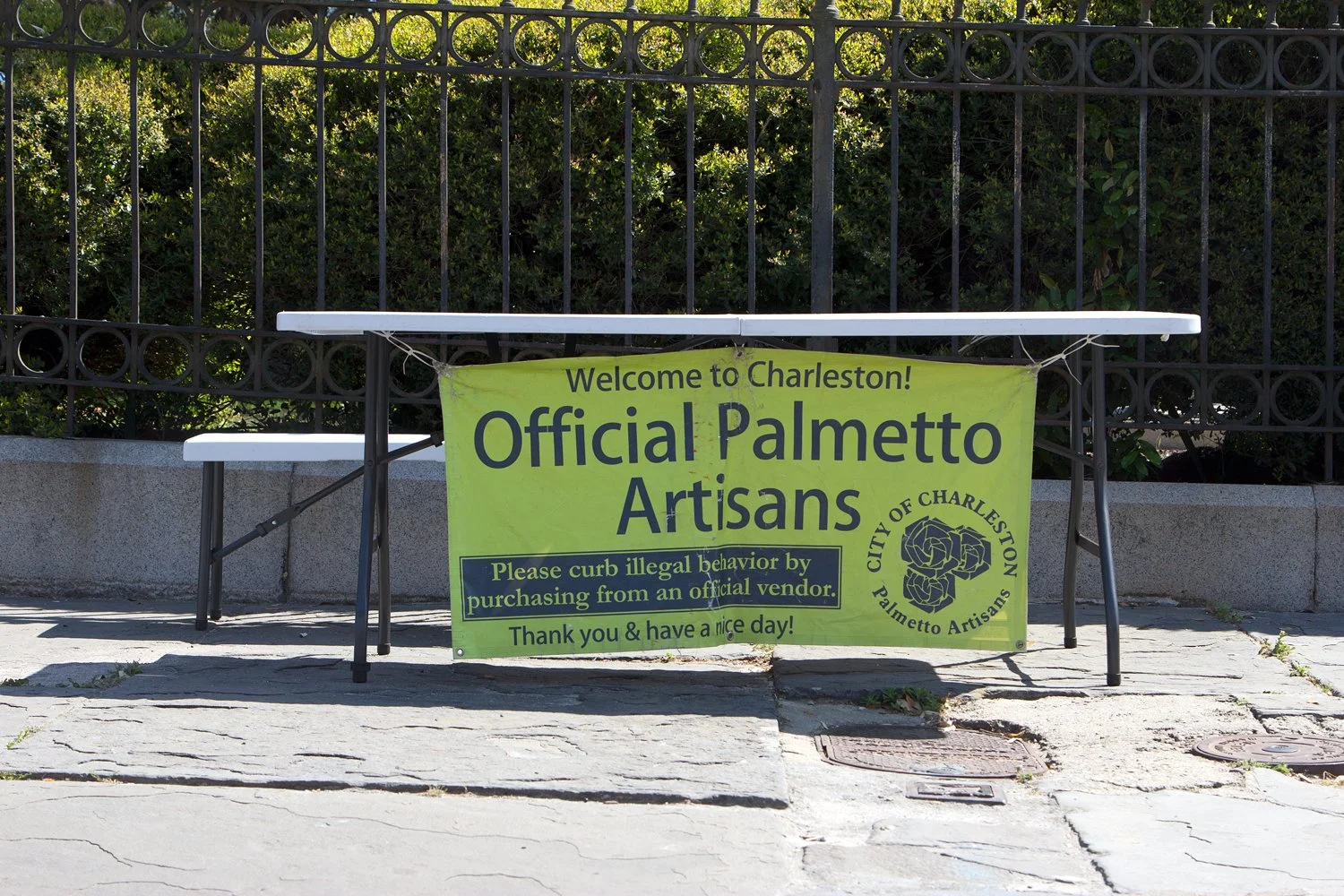
Reports of hostility toward Palmetto Rose makers, as well as arrests by local law enforcement, underscore the tension between cultural practice and municipal control. Furthermore, structured artisan programs—while framed as opportunities—can impose spatial and economic limitations, discouraging participation among young makers who seek access to higher-traffic tourist areas. These dynamics reveal a broader conflict between institutional containment and the fluid, self-determined nature of informal cultural economies.
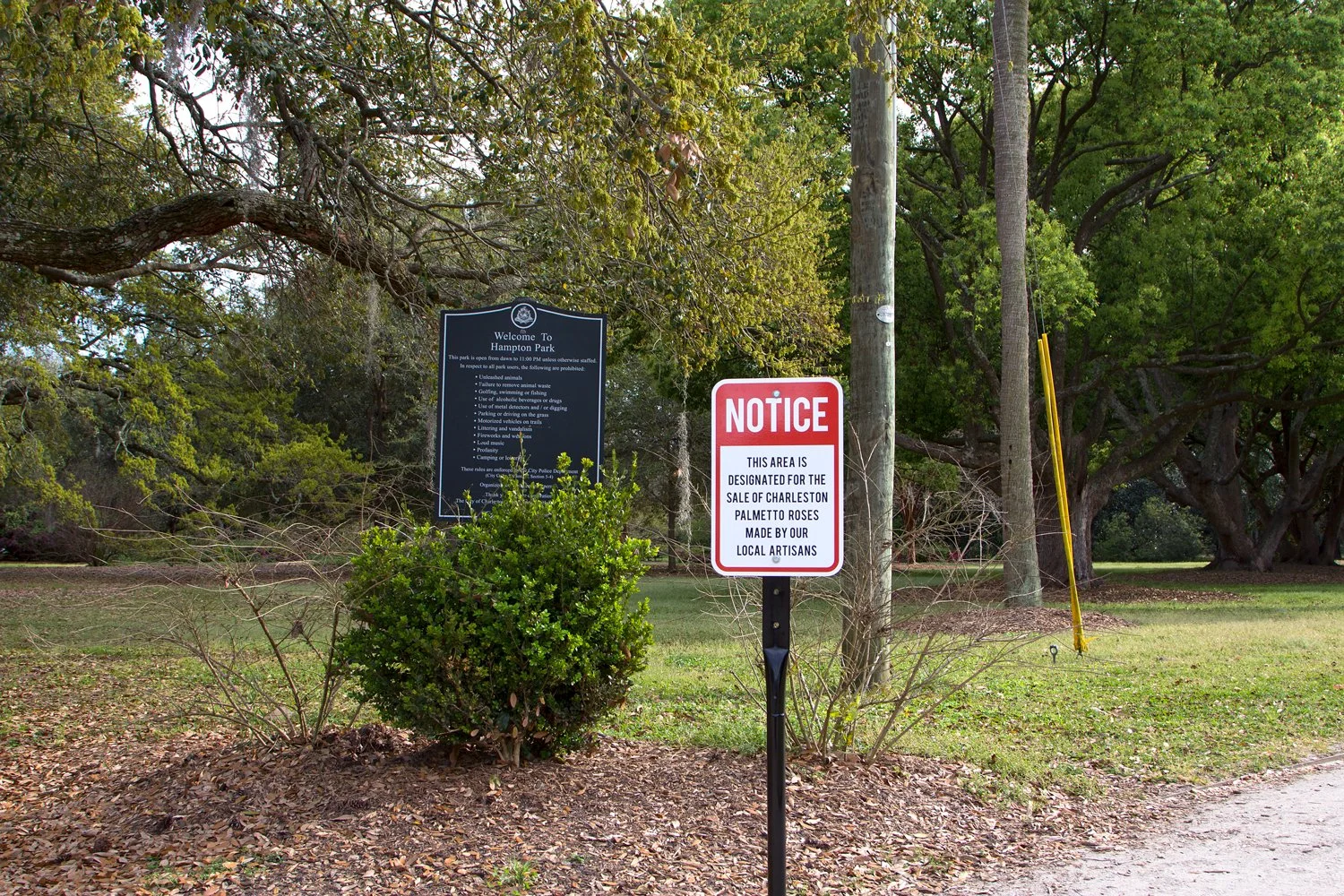
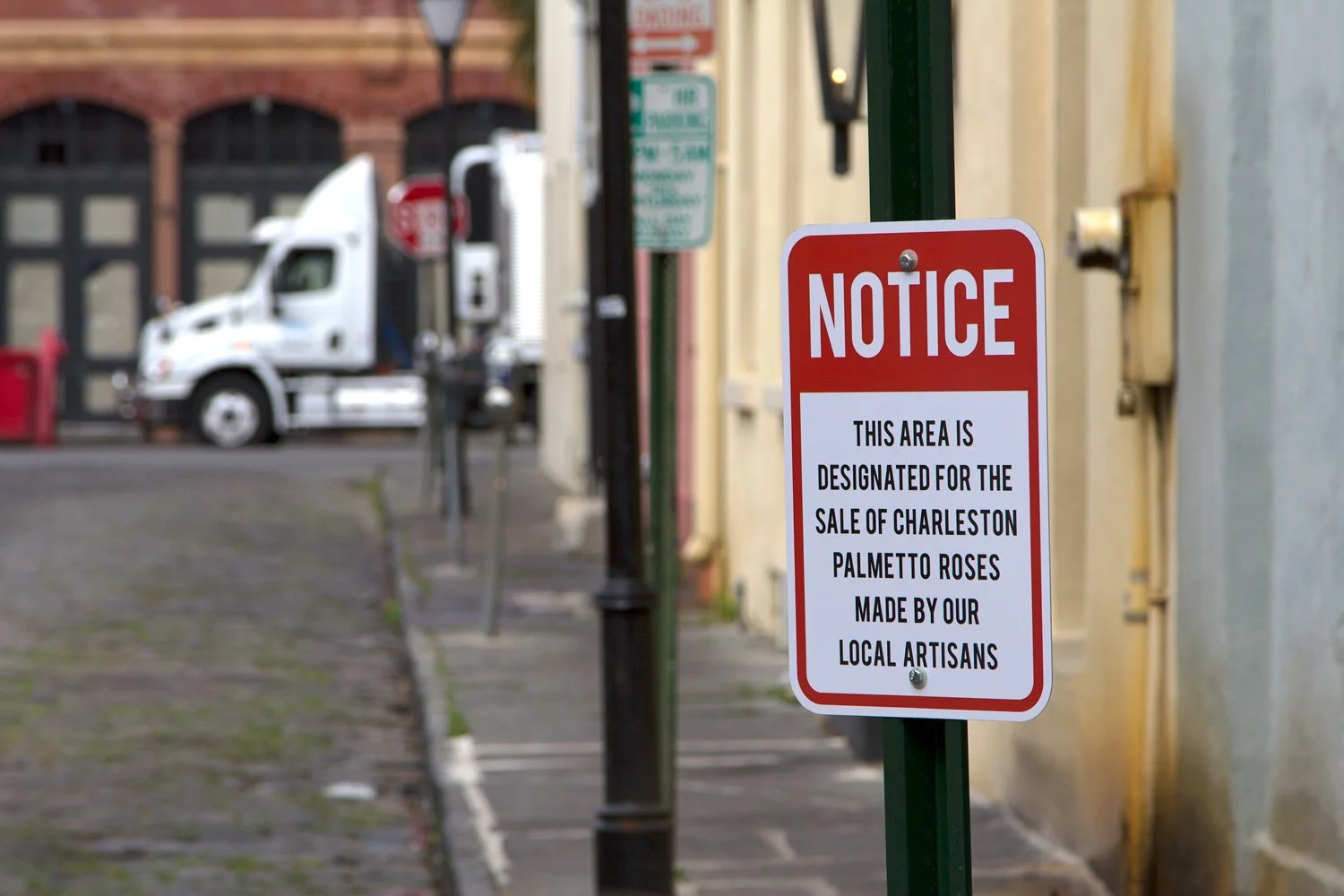
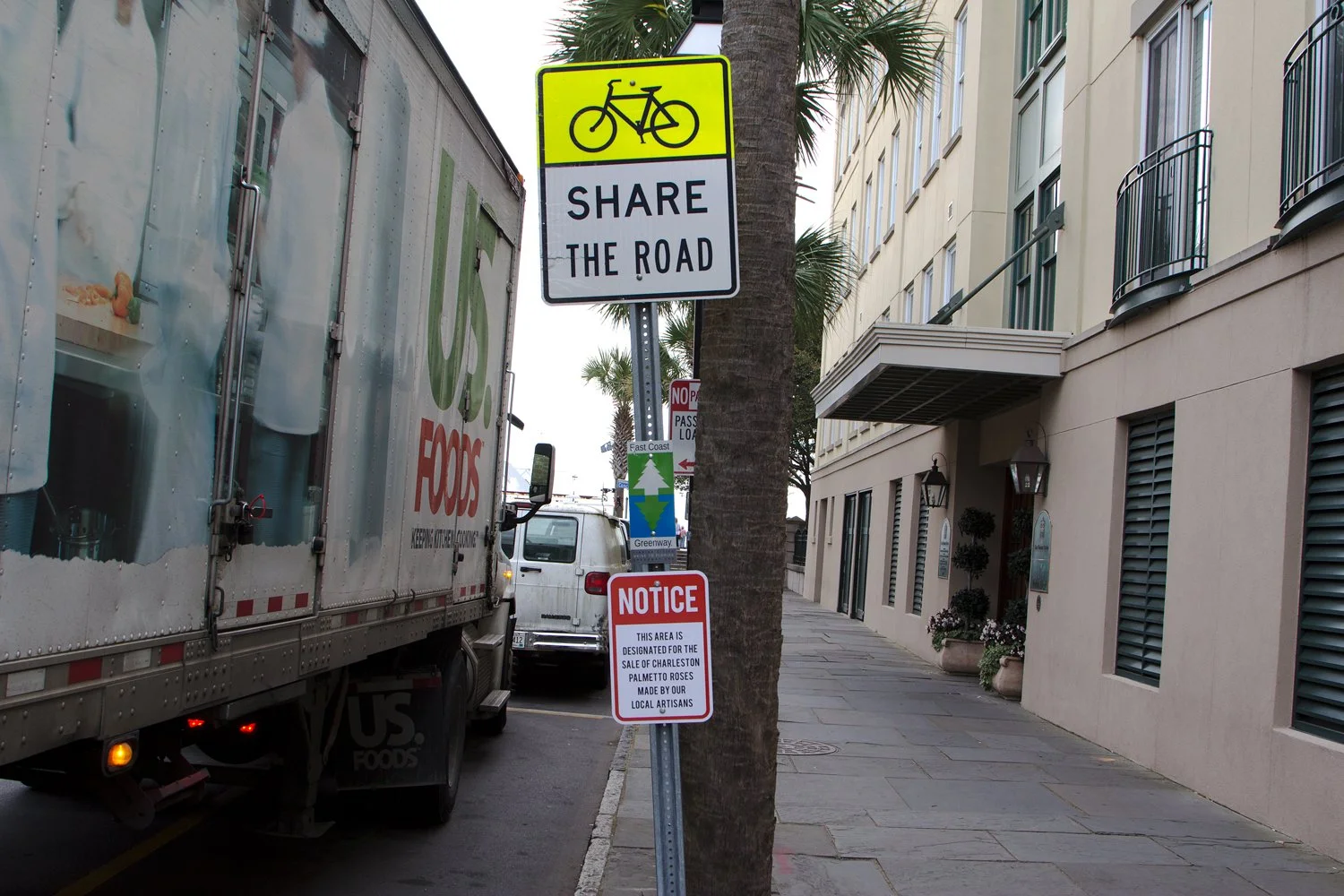
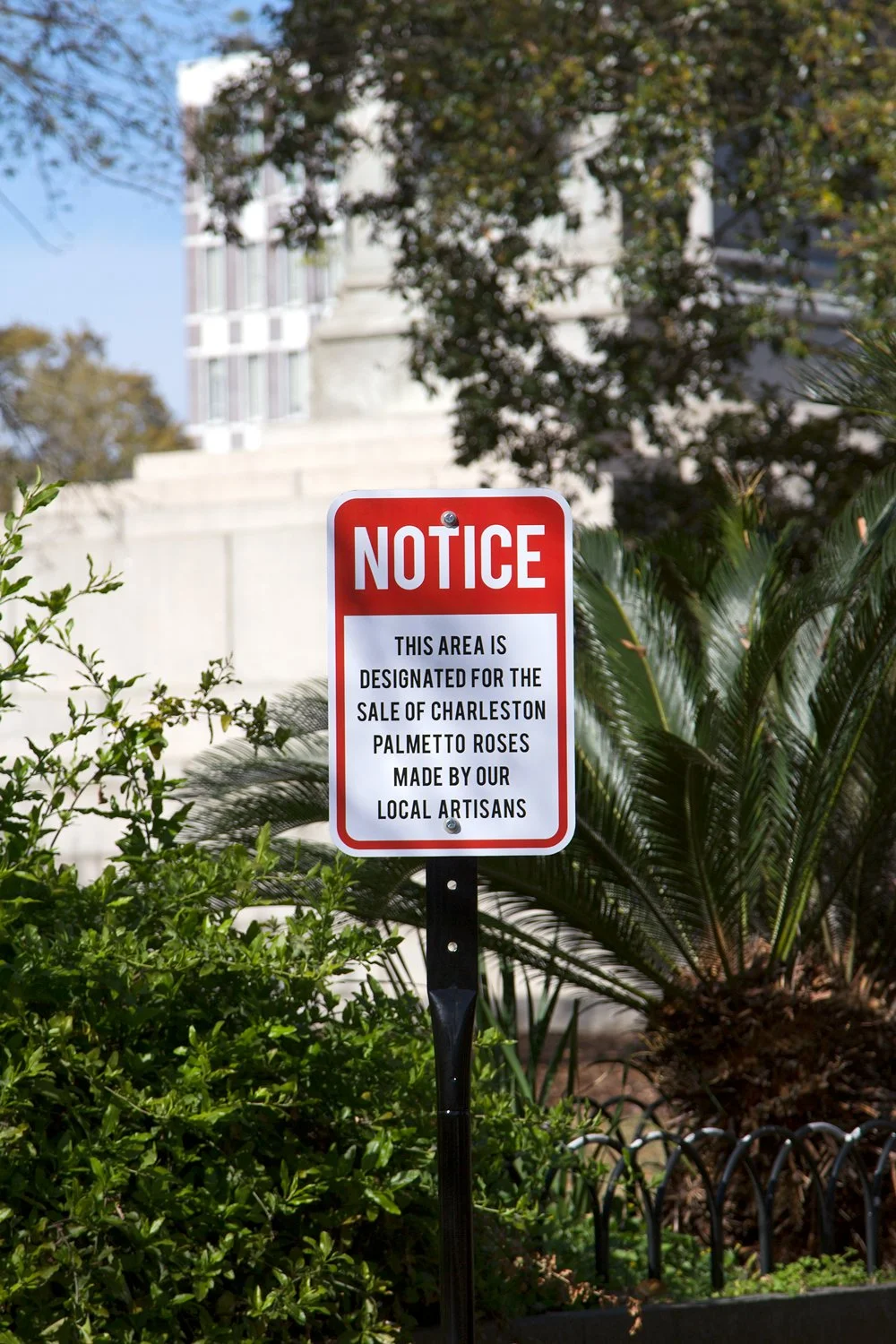
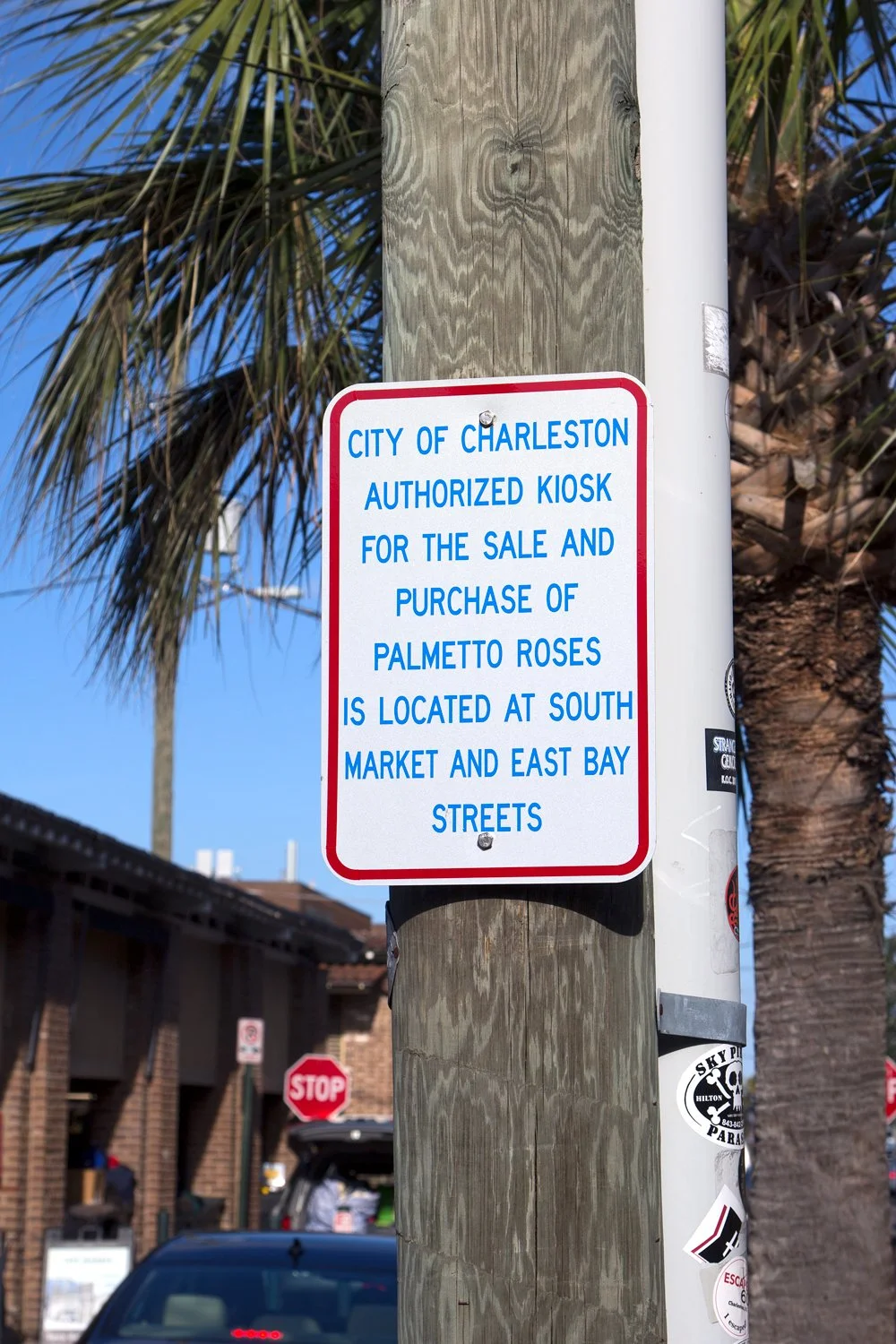
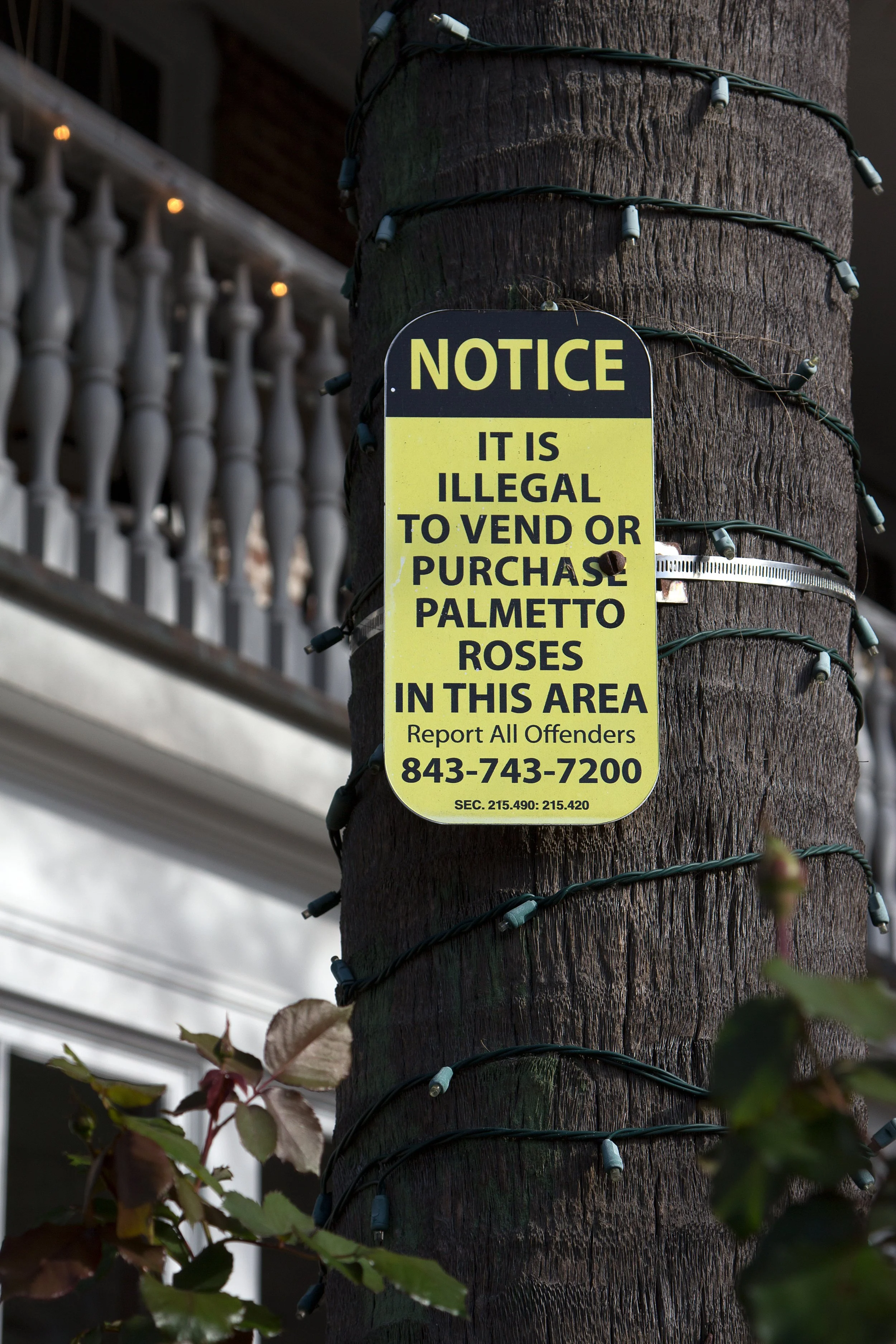
In response, this project employs a strategy of visual and linguistic mimicry. By replicating the aesthetic authority of municipal signage—the red “NOTICE” format, typographic hierarchy, and spatial placement—I introduce revised text that reframes Palmetto Rose vendors as “local artisans” and repositions their activity as legitimate and culturally integral. This act of substitution functions as a counter-narrative, exposing the constructed nature of official language while proposing an alternative framework of recognition.
The strategic placement of these signs throughout historically significant and highly regulated sites—such as Waterfront Park, Rainbow Row, The Battery, Market Street, and Hampton Park—activates these spaces as contested terrains. These locations, central to Charleston’s tourist economy and historical identity, have long been sites where Black presence is both foundational and tightly controlled. By inserting revised signage into these environments, the project interrogates how public space is curated, who is rendered visible or invisible, and how cultural labor is selectively legitimized.
This intervention operates within the tradition of socially engaged and site-specific art practices that challenge dominant narratives through subtle disruption. Rather than directly opposing municipal authority, it inhabits and redirects its visual language, creating moments of ambiguity that invite critical reflection. Viewers are prompted to question not only the content of the message, but the systems of power that produce and authorize it.
The Palmetto Rose, as both material and symbol, remains central to my broader artistic practice. It embodies a convergence of place, people, and cultural continuity. As a souvenir, it travels globally, carrying with it a trace of Charleston’s identity; as a handmade object, it reflects the labor and ingenuity of those who produce it under constrained conditions. This project seeks to honor that complexity while advocating for a more equitable recognition of the individuals and networks that sustain this cultural form.
This work is not endorsed by the City of Charleston. It is a critical intervention—one that reframes public language, challenges spatial restrictions, and foregrounds the cultural and economic significance of Palmetto Rose artisans within the contemporary urban landscape.
Press
Charleston City Paper — “Fletcher Williams Has an Idea to Give Palmetto Rose Artisans the Recognition They Deserve,” 2019
Related works
Heirs To Master Builders, 2019
250 Years From Mr. Freedman, 2026
Notice Sticker
4x5 in. Sticker + 3 Handwoven Charleston Palmetto Roses