HAVE SOMETHING TO SAY ABOUT PUBLIC ART IN CHARLESTON?
JOIN THE PUBLIC ART DISCUSSION.
Comments may be submitted anonymously.
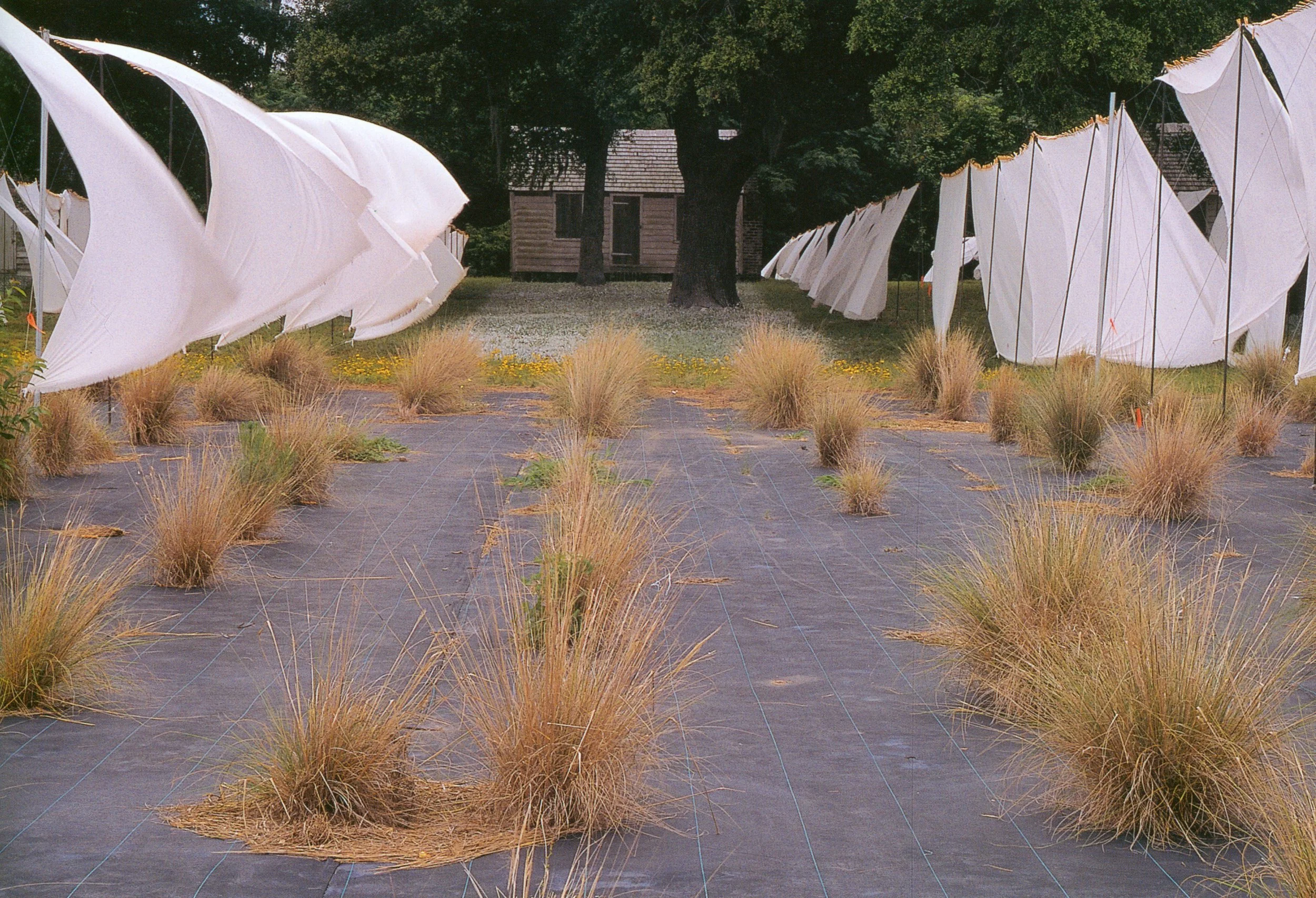
Martha Schwartz, Field Work, 1997. Cotton sheets, steel posts, cable and clothes pins. McLeod Plantation, James Island, SC. View toward slave cabins from sweetgrass field. Photography by Len Jenshel Exhibition: HUMAN/NATURE: ART AND LANDSCAPE IN CHARLESTON AND THE LOW COUNTRY.John Beardsley, curator; Roberta Kefalos, associate curator. Spoleto Festival USA, Charleston, South Carolina, 1997
What Charleston Chooses to Preserve: Public Art, Cultural Authority, and the City's Fear of Dissent by fletcher williams iii
Table of contents
July 26, 2026
Ongoing Record
Contemporary examples corresponding to What Charleston Chooses to Preserve.
September 10, 2026
FOLLOWING CHARLESTON’S CULTURAL MONEY
Where does the public money for arts and culture actually go?
September 17, 2026
INSTITUTIONS THAT TEACH CHARLESTON TO FEAR PUBLIC ART
A response to “Editorial: Time to reimagine public art in Charleston,” published by the Post and Courier editorial staff in the Opinion section by Fletcher Williams III
September 19, 2026
1. What Charleston Chooses to Preserve by fletcher williams iii
Table of Contents
The message everyone repeats
During my current exhibition at Navy Yard, I have received versions of the same message again and again: this space should remain an arts venue. Visitors imagine exhibitions, performance, music, dance, education, and public programming. They understand the architectural potential of the rooms. Still, more importantly, they recognize a need Charleston has failed to meet: an additional durable, professionally scaled and independently programmed venue for ambitious, multidisciplinary contemporary art.
The response did not begin with my current project. It was already being expressed in November 2025, after an independently organized multidisciplinary group exhibition on the same floor in which I participated. Artists across disciplines, educators, cultural workers, arts-board members, and other attendees reached the same conclusion. That earlier event matters here not as a curatorial precedent, and not because I intend to campaign for this particular room, but because it confirms that the recognition was broad and preceded my present exhibition.
The messages often arrive in nearly identical language: perhaps someone with clout could persuade the developer or the city to preserve the space for the arts. That phrase is revealing. Permanent cultural infrastructure is imagined not as a product of policy, planning, protected leases, public investment, or institutional commitment, but as a favor that an influential person might secure.
I am no longer making a case for this particular room to become a permanent arts venue. The point is not to revive another campaign that will consume artists' time while relieving developers, government, institutions, donors, and boards of their responsibilities. The point is what these repeated responses reveal. Cultural activity demonstrates the need. Audiences recognize the value. Artists supply the proof. Yet no reliable mechanism exists to translate that recognition into permanence. Charleston is willing to experience art temporarily. It is far less willing to secure the conditions that would allow art to remain.
Charleston is not without permanent exhibition venues. City Gallery is a permanent, publicly funded municipal space, and institutions such as the Halsey Institute, the Gibbes Museum of Art, and Redux Contemporary Art Center regularly present visual art. My argument is not that exhibition space is absent. It is that Charleston has too few professionally equipped, independently programmed venues capable of sustaining ambitious contemporary-art exhibitions - and that the city does not always use the spaces it already possesses with sufficient curatorial seriousness. City Gallery's existence is therefore not the end of the question; how it is governed and programmed, especially during Spoleto and Piccolo Spoleto, is central to the argument that follows. (1)
Why I am writing this
I have spent my entire career in Charleston trying to create work that lives up to the ambitions of the city's most important moments of public artistic engagement. I have tried to make work that enters public life rather than remaining safely contained within a gallery; work that responds to place, confronts historical memory, and asks Charleston to encounter itself as something more complicated than a beautiful setting.
I am not writing from outside the city's cultural life, nor am I asking to be admitted into something I have not helped produce. Like many Charleston-based artists, I have created exhibitions, audiences, public conversations, documentation, and cultural value at substantial personal cost. I have built temporary institutions around my work because permanent ones were absent or insufficient. I have watched artists repeatedly demonstrate what this city could become while its cultural leadership describes the demonstration itself as evidence that the system is already working. It is not working.
Charleston wants the prestige, beauty, economic value, and civic legitimacy of culture without consistently supporting the conditions that produce serious cultural life: independent institutions, professional exhibition spaces, sustained criticism, public investment, long-term planning, artistic risk, and open disagreement. The city celebrates artists when they support its preferred image but distrusts them when they claim authority over public space, history, institutional judgment, or the meaning of Charleston itself.
This essay is not a demand that everyone working in Charleston's arts community agree with me. It is a demand that we stop pretending these conditions do not exist.
The tradition Charleston abandoned
Charleston cannot claim that it has never known how to make a serious commitment to visual art. Spoleto Festival USA once treated visual art as one of its crowning intellectual and civic achievements. In 1991, Places with a Past invited artists to engage Charleston through site-specific work that entered buildings, streets, histories, and contested spaces. In 1997, Human/Nature again treated Charleston and the Lowcountry landscape as artistic material rather than picturesque background. (2)
These exhibitions mattered because they allowed contemporary art to examine Charleston. Artists were not simply brought here to decorate the festival or confirm the city's cultural prestige. They were asked to confront architecture, memory, labor, race, land, beauty, and power. The city became the exhibition.
That tradition has shaped my understanding of what art in Charleston can and should do. I inherited evidence that this city could support ambitious public engagement. I did not inherit the infrastructure capable of sustaining it.
Spoleto still presents accomplished opera, theater, music, and dance. Those disciplines now carry much of Charleston's annual claim to international cultural seriousness. Visual art, by contrast, has largely retreated into the annual festival poster and other forms of branding. A poster can be beautifully conceived and may involve an important artist, but a poster is not a visual arts program. It does not commission new thinking about Charleston. It does not alter public space. It does not create sustained encounters among artists, residents, buildings, landscapes, and histories.(3)
Spoleto has become Charleston's temporary alibi for cultural seriousness. For three weeks each year, Spoleto asks us to believe that Charleston is more than a beautiful coastal scene. The rest of the year, too much of its gallery culture is devoted to selling that scene back to us. Charleston has not simply failed to build a public art culture. It has dismantled one of the strongest public art traditions it formerly held.
Public art after the fact
Charleston repeatedly treats art as something to be considered after a public project has been designed, financed, approved, and nearly completed. Parks, walkways, civic buildings, transportation corridors, and redevelopment projects are conceived through engineering, landscape architecture, recreation, tourism, safety, and economic development. Artists are rarely present when the project's meaning, budget, and physical possibilities are being determined.
By the time someone asks whether the finished space should contain art, the answer is predictable: the project is already enormously expensive, and no money remains. But the absence of money for art is not an unavoidable consequence of an expensive project. It is usually evidence that art was never treated as part of the project. Lighting received a line item. Landscaping received a line item. Engineering, drainage, paving, signage, security, amenities, design services, project management, and contingencies received line items. Art did not.
Charleston gets the art it plans for.
The Lowcountry Lowline offers an important test. The current publicly posted framework remains the 2020 Conceptual Master Plan, now being carried into Phase 1A construction. That plan and the project's public descriptions do not ignore culture: they envision a public realm defined by neighborhood identity, historical interpretation, community programming, the arts, and local participation. That recognition should be acknowledged. But cultural programming and general references to art are not the same as a durable public-art program. I have not reviewed a complete line-item budget, and the public record still does not establish a protected art allocation, a professional commissioning process, independent artistic leadership, maintenance commitments, or the point at which artists entered the design process. The city has also announced a more extensive Charleston Public Art Initiative, but its relationship to the Lowline has not yet been publicly defined. The Lowline passes through a corridor shaped by transportation, industry, labor, segregation, neighborhood formation, environmental change, and development pressure. The relevant question is no longer whether culture appears in the plan, but whether artists will receive meaningful authority, resources, and permanence within the project rather than being asked principally to animate a landscape whose major physical and financial decisions have already been made. (4)
Artists could be embedded within the design team. Temporary commissions could accompany construction. Artists could develop gathering spaces, lighting, landscape interventions, sound works, historical markers, performances, and projects with surrounding neighborhoods. A rotating commission program could allow the Lowline to change over time rather than becoming culturally fixed on the day it opens.
The Charleston Civic Design Center's 2026 Peninsula Plan open-studio series is a constructive attempt to make planning visible. The public can drop in on Thursday afternoons, see work in progress, and speak directly with project staff; separate sessions feature the Lowline and the city's developing Public Art Initiative. But meaningful participation requires more than making a room technically open. I learned of the Civic Design Center and its public hours through word of mouth, despite being a Charleston-based artist whose work directly engages public space, history, and cultural infrastructure. A public process can be open and remain practically invisible to many of the people whose knowledge it needs. Outreach should therefore be active, repeated, and directed through artists, neighborhood organizations, schools, cultural institutions, and communities along the project corridor. Engagement should not be measured only by whether the public was permitted to attend, but by whether the city made a serious effort to ensure that the relevant public knew the conversation was happening and had a meaningful way to shape it. (5) By the time Charleston says there is no money for art, it has already spent the money expressing what it believes matters.
The city's 2025 application for a Bloomberg Asphalt Art grant shows that Charleston does understand, at least intermittently, that art can be integrated with transportation, pedestrian safety, and public-space design. The proposed project at Lockwood Boulevard and Bee Street was an example of the kind of cross-departmental thinking the city should pursue. Yet public approval occurred only three days before the application deadline. The public record does not establish when staff began preparing the proposal, so it would be unfair to claim the application itself was written in three days. What is clear is that the publicly visible process offered almost no time for artists, residents, elected officials, or cultural organizations to examine and strengthen it. (6)
A serious public art program would not depend on discovering one outside grant and hoping to win it. It would develop projects, recruit artists, assemble funding from multiple sources, learn from rejection, and continue. A grant application is evidence of possibility. A continuing program would be evidence of commitment.
Charleston should adopt a percent-for-art policy for qualifying public capital projects. Artists should be included at the beginning of planning, not summoned after all meaningful decisions have been made. Public art is not what remains after infrastructure fulfills its practical responsibilities. Art is one of the ways infrastructure acquires civic meaning. (7)
Charleston already possesses an important example of what sustained commitment can produce. Fred Wilson's OMNISCIENCE, commissioned by the Gibbes Museum of Art and permanently installed on Meeting Street, transforms Charleston's wrought-iron tradition through the story and writings of Omar Ibn Said, an Islamic scholar enslaved in the Carolinas. The work grew from Wilson's 2019 engagement with the city, was unveiled in 2022, and required a coalition of museum leadership, donors, local fabricators at the American College of the Building Arts, architects, the City of Charleston, and other partners. Its achievement should be recognized. It also demonstrates how exceptional each ambitious public artwork must become when no continuing municipal program exists to make commissions routine. (8)
North Charleston delivers a more modest but instructive regional model. Its National Outdoor Sculpture Competition and Exhibition at Riverfront Park is now in its twentieth year, places juried works in a free public park for nearly a year, provides cash awards, and renews the exhibition annually. A competition is not the same as a commission-based public-art program, and rotating sculpture alone cannot carry the full burden of civic art. But continuity matters. It gives artists a recurring opportunity, makes new work visible, and teaches residents to expect public art as a normal part of municipal life. (9)
Charleston needs both kinds of ambition: occasional landmark works such as OMNISCIENCE and smaller, recurring allocations that produce many commissions across neighborhoods, parks, streets, and public buildings. A few large projects may create prestige; a sustained range of works creates demand, familiarity, and public expectation. The goal should not be to choose between significance and frequency, but to build a program capable of both.
That program should also make room for work that directly reexamines monuments rather than merely adding decoration around them. In Los Angeles, Kara Walker's Unmanned Drone, presented in the exhibition MONUMENTS, was made through dissecting and reassembling a decommissioned statue of Confederate general Thomas J. 'Stonewall' Jackson. Charleston, whose public landscape is saturated with contested historical symbols, should invite artists capable of comparable interventions. Such work would not tell the city what to think; it would create serious occasions to reconsider whom Charleston monumentalizes, what those monuments suppress, and what forms public memory might take now. (10)
Institutions without sufficient authority
Charleston has institutions and leaders capable of serious work, but appointments alone do not produce an ecosystem. The Halsey Institute can present ambitious contemporary art while operating in a historic-district environment where exterior signage and other visible alterations are subject to preservation review. The International African American Museum can carry enormous historical and civic expectations while remaining financially vulnerable. The Gibbes can appoint a new director, and the city can appoint a new cultural affairs director and reconstitute the Commission on the Arts. Still, the central question remains: what authority, funding, land, political support, and institutional independence will Charleston actually permit these leaders to exercise? (11)
This is why City Gallery deserves especially direct scrutiny. City Gallery should be publicly funded. Contemporary art is a public good, and admission-free access matters. A municipal gallery can present work that has no immediate commercial market, support artists whose practices cannot be reduced to saleable objects, and create a public record of artistic life in Charleston. Its permanence does not by itself resolve Charleston's exhibition-space problem; the issue is whether the gallery is granted the independence and ambition to use that permanence consequentially. The problem is not that City Gallery is city-funded. The problem is that public funding and direct municipal artistic administration have been treated as though they must be the same thing.
City Gallery operates within the Office of Cultural Affairs, an office responsible for festivals, public events, administration, and competing civic constituencies. In such a structure, curatorial independence inevitably competes with political caution, public relations, bureaucratic procedure, and pressure to produce programming that appears broadly agreeable. A municipal government must answer to voters, elected officials, department heads, budgets, ordinances, and public complaints. A serious contemporary art institution must sometimes answer first to artists, ideas, history, experimentation, and inquiry that may initially be unpopular. (12)
Charleston should preserve public support while creating greater arm's-length curatorial governance. The city could continue to own the building, provide operating support, maintain free admission, and require financial openness. An independent artistic director and governing body should control exhibitions, commissions, publications, and critical programming. Public accountability should remain. Political supervision of artistic content should not.
A juried show is not a curatorial achievement
Charleston repeatedly treats the juried exhibition as a central feature of its visual arts calendar, especially during Piccolo Spoleto. A juried exhibition can be useful. It can provide access, introduce artists, and create an open application process. It may be an important annual opportunity. But it is not a major curatorial achievement. (13)
A juried exhibition begins with whatever happens to be submitted. Its organizing principle is selection. A serious curated exhibition begins with an urgent question, sustained research, historical context, relationships among artists, commissions, and a coherent argument about why the work belongs together in a particular place and moment.
Piccolo Spoleto has not been entirely without planned, thematically curated exhibitions at City Gallery. A Dialogue in Black and White, curated by Torreah “Cookie” Washington, debuted during the 2018 festival, and Celebrating Black Mermaids: From Africa to America, also curated by Washington, opened there during Piccolo Spoleto in 2023. These projects are important precedents because they demonstrate that the city can use its permanent municipal gallery for a developed curatorial proposition rather than defaulting to an open-call selection process. But that level of intention has appeared intermittently rather than as a protected, consistently funded centerpiece of Charleston’s most visible cultural season. (14)
Southbound: Photographs of and about the New South offers an even more substantial benchmark. Co-curated by Mark Sloan and Mark Long, the exhibition brought together 220 works by 56 photographers and was presented simultaneously at the Halsey Institute and City Gallery from October 19, 2018, through March 2, 2019. It was supported by a major catalog, commissioned film and video material, educational resources, an interactive mapping project, public programming, and a national tour. Southbound did not occur during Spoleto or Piccolo Spoleto. That is precisely the point: Charleston has already demonstrated the institutional capacity to produce a deeply researched exhibition of regional and national consequence, but it did not place that achievement within the annual period when the city commands its greatest cultural attention. (15)
During Spoleto and Piccolo Spoleto, City Gallery should regularly present the most ambitious visual art exhibition Charleston can produce: a project developed over a year or more, with substantial artist fees, commissioned work, original writing, professional documentation, public programming, and meaningful dialogue among Charleston-based, national, and international artists. The city has produced precedents for this level of work. The failure is that it has not converted those precedents into a sustained institutional commitment.
The juried exhibition can take place at another time. It should be respected for what it is without being asked to stand in for curatorial vision. Charleston does not need more opportunities for artists to be included. It needs institutions prepared to make arguments—and a festival-season structure that consistently gives those arguments the time, space, and resources they require.
When community becomes a curatorial alibi
Charleston's visual arts institutions have developed an agonizing marriage to the language of community. Exhibitions are repeatedly organized around community, identity, participation, accessibility, healing, and celebration. These words can carry real social and political value. The problem begins when they become substitutes for curatorial judgment.
Community engagement and artistic seriousness are not opposites. The landmark Spoleto exhibitions were deeply engaged with Charleston's places, histories, and communities precisely because they were artistically rigorous. An exhibition can be inclusive and still be intellectually weak. It can be socially well-intentioned and still contain unconvincing work. It can give many artists visibility without offering any of them serious consideration.
In this model, artists are publicly celebrated while their artistic agency is quietly diminished. They are invited to represent neighborhoods, identities, histories, social concerns, and civic aspirations, but they are rarely permitted to operate as difficult, autonomous, critically engaged thinkers. The artist becomes a community ambassador, workshop leader, storyteller, mentor, healer, or symbol of inclusion. These may be meaningful roles, but they are not substitutes for the artist's responsibility to make demanding work.
Charleston has become comfortable celebrating artists as civic leaders while denying them the authority associated with actual leadership. Leadership includes criticism, refusal, imagination, disagreement, and the ability to articulate possibilities institutions have not already approved. Community can become a demand for consensus, and consensus can become a way to protect institutions from judgment.
Artistic seriousness does not mean expense, obscurity, academic language, exclusion, or approval from New York. It means sustained formal, material, conceptual, and historical intention. It means adequate time and resources. It means risk, revision, difficulty, and respect for the audience's ability to encounter complexity. A worthy civic message does not relieve an institution of the responsibility to make artistic judgments.
The local artist and the performance of gratitude
Charleston appears to possess a fundamental distrust of artists it designates as local. The word is not inherently insulting. Every artist lives and works somewhere. The problem is the cultural work the designation performs here. Local often becomes a category separate from - and implicitly below - contemporary, national, international, or simply artist.
The local artist is presumed to need opportunity rather than investment. The local artist is invited to submit work to a juried exhibition, participate in a community program, decorate an event, activate a temporary building, or provide evidence of inclusion. The local artist is less consistently offered a substantial production budget, a carefully researched solo exhibition, a commissioned critical essay, professional documentation, national curatorial introductions, or authority over the terms under which the work is presented.
Local becomes synonymous with available, affordable, familiar, and grateful. I prefer the term Charleston-based artist. It identifies where I work without establishing a professional boundary. My practice is inseparable from Charleston and the Lowcountry. The histories and questions within the work are not meaningful only to people who live here.
The artist from elsewhere is understood as bringing contemporary art to Charleston. The Charleston artist is understood as representing Charleston. The same hierarchy can appear in cultural leadership. Charleston sometimes recruits people from elsewhere as though cultural seriousness must be imported. Outside experience can be enormously valuable, and no serious cultural ecosystem should be closed to it. The problem begins when appointment is confused with superior understanding: when Charleston-based artists and cultural workers are approached as people to instruct, manage, or professionalize rather than as holders of knowledge the institution must learn from. Local familiarity is then recast as provincialism, while a newcomer's unfamiliarity is mistaken for objectivity. Leadership should arrive with inquisitiveness, not with the assumption that cultural intelligence arrived with it.
A serious cultural city should not require its artists to leave, receive validation, and return before it recognizes what they have built. Nor should artists have to disguise their relationship to Charleston to escape the limitations Charleston attaches to that relationship.
The category of local is reinforced by an expectation that artists perform gratitude. We are expected to be grateful for access to a room, even when the room requires extensive work before it can function as a gallery. Grateful for exposure, even when no serious criticism, documentation, compensation, or career development accompanies it. Grateful for temporary access to a property whose owner or developer benefits from the cultural activity our work creates.
Gratitude is appropriate when someone acts generously. Many individuals and property owners have supported artists in valuable ways, and that support should be acknowledged. But gratitude becomes coercive when it is demanded as the price of participation. It becomes governance when artists are made to feel that criticism will render them difficult, disloyal, arrogant, or undeserving of future opportunity.
Artists are not passive beneficiaries of Charleston's cultural life. We produce it. We make the work that fills exhibitions, activates buildings, supplies festivals, attracts audiences, creates images for publicity, and allows Charleston to describe itself as creative. We contribute ideas, labor, risk, material, time, and often significant personal expense. Too often, Charleston-based artists are asked to subsidize the city's cultural identity and then express gratitude for being allowed to participate in it.
The exhibition as event
Charleston also does not have enough professionally equipped, independently programmed exhibition spaces capable of supporting ambitious contemporary art. This shortage has produced a necessary artist-led alternative exhibition practice. Artists locate temporary buildings, negotiate access, raise money, clean and alter rooms, install work, write press materials, organize an opening, manage audiences, document the result, and dismantle everything almost immediately afterward.
Artist-run exhibitions can be among the most experimental and consequential forms of cultural production. They allow artists to move outside institutional caution, respond quickly, and build new publics. But an alternative exhibition culture should expand a city's institutional landscape, not compensate for the near absence of one.
In Charleston, months or years of artistic labor may culminate in a one-, two-, or three-day event. The exhibition becomes inseparable from the opening reception. Social attendance becomes the primary measure of success. The room may be full, and photographs may circulate, but the work has barely been given time to exist as an exhibition.
A serious exhibition requires duration. Audiences need opportunities to encounter work without the noise and social pressure of an opening. Writers need time to visit, reconsider, research, and respond. Curators, students, educators, collectors, and other artists need the ability to return. Public programs need time to develop. Documentation should record the spatial and intellectual character of the exhibition, not simply prove that a crowd attended.
Private property owners who make buildings or public-facing areas available to artists deserve acknowledgment. Their generosity can make projects possible that would otherwise have nowhere to exist. But a private invitation can make an exhibition possible. It cannot make an arts ecosystem. Too many spaces offered to artists feel more like arts classrooms, community rooms, meeting rooms, unfinished development floors, or temporary event venues than galleries. I have spent a ridiculous amount of time finding rooms that can function at professional standards. Too often, before I can develop the exhibition, I must first determine whether the room can be transformed into a gallery.
I have often spent more time making a room function as a gallery than the city has spent making galleries available to artists. Raw spaces may require major cleaning, construction, painting, electrical work, wall repair, lighting, climate control, security, accessibility improvements, and installation equipment. Artists absorb those costs in money, labor, time, and compromise. The lack of stable space also makes meaningful long-term planning nearly impossible. Dates depend on temporary leases, informal favors, vacancy schedules, construction timelines, and the changing priorities of property owners.
These conditions shape what can be made. Artists learn to produce work they can transport quickly, install cheaply, supervise personally, and remove without difficulty. Projects requiring complex fabrication, environmental stability, prolonged public engagement, or extended research become harder to attempt. Infrastructure does not merely affect how art is displayed. It quietly determines what kinds of art can exist.
The space shapes the record
Inadequate spaces also limit the life of the work beyond Charleston. Professional documentation is one of the principal ways an exhibition travels. Curators, galleries, museums, writers, collectors, and residency programs elsewhere may encounter the work only through installation photographs. Those images must communicate scale, material, lighting, spatial relationships, and the coherence of the exhibition.
When the venue has poor lighting, distracting walls, damaged floors, exposed utilities, insufficient sightlines, or no room to photograph the work properly, the resulting images can make serious art appear provisional. The artist may have transformed an unsuitable space through months of unpaid labor, but the curator in another city sees only the final image. The limitations of the room become part of the judgment of the work.
Charleston-based artists are expected to produce work of professional consequence in spaces that often prevent professional presentation. This isn't just a local inconvenience. It limits artists' ability to present their work credibly to curators, galleries, museums, and collectors in serious national and international markets. A temporary raw space can be artistically compelling when chosen intentionally. It becomes a liability when it is the only option available.
The city already had the evidence
Charleston's need for professional artist space was formally studied years ago. In 2016 and 2017, Artspace conducted a regional process that included site tours, focus groups, meetings with cultural stakeholders, a public question-and-answer session, and a market survey. I participated in a focus group and toured potential sites with Artspace representatives. (16)
The result is often remembered too simply as a conclusion that Charleston and North Charleston could not support artist live-work housing. The actual finding was more specific. Within Artspace's expected low-income-housing-tax-credit financing model, the survey did not demonstrate sufficient demand for its conventional live-work residential project. At the same time, the study found strong demand for affordable creative workspace. It recommended a fully creative commercial facility in North Charleston, along with efforts to encourage developers to include artist space and affordable artist housing.
That distinction matters. The study did not prove that Charleston lacked demand for artist space. It documented the need and identified a different model. Years later, artists remain dependent on temporary buildings, informal access, development activations, and exhibitions that disappear after several days.
The region did not lack information. It lacked follow-through. The same is true of the missing professional workforce. A functioning ecosystem requires experienced exhibition producers, preparators, registrars, installers, curators, critics, editors, publicists, grant writers, photographers, conservators, archivists, and project managers. Charleston often substitutes enthusiasm, volunteerism, social relationships, and general event-planning experience for specialized knowledge. Willingness is valuable, but willingness is not competence.
Independent artists are then required to become their own curator, producer, installer, fundraiser, publicist, registrar, archivist, and institution. Charleston celebrates artists' independence while depending on that independence to conceal the absence of professional support.
A city of galleries without a contemporary gallery culture
Charleston has many places where art can be purchased. That should not be confused with a fully developed contemporary gallery ecosystem. A serious contemporary gallery does more than sell recently made objects. It develops artists' careers over time. It supports new bodies of work, organizes coherent solo exhibitions, produces professional documentation, commissions writing, places work in significant collections, and creates relationships with curators, museums, residencies, publications, and galleries elsewhere.
Charleston's visible commercial gallery culture remains heavily shaped by tourism. Marshes, oyster shells, historic architecture, coastal light, street scenes, and other familiar Lowcountry subjects become dependable forms of cultural merchandise. There is nothing inherently unserious about a marshscape or a painting of Charleston. The problem is dominance and repetition. When one narrow image of the region becomes the commercial grammar through which art is expected to communicate, artists encounter pressure to confirm what visitors already came to see.
Charleston has developed a market for images of place without developing an adequate market for artists who interrogate place. This is also why the city's extraordinary emphasis on interior design and decorative culture deserves scrutiny. Interior design, furniture, textiles, ceramics, architecture, metalwork, and craft can all be rigorous artistic disciplines. The problem is that Charleston repeatedly allows their most commercial and lifestyle-oriented forms to stand in for an actual contemporary art ecosystem.
Art is welcomed when it completes a room, enhances a hotel, activates a restaurant, attracts buyers to a development, or confirms Charleston's cultivated taste. Contemporary art may ask for something else. It may resist usefulness. It may disrupt an interior rather than complete it. It may question the property, labor, wealth, or social order represented by the room in which it appears.
Art Charleston's visible emphasis on design and Navy Yard's branding as a design district make this imbalance clear. There is nothing wrong with showrooms, fabrication businesses, furniture companies, restaurants, or commercial design. But Charleston should not confuse a design district with an arts district. (17)
The commercial tenants receive leases and permanent showrooms. Artists receive events. Temporary exhibitions and artist activations help developments appear culturally alive. They attract visitors, create images, generate press, and establish identity. As the development acquires value, permanent space is allocated to businesses capable of paying commercial rents. Art remains temporary because its role was to produce atmosphere rather than to secure an enduring place for artists. Taste is not the same as inquiry. Charleston is highly skilled at using art to complete an environment. It has been far less willing to let artists question who owns the environment, who designed it, whose labor created it, and whom it is intended to serve.
Without criticism, cultural activity becomes publicity
Charleston has artists, exhibitions, museums, festivals, collectors, and cultural organizations, but almost no sustained independent art criticism. Exhibitions are announced rather than reviewed. Openings are photographed. Donors are thanked. Institutions describe their own accomplishments. What is missing is interpretation, judgment, disagreement, and memory.
Without criticism, cultural activity becomes publicity. There is no consistent public record capable of distinguishing ambitious work from safe programming, genuine engagement from institutional branding, or cultural leadership from cultural administration. Work can appear and disappear without serious consideration. Years of practice can unfold without being documented. Artists are left to explain their own significance, preserve their own histories, and create the language through which their work might eventually be understood.
The absence of criticism also protects institutions. Spoleto can retreat from visual art without sustained examination. City Gallery can substitute a juried exhibition for a major curatorial program. Museums can become cautious, parks can reject artistic intervention, and cultural boards can reproduce the same assumptions without a durable public conversation about what is being lost.
A healthy cultural city does not exclusively present art. It develops writers capable of contending with art. It creates publications, archives, editorial platforms, and arguments. It allows critics to praise, challenge, contextualize, and sometimes offend. Charleston wants the identity of a cultural capital without supporting the intellectual life that would make that identity credible.
The city that applauds itself
Charleston is an intensely self-congratulatory city. It is constantly announcing its beauty, history, hospitality, architecture, food, preservation, creativity, resilience, and cultural sophistication. Its institutions congratulate the city. The city congratulates its institutions. The institutions congratulate one another.
What remains much harder to find is a sustained public willingness to ask whether any of this success is deserved. Criticism of an exhibition becomes an attack on the artists. Criticism of an institution becomes ingratitude toward the people working inside it. Criticism of a city program becomes insufficient appreciation of limited resources. Criticism of preservation becomes hostility toward history. Criticism of community programming becomes elitism. The conversation moves from the substance of the criticism to the supposed impoliteness of making it.
Charleston's image is economically and socially valuable. Beauty, history, hospitality, authenticity, and refinement are not simply civic virtues; they are products. Serious criticism interferes with the story the city tells about itself. A public artist may alter the meaning of a park, reveal the history beneath a development site, or interrupt the usefulness of a place as a charming scene. A critic may distinguish artistic seriousness from civic branding. Both become inconvenient.
New York, Los Angeles, New Orleans, and Miami are hardly free from vanity, donor influence, inequality, real-estate pressure, or institutional cowardice. The difference is that their cultural ecosystems contain more competing centers of authority. Museums, universities, commercial galleries, artist-run spaces, independent curators, journalists, critics, publishers, collectors, foundations, and informal intellectual communities overlap and compete.
Those cities do not thrive because everyone graciously welcomes criticism. They thrive because no single civic network can completely contain it. Charleston's smaller and more concentrated cultural world produces anticipatory politeness. People understand that a critical statement may affect an invitation, commission, grant, introduction, board relationship, sale, partnership, or future position. Criticism moves into private conversation. Public language becomes defined by thankfulness and affirmation. Charleston then mistakes the absence of disagreement for cultural health.
The closed circuit
Charleston's arts institutions also suffer from a lack of diversity in governance that cannot be measured only through race or wealth. Diversity must also include thought, profession, generation, artistic experience, institutional loyalty, and geography.
Too many cultural boards are drawn from the same limited civic and philanthropic network. The same people circulate among museums, festivals, preservation organizations, foundations, universities, political circles, development interests, and nonprofit institutions. I do not need to list names here. The official board rosters are publicly available and should be examined together. (18)
Many board members contribute time, expertise, and money in good faith. The problem is structural. When the same people govern several institutions, independence becomes harder to sustain. A trustee may be expected to advocate for one organization while protecting donors, colleagues, partners, or relationships connected to another. Institutions become too interconnected to challenge one another freely and often too territorial to collaborate transparently.
Charleston's institutions may possess separate names and buildings while remaining governed through the same civic nervous system. The network does not have to coordinate formally to produce consensus. Reputation travels. Approval in one room opens another. Disagreement in one room can quietly close several doors. Residents experience apparently separate institutions as a closed circuit, while internal turf conflicts and divided loyalties make accountability harder to locate.
The reconstituted Commission on the Arts should be treated as a test, not celebrated in advance. Will it broaden cultural authority or reproduce the same network? Will it include independent working artists, critics, curators, exhibition producers, educators, organizers, and people without established board affiliations? Will overlapping institutional roles be disclosed? Will its recommendations be public? Will it possess the confidence to challenge the administration that appoints it? (19)
Charleston needs term limits, affiliation disclosure, conflict policies, meaningful artist representation, and board recruitment that values cultural knowledge as seriously as fundraising capacity. A healthy cultural ecosystem cannot be governed like a private club.
Consensus as control
Charleston's tendency to reward consensus and punish dissent is one of the city's oldest governing habits. Charleston was built through systems organized around hierarchy, property, racial domination, controlled participation, and the protection of elite authority. Power did not survive through force alone. It also created laws, institutions, rituals, cultural standards, and definitions of acceptable behavior. Domination presented itself as order. Order presented itself as civilization. (20)
The contemporary arts system is not identical to the historical plantation system, and the essay should not collapse those distinctions. But it inherits a recognizable governing instinct. Those who protect the existing arrangement are described as reasonable, responsible, tasteful, collaborative, and community-minded. Those who challenge it are described as divisive, impolite, ungrateful, radical, difficult, or elitist.
Charleston converts elite priorities into consensus, calls consensus community, and treats artists who disturb it as threats rather than participants in public intellectual life. This is why criticism feels socially dangerous here. It is why artists are asked to perform gratitude. It is why community becomes an alibi, board overlap becomes a closed circuit, preservation can protect decorum more readily than artistic expression, and institutions congratulate one another rather than evaluate one another.
Charleston has never actually lacked dissent. Black Charlestonians created religious, educational, political, labor, and cultural institutions despite repeated efforts to restrict them. Artists, organizers, workers, educators, and residents have continually challenged the city's definitions of order. The official city has pursued consensus precisely because Charleston has always contained resistance. (21)
My work belongs to that countertradition. I am not interested in rejecting Charleston or standing outside its history. I am interested in refusing the narrow terms with which Charleston permits itself to be understood. The city does not need artists to admire it. It needs artists who are free to question it.
106 Coming Street: when history imposes a cost
The burial ground at 106 Coming Street brings the essay's central argument into its clearest moral focus. The College of Charleston's proposed development at the site elicits questions that extend beyond one project. The site should be kept distinct from the Anson Street burial ground near the Gaillard. At 106 Coming Street, the issue is whether a historic municipal cemetery believed to contain the remains of thousands of people can place real limits on present-day construction, land use, institutional ambition, and capital. (22)
Charleston celebrates history constantly. It builds institutions around history, markets history, researches history, commemorates history, and draws prestige from history. The harder test arrives when history refuses to remain symbolic.
Black history is celebrated when it produces institutional prestige but becomes inconvenient when it imposes material limits on construction, land use, and capital. A plaque, memorial, interpretive program, or ceremonial acknowledgment may have value. But commemoration after a development decision is not the same as allowing the historical truth contained in the land to constrain the decision. Descendant communities should not be invited merely to help manage or narrate an outcome whose physical terms have already been determined.
The controversy asks what preservation in Charleston actually protects. Does preservation defend the dead and the history contained beneath the visible city? Or does it primarily protect the architecture, views, and aesthetic continuity of the city above them? Is Black history honored only when it can be incorporated into institutional prestige, or can it require a university, developer, donor, or government to relinquish buildable land, density, revenue, convenience, or control?
Charleston has had enough time
Charleston can no longer explain these failures as the growing pains of a young cultural ecosystem. The city has had internationally significant precedents, generations of accomplished artists, established institutions, wealthy donors, experienced cultural leaders, available properties, successful temporary exhibitions, commissioned studies, and repeated demonstrations of public demand.
It has had enough time.
The city cannot continue presenting its failures as temporary limitations, unfortunate oversights, or problems waiting for the right leader, grant, donor, building, or committee. The need has been identified repeatedly. The possibilities have been demonstrated. What remains absent is sustained institutional will.
Charleston's visual art infrastructure is not underdeveloped because the city has lacked time, knowledge, talent, or resources. It is underdeveloped because visual art has not been treated as a civic priority.
What Charleston must build
Charleston does not need another round of vague commitments to support the arts. It needs mechanisms, budgets, spaces, policies, and institutions that can be evaluated.
Adopt a percent-for-art policy for qualifying public capital projects and protect the allocation from being absorbed by unrelated construction overruns. Use the fund to support a balanced portfolio of major permanent commissions, smaller neighborhood-scale works, short-term projects, and rotating programs. (23)
Include artists at the beginning of park, transportation, civic-building, and public-private development planning.
Give City Gallery arm's-length curatorial governance, a protected exhibition and commissioning budget, independent artistic leadership, and the capacity to publish serious writing.
Restore a major curated visual art exhibition during Spoleto season, with commissions, substantial artist fees, professional documentation, and meaningful public engagement.
Develop a permanent independent contemporary art institution or kunsthalle-style organization that does not duplicate existing museums but fills the gap between them.
Create durable, professionally equipped exhibition spaces and affordable long-term leases for artists and nonprofit organizations.
Fund the entire exhibition process: research, artist fees, fabrication, installation, insurance, interpretation, documentation, publications, and adequate duration.
Build independent criticism through fellowships, publications, visiting writers, editorial platforms, and archives.
Reform cultural governance through term limits, affiliation disclosure, conflict policies, broader intellectual representation, and meaningful voting power for working artists.
Convert the Artspace findings and other documented demand into actual affordable creative workspace.
Require major developments receiving public benefits to contribute meaningfully to permanent cultural infrastructure rather than using temporary art solely as activation.
Treat historical preservation as capable of imposing real limits on development, not simply decorating completed projects with commemoration.
None of these ideas are radical. Other cities use public funding without direct political control, reserve capital funds for art, support independent institutions, maintain professional exhibition spaces, and treat artists as contributors to civic knowledge. Charleston has the resources to do the same. What it lacks is the willingness to stop confusing cultural activity with cultural infrastructure.
A city mature enough to be questioned
I am not arguing that nothing worthwhile happens in Charleston. Serious artists work here. Dedicated people labor inside its institutions. Private property owners sometimes make meaningful opportunities possible. Artist-led exhibitions create energy and experimentation. Designers and craftspeople contribute important work. Juried shows can introduce artists. Community programs can be valuable. These facts do not invalidate the structural pattern. They demonstrate how much cultural life Charleston produces despite the weakness of the system meant to sustain it.
The city has learned to praise resourcefulness because resourcefulness is cheaper than infrastructure. It celebrates inclusion because inclusion is easier than authority. It values local artists as symbols while reserving seriousness for people validated elsewhere. It calls temporary access opportunity, publicity criticism, attendance engagement, design culture an arts ecosystem, and consensus community.
Artists are not ornamental beneficiaries of Charleston's generosity. We are part of the city's intellectual, social, economic, and historical fabric. We make Charleston more interesting, often at our own expense. We should not be required to perform gratitude for lackluster support, conceal our relationship to the city to be taken seriously, or remain silent because we know the people and institutions we need to criticize.
I know and have relationships with some of the people whose institutions and decisions are discussed here. Some have supported my work. That familiarity does not relieve me of the responsibility to examine the system in which we all participate. Private patronage is not public policy. Personal cordiality should not purchase public silence.
Charleston does not need more applause. It needs institutions strong enough to withstand criticism, artists supported enough to exercise authority, and a public engaged enough to understand dissent as a form of civic commitment. Charleston will become a serious contemporary art city not when it learns to praise itself more convincingly, but when it becomes confident enough to allow its artists to question what the city has chosen to preserve, celebrate, conceal, and control.
Disclosure
The author has personal and professional relationships with some people connected to Charleston's cultural, political, collecting, and development communities.
Notes and Public Record
Sources were checked July 26, 2026. This record documents the public materials most directly relied on in the essay; it is not intended as an exhaustive bibliography. Institutional webpages, board rosters, plans, and public records change. The canonical online version should preserve dated links and, where possible, archived copies. Statements based on the author’s direct participation or observation are identified in the essay as firsthand experience.
Festival and Exhibition History
Lecture – Mary Jane Jacob — Halsey Institute of Contemporary Art; identifies Places with a Past as a major site-specific Spoleto exhibition in 1991.
Human/Nature: Art and Landscape in Charleston and the Low Country — Smithsonian Institution catalog record for the 1997 Spoleto exhibition.
About Spoleto Festival USA — Current mission and description of the festival as a performing-arts festival.
Spoleto Festival USA Press Room — Current releases, including the 2026 festival poster announcement.
Piccolo Spoleto Juried Art Exhibition — 2026 annual juried exhibition at City Gallery.
A Dialogue in Black and White — City of Charleston record for the 2018 exhibition curated by Torreah “Cookie” Washington.
Piccolo Spoleto 2023 Program — Program record for Celebrating Black Mermaids: From Africa to America at City Gallery.
Southbound: Photographs of and about the New South — Halsey Institute exhibition record, dates, scale, artists, and partners.
Southbound Traveling Exhibition — Catalogue, film, video, educational, mapping, and tour materials.
OMNISCIENCE: A Sculpture by Fred Wilson — Gibbes Museum of Art commission, materials, collaborators, donors, and Omar Ibn Said context.
National Outdoor Sculpture Competition & Exhibition — City of North Charleston Cultural Arts Department; 2026–27 program and twentieth-anniversary record.
Unmanned Drone by Kara Walker — The Brick / MONUMENTS exhibition record for Walker’s transformation of the decommissioned Stonewall Jackson statue.
Art Charleston — Current Gibbes Museum program emphasizing art, design, collecting, and cultural programming.
Public art, planning, and municipal recordsLowcountry Lowline Conceptual Master Plan and Implementation Framework — City-approved conceptual framework, 2020.
Lowline Project — Current City of Charleston Phase 1A scope, timeline, and project description.
Charleston Peninsula Plan — Current plan process, open-studio schedule, Lowline session, and Public Art Initiative session.
Charleston Civic Design Center — City design office and public-facing design mission.
Charleston City Council Agenda, January 28, 2025 — Public approval record for the Bloomberg Asphalt Art Initiative application.
Asphalt Art Initiative — Bloomberg Philanthropies program description and grant framework.
Public Art Program — Seattle Office of Arts & Culture; percent-for-art funding and integration of artists in public projects.
Percent for Art — Creative Philadelphia; municipal percent-for-art program.
City Gallery — City ownership, Office of Cultural Affairs operation, admission-free access, and exhibition mission.
Office of Cultural Affairs — Mission, programs, public events, and administrative context.
Office of Cultural Affairs Staff — Current leadership and staff directory.
Board of Architectural Review — Review authority for visible alterations, including signage, in historic districts.
Commission on the Arts Ordinance Materials — Proposed 2026 amendments to membership, purpose, advisory powers, and public-art review.
Charleston City Council Minutes, March 10, 2026 — Council record concerning the reconstitution of the Commission on the Arts.
Institutions, governance, and cultural infrastructureHalsey Institute of Contemporary Art — Current exhibition and institutional information.
Gibbes Museum of Art — Current exhibitions, programs, collection, and institutional information.
Redux Contemporary Art Center — Current exhibitions, studios, education, and institutional information.
The Results Are In! Artspace Market Survey of Charleston — 2017 summary of demand for creative workspace, live/work findings, and recommendations.
Introducing the Charleston Design District — Navy Yard Charleston development and design-district branding.
Gibbes Museum Board Members — Official roster accessed July 26, 2026.
Halsey Institute Team and Advisory Board — Official roster accessed July 26, 2026.
Spoleto Festival USA Board of Directors — Official roster accessed July 26, 2026.
International African American Museum Leadership — Official leadership and board roster accessed July 26, 2026.
International African American Museum — Nonprofit Explorer — Public IRS filings and financial summaries.
Historic Charleston Foundation Board and Staff — Official roster accessed July 26, 2026.
Preservation Society of Charleston Staff and Board — Official roster accessed July 26, 2026.
History, preservation, and countertraditionsThe Fundamental Constitutions of Carolina — University of Michigan Library digital edition of the 1670 text.
South Carolina Constitution, March 26, 1776 — South Carolina Department of Archives and History transcription.
History of the Avery Research Center — Avery’s institutional history and Charleston’s Black educational and cultural countertraditions.
Coming Street Commons FAQs — College of Charleston record concerning the cemetery, acquisition, consultation, archaeology, construction, and commemoration.
Coming Street Commons — College of Charleston project overview and current institutional position.
106 Coming Street and the College of Charleston — Historic Charleston Foundation, June 1, 2026.
College of Charleston’s Proposed Student Housing Development on Hold — South Carolina Public Radio, July 9, 2026.
106 Coming Street Project: Community Engagement Council to Meet — College of Charleston, July 8, 2026.
Author’s records and firsthand experience250 Years From Mr. Freedman — Current Navy Yard exhibition page and public project information.
Author’s contemporaneous exhibition records, correspondence, photographs, and notes — November 2025–July 2026; retained by Fletcher Williams III.
Fletcher Williams III — About and Exhibition History — Career history, exhibitions, collections, and public projects.
Version History: Version 1 - July 2026
Factual corrections and newly available public records may be incorporated into dated revisions. The canonical version and revision history will be maintained at fletcher3.com.
Back to Table of Contents for What Charleston Chooses to Preserve
Ongoing Record
Contemporary examples corresponding to What Charleston Chooses to Preserve
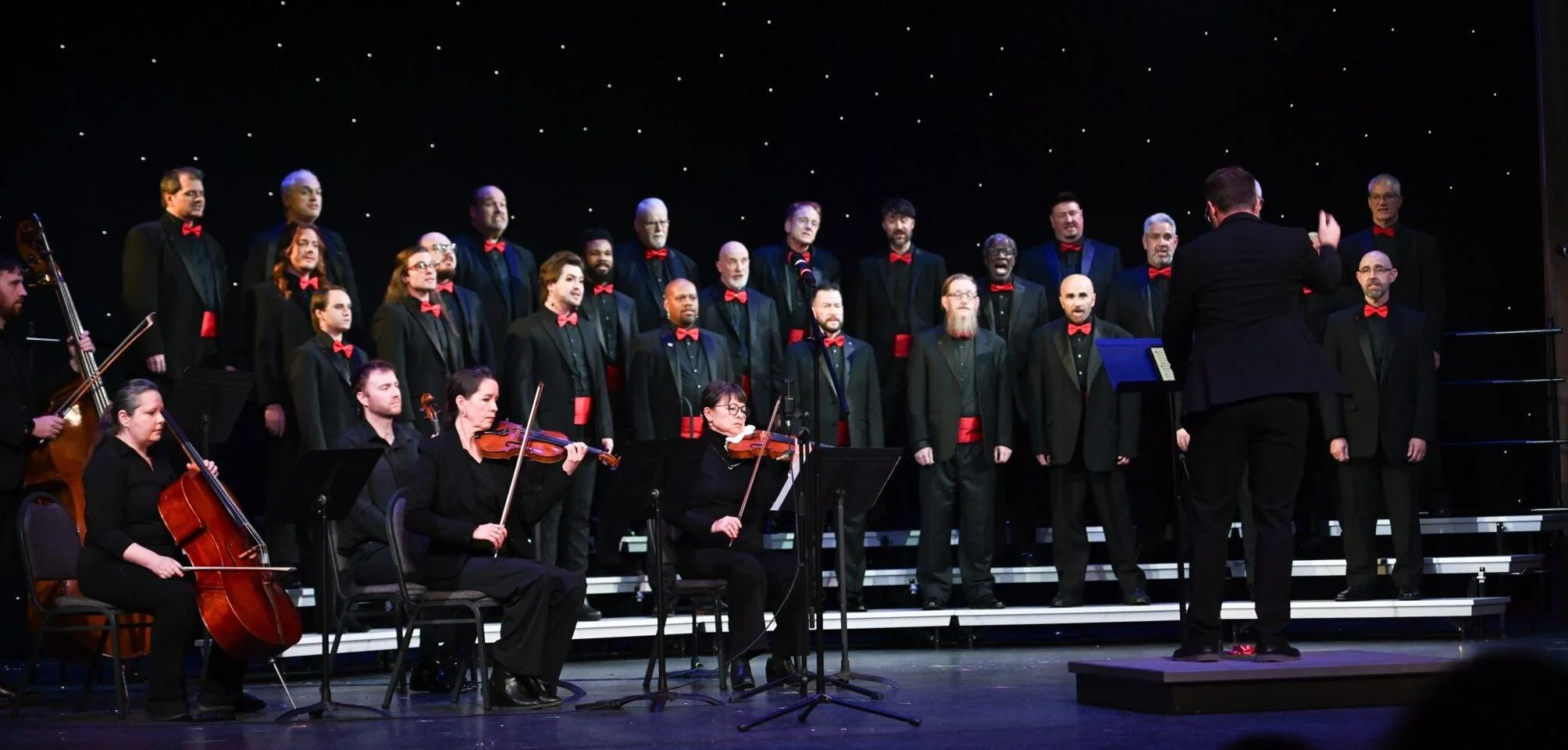
Arts leaders fear SC making LGBTQ+ arts groups re-prove merit for funding sets dangerous precedent
“That resolution is so duplicitous,” Madden said. “It starts off by saying (it’s) directed toward encouraging (and) assisting, rather than limiting the freedom of artistic expression, when the whole point of this resolution is to limit the freedom of artistic expression.”
Cindi Boiter, founder of Columbia arts nonprofit The Jasper Project, questioned whether the board understood the concept of ideology.
“The irony of this situation is that these folks are using an ideology, which is conservatism,” Boiter said. “It is based on the commitment of maintaining traditional values and opposition to change. Change is inherent in art.”
By Pat Moran | August 31, 2026 | The Post & Courier Columbia | Read Article
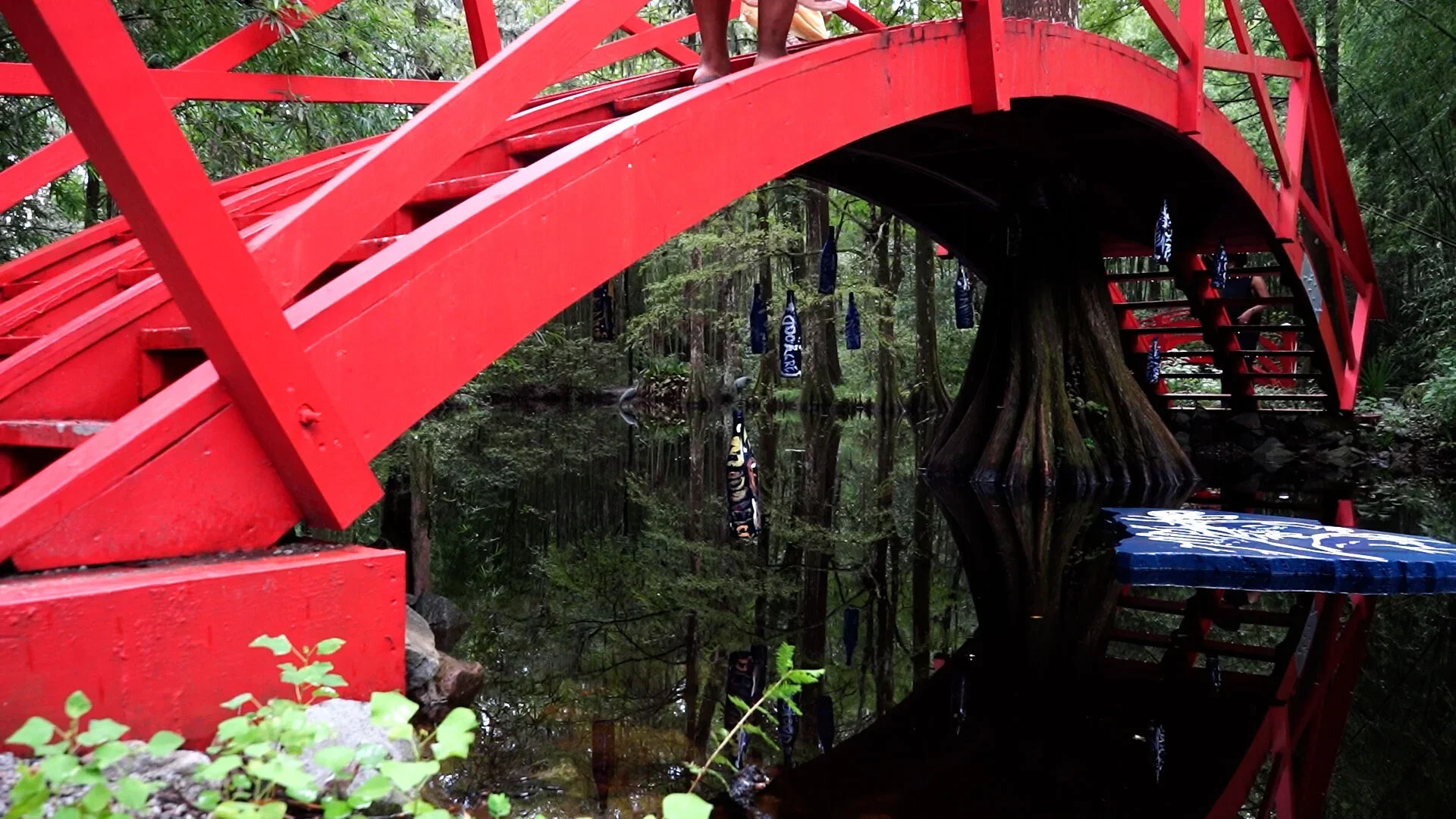
SC artist's work removed from Magnolia Plantation after reparations message sparks tension
Columbia artist Kolpeace wanted to remove a portion of his art installation at Magnolia Plantation after a tense encounter. When he arrived, the rest of his work had been taken down.
by Chelsea Grinstead | Sept 3, 2026 | The Post and Courier Charleston | Read Article
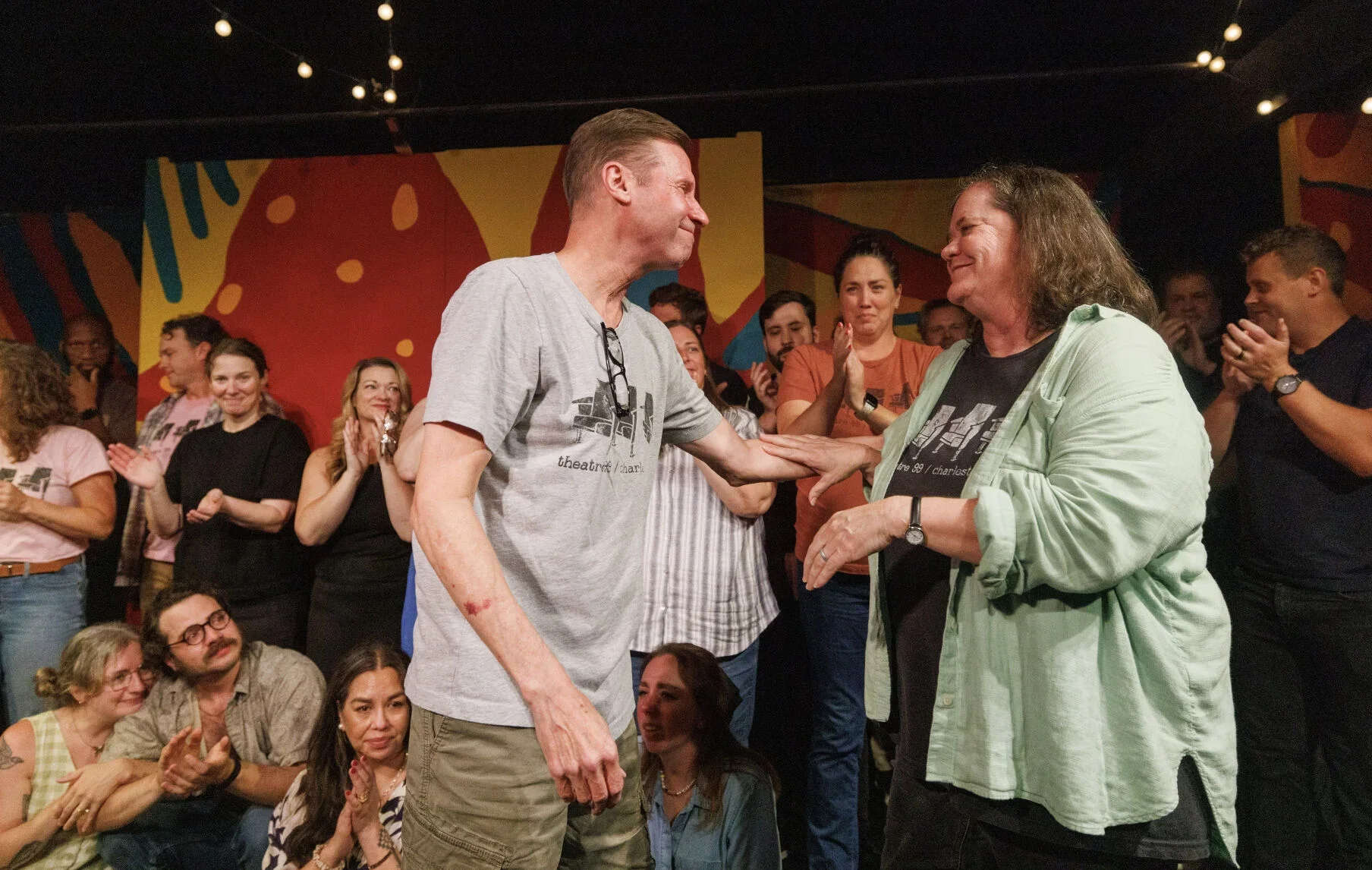
Charleston's Theatre 99 says goodbye to home of 21 years the way it knows best: with laughter
Theatre 99 has closed its longtime downtown home at 280 Meeting Street after the property was sold for $6.7 million. The new owners plan to convert the property to luxury housing. After searching West Ashley, North Charleston, James Island and Mount Pleasant, Theatre 99’s owners said they could not find an affordable permanent replacement and will instead operate part-time from a pop-up location in Mount Pleasant.
By Kalyn Oyer | September 16, 2026 | The Post & Courier Charleston | Read Article
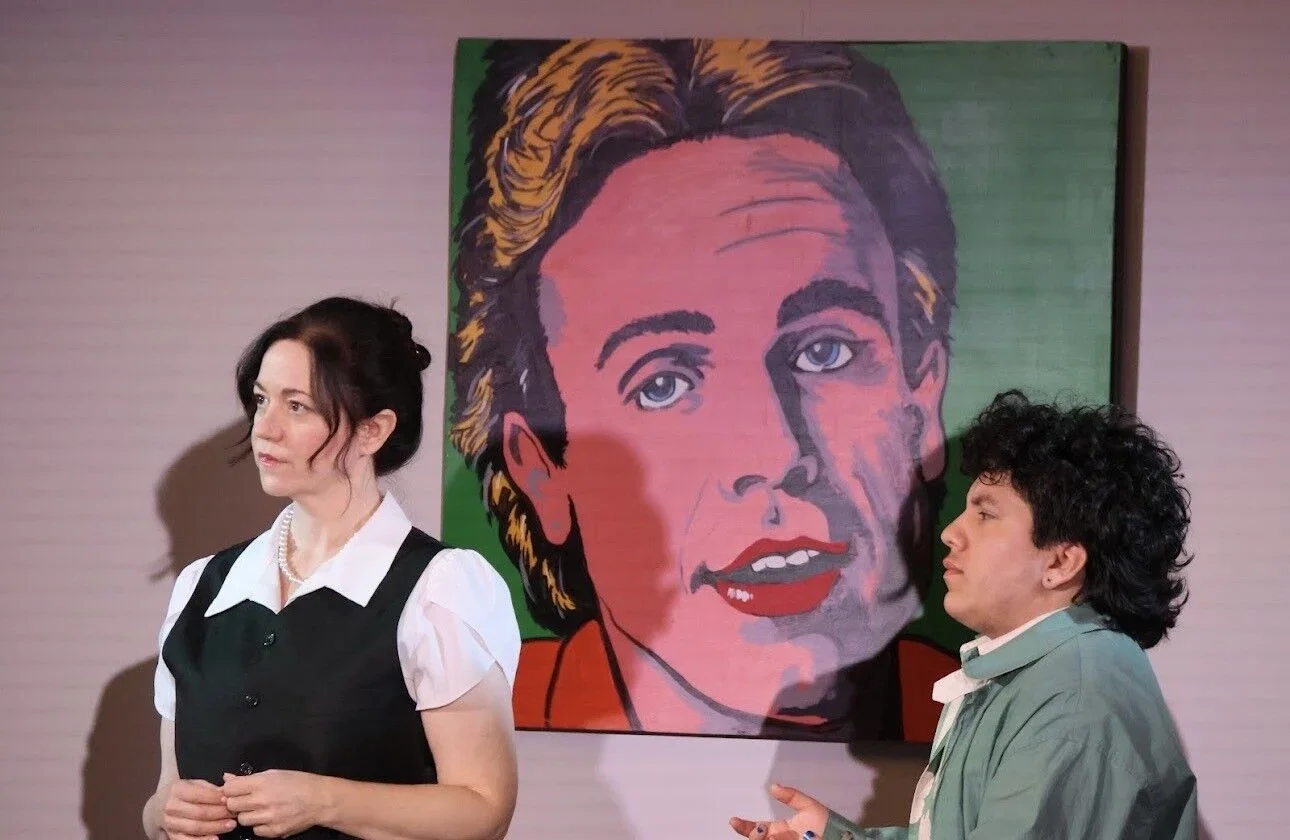
Column: SC arts board targets LGBTQ art and creates political test for art
The board of the South Carolina Arts Commission made four dangerous political decisions at their Aug. 20 meeting. They singled out two gay organizations to defend their artistic merit above and beyond what was required of all other organizations.
In doing so, they set a precedent by which LGBTQ-related arts must pass additional hurdles to receive funding. They passed a disingenuous resolution about “ideological” art to mask the bigotry of those two decisions, and they suggested that all artists and arts organizations coming before them in the future must undergo political review.
By Ed Madden | September 20, 2026 | The Post & Courier Freetimes Columbia | Read Article

3. FOLLOWING CHARLESTON’S CULTURAL MONEY
Table of Contents
Introduction
- What this accounting is beginning to reveal
- Two artistic economies
- Who gets to prove their value?
- When the visitor becomes the primary audience
- And then there is the local audience
Money Streams
STATE ACCOMMODATIONS TAX
FOLLOWING THE $750,000
- What is the Cultural Festivals & Events Fund?
- What we still need to know about CFEF
- Artist fees are not the same as artist-controlled funding
- Another question: could some cultural funding operate differently?
- What would the scale look like?
- Charleston has used a direct-access model before
FOLLOWING THE $2.5 MILLION
- Following the $2.5 million
- 2026 State A-Tax organizational grants
- Case study: Redux Contemporary Art Center
CHARLESTON HOSPITALITY FEE
MUNICIPAL ACCOMMODATIONS TAX
CHARLESTON GENERAL FUND
THE BIG PICTURE
Introduction
1. WHAT THIS ACCOUNTING IS BEGINNING TO REVEAL
What is becoming difficult to ignore is the gap between Charleston’s public spending on culture and its investment in Charleston-based visual artists. The City clearly has the capacity to find substantial cultural money when it chooses to do so: in 2026 it increased the General Fund transfer to the Cultural Festivals & Events Fund from $35,000 to $235,000 specifically to expand the City’s Christmas lights programming during the holiday season, while millions of dollars also flow annually to cultural institutions, festivals and facilities. Yet I have not found a comparable recurring City program that provides serious project capital, exhibition funding, studio support or production resources directly to Charleston-based visual artists. Institutional support for visual art should not be confused with support for the artists themselves: funding the Gibbes, Halsey or a City-produced exhibition does not tell us how much capital is actually available to artists to originate work. The imbalance is especially visible when Charleston’s cultural system is organized around festivals, performing arts and tourism-facing programming, while the city still lacks the kind of professionally equipped, consistently programmed contemporary exhibition infrastructure that would allow Charleston-based visual artists to present ambitious work at the level expected in larger art centers.
The structure of cultural decision-making reinforces that concern. Charleston’s newly expanded 20-member Commission on the Arts reserves 13 seats for representatives of local arts organizations, with ten organizations named directly in the ordinance: the Gaillard Center, Charleston Symphony Orchestra, Gibbes Museum of Art, Spoleto Festival USA, MOJA Arts Festival, Charleston Literary Festival, Charleston Stage, Footlight Players, Charleston Jazz Festival and Charleston Library Society. Several of those same organizations also receive substantial City-controlled cultural or tourism funding: Spoleto receives $275,000 from the 2026 State A-Tax grant pool; the Gibbes receives $235,000 there plus $175,000 from the Hospitality Fee Fund; Charleston Symphony receives $200,000; Charleston Stage $80,000; Charleston Jazz $80,000; and the Literary Festival $20,000, while the Gaillard receives nearly $3 million in identified Hospitality Fee support.
Back to Table of Contents for Following Charleston’s Cultural Money
2. two artistic economies
Charleston also contains two very different artistic economies that are too often treated as though they have the same needs. One is a visitor-facing market for art: work sold directly to tourists, decorative work, outdoor sales exhibitions, festival markets and practices that can demonstrate value through sales, attendance and visitor activity. That economy is highly legible to Charleston’s tourism-centered cultural model. The other consists of artists working within contemporary practice whose ambitions may be less immediately commercial: artists producing installations, sculpture, experimental painting, film, conceptual work, research-based projects, publications, temporary environments and other forms intended to contribute to the larger development of art being made in the South. These artists need different infrastructure—serious exhibition space, fabrication support, curatorial engagement, documentation, project capital, studios and time. A system built primarily around tourism can easily mistake the existence of the first economy for evidence that the second is adequately supported. A successful art market is not the same thing as a successful artistic ecology.
Even one of Charleston’s most visible presentations of visual artists during festival season should not be misrepresented as public financial support for those artists. The 2026 Piccolo Spoleto Outdoor Art Exhibition in Marion Square charged artists a $40 application fee and, if accepted, $750 for a single booth or $1,500 for a double booth, in addition to requiring liability insurance and appropriate business and retail licenses. Artists participate because the exhibition may provide visibility and sales, but that is a marketplace relationship: the artist pays for access to the platform. It is not a City grant, residency, commission or gift of exhibition space to Charleston artists.
Back to Table of Contents for Following Charleston’s Cultural Money
3. WHO GETS TO PROVE THEIR VALUE?
The tourism requirement does not operate only through eligibility rules. It also operates through measurement. For Charleston’s 2026 State Accommodations Tax grants, 50 percent of an applicant’s score was based on economic impact. The City calculated that impact using the number of visitors, average daily visitor spending and average length of stay. Another 20 percent of the score came from media and marketing impact, 20 percent from a tourism panel, and 10 percent from community impact. Applicants are expected to explain how they will document tourism impact and provide data where possible. That creates an important distinction between creating cultural value and being equipped to prove cultural value in the form the funding system rewards.
A ticketed museum, festival or performance naturally produces attendance records. A free contemporary-art space does not. Institutions such as Redux or the Halsey may have substantial audiences, but without ticket sales they must build other systems for counting visitors, identifying where those visitors come from and demonstrating tourism impact. That does not mean their impact is smaller. It means their impact may be harder to translate into the quantitative language of tourism funding.
Larger institutions are also more likely to have ticketing systems, marketing departments, databases, development staff, audience surveys and other administrative tools capable of producing that evidence. Smaller organizations may be using comparatively limited resources simply to produce exhibitions and keep their spaces operating. The result is a potentially self-reinforcing advantage: organizations with greater capacity to document economic impact may be better positioned to demonstrate that impact, which can strengthen their case for additional resources.
What cannot be easily counted can become easier to undervalue. The danger is that a cultural funding system begins rewarding not only cultural impact, but institutional capacity to prove cultural impact according to a tourism metric. And once tourism impact becomes a principal measure of value, the consequences extend beyond which organizations receive money. It can also influence what kinds of programming are easiest to justify.
Back to Table of Contents for Following Charleston’s Cultural Money
4. WHEN THE VISITOR BECOMES THE PRIMARY AUDIENCE
Charleston’s tourism-based cultural funding system does more than determine who can apply for money. It also creates an incentive around what kinds of cultural activity are easiest to justify with public money. To compete successfully for State Accommodations Tax support, an organization must demonstrate tourism impact. Charleston’s grant program requires applicants to show that their projects support or increase tourism, and the City has explicitly evaluated A-Tax proposals according to their ability to attract visitors from outside the area. That requirement does not prohibit ambitious contemporary art. But it creates a structural advantage for programming whose public value can be translated into a familiar tourism argument. In Charleston, that often means subjects already strongly associated with the city in the visitor economy: history, historic architecture, preservation, race, heritage, regional identity and established cultural traditions. The problem arises when the funding structure repeatedly rewards the legibility of those subjects to a visitor economy, until they become the safest language through which institutions justify cultural programming. Meanwhile, work whose importance lies primarily in experimentation, formal innovation, difficult new ideas, emerging practices or contributing to the development of contemporary art may have a harder time explaining itself through the same metric.
Back to Table of Contents for Following Charleston’s Cultural Money
5. AND THEN THERE IS THE LOCAL AUDIENCE
There is another audience largely missing from a tourism-centered measurement of cultural success: the people who live here. A visitor may encounter Charleston’s history, architecture, preservation, racial history and regional traditions for the first time. For a resident who has followed Charleston cultural programming for ten or twenty years, however, those same interpretive frameworks can recur with extraordinary frequency. A city cannot build its entire contemporary cultural imagination around continually repackaging the subjects for which it is already famous. At some point the local audience is being asked to watch variations of the same movie over and over again. Charleston’s tourism-centered funding structure creates an incentive to repeatedly filter contemporary cultural programming through a limited set of subjects already legible to the city’s visitor economy—history, heritage, race, preservation, architecture and regional identity.
Back to Table of Contents for Following Charleston’s Cultural Money
Money streams
6. THE FOUR PUBLIC-MONEY STREAMS TO KNOW
Charleston’s public cultural spending is distributed through several different funds. Each has a different revenue source, different legal restrictions, and a different level of City discretion. The important distinction is that these four funds are not interchangeable. Some are legally tied to tourism. The General Fund has much broader municipal purposes.
Back to Table of Contents for Following Charleston’s Cultural Money
| PUBLIC FUND | 2026 BUDGET | WHAT IT IS | CULTURAL SPENDING CURRENTLY IDENTIFIABLE | DIRECT ARTIST ACCESS |
|---|---|---|---|---|
| State Accommodations Tax | $11.897M | Charleston’s fund containing its share of South Carolina’s 2% State tax on transient lodging. Much of the money is restricted by State law to tourism-related uses. |
$750K Cultural Festivals & Events Fund
$2.5M grants to outside organizations Additional cultural facilities and tourism-related expenditures |
No under the City’s current A-Tax grant eligibility rules. Individual artists cannot apply directly to the $2.5M grant pool. |
| Hospitality Fee | $30.792M | Charleston’s locally imposed 2% tax on prepared food and beverages. Revenue remains restricted to tourism-related uses, while the City determines specific appropriations within those restrictions. | At least $4.44M explicitly identified for major cultural institutions and facilities, including the Gaillard, IAAM, Gibbes, Charleston Museum and Children’s Museum. | No general direct artist-grant mechanism identified in this fund. |
| Municipal Accommodations Tax | $15.101M | Charleston’s separate local 2% tax on transient lodging, composed of two 1% municipal fees dedicated to tourism-beneficial capital and operating expenditures. | No direct arts-organization allocation is separately identified in the published 2026 ordinances. | No direct individual-artist program identified so far. |
| General Fund | $320.634M |
Charleston’s principal municipal operating fund, supported by
property taxes, business licenses, sales-tax revenue, permits,
franchise fees and other sources.
It is not governed by the State A-Tax tourism formula. |
$1.374M Cultural Affairs
$235K Cultural Festivals & Events transfer $150K multi-sector Community Assistance grant pool |
Broader City discretion, but no substantial recurring individual-artist project-grant program has been identified so far. |
Note: Figures are 2026 approved City of Charleston budget amounts unless otherwise stated. These four funds have different legal restrictions and should not be treated as interchangeable sources of money.
STATE ACCOMMODATIONS TAX
7. 2026 Charleston State A-Tax Fund: $11,897,271
South Carolina imposes a 2% State Accommodations Tax on transient lodging. The State collects the tax and distributes accommodations-tax revenue to local governments under a formula established by state law.
Charleston expects $11.6 million from the State of South Carolina in 2026. Interest and $265,000 of existing fund balance bring the City’s total 2026 State A-Tax Fund budget to: $11,897,271
State law directs the basic distribution of these funds. The first $25,000 goes to the local General Fund; 5% of the remaining balance also goes to the General Fund; 30% of the balance is reserved for tourism advertising and promotion; and the remaining balance plus interest must be used for eligible tourism-related expenditures.
Where Charleston budgeted the $11.897 million in 2026
$3,472,500 — Charleston Convention & Visitors Bureau
$603,750 — transfer to the General Fund
$788,255 — DASH free shuttle
$400,116 — IAAM 2014 bond transfer
$616,616 — IAAM 2018 bond transfer
$500,000 — South Carolina Aquarium maintenance
$261,034 — Visitor Center operations
$50,000 — Brittlebank Park Boardwalk
$65,000 — Wragg Square wall repairs
$150,000 — Waterfront Park hardscape renovation
$750,000 — City Cultural Festivals & Events Fund
$1,740,000 — workforce housing
$2,500,000 — grants to outside organizations
TOTAL: $11,897,271
These figures come directly from Charleston’s approved 2026 State Accommodations Tax Fund budget.
For this investigation, two allocations deserve particular attention:
$750,000 - City Cultural Festivals & Events Fund
$2,500,000 - Grants to outside organizations
Back to Table of Contents for Following Charleston’s Cultural Money
8. WHO DECIDES? THE TOURISM FRAMEWORK BEHIND STATE A-TAX
The State Accommodations Tax is not primarily structured as an arts-funding system. It is a tourism-funding system that permits arts and cultural activity as an eligible tourism-related use. Charleston’s Accommodations Tax grant program is administered through the City’s Budget, Finance & Revenue Collections Department. Applicants must demonstrate tourism impact and provide financial, operational and program information. The City describes eligible applicants as nonprofit organizations that support or increase tourism through arts and cultural events or the operation of cultural facilities.
State law also requires Charleston to maintain an Accommodations Tax Advisory Committee to review applications and recommend how this portion of the money should be distributed. The committee has seven members:
four members from the hospitality industry
including at least two from the lodging industry
one representative of cultural organizations
two at-large members, one of whom Charleston designates as a City Council member
The City states that committee members receive and evaluate the annual applications, vote on funding recommendations, and forward those recommendations to the Mayor and City Council. City Council ultimately votes on the budget. This composition is not an accidental feature of Charleston’s process. South Carolina law requires the seven-member committee to have a majority drawn from the hospitality industry, with at least two lodging representatives and one representative of cultural organizations.
Back to Table of Contents for Following Charleston’s Cultural Money
9. WHY THAT MATTERS
The distinction is important when discussing arts funding. The system is structurally designed to ask questions such as:
Will this activity support or increase tourism?
Will it attract visitors?
Does it qualify as a tourism-related expenditure?
Those are legitimate questions within the State A-Tax statute. They are not necessarily the same questions as:
Does this investment strengthen the working conditions of Charleston’s artists?
Will it allow an artist to develop ambitious new work?
Will it provide studio access, fabrication resources, research time, documentation or exhibition support?
Will it strengthen the year-round artistic ecology of the city?
These objectives can overlap. But they should not be treated as identical. This distinction helps explain why large amounts of public cultural money can move through festivals, museums, tourism organizations and cultural institutions while an individual artist cannot apply directly to Charleston’s current A-Tax organizational grant program.
Back to Table of Contents for Following Charleston’s Cultural Money
FOLLOWING THE $750,000
10. What is the Cultural Festivals & Events Fund?
CFEF means Cultural Festivals & Events Fund. It is a City special-revenue fund used for the annual Piccolo Spoleto Festival, MOJA Arts Festival and other City cultural festivals and events. Charleston’s audited financial statements define CFEF as the fund accounting for grants, private donations, user-fee revenue, and the program and general expenses of Piccolo, MOJA and other festivals. (City of Charleston, SC) The first thing to understand is: The $750,000 is not the Office of Cultural Affairs’ entire budget. It is the 2026 State A-Tax contribution to CFEF. The City’s 2026 budget identifies this $750,000 with Piccolo, MOJA, the Charleston Farmers Market and related City cultural programming.
At least $985,000 in City money is flowing into CFEF in 2026
Two City transfers are already identifiable:
$750,000 — State A-Tax
$235,000 — General Fund
$985,000 Total Identified City transfers
The General Fund transfer increased from $35,000 in 2025 to $235,000 in 2026, with the City stating that the increase supports expansion of its Christmas-lights programming. (City of Charleston, SC) CFEF can also receive outside grants, donations, sponsorships and user-fee revenues. Those sources should not be added to the $985,000 until their exact fiscal-year treatment is established.
What does a complete CFEF year look like? The latest complete audited City financial statements currently available are for 2024.
In 2024, CFEF reported:
$278,975 — direct fund revenue
$584,438 — transfers into the fund
$863,413 — total current-year inflows
$972,355 — total expenditures
$258,066 — ending fund balance
In other words, in the latest fully audited year, CFEF was approximately a:
$972,000 annual spending operation
The fund spent about $109,000 more than it received in current-year revenues and transfers, drawing that difference from existing fund balance. (City of Charleston, SC)
Back to Table of Contents for Following Charleston’s Cultural Money
11. WHAT WE STILL NEED TO KNOW ABOUT CFEF
The public budget does not provide a clear program-by-program and expenditure-by-expenditure breakdown of the fund. Where these figures remain unclear, the responsibility for clarification belongs to the City of Charleston and the Office of Cultural Affairs. If public money is being presented as support for arts and culture, the public should be able to determine how much is being spent on festivals, administration, production, facilities, contractors and artist compensation; how much reaches Charleston-based artists; and whether any meaningful portion is available for artist-originated work. The absence of that clarity should not be treated as an absence of a problem, nor should artists be expected to reconstruct the answer from scattered budgets and monthly transaction reports. If the City believes this accounting understates its investment in Charleston-based artists, it should be able to show where that investment appears in the public record. Transparency should make public cultural investment legible to the people it is supposed to serve.
The questions this investigation is pursuing are:
Piccolo Spoleto $________
MOJA Arts Festival $________
Charleston Farmers Market $________
Christmas / holiday programming $________
Other cultural programs $________
Artist and performer fees $________
Production and contractors $________
Equipment and staging $________
Advertising and marketing $________
Graphic design $________
Royalties and licensing $________
Venues, rent and utilities $________
Administration $________
Payments to Charleston-based artists $________
Artist-originated, artist-controlled project funding $________
These blank spaces are intentional. They identify information that is not yet sufficiently visible in the published budget and that requires transaction-level records.
What the city’s 2025 artist-fee records already show
Charleston publishes monthly spending-transparency reports listing accounts-payable transactions over $150. Those reports identify the vendor, date, description, City division, expenditure category and amount. (City of Charleston, SC) My current calculation from the twelve 2025 reports identifies approximately: $218,470 in Cultural Affairs transactions coded “Artistic Performers Fees.” Of that total:
2025 CULTURAL AFFAIRS ARTIST FEES
$218,470.05 in Cultural Affairs transactions were coded “Artistic Performers Fees.” Individual recipients are intentionally not named here.
| TYPE OF PAYEE | AMOUNT | SHARE OF TOTAL |
|---|---|---|
| Vendors listed under individual names | $153,767.00 | 70.4% |
| Identifiable companies, organizations or performing groups | $63,150.00 | 28.9% |
| P-card transactions not confidently classified | $1,553.05 | 0.7% |
| TOTAL | $218,470.05 | 100% |
Note: These figures represent 2025 City of Charleston Cultural Affairs transactions coded “Artistic Performers Fees.” A payee listed under an individual name should not automatically be interpreted as a Charleston-based artist. The 2025 transparency reports also do not identify the source fund for every Cultural Affairs transaction, so this total should not yet be described as spending exclusively from the Cultural Festivals & Events Fund.
Companies, organizations and performing groups appearing in the 2025 artist-fee transactions include:
Collage Dance Collective — $25,000
Just The Beginning Inc. — $7,500
Lionsbridge Entertainment — $7,500
FPC Live LLC — $4,500
Zania.art LLC — $4,000
PURE Theatre — $3,500
Hat on a Hat Creative — $3,500
Charleston Jazz — $2,000
De Lions of Jah — $1,700
Art of Christine D. Johnson LLC — $1,250
Ear For Music, Inc. — $750
Ballet Gloria Company — $500
Columbia Repertory Dance Company — $500
Styx Corporation — $500
Holy City Dance Center — $250
Lawson Creative Group — $200
The monthly records confirm that Cultural Affairs regularly pays artists and performers. (City of Charleston, SC) There is, however, an important limitation: The 2025 transparency reports identify Cultural Affairs as the paying division but do not identify the source fund for each transaction. For that reason, the approximately $218,470 should not yet be described as $218,470 spent from CFEF specifically. It is a Cultural Affairs artist-fee total. That distinction will remain until the underlying CFEF ledger is obtained.
Back to Table of Contents for Following Charleston’s Cultural Money
12. ARTIST FEES ARE NOT THE SAME AS ARTIST-CONTROLLED FUNDING
Artist fee
An artist is paid to perform, exhibit, design or otherwise participate in a program that has already been created.
Commission
An artist is selected and paid to create work within a defined opportunity.
Artist-controlled project funding
An artist originates a project, proposes it, receives meaningful funding, and has substantial authority over how the project budget is used for research, materials, fabrication, collaborators, space, installation, documentation, publication or presentation.
All three put money into artistic activity. They do not give artists the same degree of agency over what gets produced.
Back to Table of Contents for Following Charleston’s Cultural Money
13. ANOTHER QUESTION: COULD SOME CULTURAL FUNDING OPERATE DIFFERENTLY?
The purpose of distinguishing an artist fee from artist-controlled funding is not to suggest that artists should not be paid to participate in City festivals. Performer fees, commissions and production expenses are necessary parts of cultural programming. The question is whether participation in a City-produced program should be the principal way an independent artist encounters public cultural money.
Under the current festival model, the City or its cultural program generally determines:
what event will occur
what type of work or performance is needed
where and when it will happen
who will be selected
what fee will be offered
The artist enters the process after much of the cultural decision-making has already occurred.
An artist-controlled project grant reverses that relationship. The artist proposes:
what should be made
what should be researched
which collaborators are needed
which materials or fabrication processes are necessary
where and how the work should be presented
how the project budget should be used
The public agency still establishes eligibility, accountability, contracts and reporting requirements. But the artist originates the cultural proposition. That is a different form of public cultural investment.
Back to Table of Contents for Following Charleston’s Cultural Money
14. WHAT WOULD THE SCALE LOOK LIKE?
The numbers in Charleston’s existing cultural budgets make it possible to show the scale without proposing a particular allocation. For example, 10% of the $750,000 State A-Tax contribution to CFEF is $75,000.
Illustratively, $75,000 could equal:
5 project awards of $15,000
15 project awards of $5,000
or 3 larger $20,000 projects plus 3 $5,000 research/development awards
These examples are simply scale comparisons. Any use of State A-Tax revenue would still have to comply with South Carolina’s tourism-related expenditure requirements and the applicable review process. The broader question is therefore not merely whether Charleston can pay artists, but whether some portion of public cultural spending could be structured so that artists participate as originators and producers, rather than only as participants in programs designed by institutions or municipal agencies.
Back to Table of Contents for Following Charleston’s Cultural Money
15. CHARLESTON HAS USED A DIRECT-ACCESS MODEL BEFORE
Charleston previously helped administer the Lowcountry Quarterly Arts Grants Program, through which individual artists could propose their own projects. Eligible proposals included activities such as producing a play, mounting a photography exhibition, publishing a book or presenting a concert. the program is important as an administrative precedent, but in no way a funding benchmark. Its maximum award was only: $1,000 and earlier City records describe it explicitly as providing “small grants.” It should be relabeled “micro-grant".” A $1,000 maximum should not be confused with meaningful capitalization of artistic production. Its relevance here is much narrower: Charleston has previously participated in a system in which an individual artist could propose a project and receive public funding directly. The question today is what such a mechanism would look like at a scale capable of materially affecting what artists can produce.
Back to Table of Contents for Following Charleston’s Cultural Money
FOLLOWING THE $2.5 MILLION
16. FOLLOWING THE $2.5 MILLION
Charleston’s 2026 State A-Tax budget contains a separate $2.5 million grant pool, labeled by the City as Arts Grants-in-Aid. Individual artists do not receive these awards directly. The City’s current A-Tax grant program is directed toward nonprofit organizations supporting or increasing tourism through cultural events, arts programming or cultural facilities, and tourism-impact data is required. (City of Charleston, SC)
Back to Table of Contents for Following Charleston’s Cultural Money
17. 2026 State A-Tax organizational grants
Spoleto Festival — $275,000
Southeastern Wildlife Exposition — $275,000
Charleston Museum — $240,000
Carolina Art Association / Gibbes Museum — $235,000
South Carolina Aquarium — $215,000
Charleston Symphony Orchestra — $200,000
Cooper River Bridge Run — $150,000
Charleston Wine & Food Festival — $140,000
SC250 Charleston — $100,000
Charleston Stage Company — $80,000
Children’s Museum of the Lowcountry — $80,000
Charleston Jazz — $80,000
Drayton Hall Preservation Trust — $75,000
Historic Charleston Foundation — $75,000
Lowcountry Jazz Festival — $70,000
Halsey Institute — $25,000
Charleston Area Sports Commission — $20,000
Charleston Literary Festival — $20,000
Charleston Parks Conservancy — $20,000
Charleston Race Week — $20,000
Engaging Creative Minds — $20,000
YALLFest — $20,000
Charleston Golf Inc. — $15,000
Preservation Society of Charleston — $15,000
South Carolina Historical Society — $10,000
Company Company — $7,500
PURE Theatre — $7,500
Charleston Opera Theater — $5,000
Lowcountry AIDS Services — $5,000
TOTAL: $2,500,000
The City’s label is worth noting: although this budget section is called Arts Grants-in-Aid, its recipients include arts organizations, museums, preservation organizations, sports events, tourism events and other nonprofits.
18. CASE STUDY: REDUX CONTEMPORARY ART CENTER
Redux Contemporary Art Center is one of the clearest examples of the difference between having an active visual-art organization and securing permanent visual-art infrastructure. Redux currently operates at 1056 King Street, where it provides year-round exhibitions, 38 private artist studios, professional printmaking and darkroom facilities, classes, outreach programs and residency opportunities. Its stated mission is explicitly centered on contemporary art, affordable artist workspace and the development of artists. But Redux does not occupy a permanent publicly secured cultural facility.
When the organization moved to 1056 King Street in 2017, the building’s owner publicly described Redux as a tenant. The move was possible in part because of the support of a private property owner after rising rents had made Redux’s previous St. Philip Street location increasingly difficult to sustain. That distinction matters. Redux has built one of Charleston’s most substantial pieces of working visual-art infrastructure inside privately controlled real estate. Its galleries, studios and shared production facilities may be culturally important, but the organization’s long-term physical security is not equivalent to that of a permanently owned or publicly secured cultural facility. The current lease expiration date and renewal terms are not publicly available in the sources reviewed for this project, so I am not claiming that Redux is facing imminent displacement. The larger structural point is different: Charleston’s most substantial independent contemporary visual-art center still does not control the real estate on which much of its work depends.
THE FUNDING SCALE IS EQUALLY REVEALING
Redux has received City of Charleston State Accommodations Tax funding, but at a scale dramatically smaller than the City’s major institutional recipients.
In the City’s 2024 State A-Tax budget, Redux received: $3,000
That same grant pool awarded:
Gibbes Museum — $225,000
Charleston Symphony Orchestra — $200,000
Spoleto Festival USA — $282,500
Halsey Institute — $20,000
The comparison is not intended to suggest that these institutions perform identical functions or should receive identical amounts. It does show the scale at which Redux appeared in the City’s tourism-based cultural funding system. Redux does not appear on the approved State A-Tax grant lists for either 2025 or 2026. That is especially notable because Redux is not peripheral to Charleston’s visual-art infrastructure. It provides something the city has relatively little of: year-round space specifically devoted to making, exhibiting and discussing contemporary visual art.
THE TOURISM PROBLEM APPEARS HERE TOO
Redux’s experience also illustrates the structural difficulty created when visual-art organizations must translate their value into tourism metrics. In 2022, then-executive director Cara Leepson described Charleston’s A-Tax system as a “double-edged sword.” Redux needed greater resources to market itself to tourists, while its limited resources made it difficult to generate the visitor numbers needed to strengthen its case for tourism funding. City Cultural Affairs Director Scott Watson said at the time that Redux’s more visible Upper King location could make it easier for the organization to demonstrate tourism impact. That is a revealing cycle: An organization needs resources to build visibility and audiences, but access to tourism-based resources can depend partly on already demonstrating that visibility and audience. For an organization whose principal purpose is supporting the production and exhibition of contemporary visual art rather than operating as a major tourist attraction, that can be a difficult fit.
AND REDUX ITSELF HAS IDENTIFIED THE REAL-ESTATE PROBLEM
In 2023, Redux launched a three-year Bridge to the Future fundraising campaign with a goal of raising $500,000 to strengthen operations, programming and studio capacity. At the time, Redux leadership publicly described demand for affordable artist studios as substantial and said the organization had a significant waiting list. Former executive director Kate Ledbetter also identified eventual building ownership as a desirable long-term direction: “Long-term, owning a building would be very exciting.” She described ownership as strategically appropriate because Redux had demand for more studio space but insufficient capacity to meet it. Redux continues to operate at 1056 King Street today and continues to advertise its studio program, exhibitions and shared production facilities. The case therefore raises a larger question about Charleston’s cultural priorities: What does it mean for a city to have a longstanding contemporary art center, substantial demand for affordable artist workspace, and an organization capable of sustaining nearly forty studios—while the organization itself must still fundraise toward the possibility of long-term physical security?
WHY REDUX MATTERS TO THIS ACCOUNTING
Redux complicates the idea that Charleston lacks visual-art activity. The activity clearly exists and artists work there. Exhibitions happen there. Classes happen there. Residencies happen there. The public visits. Artists rent studios. The organization raises private money. The organization applies for grants. What remains less secure is the capital structure underneath that activity. And that returns to the same distinction running throughout this investigation: A functioning arts organization is not necessarily evidence of a well-capitalized arts ecosystem. Redux has succeeded in creating substantial visual-art infrastructure. The more difficult question is who is responsible for securing that infrastructure over the long term, and how much public investment is actually committed to doing so. Its survival and productivity should not automatically be read as proof that the underlying system is adequate. In fact, Redux may demonstrate the opposite possibility: An organization can become indispensable precisely because it has spent years compensating for infrastructure the city itself has never permanently secured.
Back to Table of Contents for Following Charleston’s Cultural Money
Charleston hospitality fee
19. CHARLESTON HOSPITALITY FEE
2026 fund: $30,791,827
Charleston imposes a 2% local hospitality tax on prepared meals, food and beverages. The City collects this revenue directly. State law restricts its use to tourism-related expenditures, while the City determines the specific appropriations within those restrictions. (City of Charleston, SC)
The 2026 fund consists of:
$27,000,000 — hospitality-fee revenue
$1,000,000 — interest
$2,791,827 — fund balance/reserves
TOTAL: $30,791,827
2026 Hospitality Fee allocations
$16,896,378 — General Fund transfer for operating expenditures
$3,491,167 — Capital Improvements Fund
$3,138,750 — seawall bond debt service
$1,550,000 — Gaillard Management Corporation operating contribution
$1,406,423 — Gaillard Center operating costs
$1,226,400 — International African American Museum
$533,529 — Ballpark Fund
$471,453 — Daniel Island Tennis Center operations/management
$150,000 — Daniel Island Tennis Center maintenance
$470,000 — Parking Facilities
$345,253 — Energy Performance Fund
$228,640 — Entertainment District police
$200,000 — King Street Business Improvement District / Charleston Downtown Alliance
$175,000 — Gibbes Museum facility contribution
$160,000 — Entertainment District maintenance
$120,000 — ESPN Classic
$90,000 — Second Sunday
$50,000 — Children’s Museum maintenance
$50,000 — monument maintenance
$33,334 — Charleston Museum facility contribution
$5,500 — Riverwalk maintenance
TOTAL: $30,791,827
Back to Table of Contents for Following Charleston’s Cultural Money
20. Cultural institutions explicitly identified in the Hospitality Fee Fund
Gaillard Center
$1,550,000 — Gaillard Management Corporation operating contribution
$1,406,423 — Gaillard Center operating costs
Combined: $2,956,423
International African American Museum
$1,226,400
Gibbes Museum
$175,000
Children’s Museum
$50,000
Charleston Museum
$33,334
Together, those explicitly identified cultural institutions and facility costs account for approximately $4.44 million of the 2026 Hospitality Fee budget.This figure does not include cultural spending that might exist elsewhere in the fund, including within the large General Fund transfer. It also demonstrates why looking at only one public fund can be misleading.
For example, the Gibbes receives:
$235,000 ( State A-Tax grant ) plus $175,000 (Hospitality Fee facility contribution) for at least $410,000 in identified 2026 support from these two City funding streams. Those allocations serve different purposes and should not be treated as interchangeable.
Back to Table of Contents for Following Charleston’s Cultural Money
MUNICIPAL ACCOMMODATIONS TAX
21. MUNICIPAL ACCOMMODATIONS TAX
2026 budgeted expenditures: $15,100,963
This is Charleston’s local accommodations tax, separate from South Carolina’s State A-Tax.
Charleston created two separate 1% Municipal Accommodations Fees, producing a combined local lodging-tax structure of 2%.
One 1% fee is reserved for capital improvements beneficial to the tourism industry. The other is reserved for operating expenses beneficial to tourism. City Council establishes the specific expenditures by ordinance.
1% Capital Improvement portion: $8,330,963
$3,946,403 — parking-garage capital maintenance
$2,500,000 — Ashley River Walk
$1,853,960 — Ashley River Crossing
$30,600 — collection fees
1% Operating portion: $6,770,000
$6,739,400 — tourism-related operating costs, including police salaries and other tourism-related operations
$30,600 — collection fees
Combined: $15,100,963
No arts organization is separately identified as a direct recipient in these 2026 Municipal A-Tax ordinances. That does not establish that none of the money indirectly supports cultural activity. It means that a direct arts allocation is not separately visible in the published ordinance.
Back to Table of Contents for Following Charleston’s Cultural Money
CHARLESTON GENERAL FUND
22. 2026 General Fund: $320,634,309
The General Fund is fundamentally different from the tourism-tax funds above. It is Charleston’s principal operating fund and receives revenue from property taxes, business licenses, local-option sales tax, franchise fees, permits, transfers and other municipal revenue sources. (City of Charleston, SC)
Most importantly for this discussion: The General Fund is not governed by the State A-Tax tourism-allocation formula. City Council therefore has much broader discretion to appropriate General Fund revenue for lawful municipal public purposes.
Back to Table of Contents for Following Charleston’s Cultural Money
23. General Fund → Cultural Affairs
$1,374,075
Charleston’s approved 2026 General Fund budget provides:
$955,243 — Cultural Affairs general program
$384,482 — Cannon Street Arts Center
$34,350 — West Ashley Farmers Market
TOTAL CULTURAL AFFAIRS: $1,374,075
Within the $955,243 Cultural Affairs general program, the budget contains:
$20,000 — Artistic Performers Fees
The West Ashley Farmers Market contains another:
$9,000 — Artistic Performers Fees (City of Charleston, SC)
Back to Table of Contents for Following Charleston’s Cultural Money
24. Cannon Street Arts Center
2026 General Fund budget: $384,482
$351,566 — rent
$22,756 — water, electricity, heating and telephone
$10,160 — professional and contractual services
TOTAL: $384,482 (City of Charleston, SC)
General Fund → Cultural Festivals & Events
Charleston also transfers: $235,000 from the General Fund into the Cultural Festivals & Events Fund in 2026.
The City states that this increased from $35,000 in 2025 as part of expanded Christmas-lights programming. (City of Charleston, SC)
Community Assistance Grants
The 2026 General Fund also contains: $150,000 — Community Assistance Grants
The program supports nonprofit organizations working in areas including community development, health and human needs, education, arts and youth development. The City reduced this appropriation from $200,000 to $150,000 for 2026. (City of Charleston, SC) This is a multi-sector grant program; the entire $150,000 should not be described as arts funding.
Back to Table of Contents for Following Charleston’s Cultural Money
The big Picture
25. A SECOND PATH: CULTURAL FUNDING OUTSIDE THE TOURISM TEST
The State A-Tax, Hospitality Fee and Municipal A-Tax all operate within tourism-related legal frameworks. The General Fund does not operate under the State A-Tax tourism formula. That makes it a separate part of this inquiry. Charleston already uses General Fund money for Cultural Affairs, Cannon Street Arts Center, the West Ashley Farmers Market, Community Assistance grants and a $235,000 transfer into the Cultural Festivals & Events Fund.
Instead of beginning with: How will this project generate tourism? A City-designed arts program funded from a broader municipal source could, subject to the normal requirements governing public expenditures, be evaluated around purposes such as:
artistic production
public cultural access
community participation
research and experimentation
professional artistic development
exhibitions and performances
public-space projects
collaboration
documentation and publication
maintaining the ability of artists to work in Charleston
That does not determine how Charleston should allocate its General Fund. It identifies a separate funding pathway that is not governed by the State A-Tax tourism test. This matters because the question of direct artist funding does not have to be answered entirely inside a tourism system.
Back to Table of Contents for Following Charleston’s Cultural Money
26. How public support moves
Charleston’s public cultural-finance system cannot be understood by looking at one budget line. Public support moves through:
STATE A-TAX — $11.897M
State-controlled formula and tourism restrictions.Important cultural components:
$750K CFEF + $2.5M organizational grants + cultural facilities
HOSPITALITY FEE — $30.792M
Locally collected but restricted to tourism-related expenditures. At least:
$4.44M explicitly identifiable for major cultural institutions/facilities
MUNICIPAL A-TAX — $15.101M
Local lodging tax dedicated to tourism-beneficial capital and operating expenses.
No direct arts-organization allocation separately identified in the 2026 ordinances.
GENERAL FUND — $320.634M
Charleston’s primary municipal operating fund.
Important cultural components: $1.374M Cultural Affairs + $235K CFEF transfer + $150K multi-sector Community Assistance program
Back to Table of Contents for Following Charleston’s Cultural Money
27. WHY TRACK THE MONEY THIS WAY?
The purpose of this accounting is not to suggest that every dollar spent on a museum, festival, venue or cultural institution should instead be handed directly to an artist. Museums require buildings. Festivals require production. Performing-arts organizations require venues. Public programs require staff, insurance, equipment, marketing and administration. Those expenditures serve identifiable purposes. But they answer a different question from: How much public capital is actually available to the people producing art in Charleston? A City can spend substantial amounts of money on culture without placing an equivalent amount of money under artists’ control. That is why this resource distinguishes among, institutional support, facility support, City-produced cultural programming, artist and performer fees, commissions and artist-controlled project funding. The distinction is not semantic. A performer fee compensates someone for participating in an existing program. A commission pays someone to fulfill a defined opportunity. Artist-controlled project funding gives an artist the resources to originate the proposition itself. The question this accounting ultimately raises is therefore not simply: How much does Charleston spend on arts and culture? It is: Within Charleston’s considerable public cultural expenditures, how much financial agency is entrusted to artists themselves?
Back to Table of Contents for Following Charleston’s Cultural Money
28. THE QUESTIONS THIS PROJECT IS NOW TRACKING
Cultural Festivals & Events Fund
How much does each program receive?
How much goes to artists?
How much goes specifically to Charleston-based artists?
How much goes to production companies, contractors, marketing, venues, equipment and administration?
How much, if any, supports projects originated and controlled by artists themselves?
The $2.5 million organizational grant pool
For cultural organizations receiving public A-Tax grants:
How is the City grant actually spent?
How much is used for artist compensation?
How much reaches Charleston-based artists?
How much supports visiting artists?
How much supports staffing, facilities, travel, marketing and administration?
Other City funds
Which cultural institutions receive support from multiple public funds?
What funding mechanisms exist outside the tourism-based system?
What opportunities, if any, currently allow an individual Charleston-based artist to seek meaningful public project funding directly?
Back to Table of Contents for Following Charleston’s Cultural Money
29. A NOTE ON PURPOSE
This page is intended as a public information resource. It does not assume that an identified expenditure is improper, nor does it assume that an organization receiving public funds does or does not adequately support Charleston-based artists. The purpose is to make Charleston’s cultural-finance system easier to see—and then to follow the money far enough to understand who ultimately receives public cultural investment and who controls how it is used. This accounting will be updated as additional budgets, audited statements, grant reports and transaction records become available.
Back to Table of Contents for Following Charleston’s Cultural Money
30. PRIMARY PUBLIC SOURCES
City of Charleston — 2026 State Accommodations Tax Fund Approved Budget
View the State A-Tax budgetCity of Charleston — 2026 Hospitality Fee Fund Approved Budget
View the Hospitality Fee budgetCity of Charleston — 2026 Municipal Accommodations Tax Fund ordinances
View the Municipal A-Tax ordinancesCity of Charleston — 2026 General Fund and Enterprise Fund Approved Budget
View the General Fund budgetCity of Charleston — Annual Comprehensive Financial Reports
View Charleston's audited financial reportsCity of Charleston — Spending Transparency Reports
View monthly City transactionsCity of Charleston — Community Assistance and A-Tax Grants
View City grant informationSouth Carolina Code § 6-4-10 — Allocation of State Accommodations Tax Revenues
Read the State A-Tax statute
Back to Table of Contents for Following Charleston’s Cultural Money
4. The Institutions That Teach Charleston to Fear Public Art: A response to “Editorial: Time to reimagine public art in Charleston,” published by the Post and Courier Editorial Staff in the Opinion section.
Charleston does not have a public-art clutter problem. It barely has a public-art system. Yet institutions that regulate Charleston physically—and institutions that shape its public conversation—continue to teach the city to approach contemporary art as a threat to architecture, real estate, order, and the image Charleston prefers of itself. The Board of Architectural Review does this through regulation of the visible environment. Within Charleston’s historic districts, the BAR reviews new construction, alterations, renovations, and other exterior changes visible from the public right-of-way. The Post and Courier, in a recent editorial ostensibly arguing for more public art, manages to perform a similar function rhetorically. It claims to welcome public art while supplying readers with reasons to fear it. Read the P&C Editorial
Charleston does not have a public-art clutter problem, it has a fear
The editorial is remarkably counterproductive. It begins by acknowledging the obvious: Charleston has lagged behind other cities in supporting public art. But almost immediately, before Charleston has anything approaching a robust municipal public-art program, the paper introduces the possibility that the city could become “too cluttered” with art and warns that work occupying prominent public space must be “worthy of the real estate it occupies.” Charleston does not have a public-art clutter problem. Charleston barely has a public-art system. Before the city has built the infrastructure or allowed residents to become accustomed to encountering new art in public space, the newspaper has already skipped ahead to warning us about excess. It manufactures fear of public art before Charleston has enough public art to fear.
“Worthy of the real estate it occupies”
The phrase “worthy of the real estate it occupies” is not some innocent aside. It exposes the hierarchy underneath the entire conversation. Public space is imagined first as real estate. Art comes afterward and must justify its presence within it. The land already possesses value. The architecture already possesses authority. Preservation already possesses legitimacy. Development already has a claim. Art is the intruder that must prove it deserves the square footage. Charleston has no difficulty filling its landscape with hotels, luxury housing, restaurants, parking structures, commercial development, signage, event infrastructure, landscaping, benches, lighting, paving, and all the other physical expressions of what the city has decided matters. Yet when art finally enters the conversation, suddenly we are worried about protecting Charleston from clutter. Charleston gets the art it plans for.
Charleston Strong is not evidence of cultural openness
The editorial’s examples make the argument worse. It cites the Charleston Strong mural as evidence of the kind of less controversial public art that has emerged in the city. But Charleston Strong is an absurd standard by which to measure Charleston’s tolerance for public art. The mural memorialized an unspeakable tragedy and participated in the language Charleston repeatedly uses to narrate itself after crisis: love, unity, peace, hope, healing, forgiveness, resilience, and inclusivity. Of course a work occupying that rhetorical and emotional position could more easily escape the scrutiny directed at ordinary public art. Charleston Strong does not demonstrate that Charleston welcomes artistic disagreement. It demonstrates that Charleston can accommodate art when the work reinforces a civic story the city already wants to tell about itself. In that sense, the mural functions as civic branding as much as public art. It folds tragedy back into Charleston’s preferred public image: the city that suffers, comes together, forgives, heals, and presents unity to the world.
That narrative has enormous public-relations value. Using a memorial embedded in that narrative as evidence that Charleston has become more receptive to public art tells us almost nothing about what happens when an artist makes something difficult, formally and wonderfully strange, historically disruptive, aesthetically divisive, or simply beautiful. But beautification should be one possibility for public art, not its job description. The danger comes when “beautification” becomes a demand that art make a place prettier, friendlier, more marketable, or more comfortable without disturbing anything. Public art can beautify Charleston. It can also complicate Charleston. It can commemorate, amuse, unsettle, orient, provoke, decorate, interrupt, invite, and reward attention. A serious public-art program should have room for all of that. A serious public-art culture is not measured by whether Charleston will tolerate art that reassures Charleston.
Shepard Fairey had to ask permission too
The contrast with Shepard Fairey makes the editorial’s anxiety even more ridiculous. Fairey is Charleston-born and internationally established. For the Halsey Institute’s 2014 project, Mark Sloan spent much of the previous year developing its outdoor component, including scouting locations with Fairey and navigating what contemporary reporting described as an “extensive permissions process” with the City for the murals. Think about how backwards that is. Charleston had an internationally recognized artist from Charleston returning to make public work in his hometown, an established contemporary-art institution organizing the project, and Mark Sloan spending months navigating permissions so the work could exist. And now, years later, with Charleston still lacking anything comparable to the sustained public-art infrastructure of other American cities, its major newspaper is warning us not to let things get too cluttered.
Even the authority they cite points in the other direction
The editorial then invokes an organization it calls the “Association of Public Art.” The organization is the Association for Public Art. That may seem like a small error. It is not encouraging in an editorial positioning itself as an informed intervention into public-art policy. There is another, more important distinction the editorial fails to make clear. The statement it introduces with “As the Association of Public Art states” is not actually a statement authored by the Association for Public Art. The words belong to art critic Eleanor Heartney. The Association displays her quotation on its public-art materials; Heartney describes public art as contested because it reflects tensions within civic life and refers to “old-fashioned monuments.” That distinction needs to be plain. The Post and Courier takes the words of an individual critic, presents them as though the organization itself is speaking, gets the organization’s name wrong in the process, and then deploys the quotation inside an editorial already preoccupied with caution, clutter, real estate, and controversy.
And there is an almost comic irony in choosing Philadelphia as the source of authority for that caution. The Association for Public Art was established in Philadelphia in 1872 and describes itself as the nation’s first private nonprofit organization dedicated to integrating public art and urban design. It advocated for the city’s Art Jury and later supported Philadelphia’s pioneering percent-for-art ordinance. Philadelphia established its Percent for Art programs in 1959, the first of their kind in the country. By the programs’ sixtieth anniversary, more than 650 artworks had been commissioned through them. And Philadelphia is also home to Mural Arts Philadelphia, which describes itself as the nation’s largest public-art program and has spent more than four decades making public art throughout the city. So the Post and Courier reaches toward one of the most developed and celebrated public-art cultures in America for intellectual authority while warning a city with scarcely comparable infrastructure that it should already be worried about clutter.
Philadelphia did not become culturally diminished because it allowed art to occupy the city. It built institutions that made public art part of the city. That is the lesson worth importing. The Association’s own description of public art is also considerably more ambitious than the editorial’s framing. It says public art can transform landscapes, heighten public awareness, express community values, and question assumptions. And Heartney’s observation that public art reflects tensions in civic life should not frighten us away from it. It should tell us why we need it. Public art can be contested because public life is contested. It is one of the reasons public art matters.
“Old-fashioned monuments”
Heartney wrote the phrase. The Post and Courier did not. That should be clear. But the editorial chose the quotation, reproduced it in Charleston, and did nothing with the extraordinary historical and political weight concealed inside the phrase “old-fashioned monuments.” In Charleston, of all places, that phrase should not simply float past. We are not merely talking about decorative objects whose style has gone out of fashion. Confederate monuments have been among the most consequential objects in the national fight over public space, historical memory, racial hierarchy, civic authority, and who is entitled to be monumentalized. Calling that problem “old-fashioned” is astonishingly inadequate. It makes these objects sound quaint. Obsolete. A little embarrassing. As though the problem is that the style aged badly. And if the phrase was intended to puncture the inflated reverence of the pro-monument, heritage-chest-beating crowd—to reduce these objects from sacred symbols to outdated relics—it still does a lousy job.
You do not diminish the power of a monument by pretending that power was inconsequential. You confront who erected it, what history it monumentalized, what history it suppressed, why people fought to preserve it, why others demanded its removal, and why these objects continue to produce conflict long after the political world that erected them supposedly disappeared. I have already written elsewhere what happens when serious artists, curators, and institutions approach monuments with the historical and artistic gravity they deserve. I do not need to reproduce that argument here. See in Public art after the fact (see cited example: MONUMENTS, co-organized by The Brick (formerly LAXART) in Los Angeles and the Museum of Contemporary Art (MOCA).) An editorial attempting to guide Charleston’s emerging public-art conversation should have done more with the quotation it chose to reproduce.
Public art does not have to behave
Charleston does not need a public-art program that produces work everyone agrees is tasteful, appropriate, properly Charlestonian, and sufficiently “worthy” of valuable property. That would simply extend the logic of preservation review into cultural production: Protect the existing appearance. Minimize disruption. Avoid offense. Maintain consensus. Then call the result public engagement. This is precisely where the Post and Courier editorial becomes more than merely poorly written. It becomes a disservice to the public-art conversation it claims to advance. The article tells readers that Charleston has historically been hostile to public art and then proceeds to reproduce the language of that hostility: Clutter. Real estate. Worthiness. Controversy. Balance. Caution. It is a remarkable editorial accomplishment: Identify the problem and then reproduce it.
We have been speaking
And then, after years of artists, curators, cultural workers, and residents trying to push this conversation forward, the editorial announces that “it’s time for those who care about the city to speak up and shape that change.” No. We have been speaking. Artists have been speaking. Curators have been speaking. Residents have been speaking. People have organized exhibitions, fought through approval processes, participated in studies and public processes, proposed projects, created temporary spaces, served on committees, built audiences, written, complained, advocated, and made work anyway. Charleston’s lack of public-art infrastructure was not discovered because an editorial board suddenly noticed it. The city’s problem has never been an absence of voices. The problem is which voices Charleston decides count, which institutions are authorized to recognize a problem, and how many times the people already doing the work are expected to repeat themselves before the city agrees that the conversation has begun. We aren’t new to this. See The City Already Had The Evidence.
The institutions that teach Charleston to fear art
That is why the Board of Architectural Review and this Post and Courier editorial belong in the same conversation. Their powers are different. The BAR possesses regulatory authority. The City describes that authority plainly: within historic districts it reviews visible new construction, alterations, renovations, and certain demolitions. A newspaper editorial does not possess that power. But the underlying presumption is related. One helps determine what may physically alter Charleston’s protected visual environment. The other helps establish the language through which the public is taught to evaluate that alteration. In both cases, contemporary artistic intervention begins at a disadvantage. Charleston’s existing landscape is presumed worthy of protection. The artist is asked to prove worthiness. And that is a particularly perverse standard in a city that has spent generations allowing architecture, development, tourism, preservation, and real estate to determine what Charleston looks like. Charleston has not merely failed to build a public-art culture. It has built powerful systems for deciding what the city should look like without one. Those systems have authority, procedures, institutional memory, professional expertise, political influence, and economic power.
The wrong question
The Post and Courier asks whether a work of art is worthy of the real estate it occupies. That is the wrong question. The question is why Charleston continues to treat real estate as more entitled to shape public life than art. That is the public-art conversation the Post and Courier should have helped Charleston have. Instead, before the city has even built the thing, it taught readers to worry about having too much of it.
After reading this editorial, I am concerned the editorial Staff is possessed by the ghosts of John C. Calhoun, Strom Thurmond, and Lindsey Graham. There’s no other logical explanation. - Fletcher
Back to beginning of A Response to Editorial: Time to Reimagine Public Art in Charleston