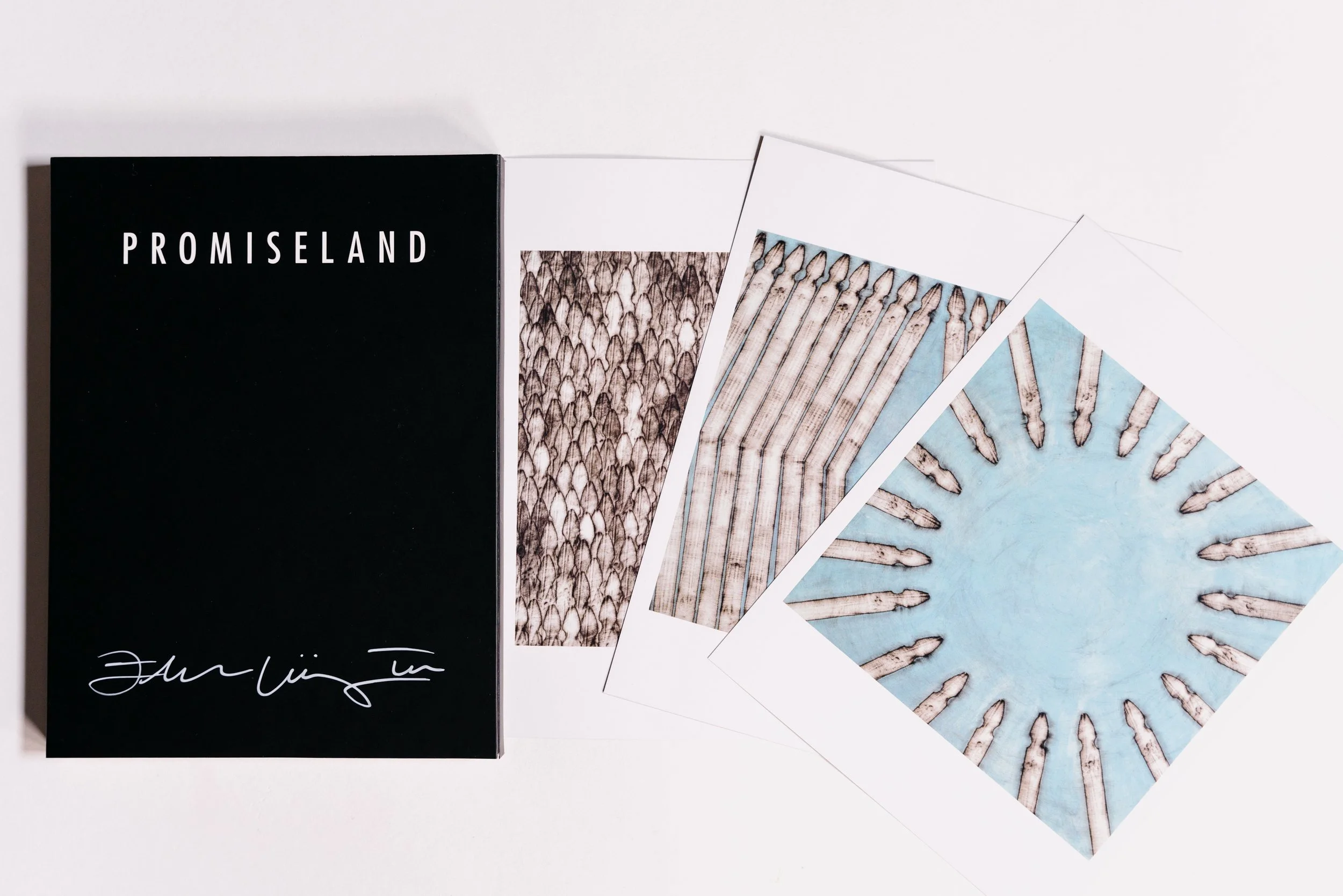


Promiseland, 2020
Aiken-Rhett House
Charleston, South Carolina
About the Work (4-MIN read)
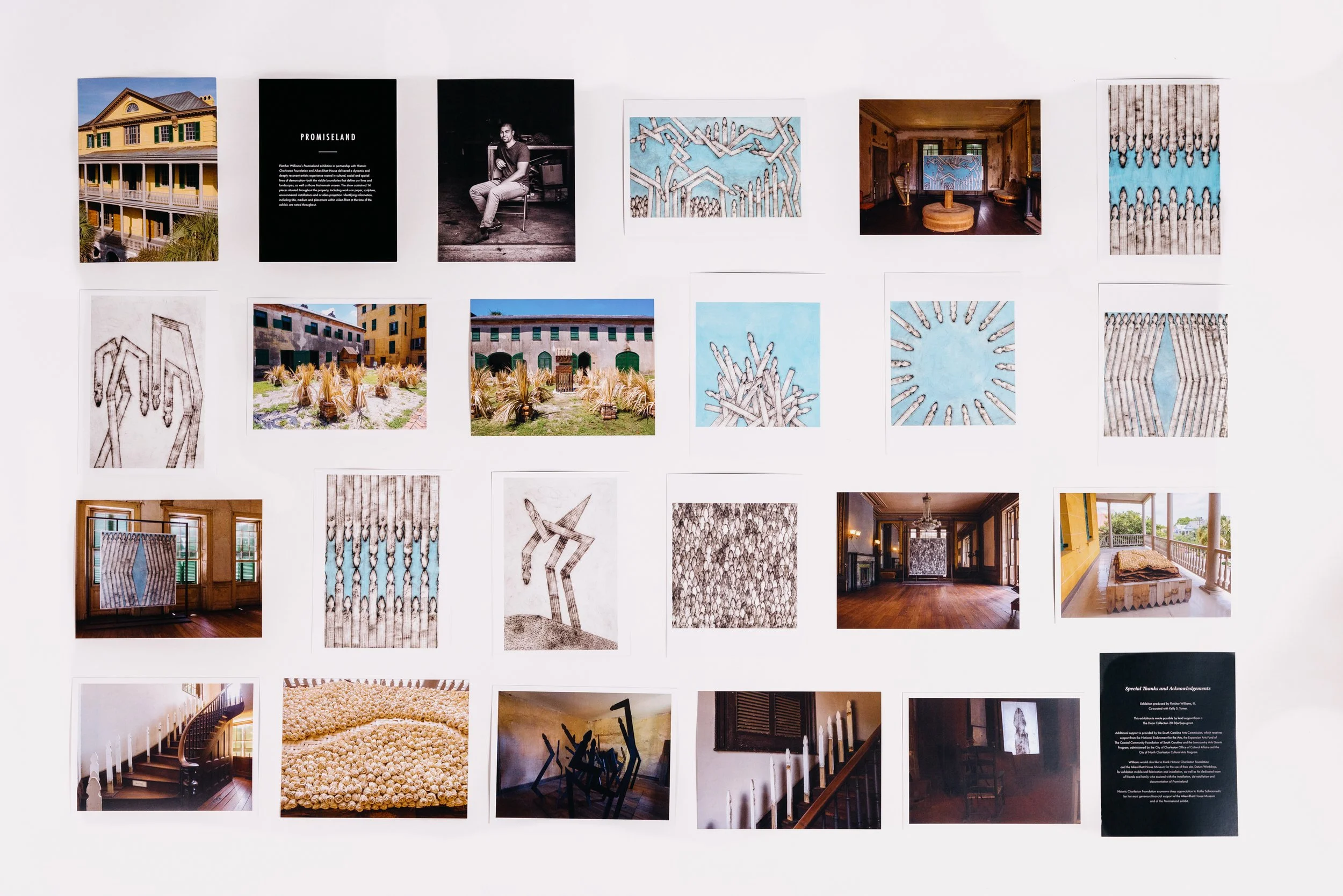
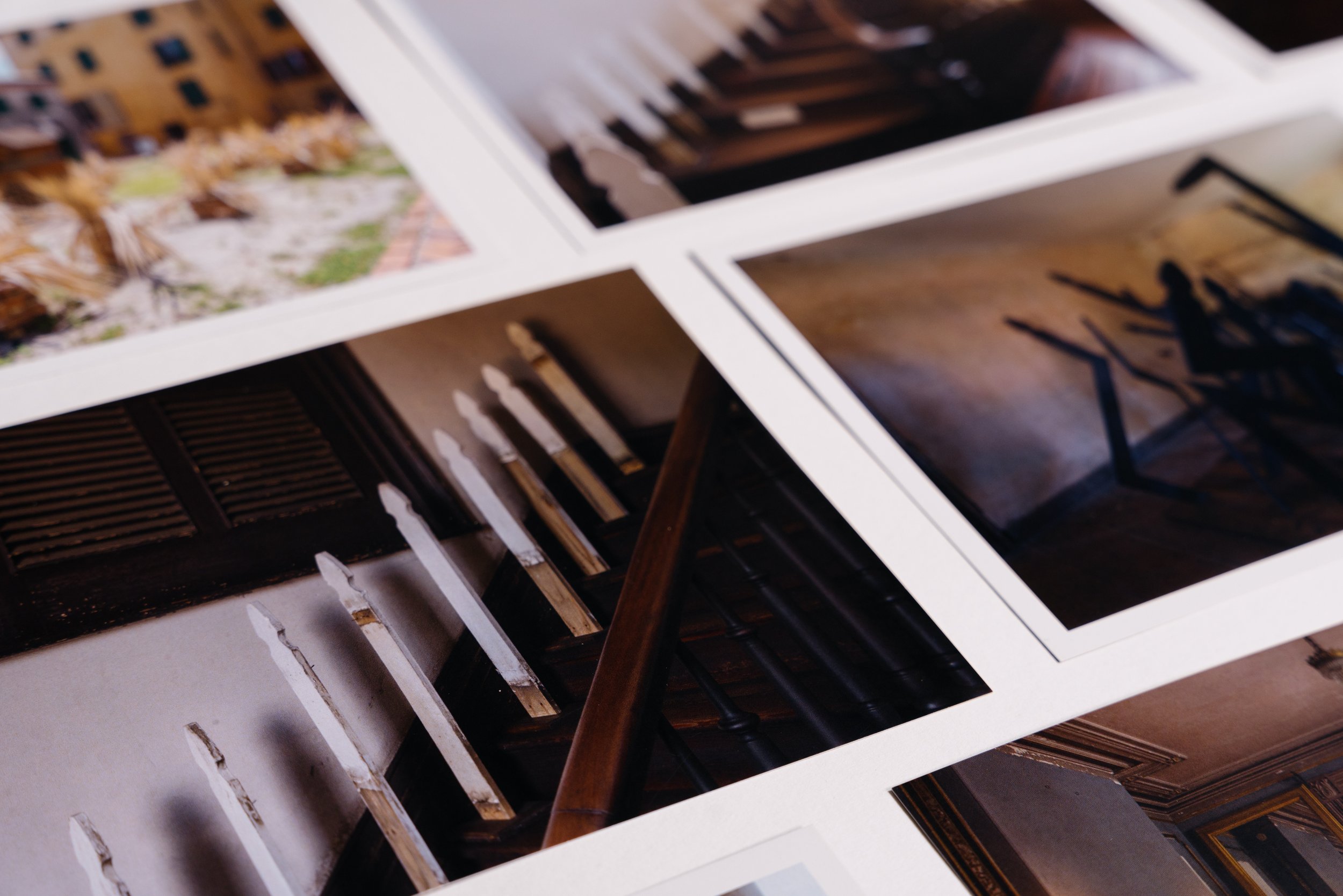
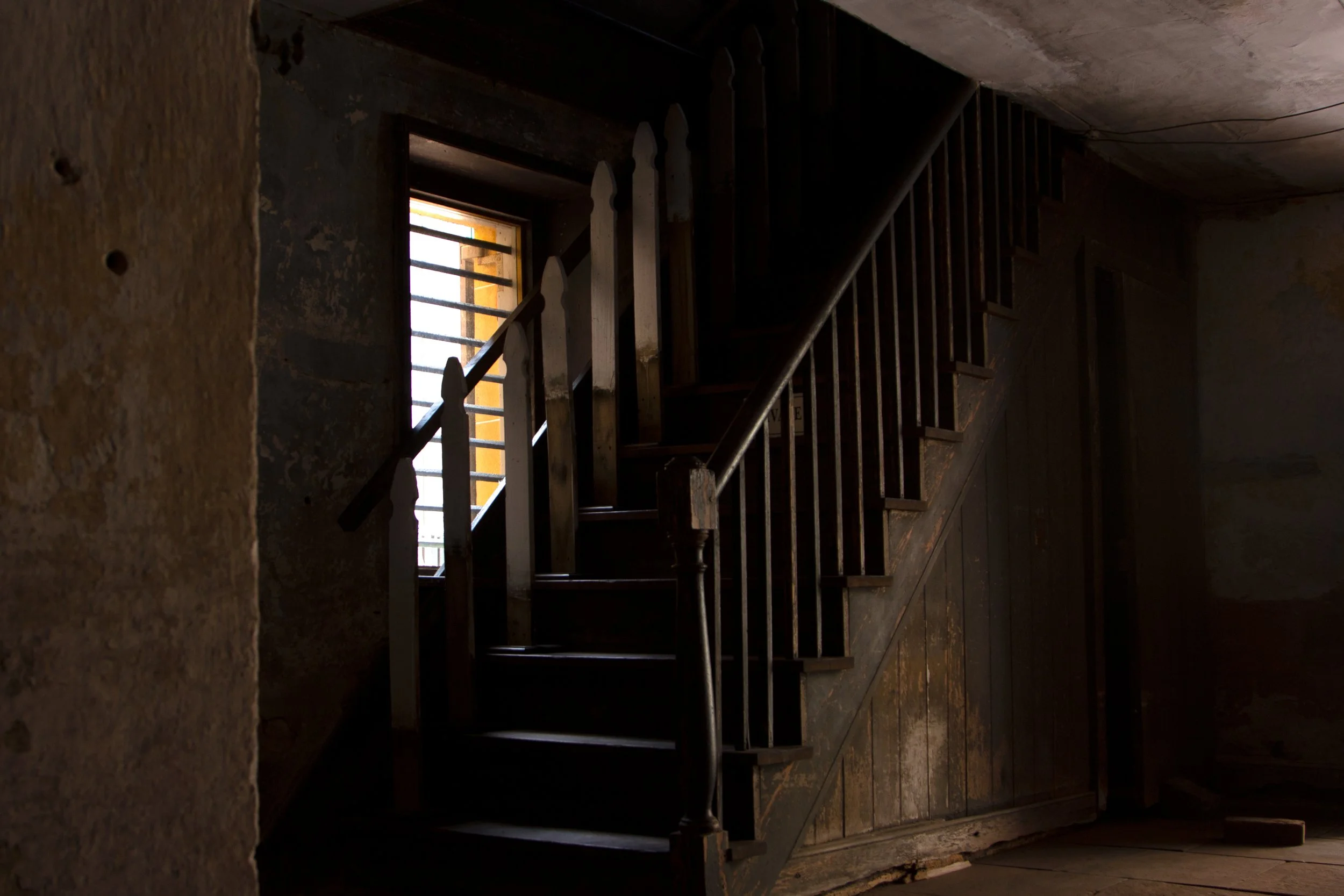
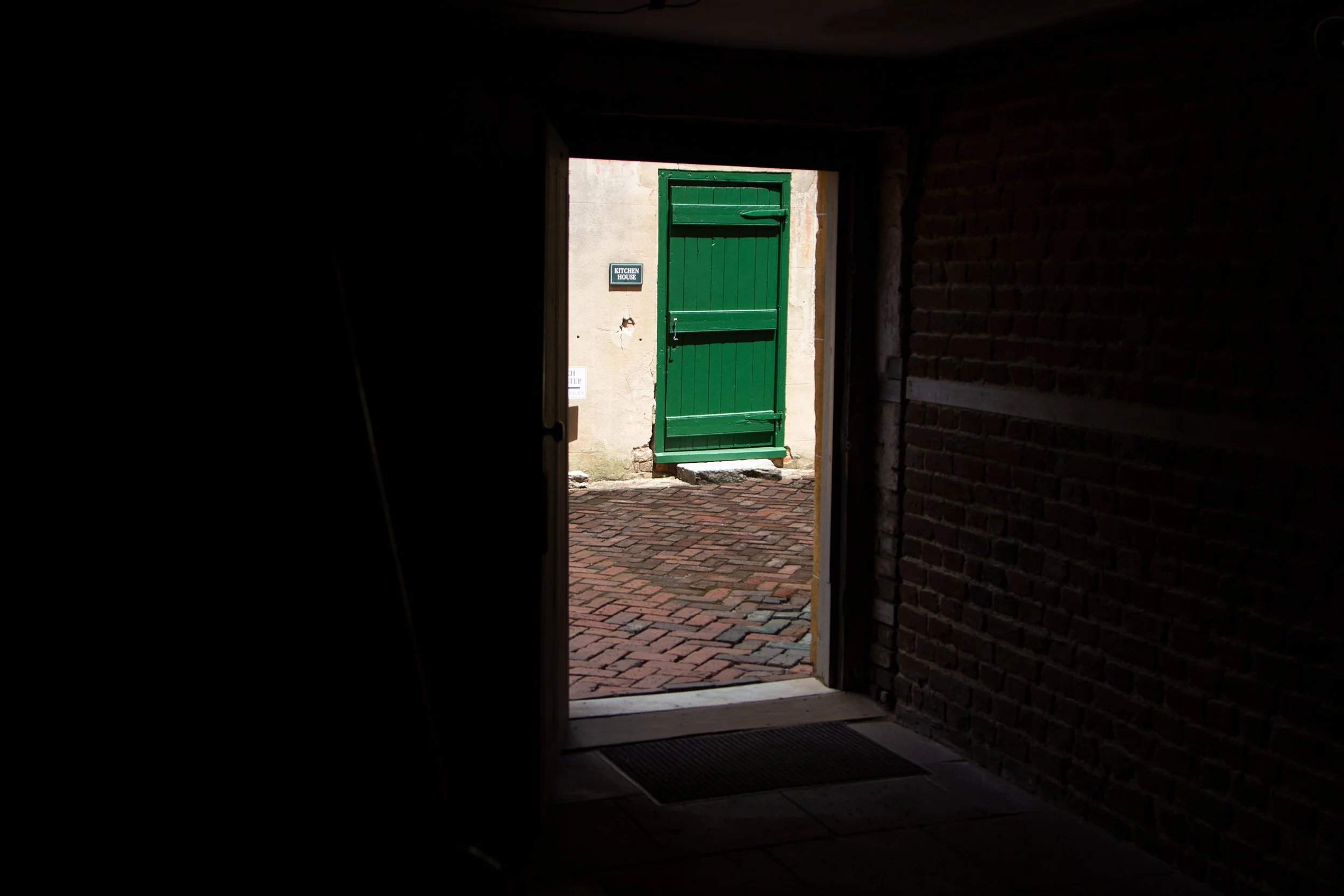
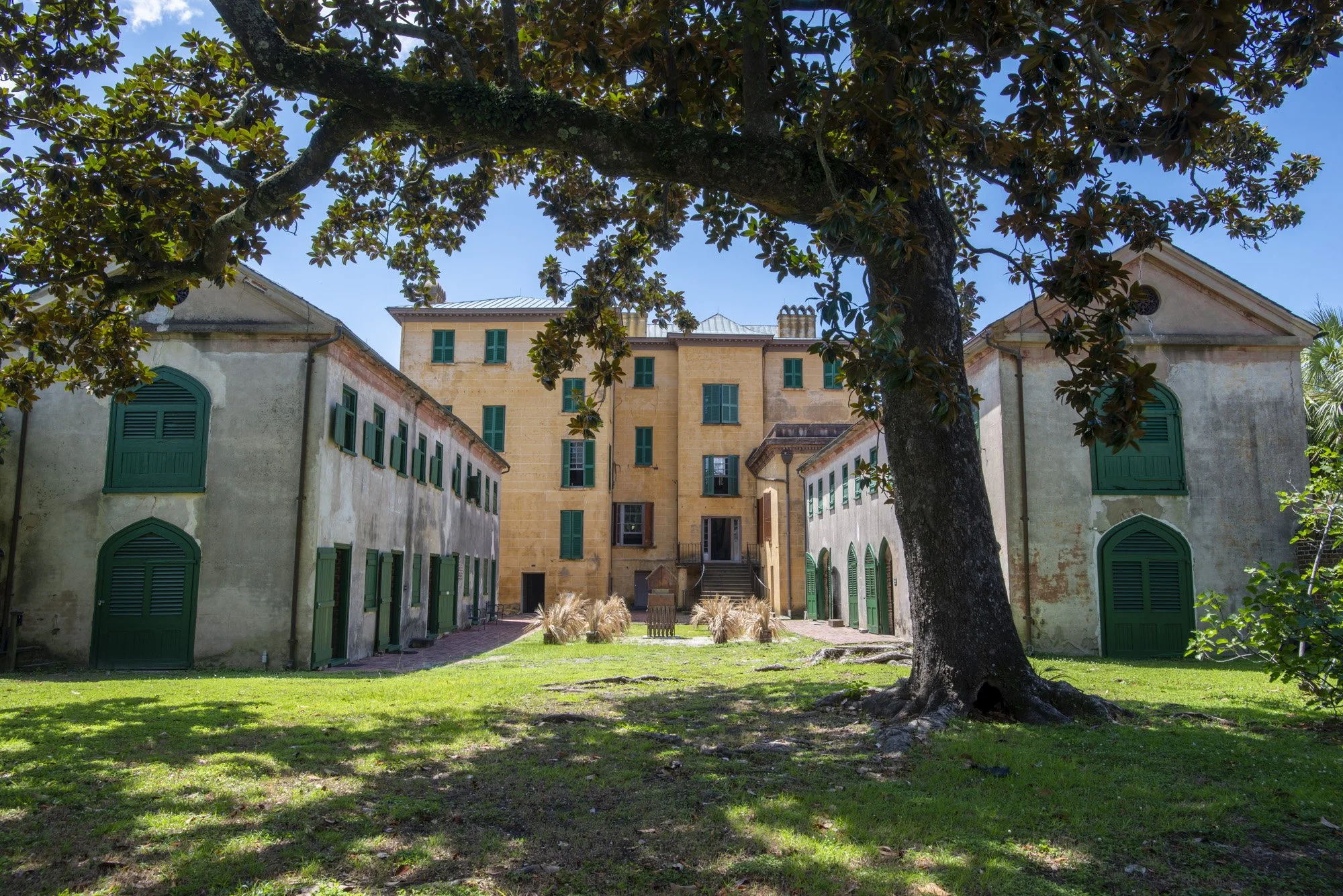
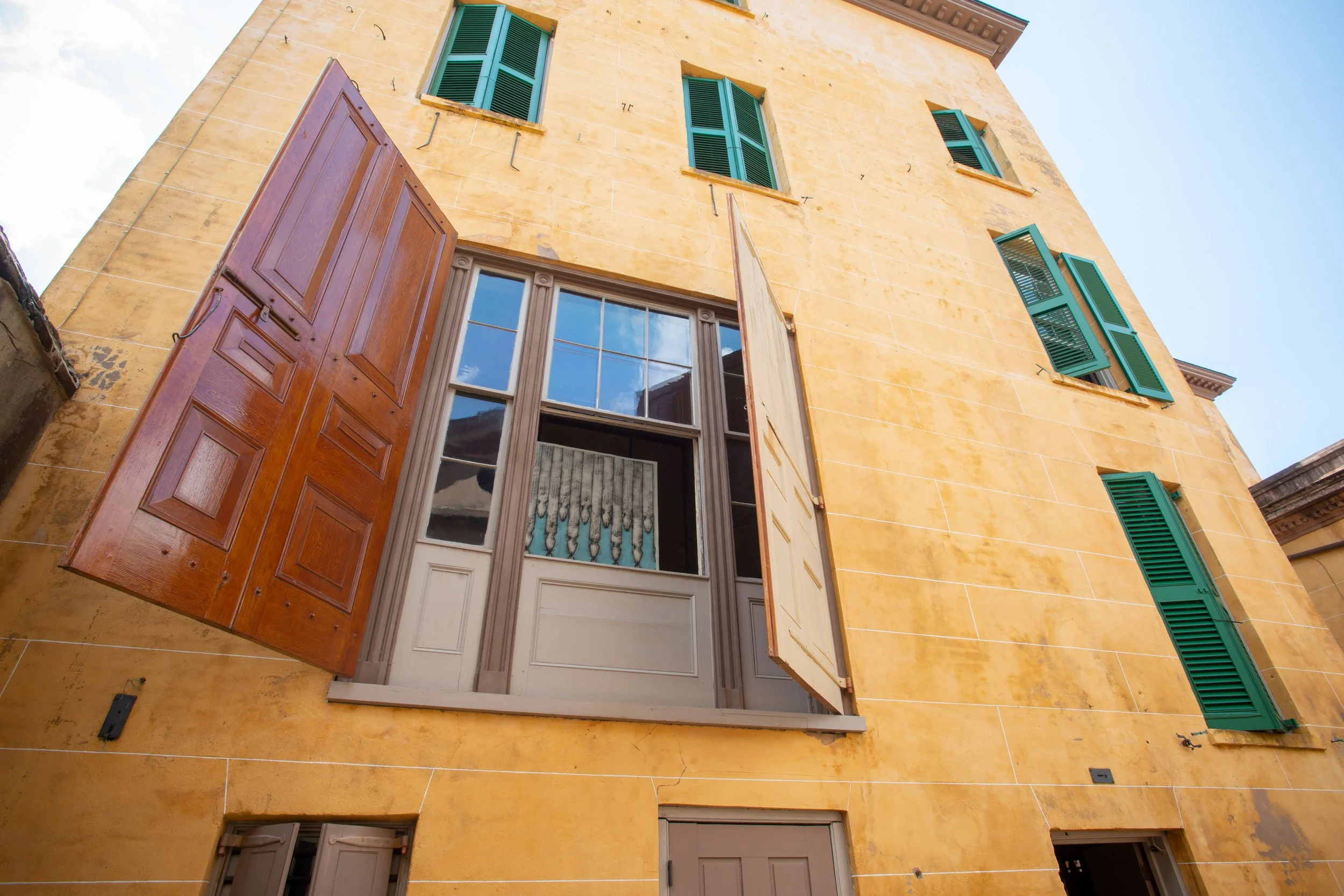
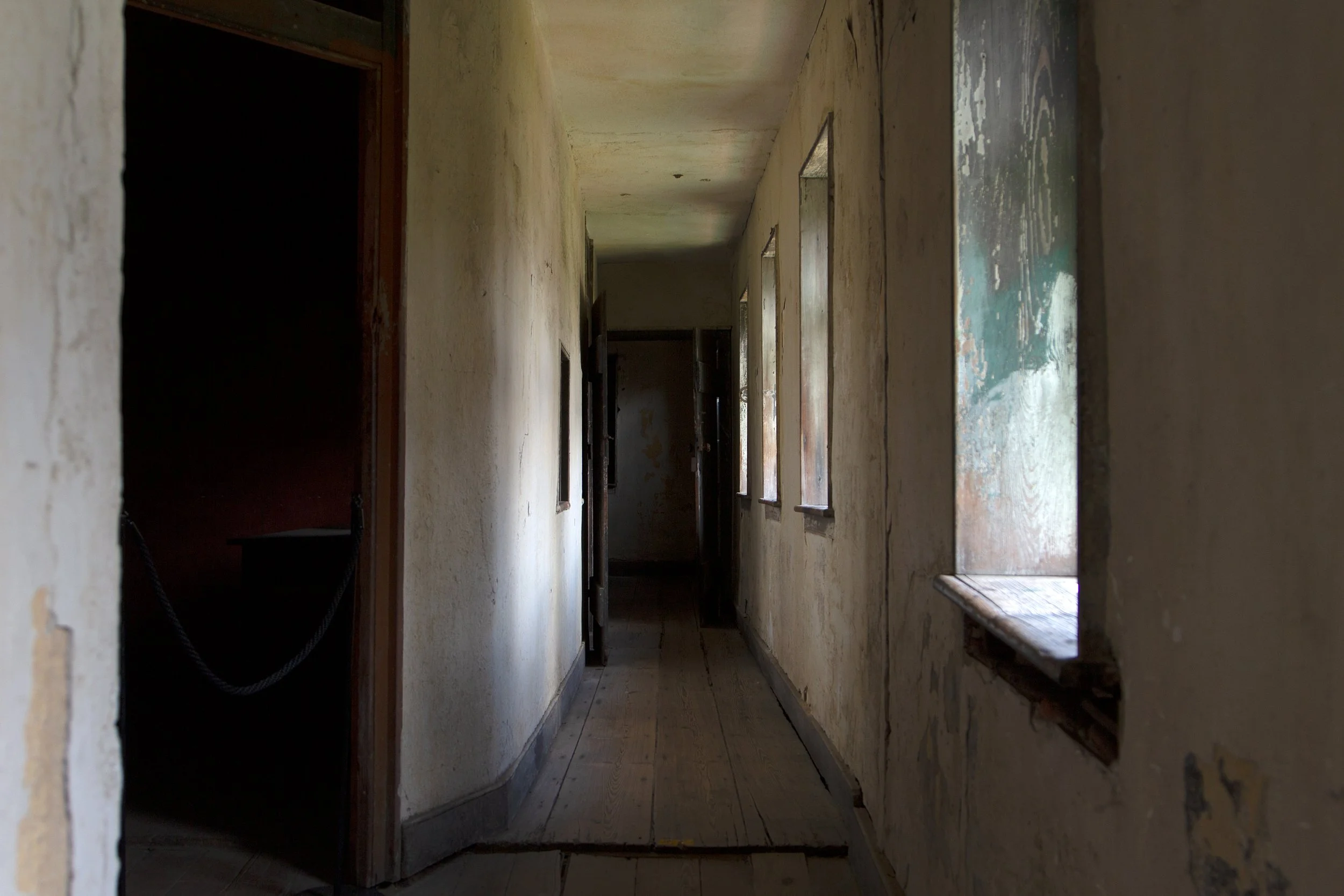
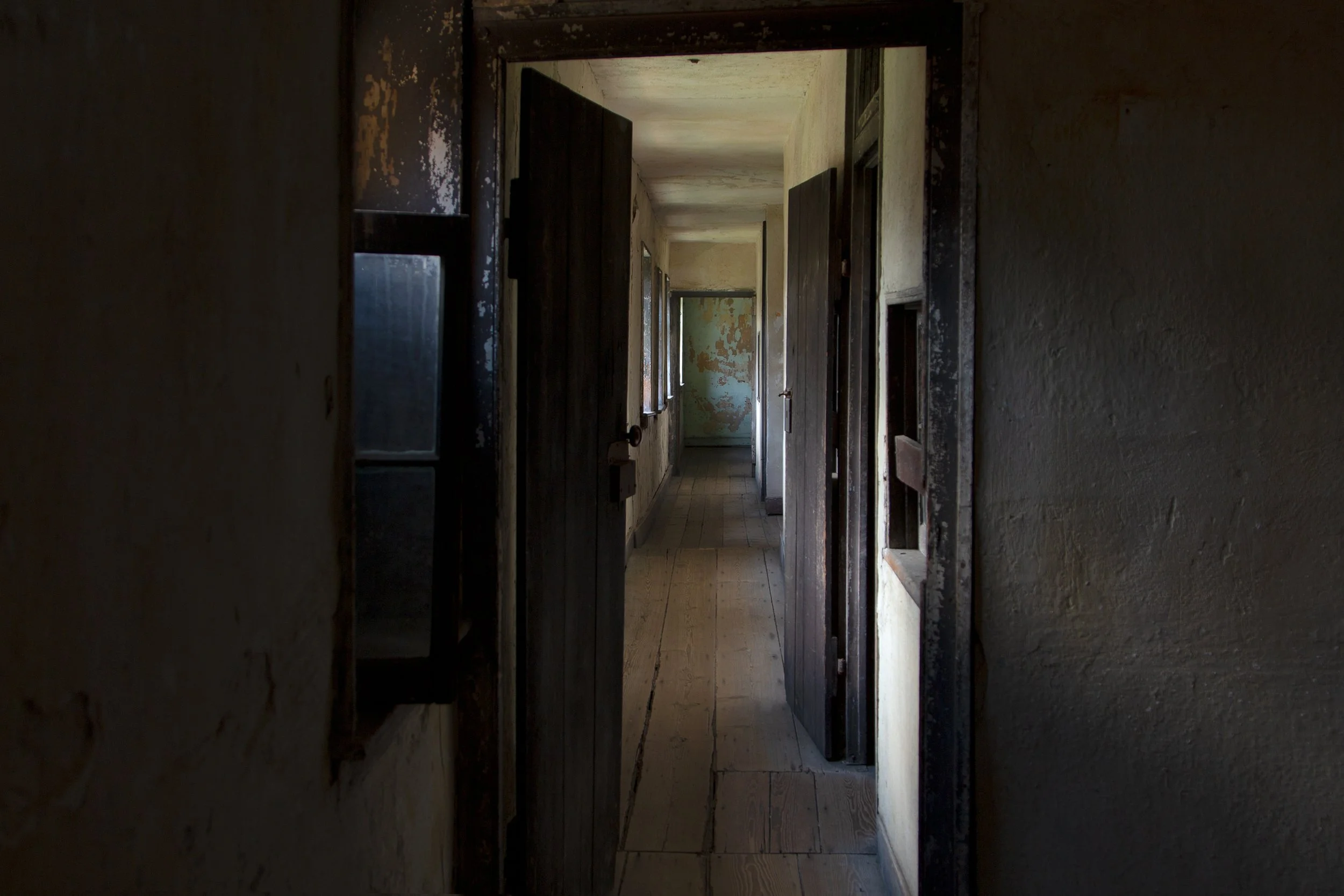
Promiseland unfolded along the existing route through the Aiken-Rhett House, beginning in the work yard and enslaved quarters and continuing through the dining room, parlors, piazzas, bedrooms, and main staircase. Williams placed new work directly into the architecture of the house, using its rooms, thresholds, windows, passages, and changes in elevation as part of the installation.
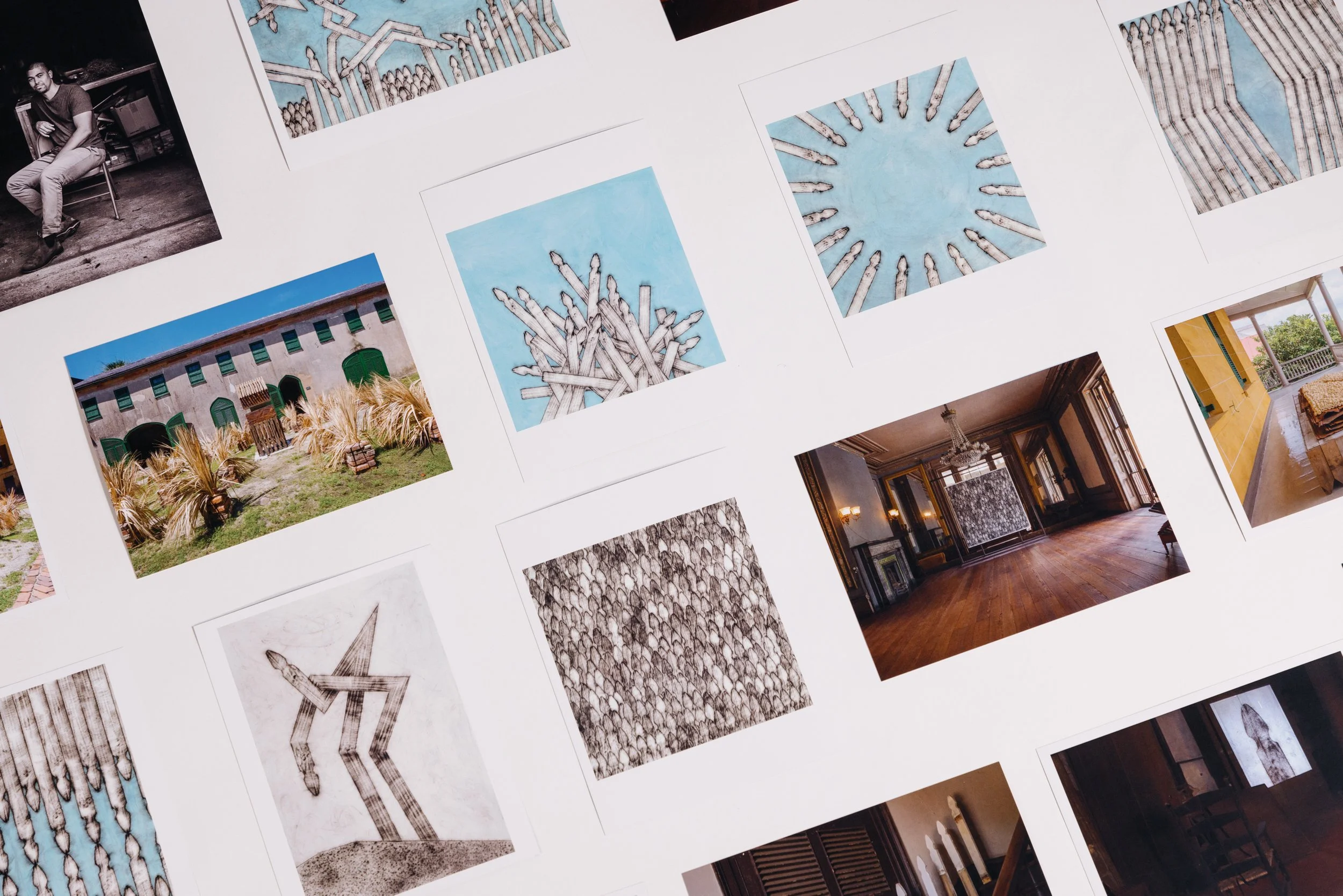
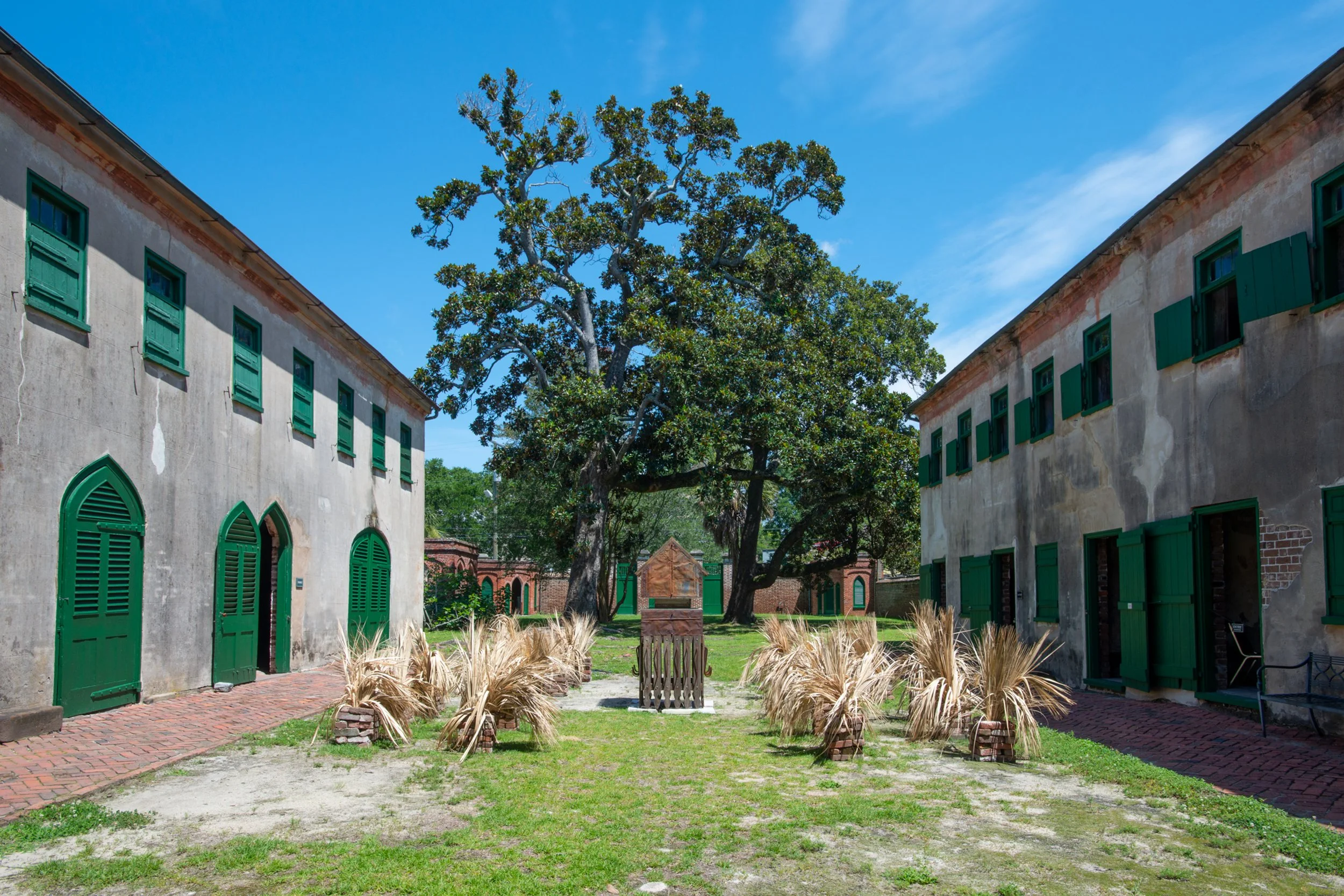
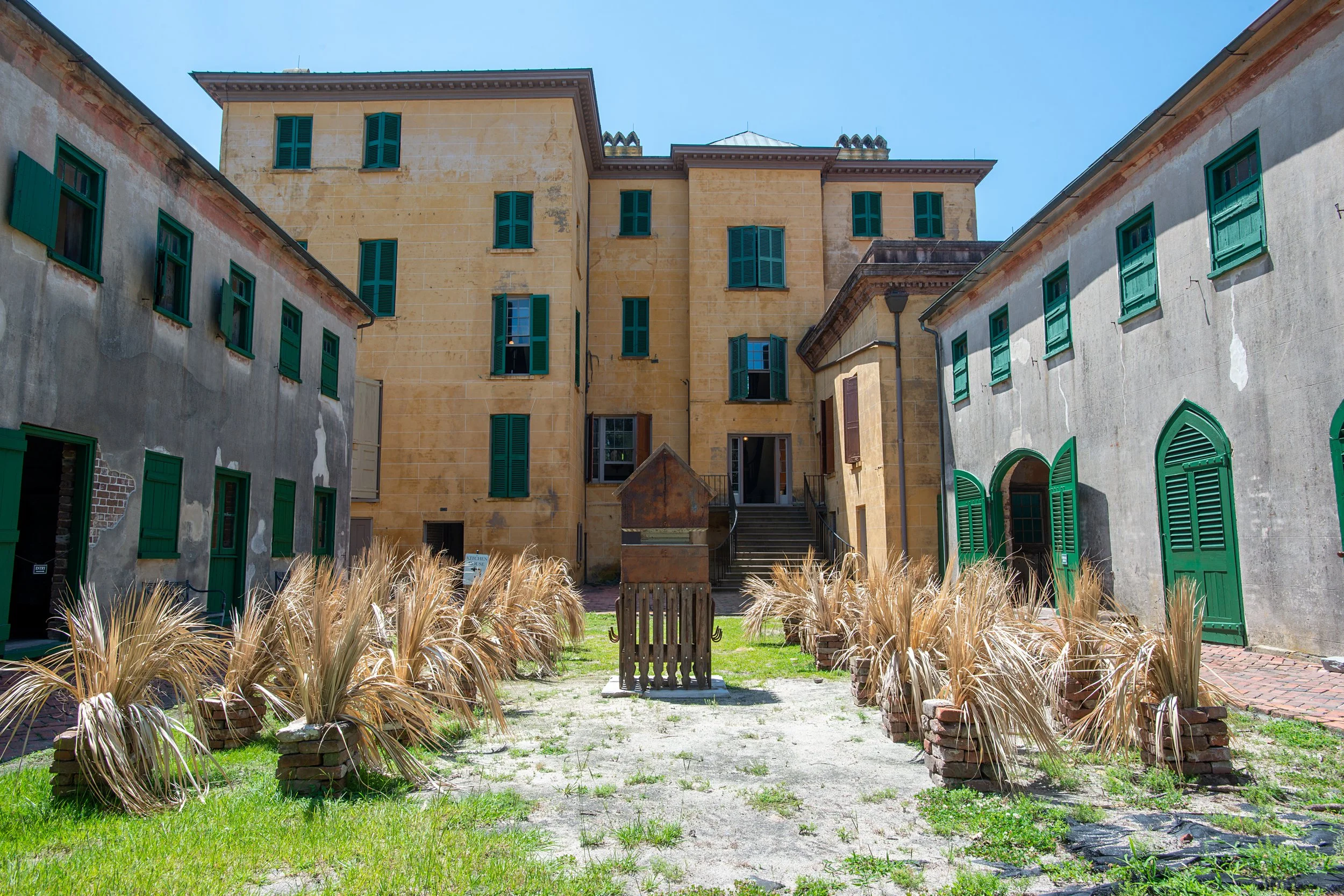
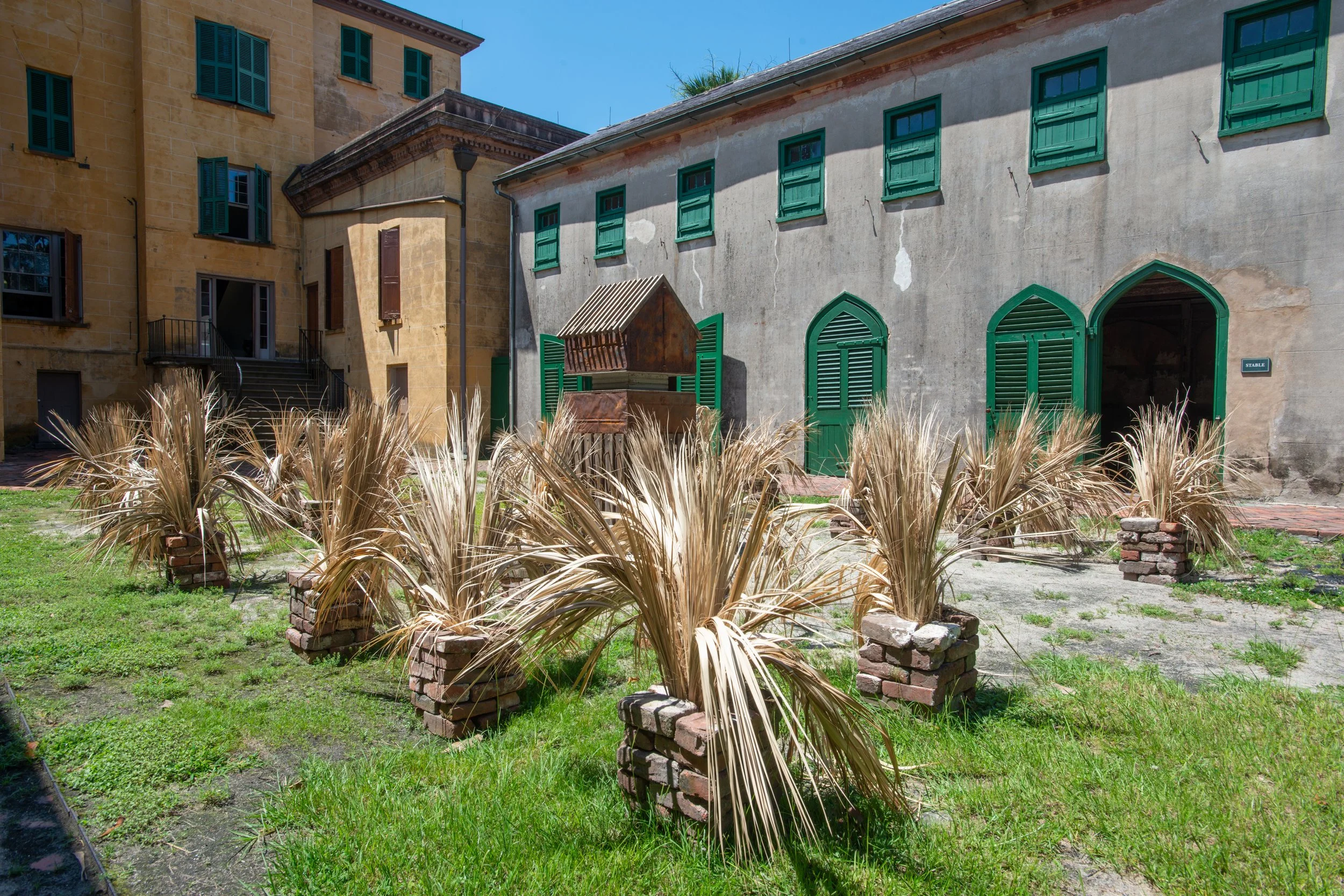
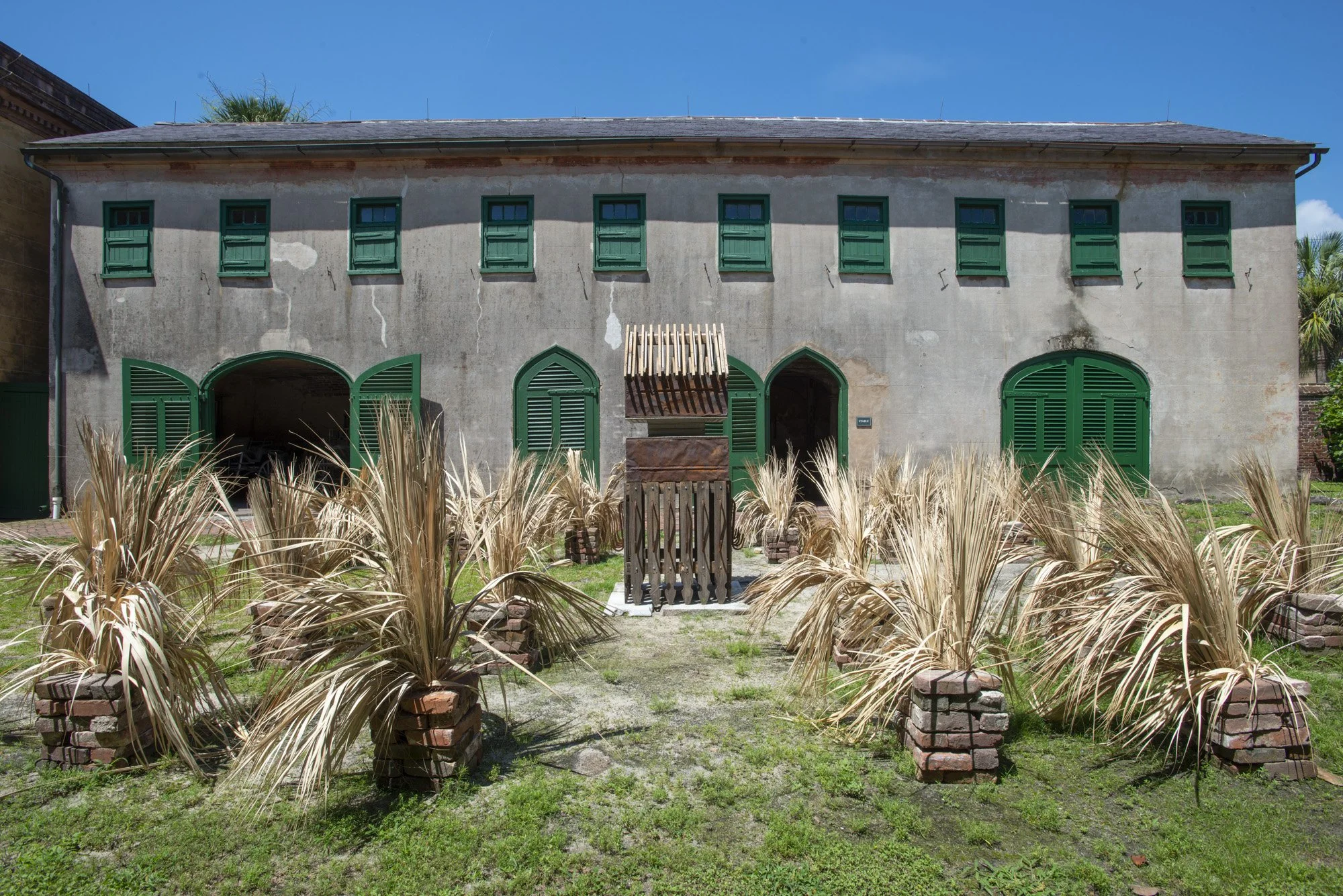
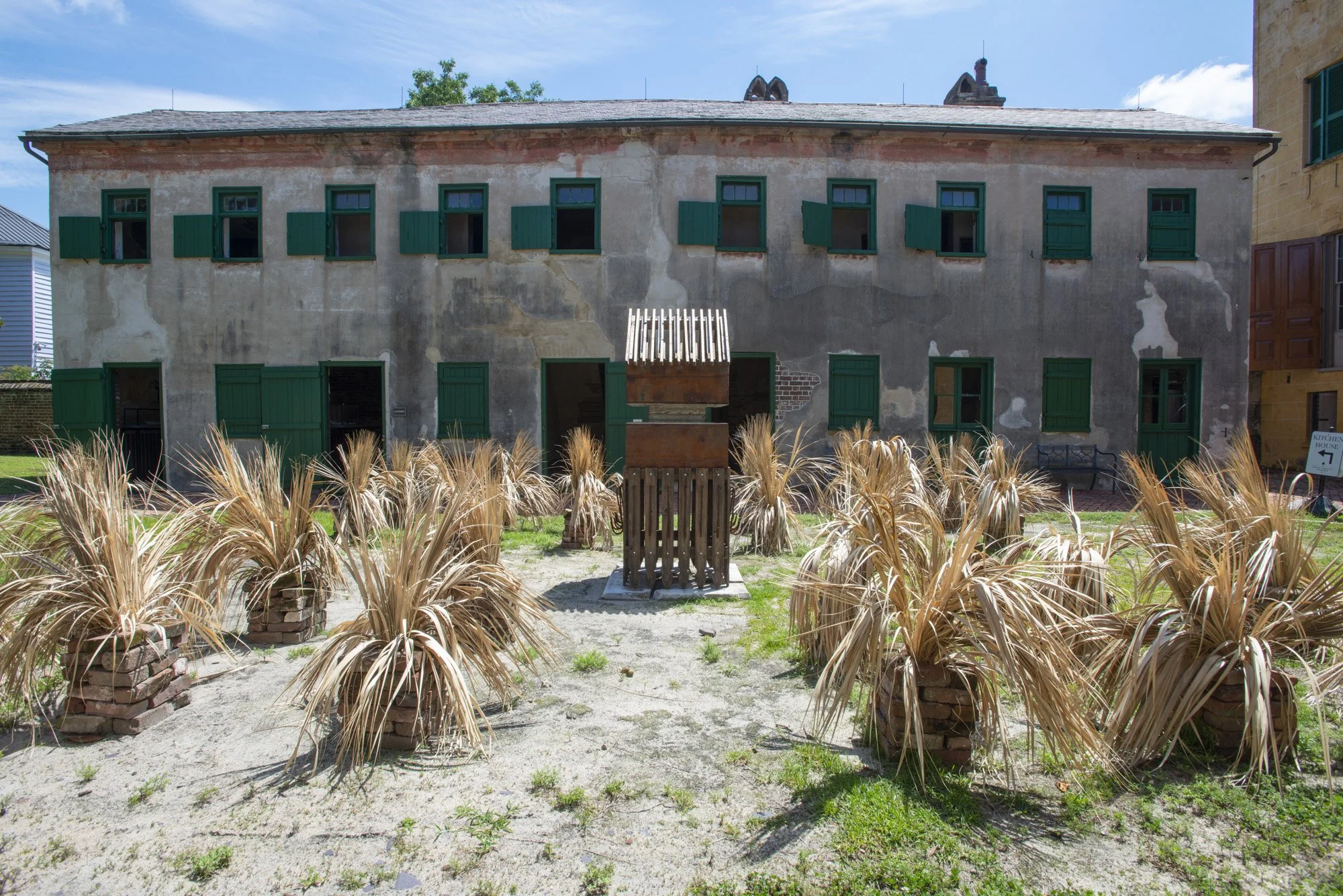
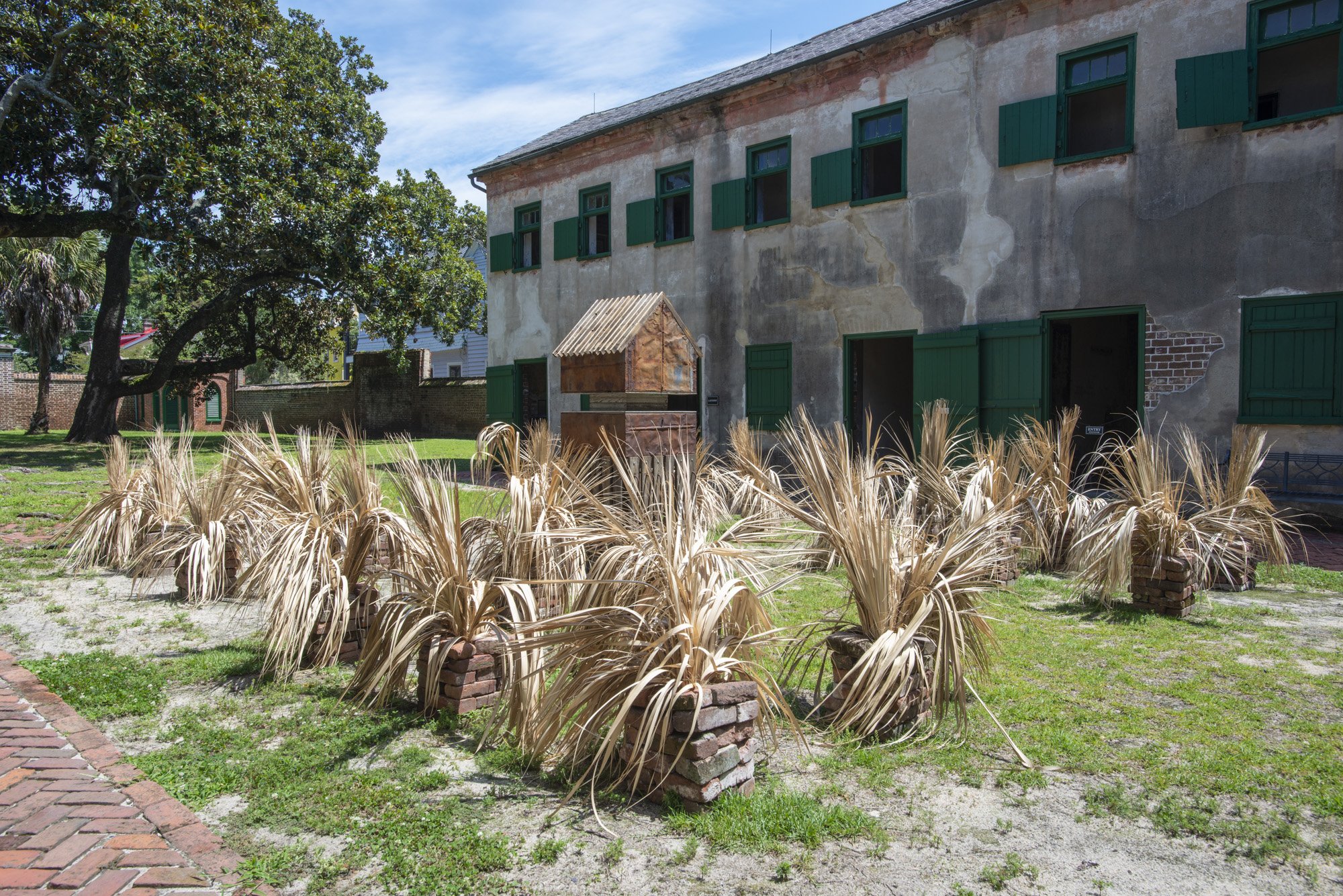
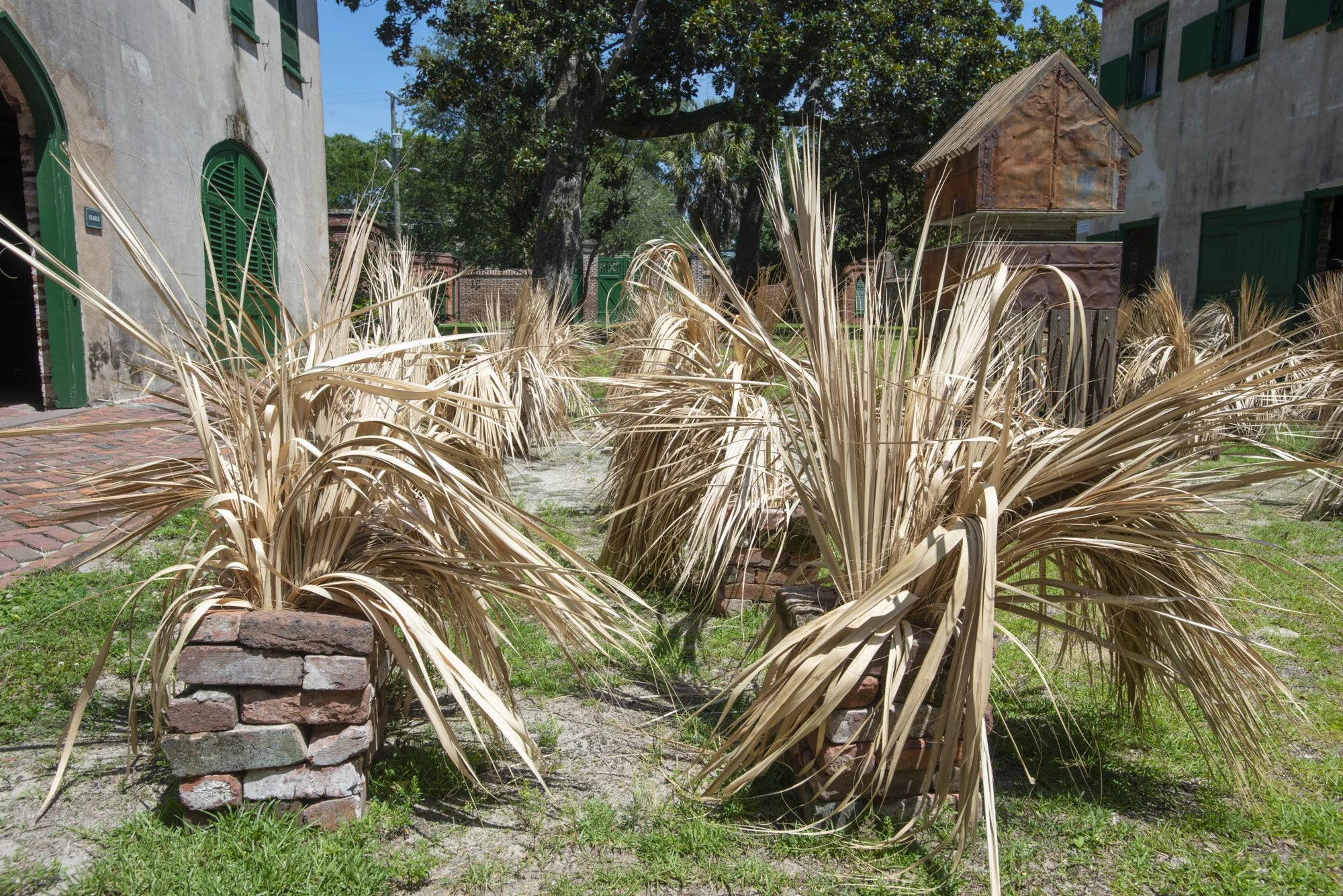
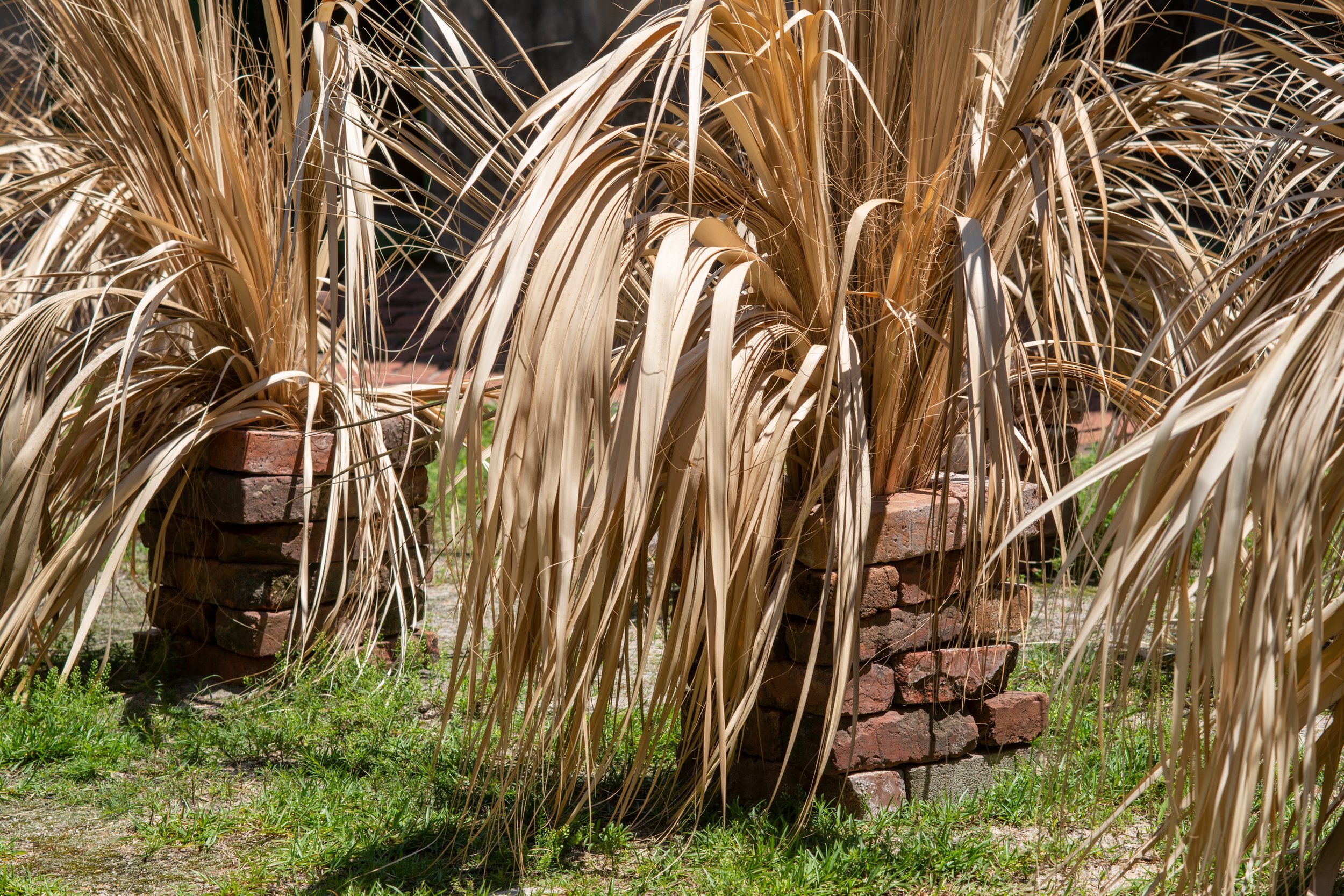
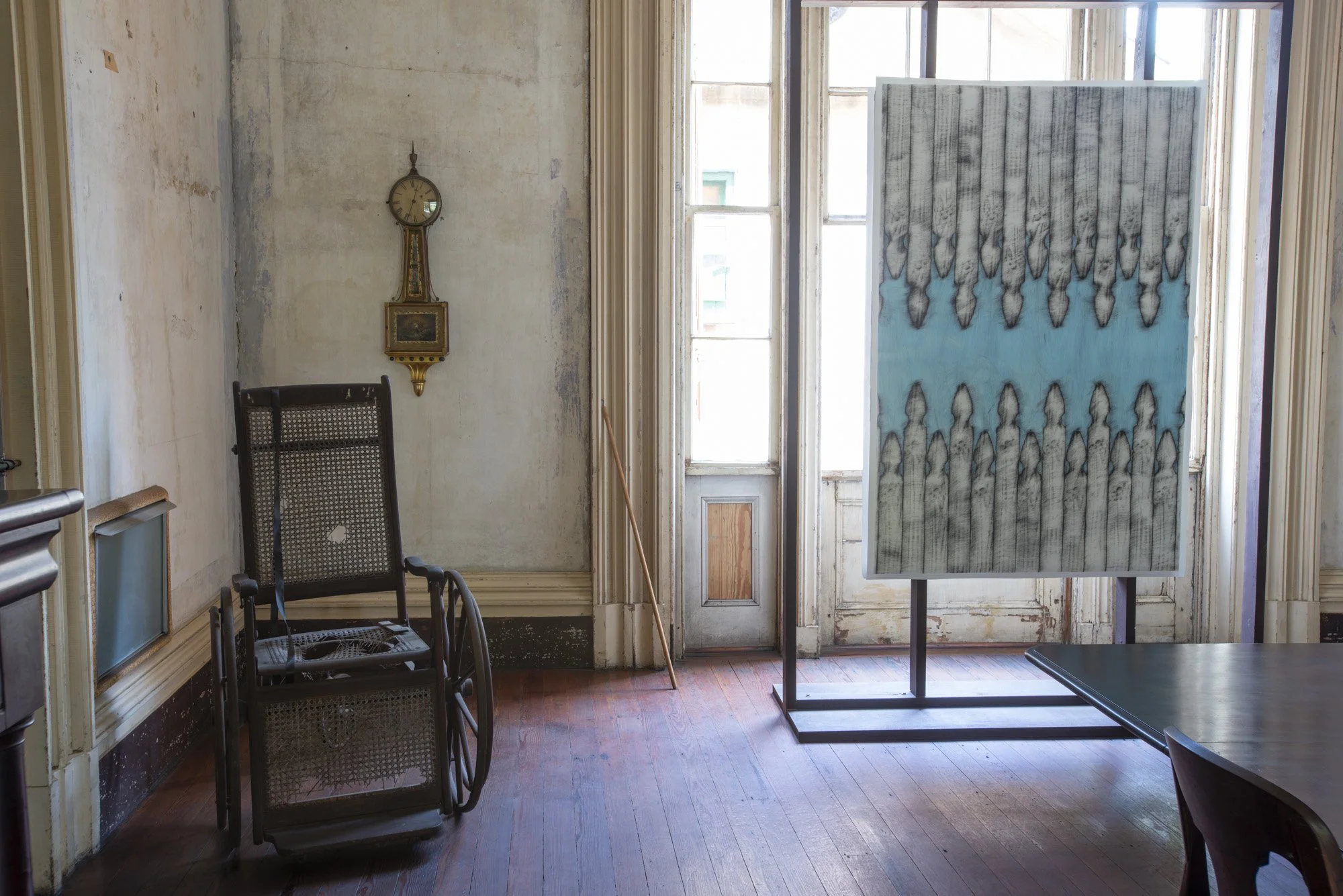
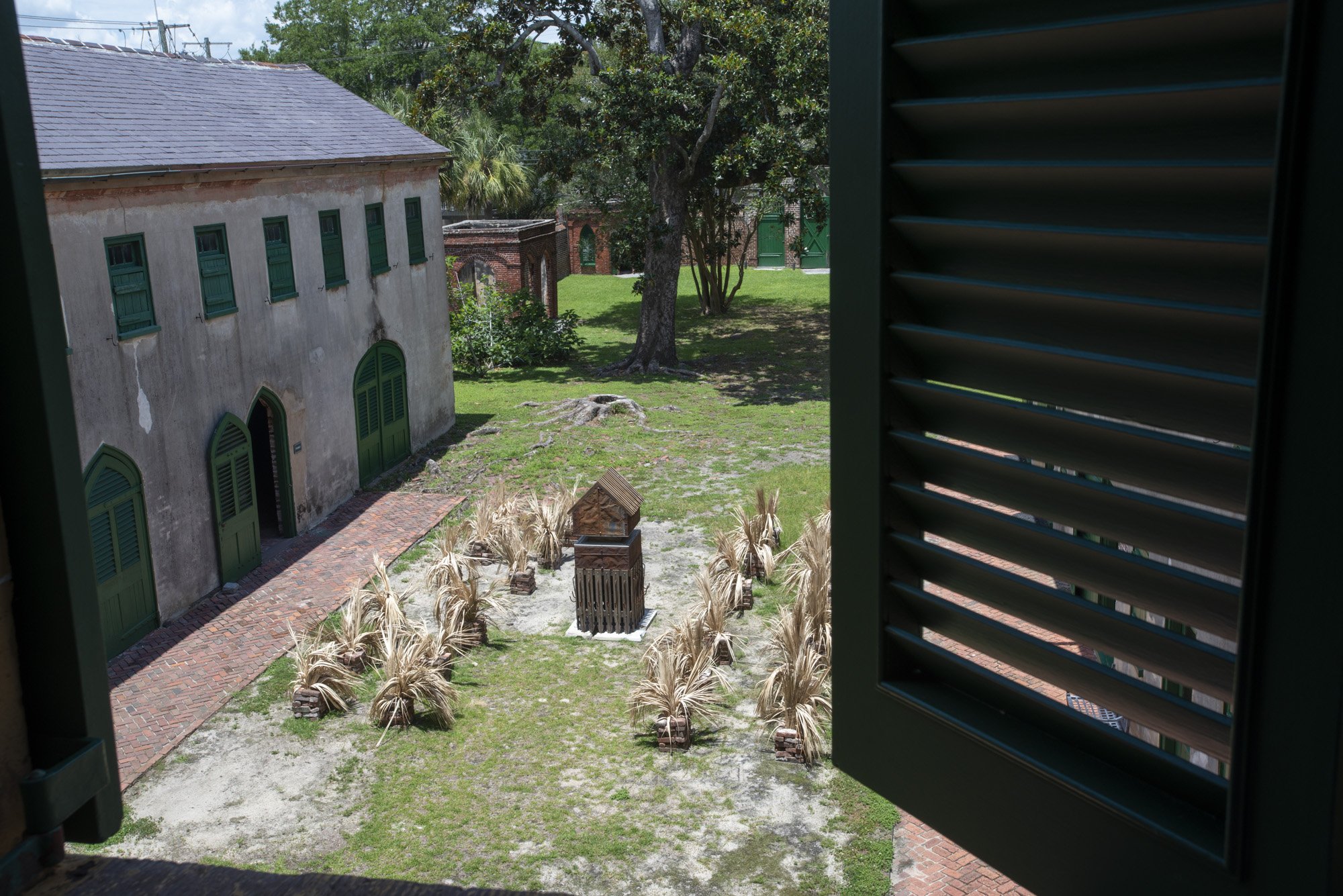
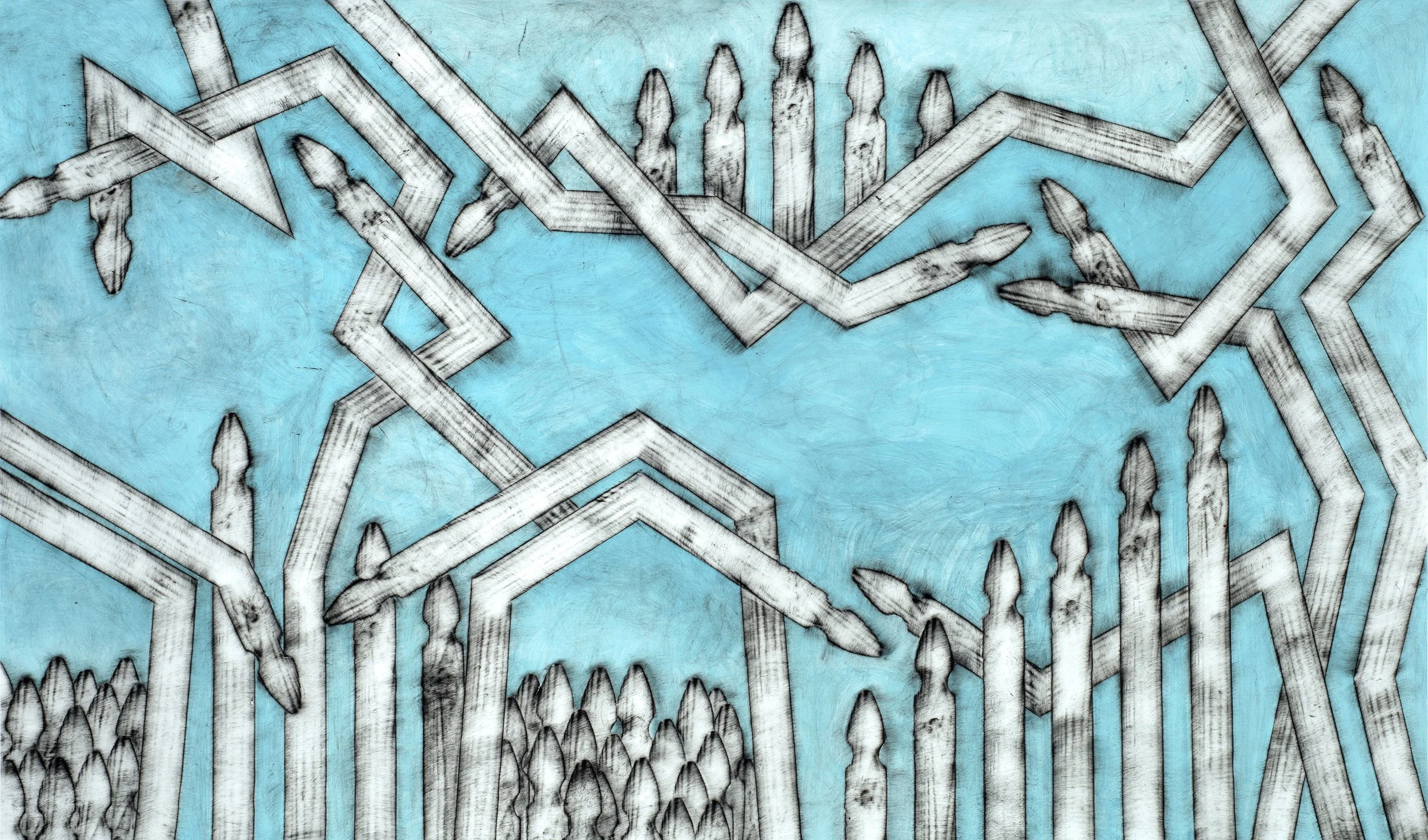
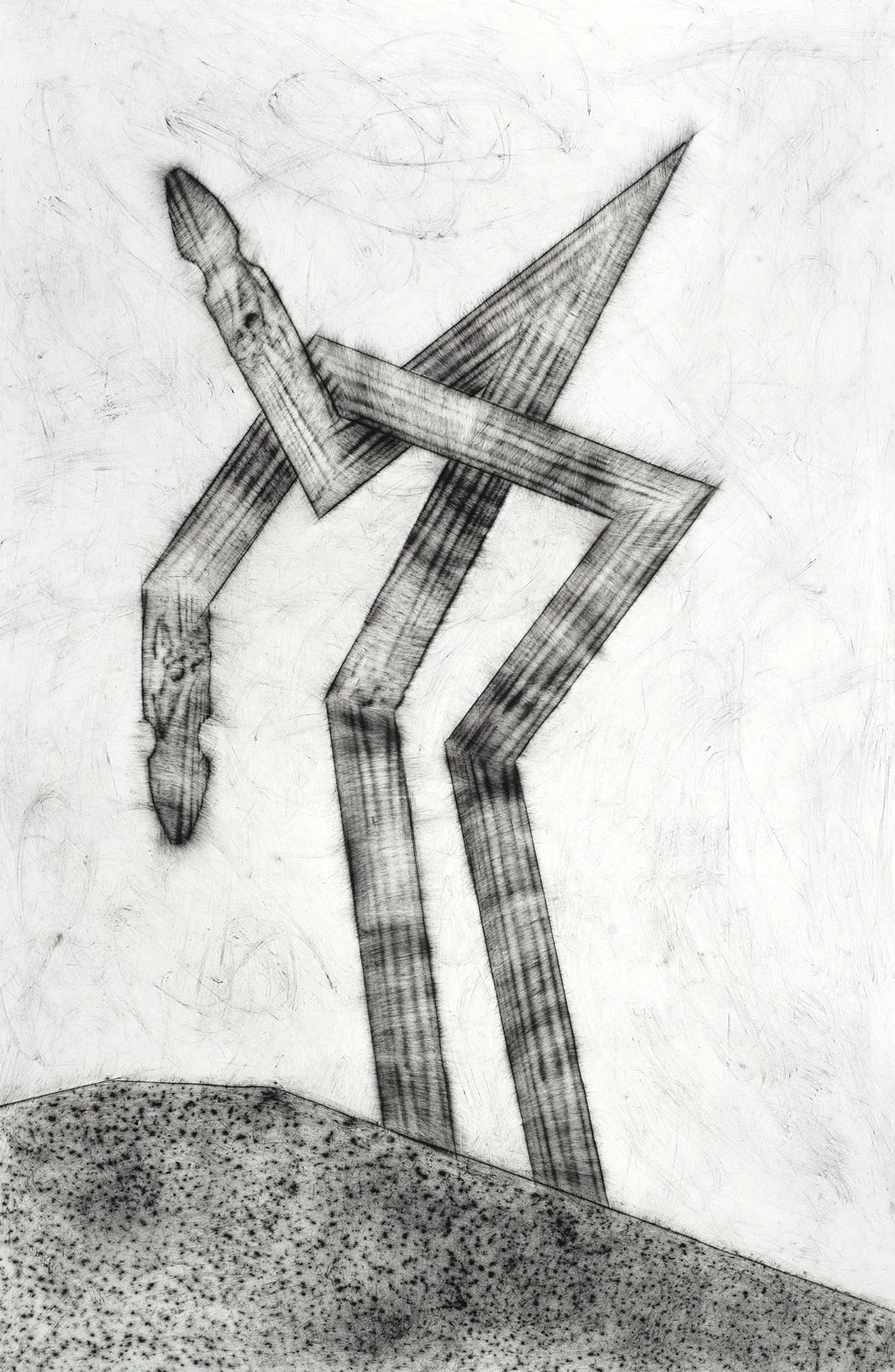
Throughout the exhibition, one form kept returning: the picket. Williams had been drawn to the picket fence as both an object and an image—ordinary, decorative, architectural, and inseparable from ideas of home, property, protection, belonging, and the American promise of having something to call one’s own. At Aiken-Rhett, those associations entered a house whose grandeur depended upon enslaved labor and whose architecture still preserves distinctions between ownership and service, visibility and concealment, access and restriction. The picket did not mean the same thing each time it appeared. It bent, accumulated, opened, closed, became ornamental, resembled a body, disappeared back into architecture, and returned again as an image. In the central work yard, Work Garden was assembled from salvaged pickets, rebar, tin roofing, heart pine, dried palmetto fronds, and reclaimed brick. The structure borrowed from the materials and makeshift construction already familiar to the Lowcountry. Exposed to the weather, it continued to change during the exhibition as wood, metal, and vegetation shifted in color and surface. The existing brick enclosure of the yard became part of the work’s larger field of walls, fences, edges, and boundaries.
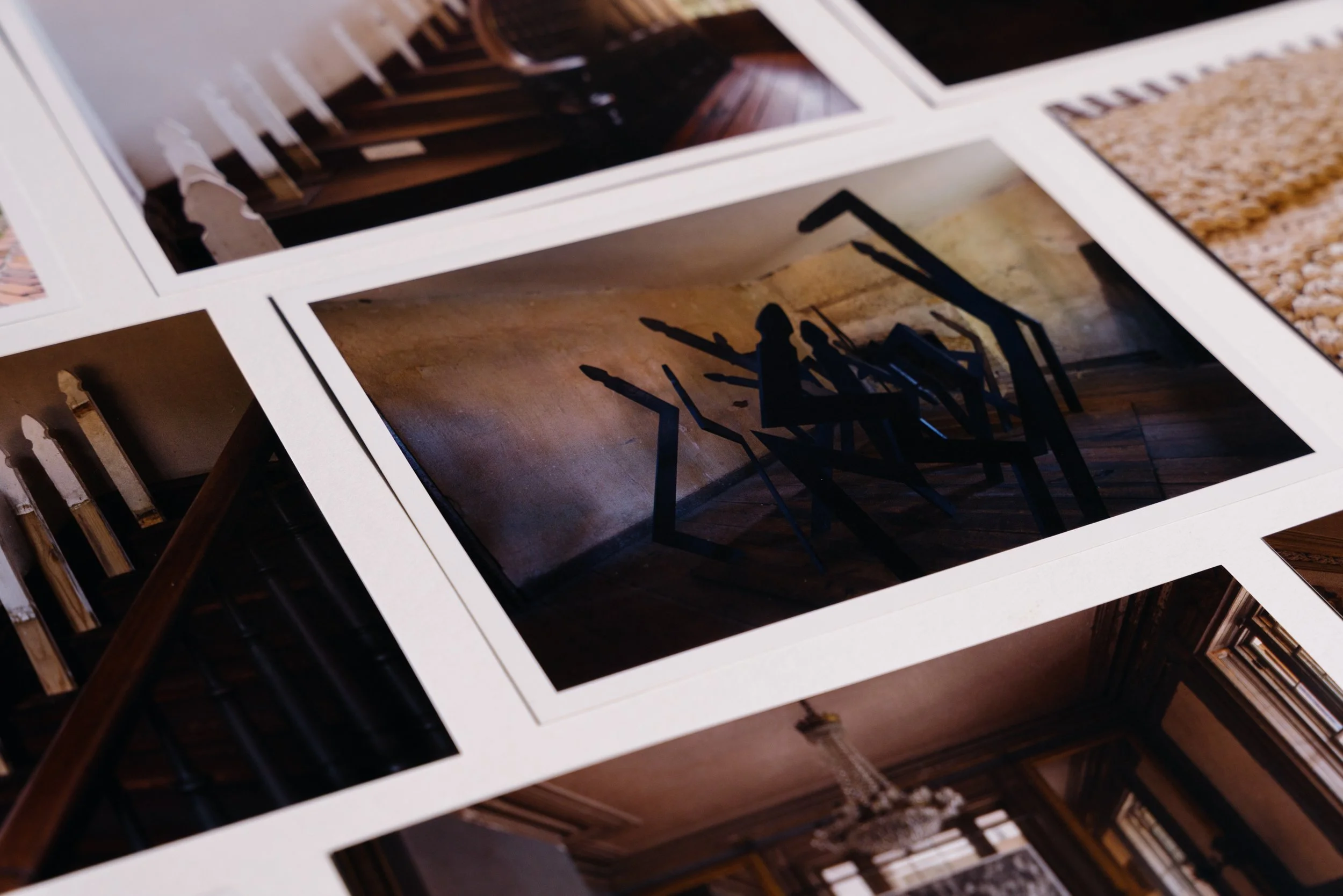
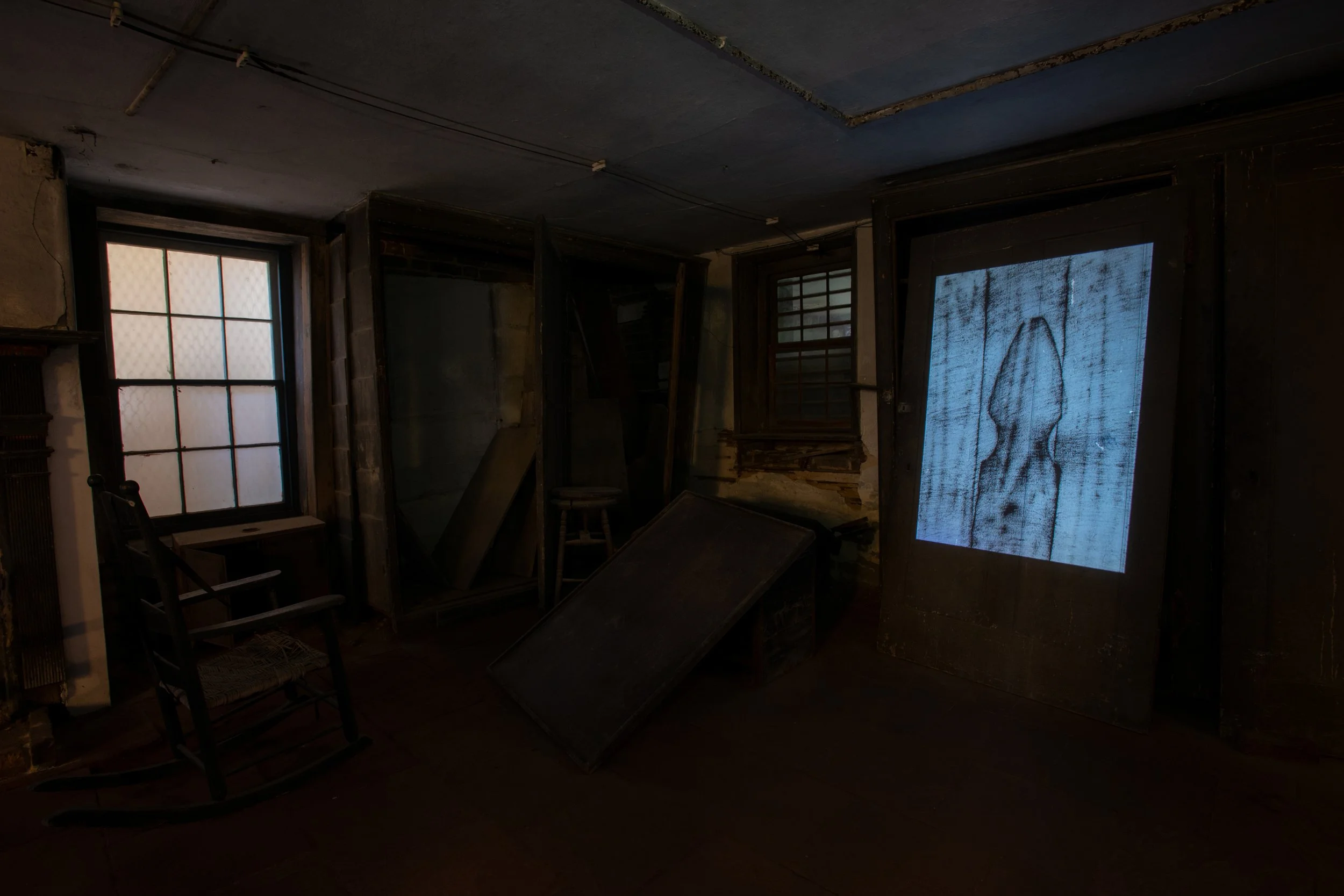
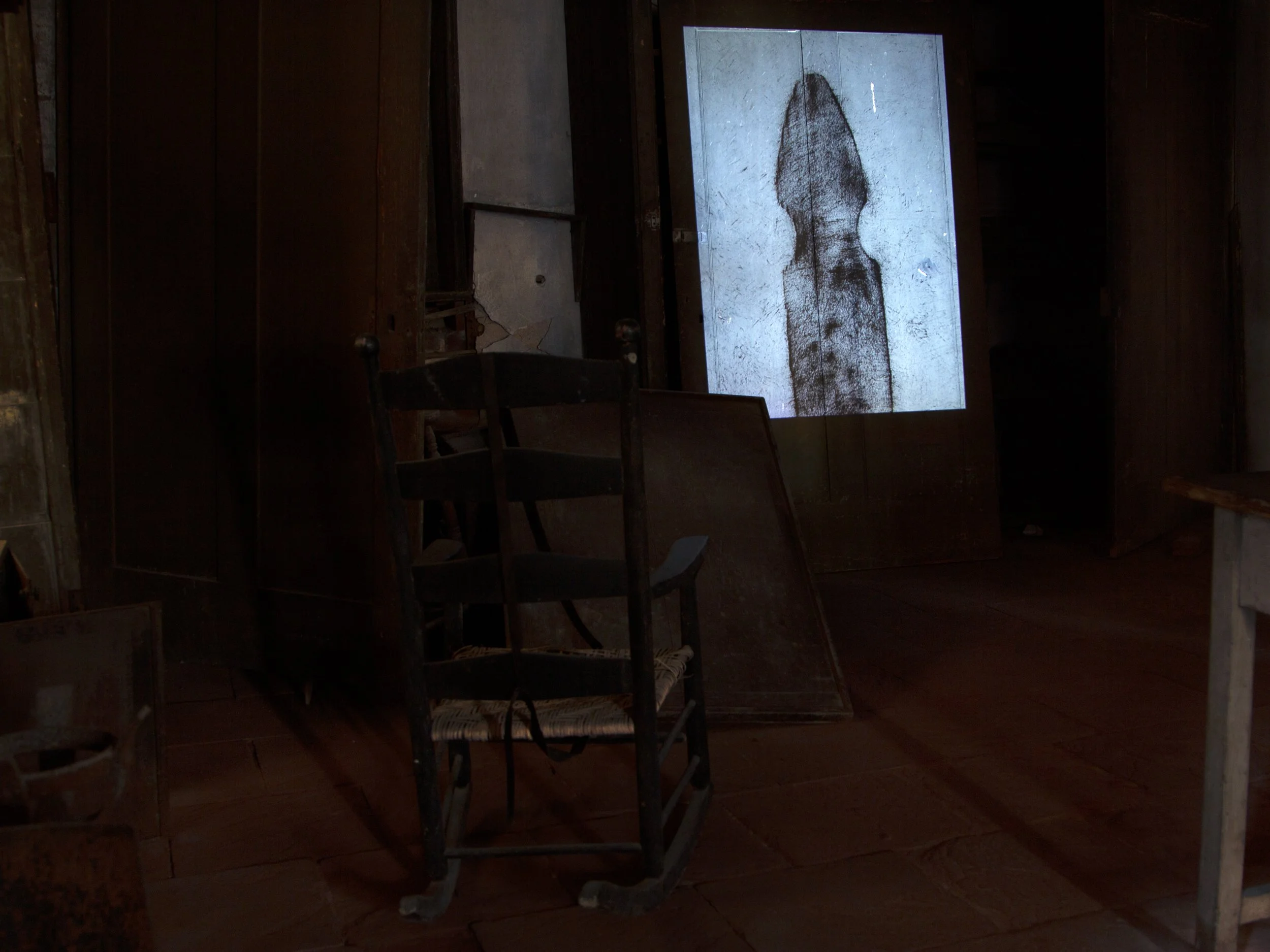
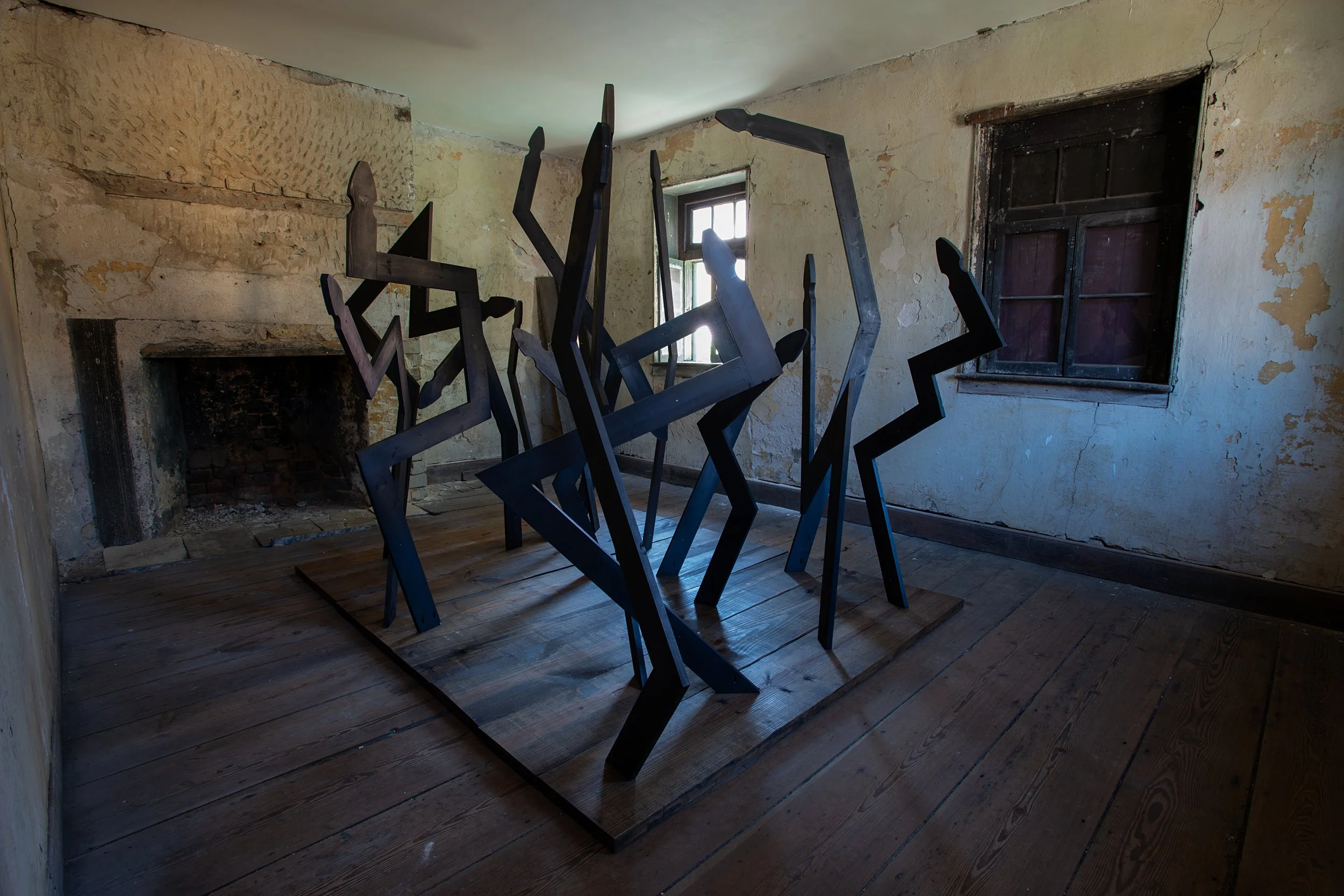
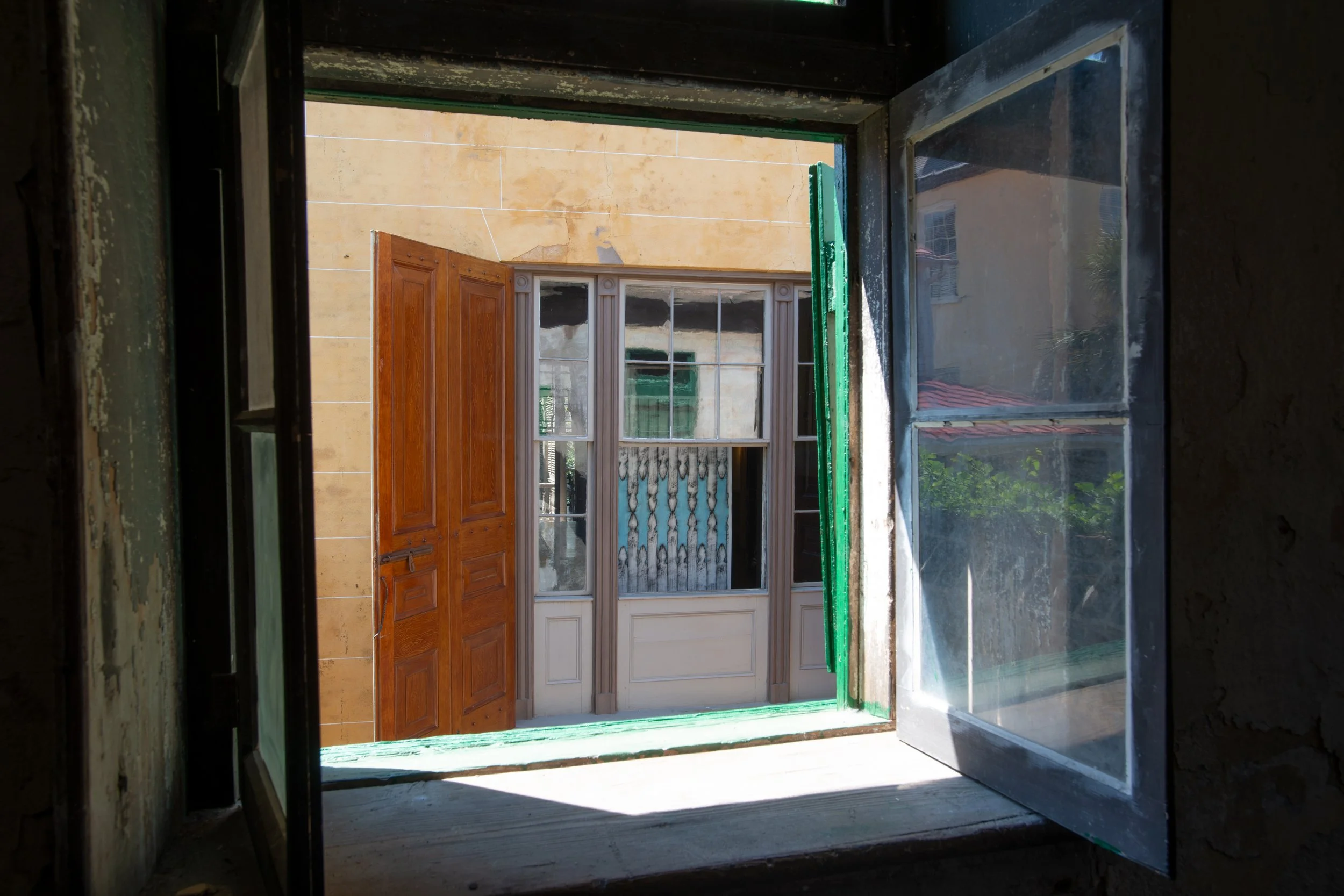
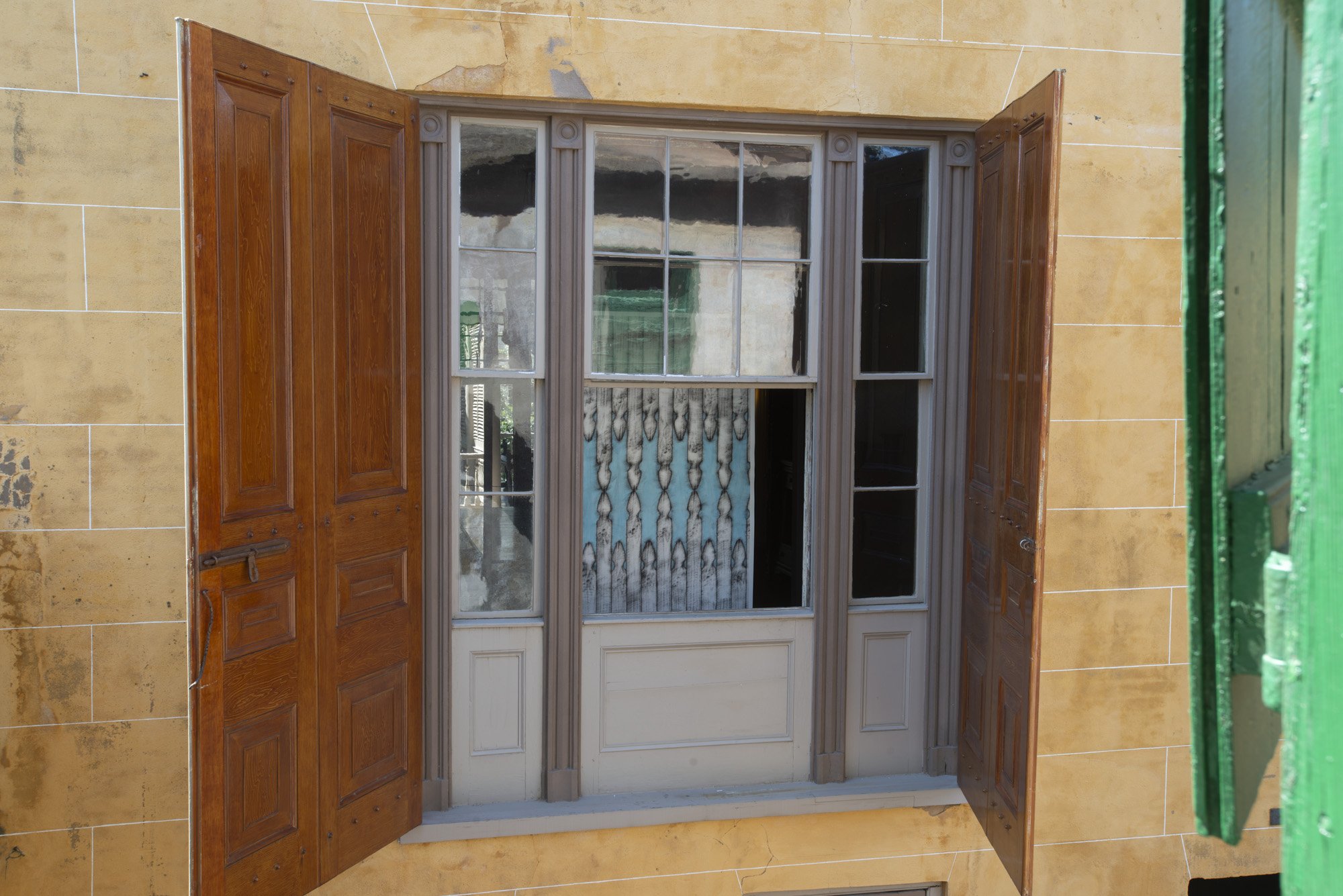
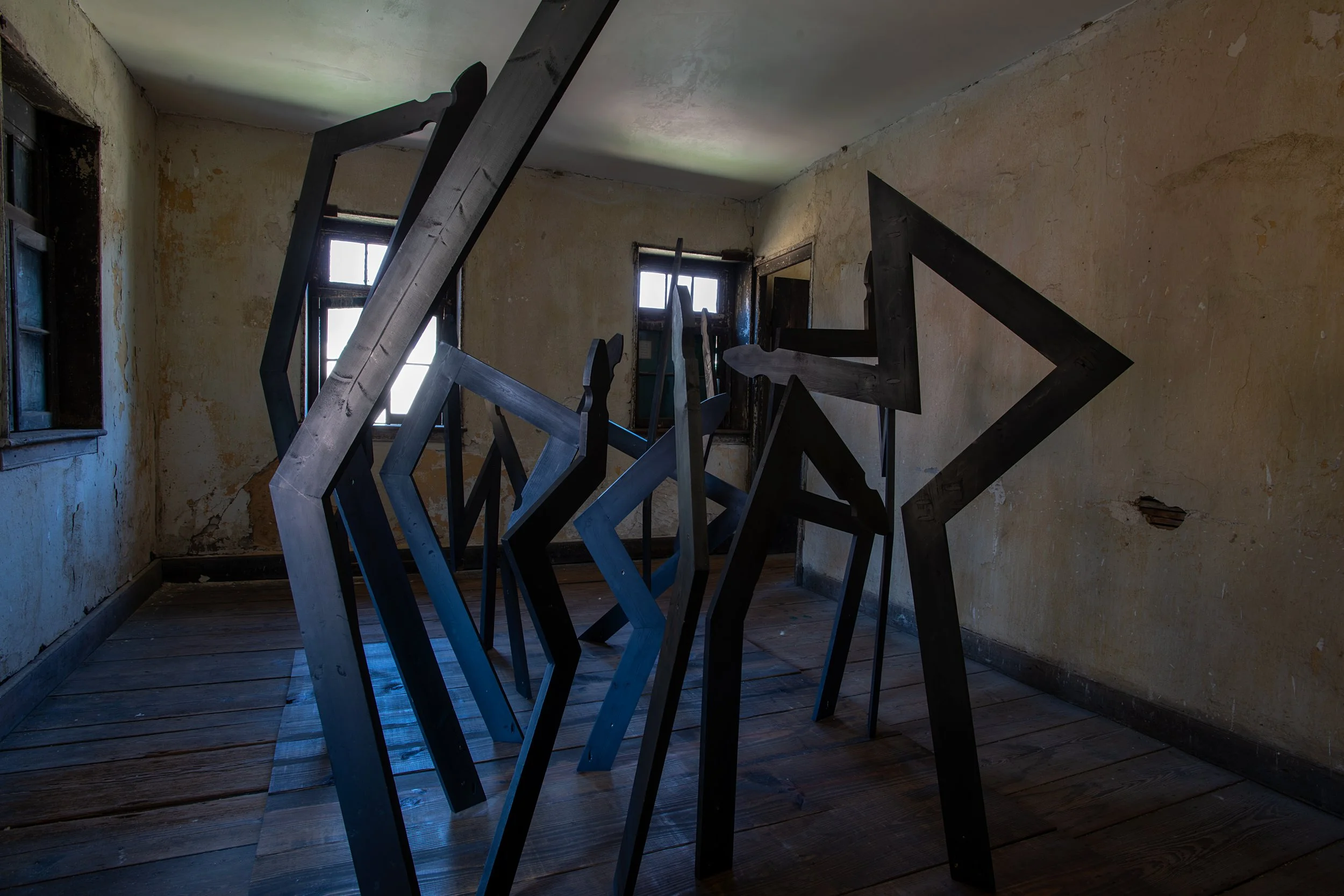
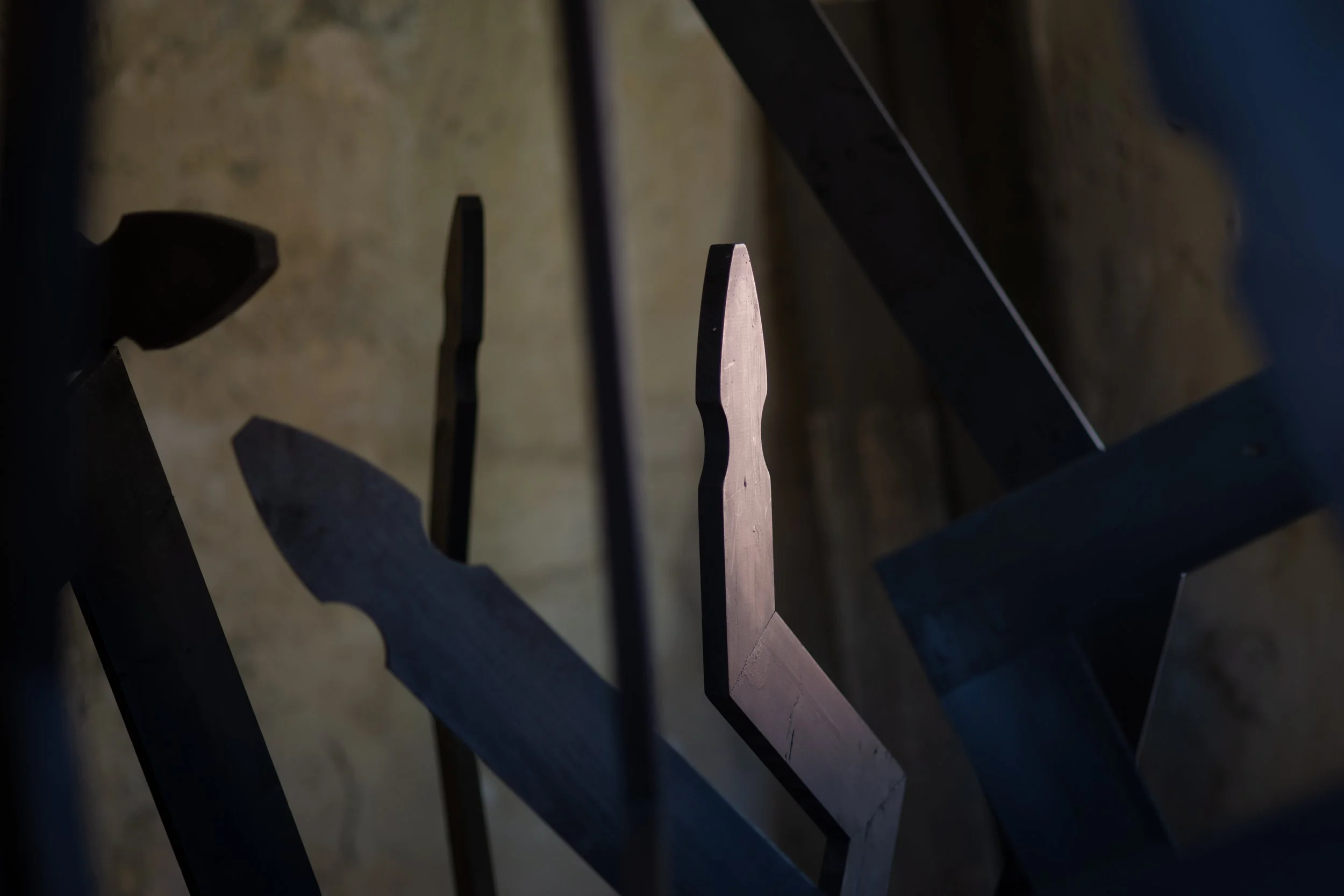
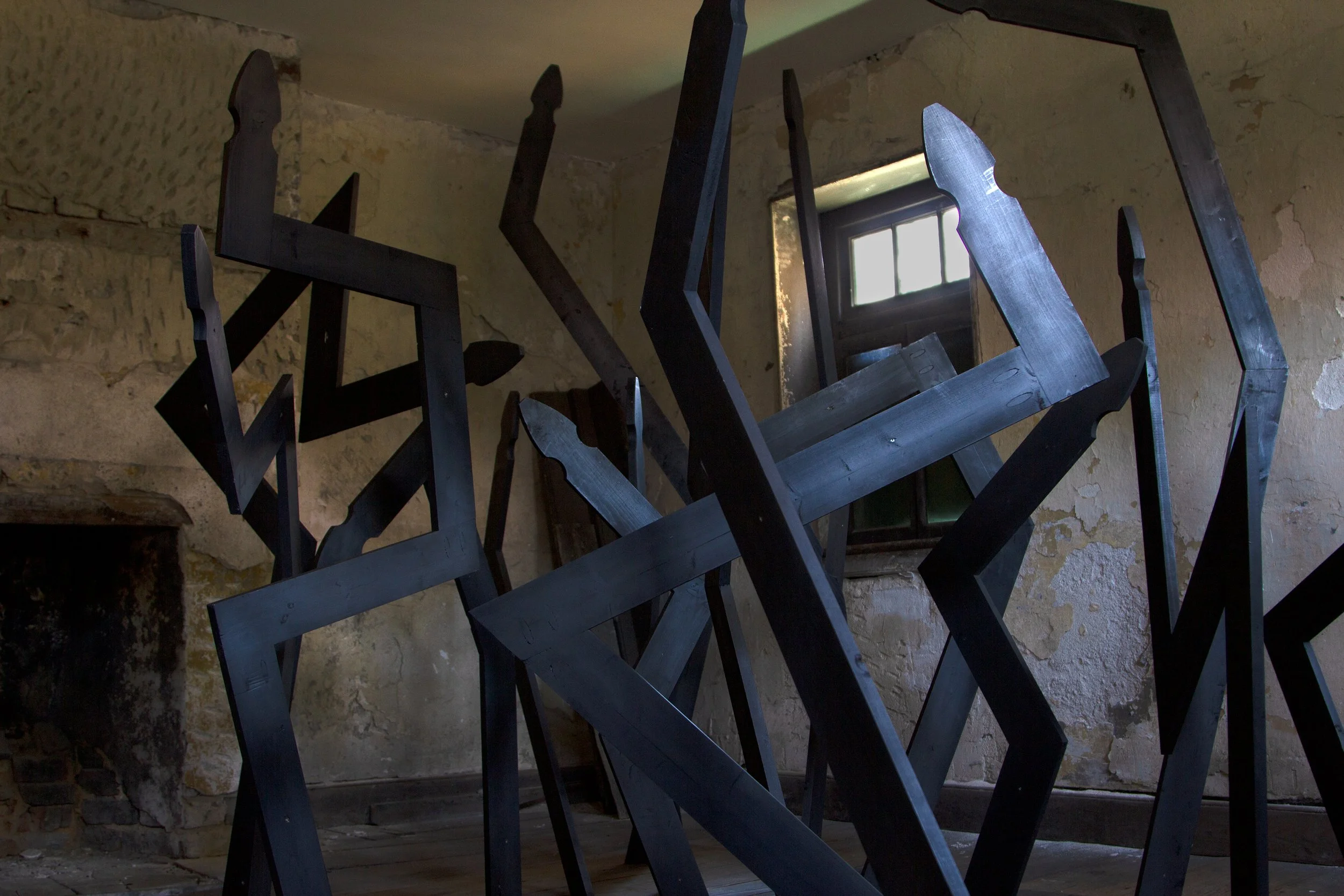
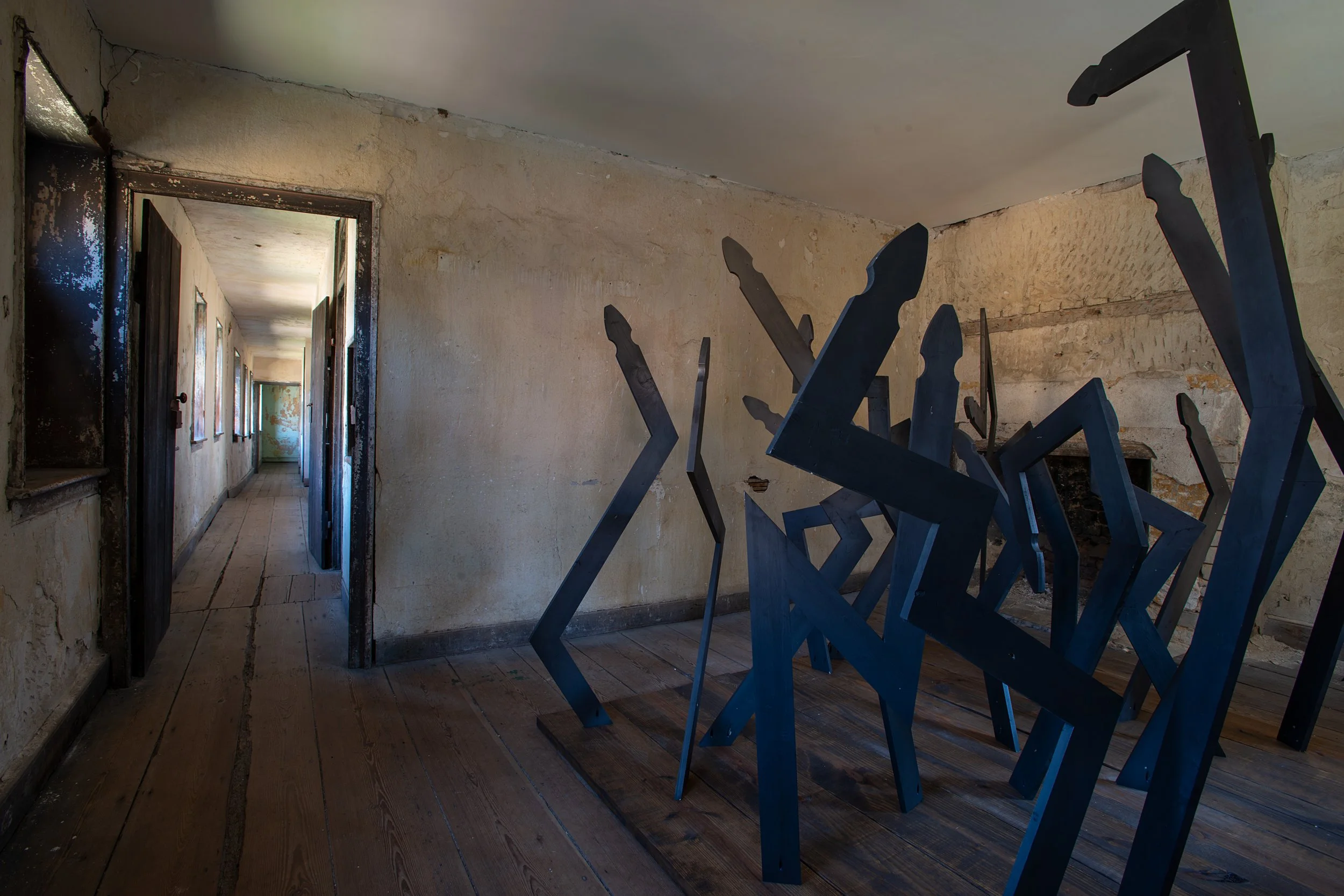
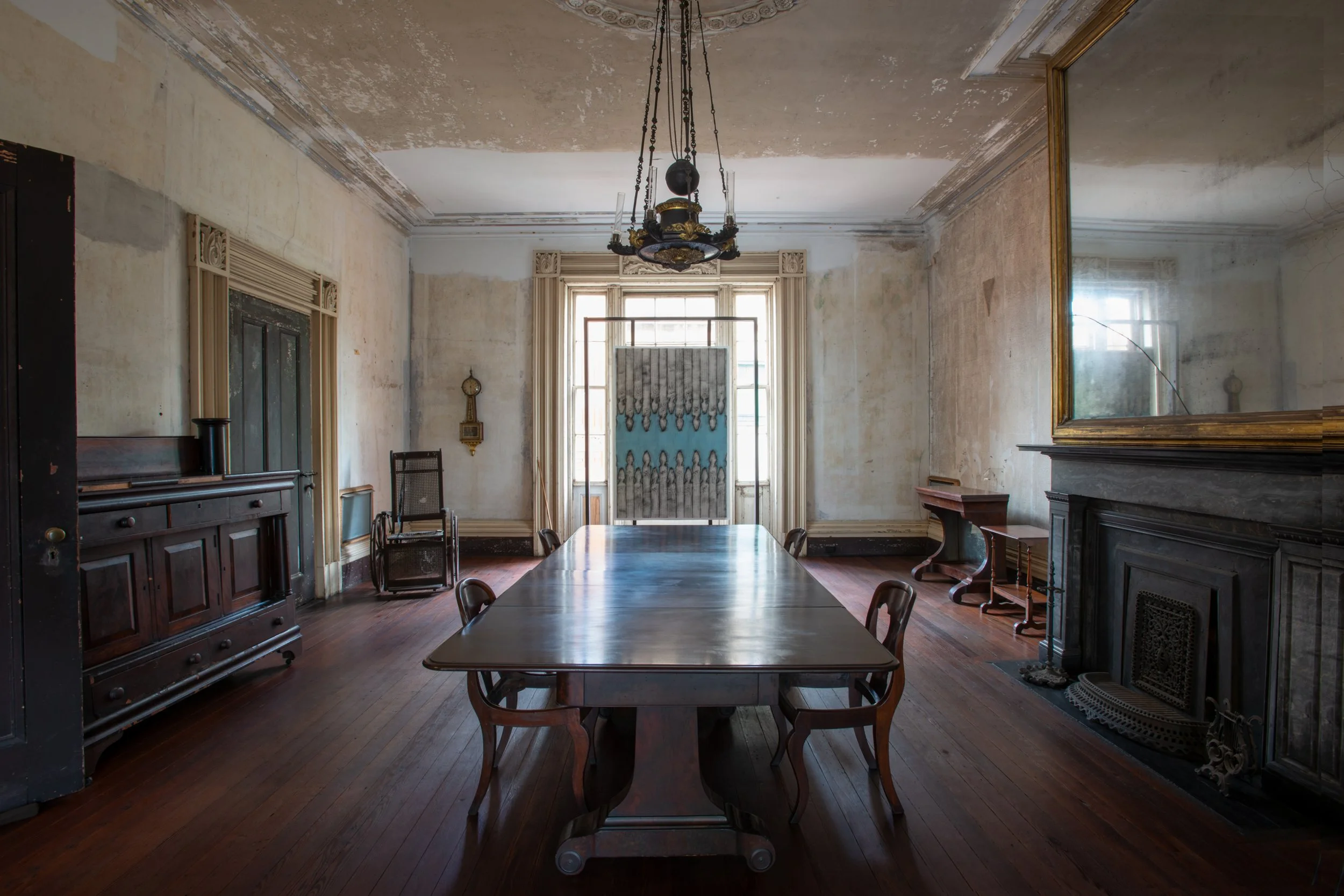
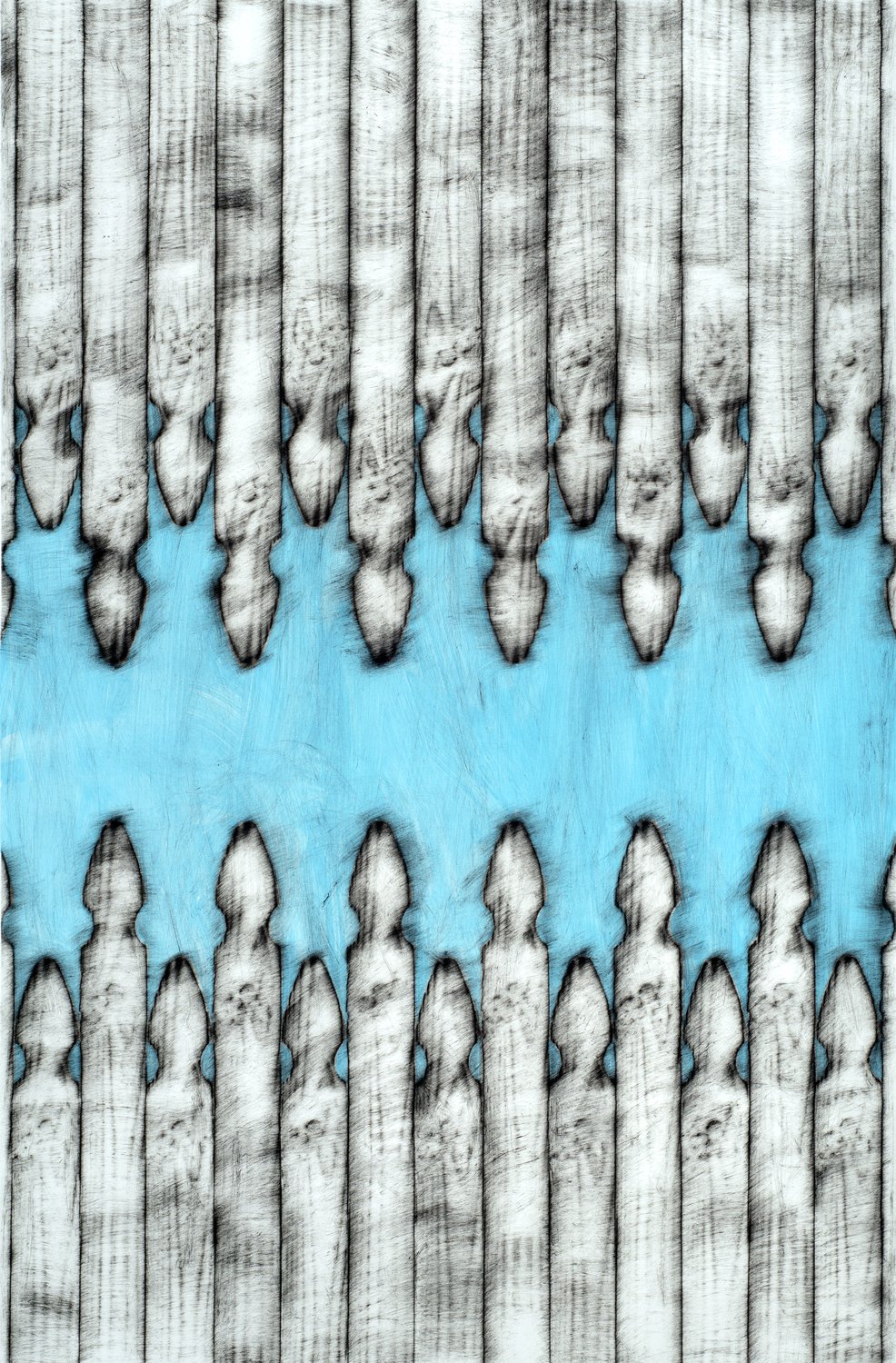
Above the kitchen, inside the enslaved quarters, Pickets crowded a small room with reconfigured pine fence posts painted black. The regular order expected of a fence had collapsed. The pickets leaned against and over one another until the distinction between structure, pile, and figure became difficult to maintain. In the compressed space of the room, the sculpture was encountered less as an image than as something physically occupying the viewer’s space. Elsewhere, two Untitled paintings were installed back to back between the enslaved quarters and dining room. From one side, a window framed a tightly closed field of pickets. From the other, the same form opened. The paintings occupied a single architectural threshold, but the image changed according to where the viewer stood. Position determined what could be seen.
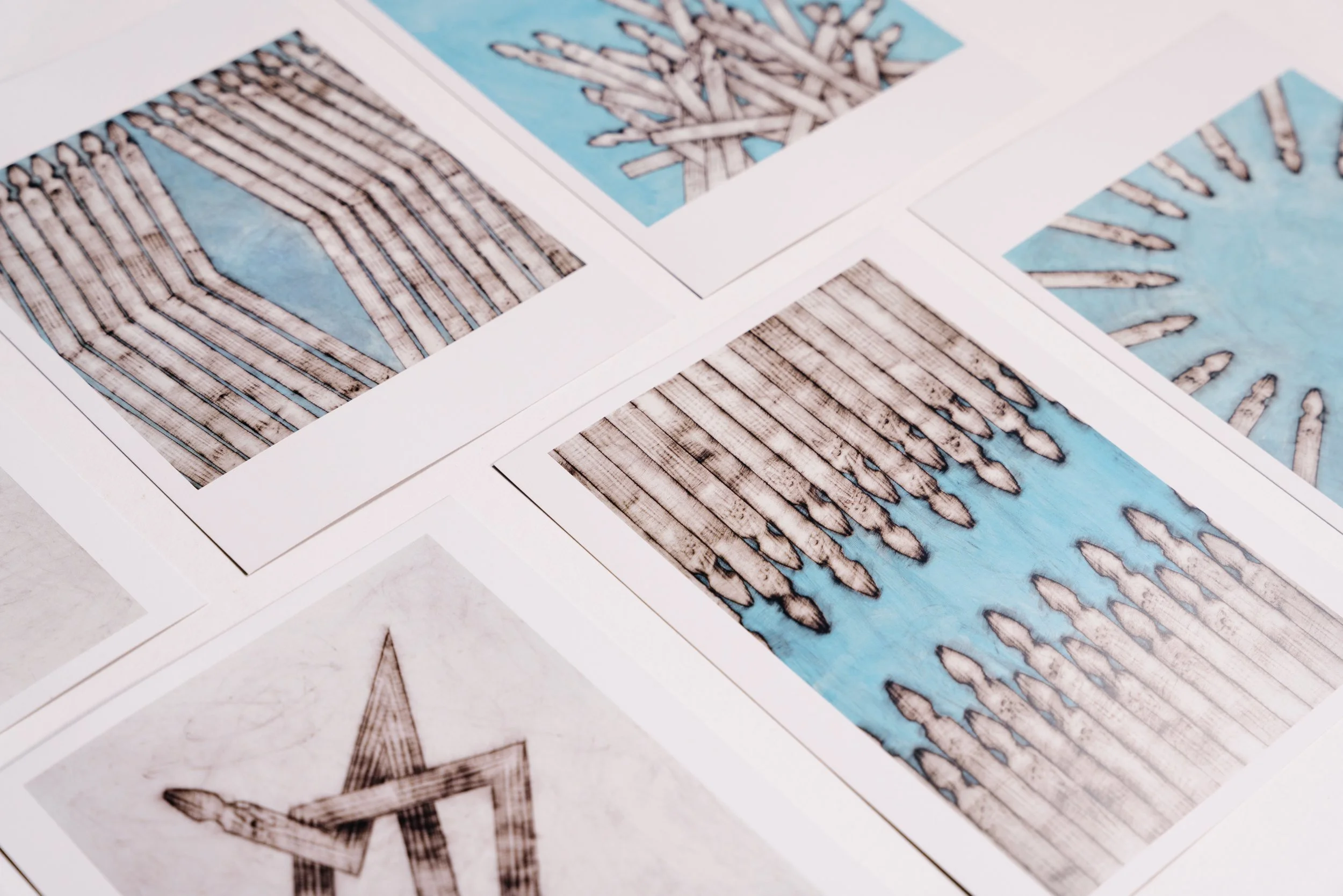
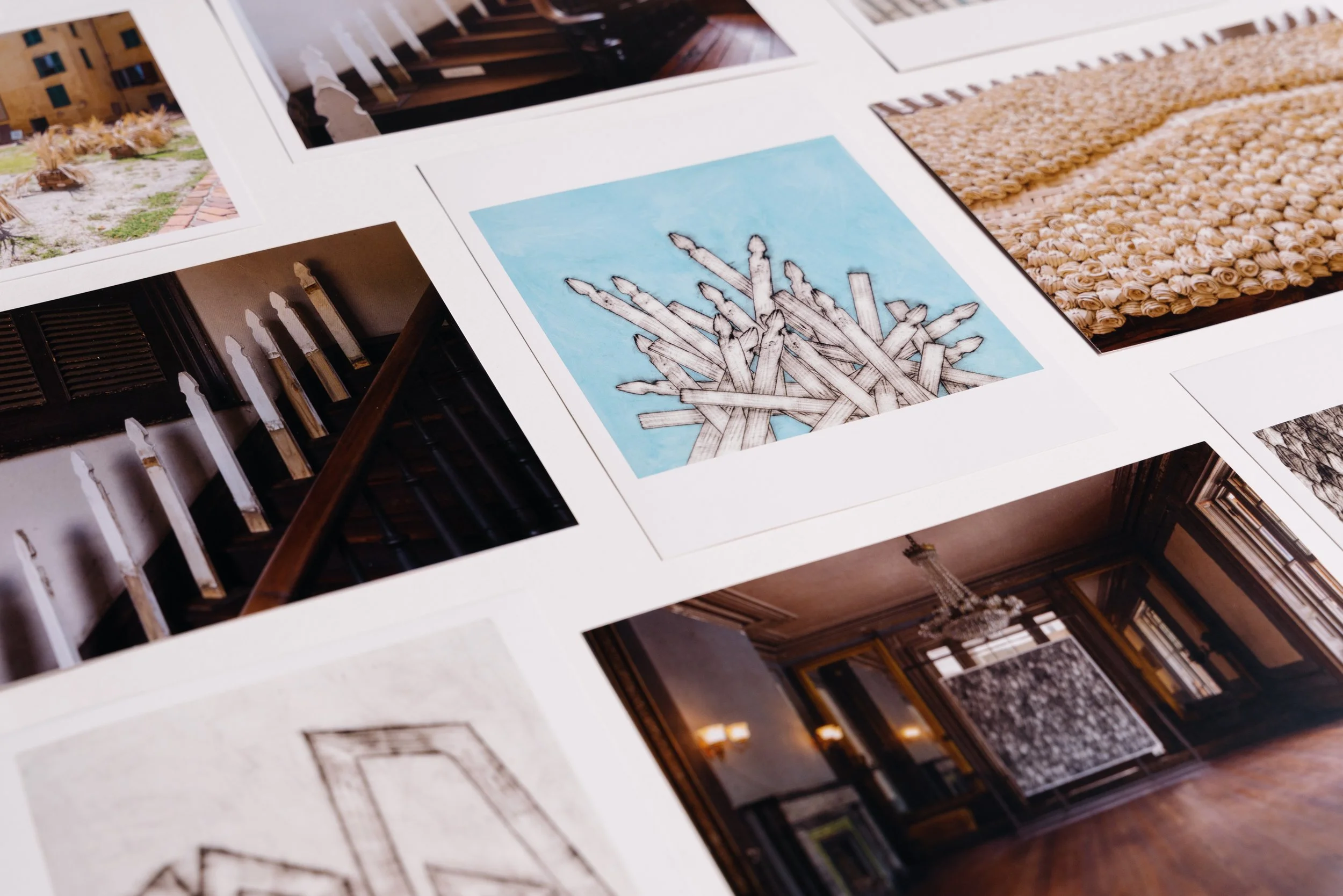
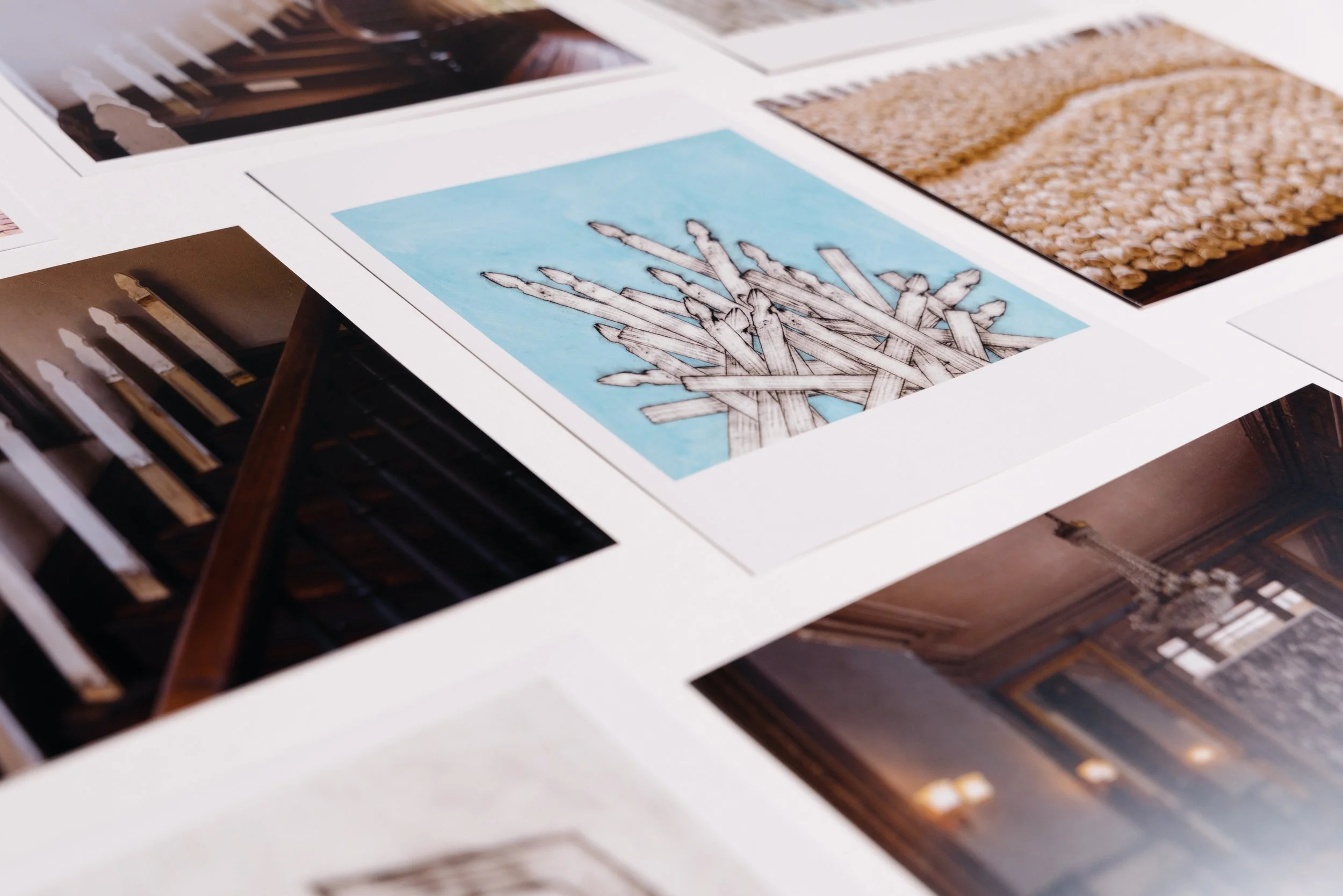
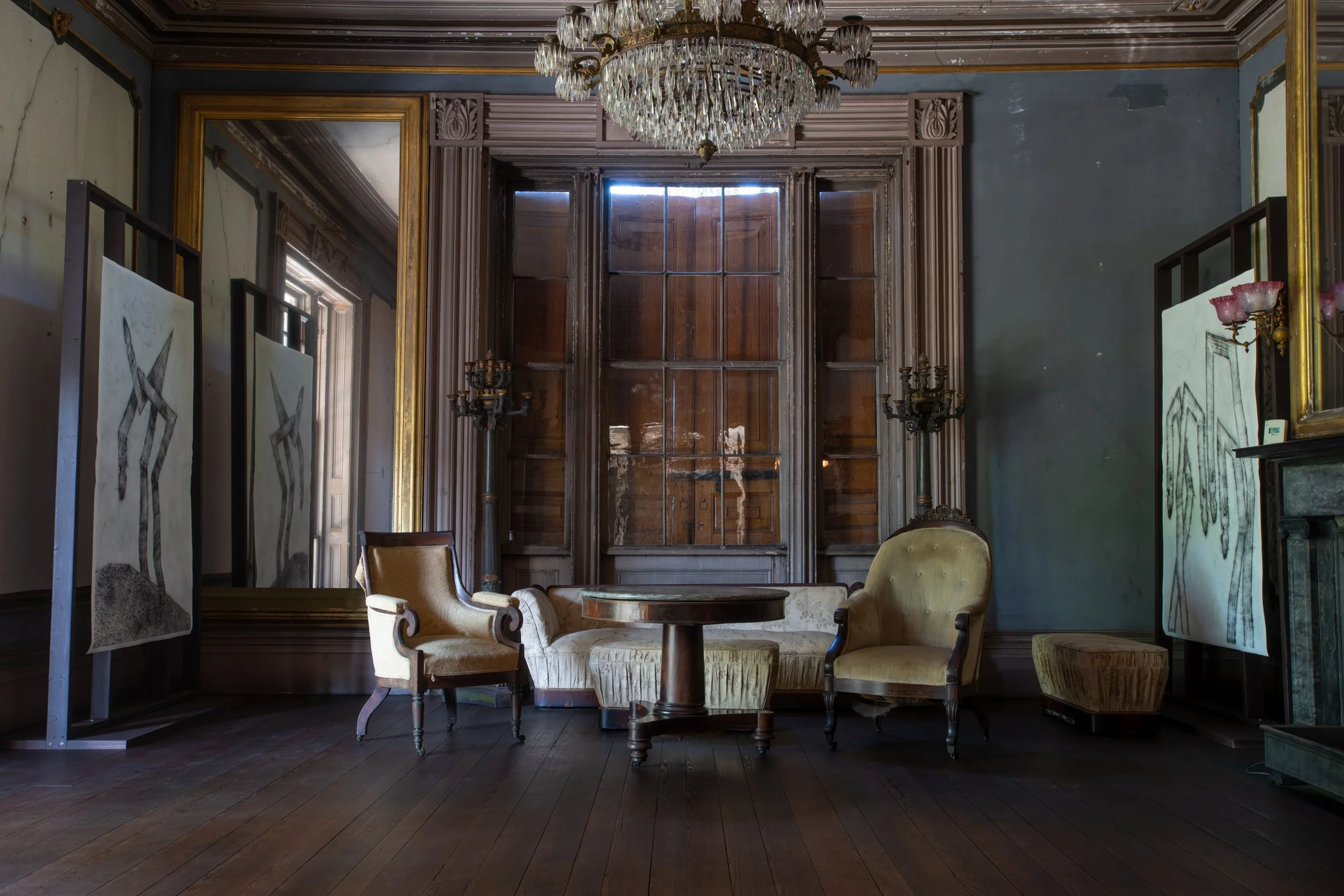
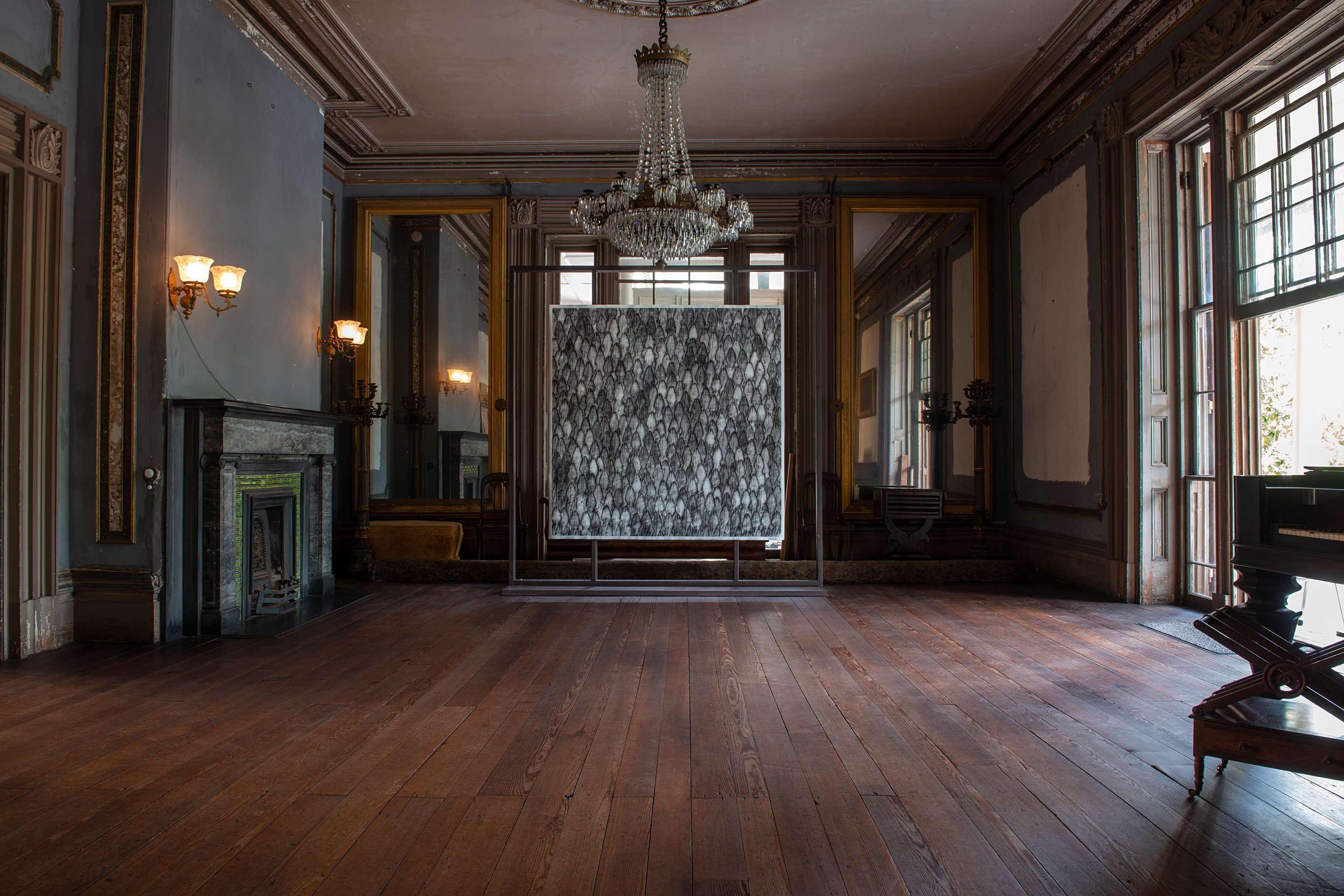
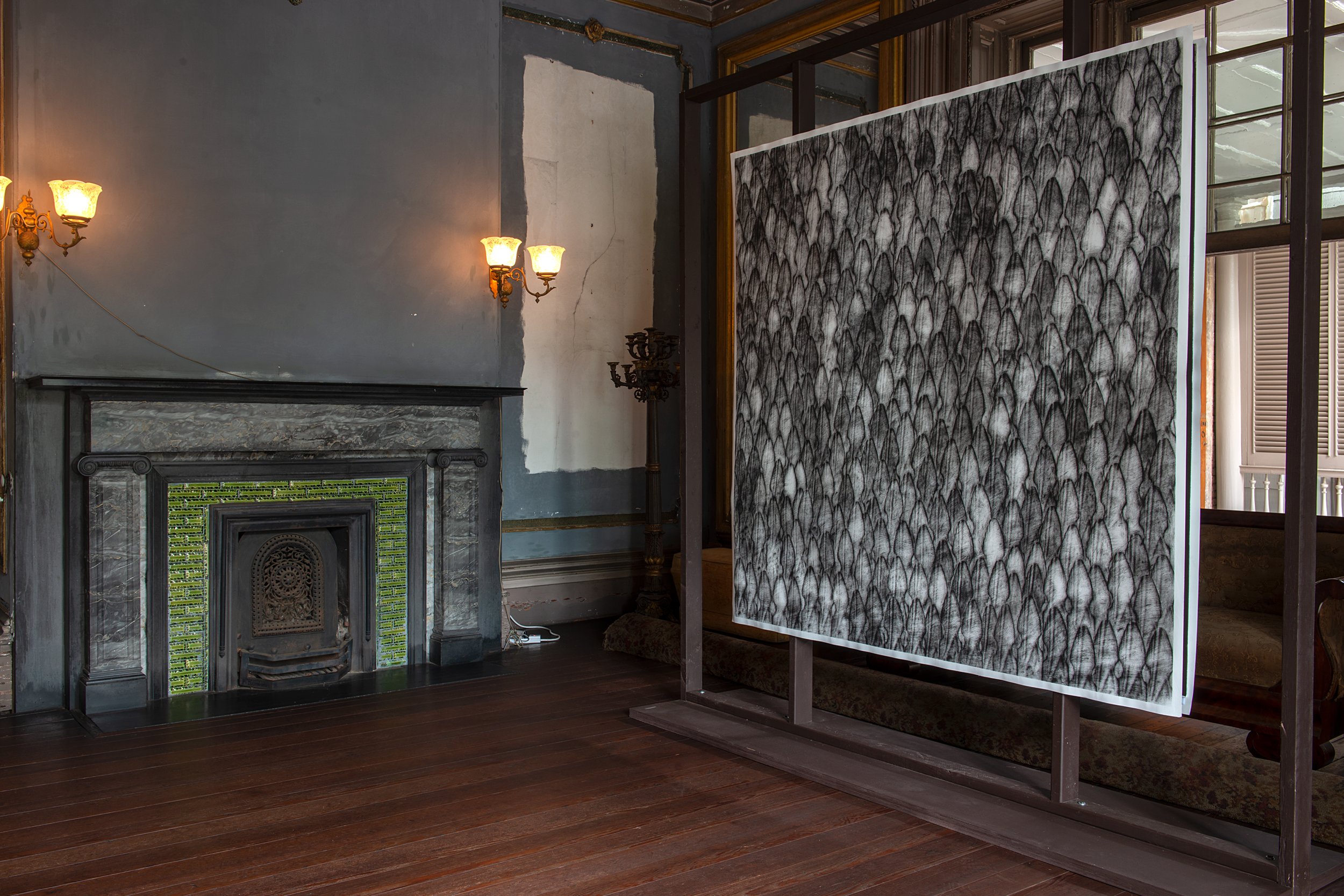
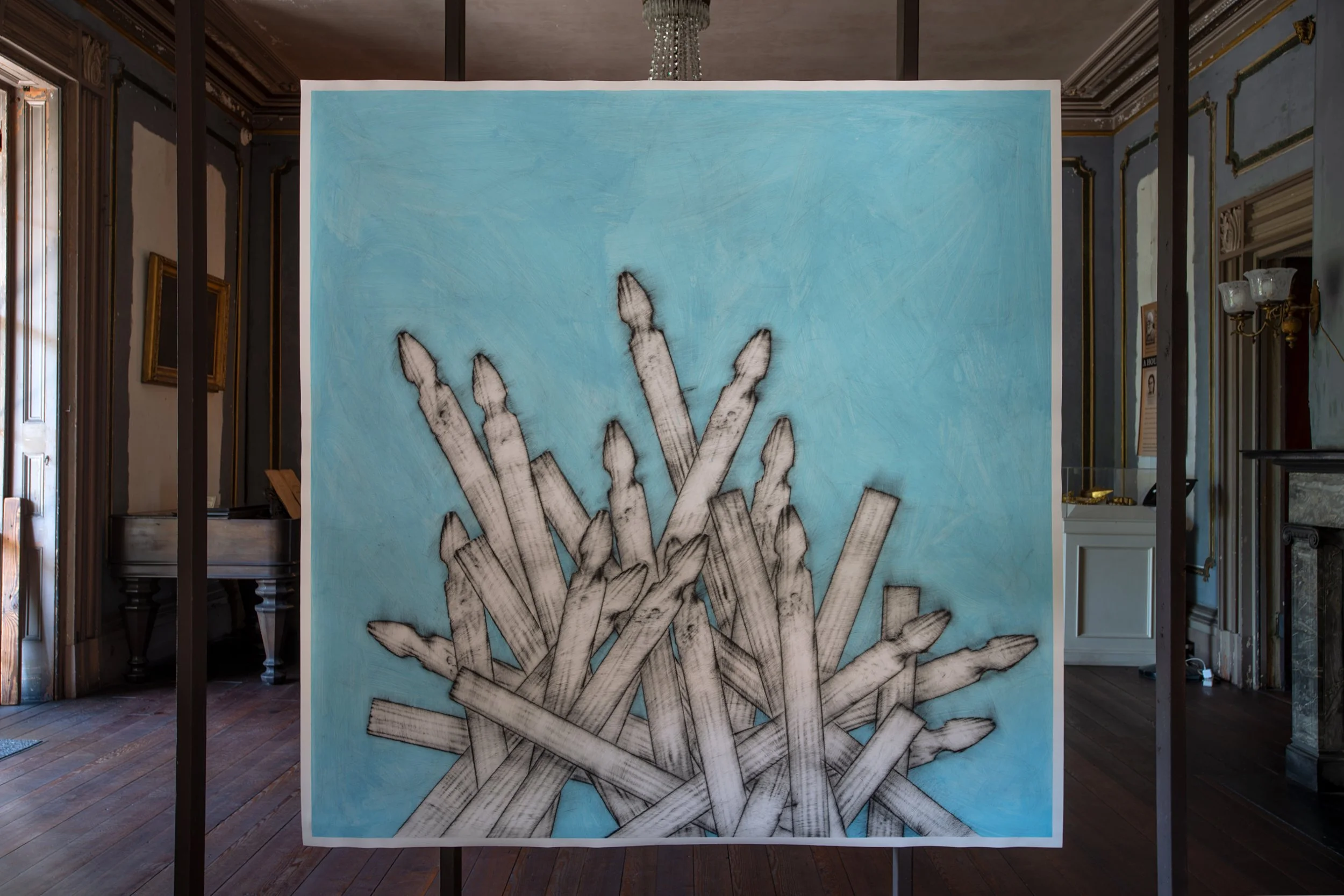
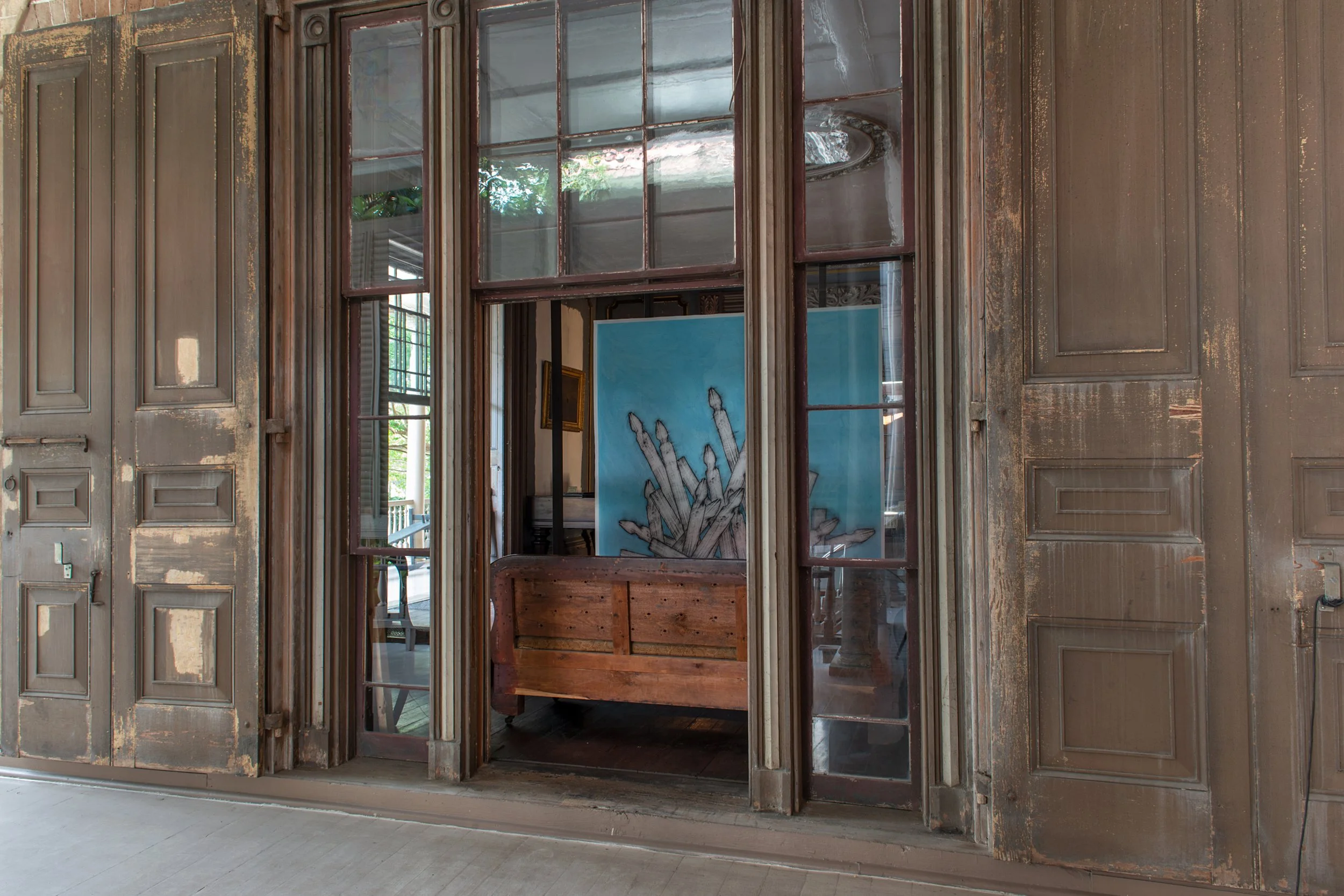
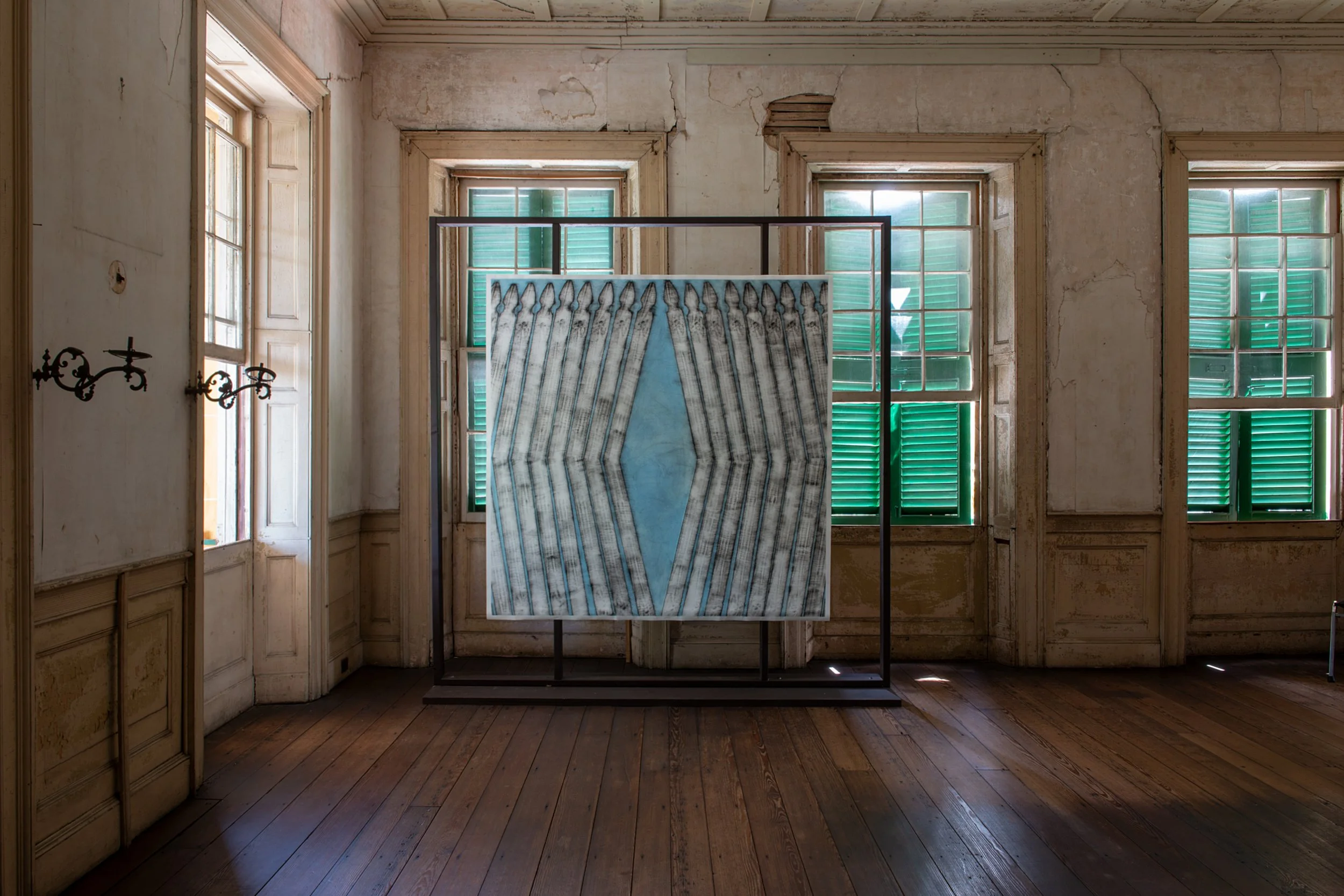
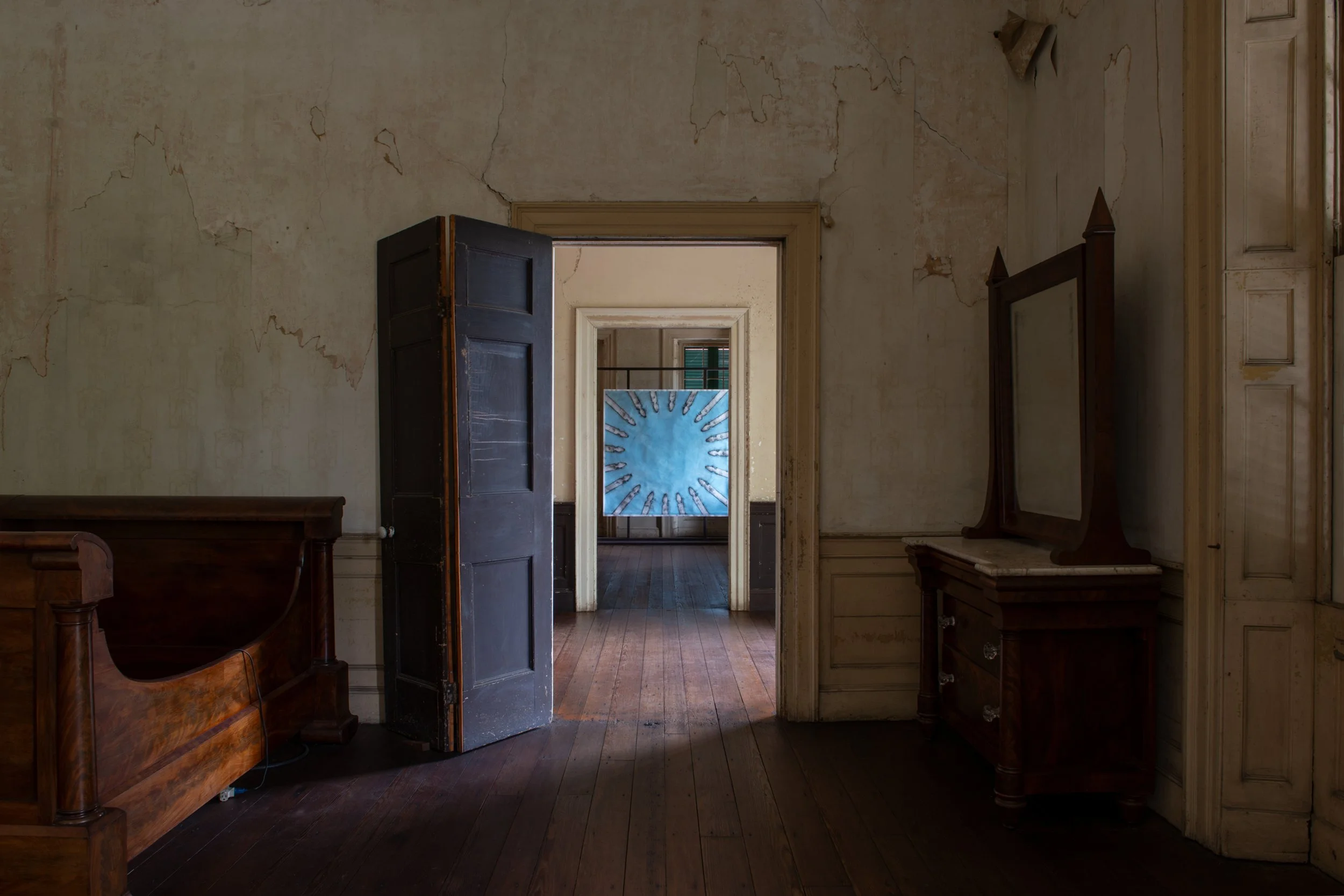
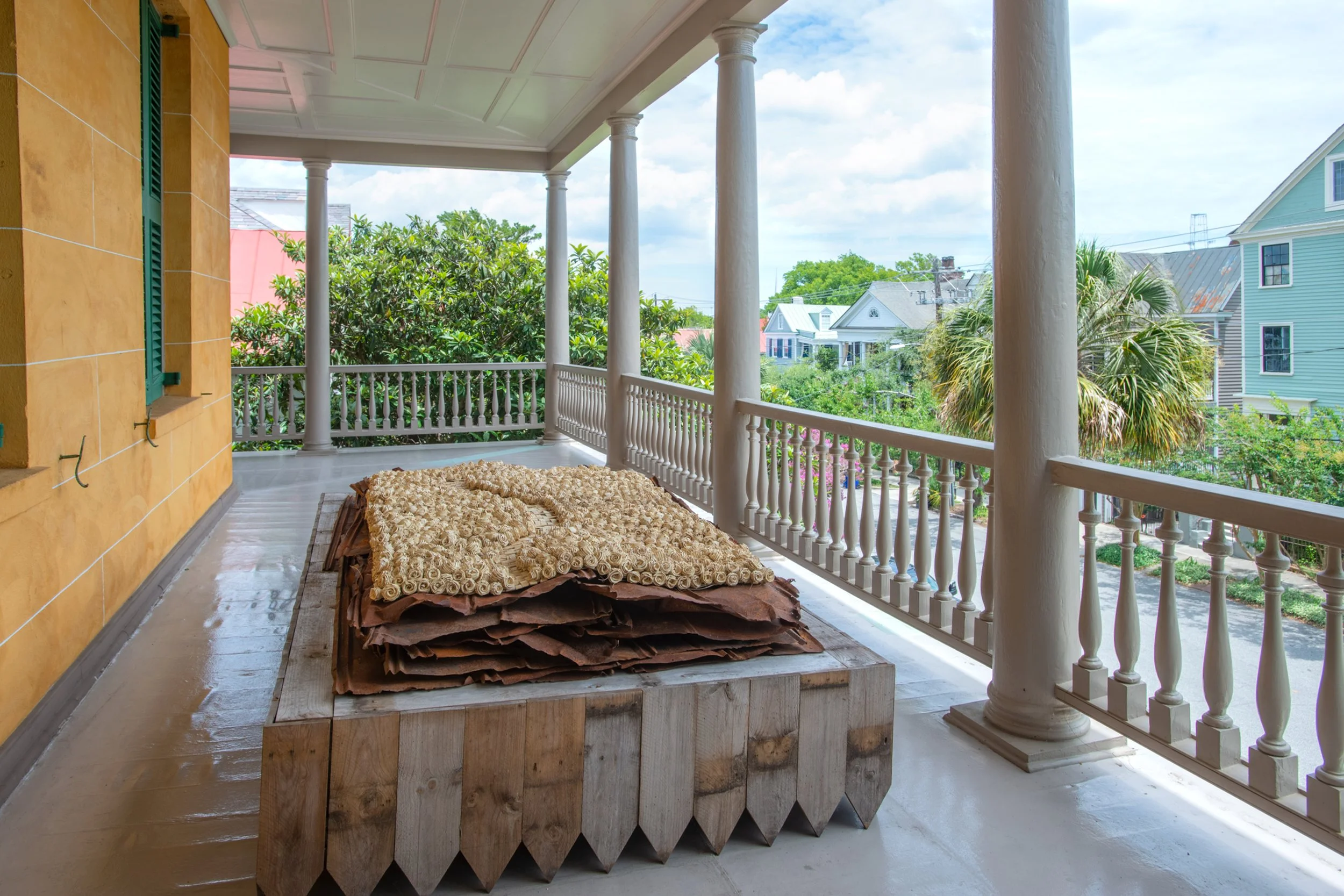
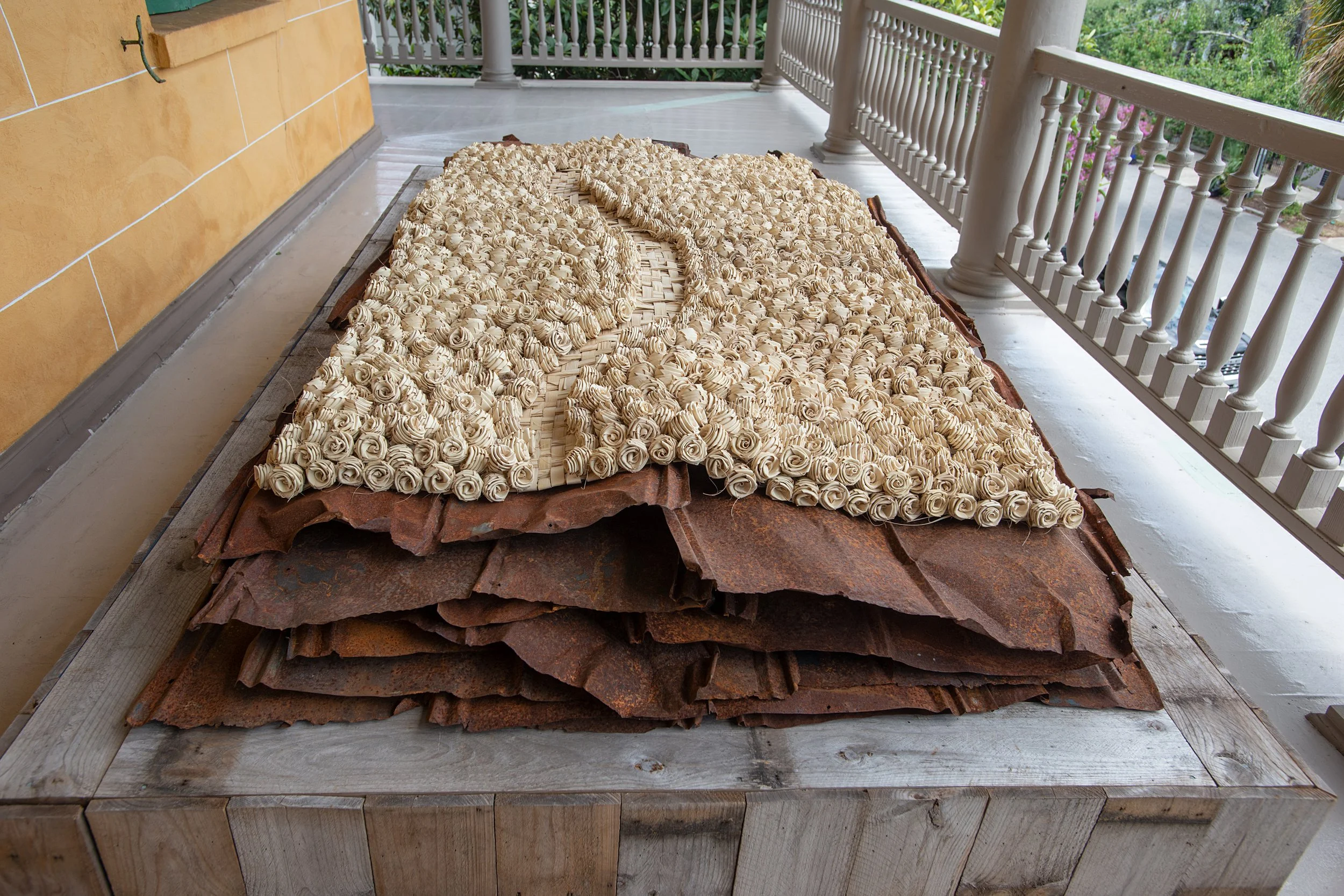
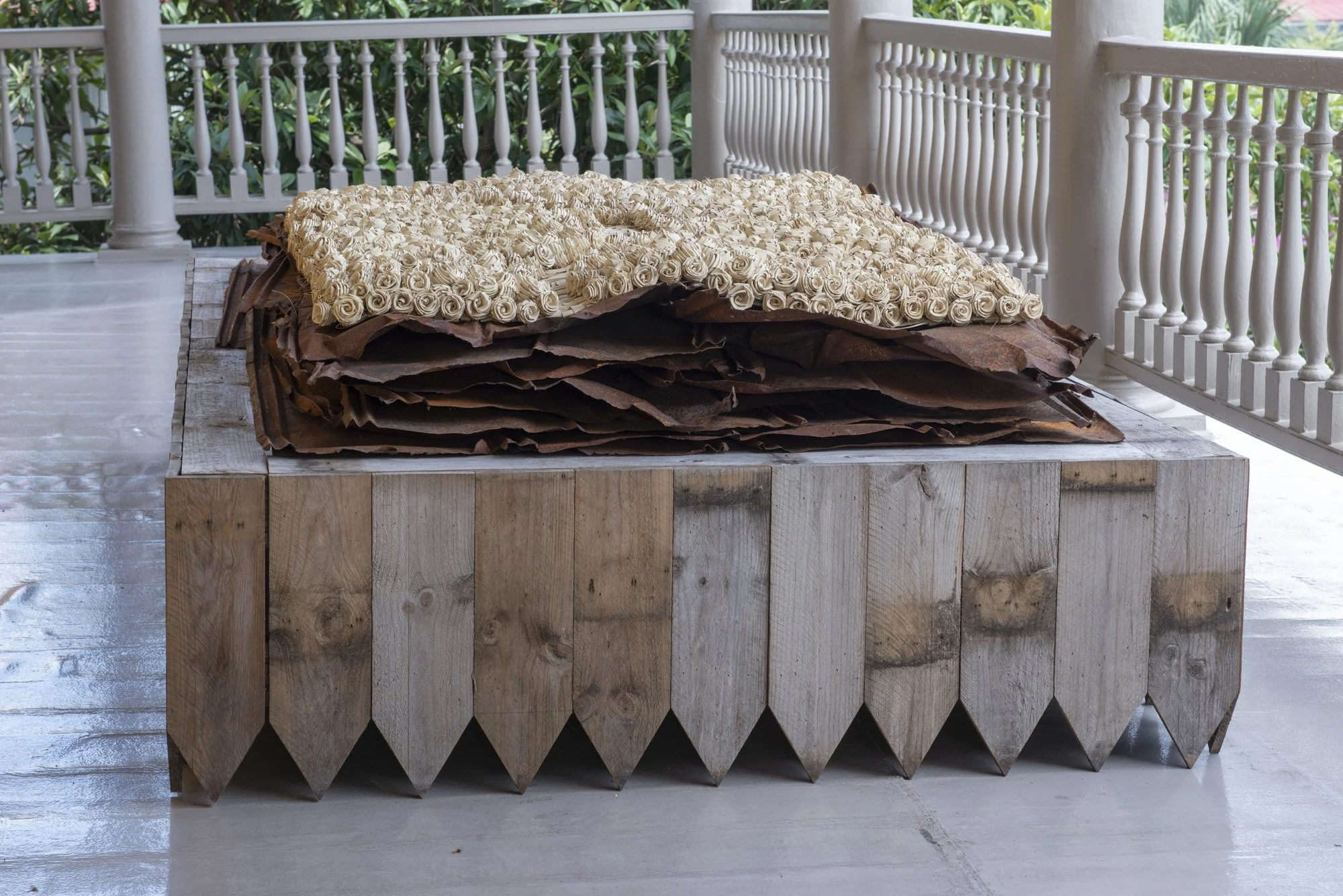
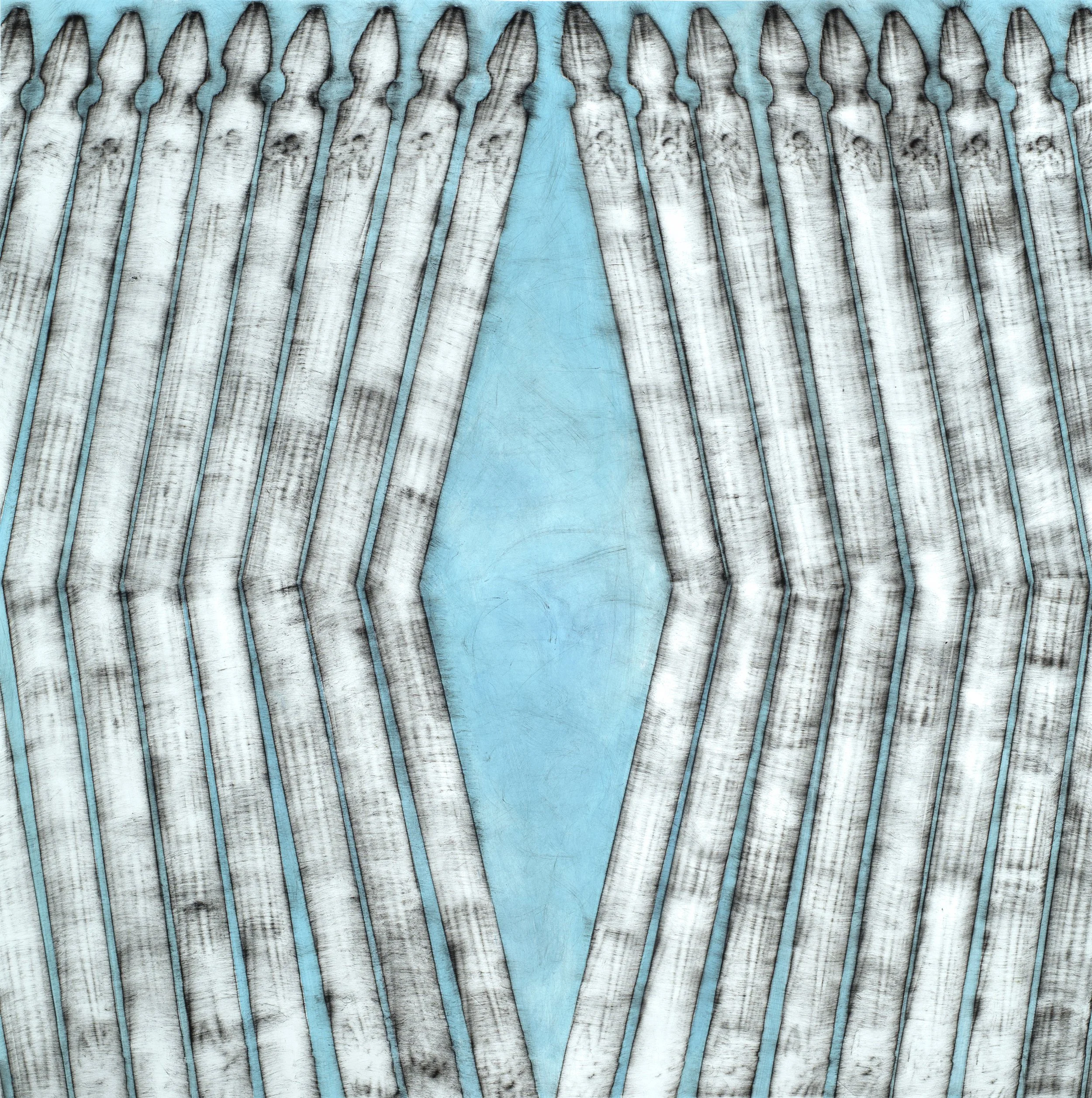
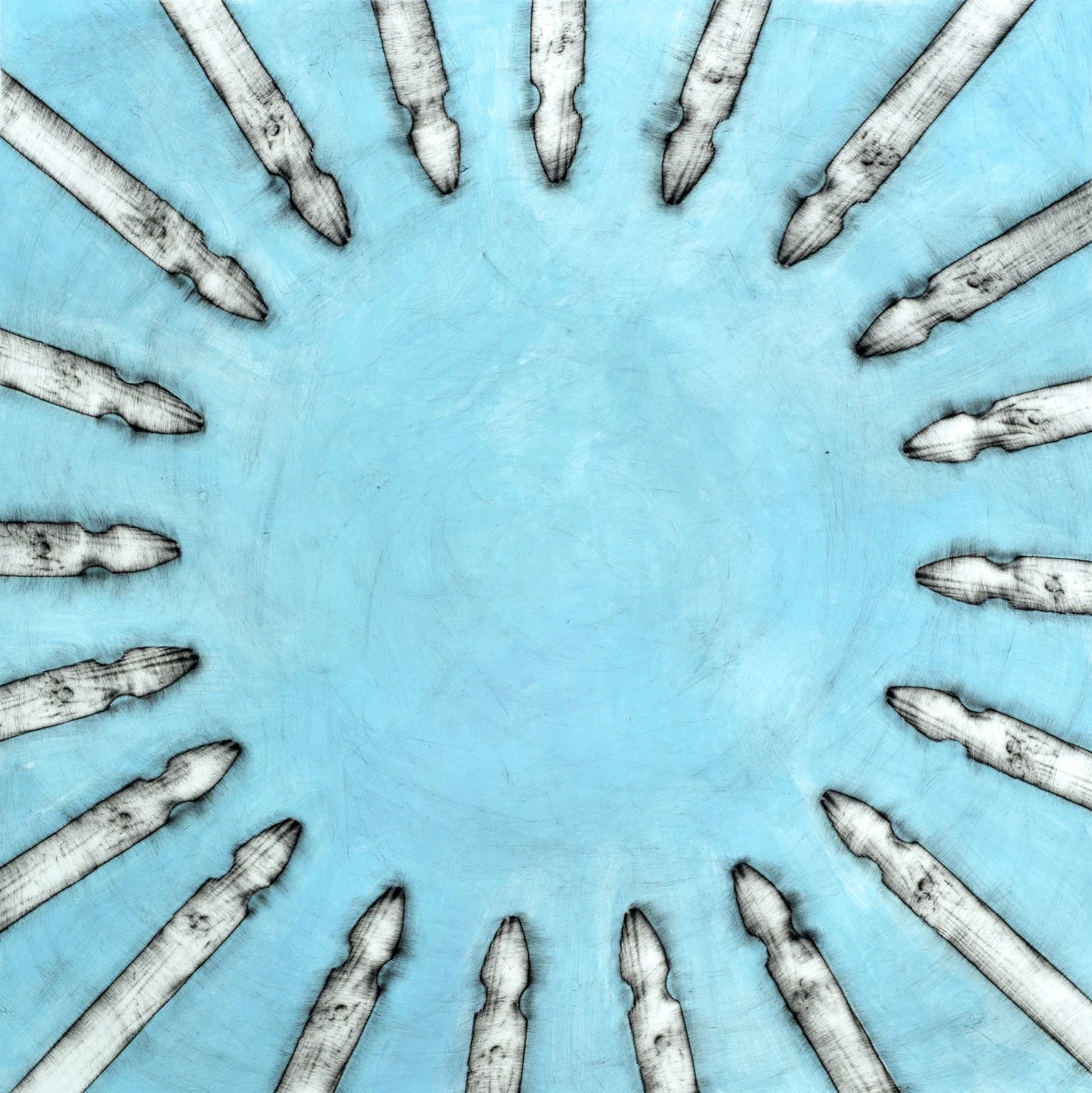
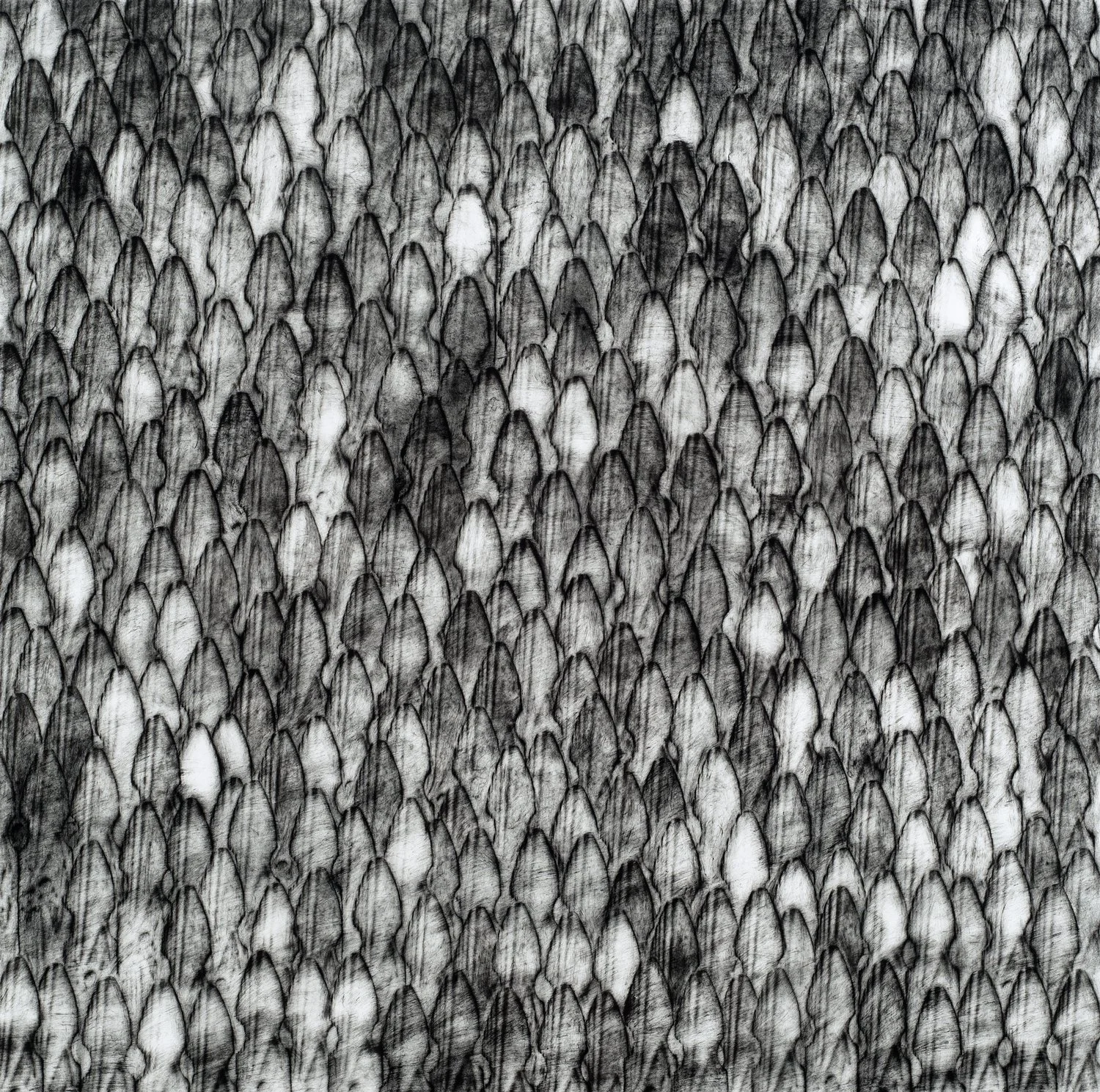
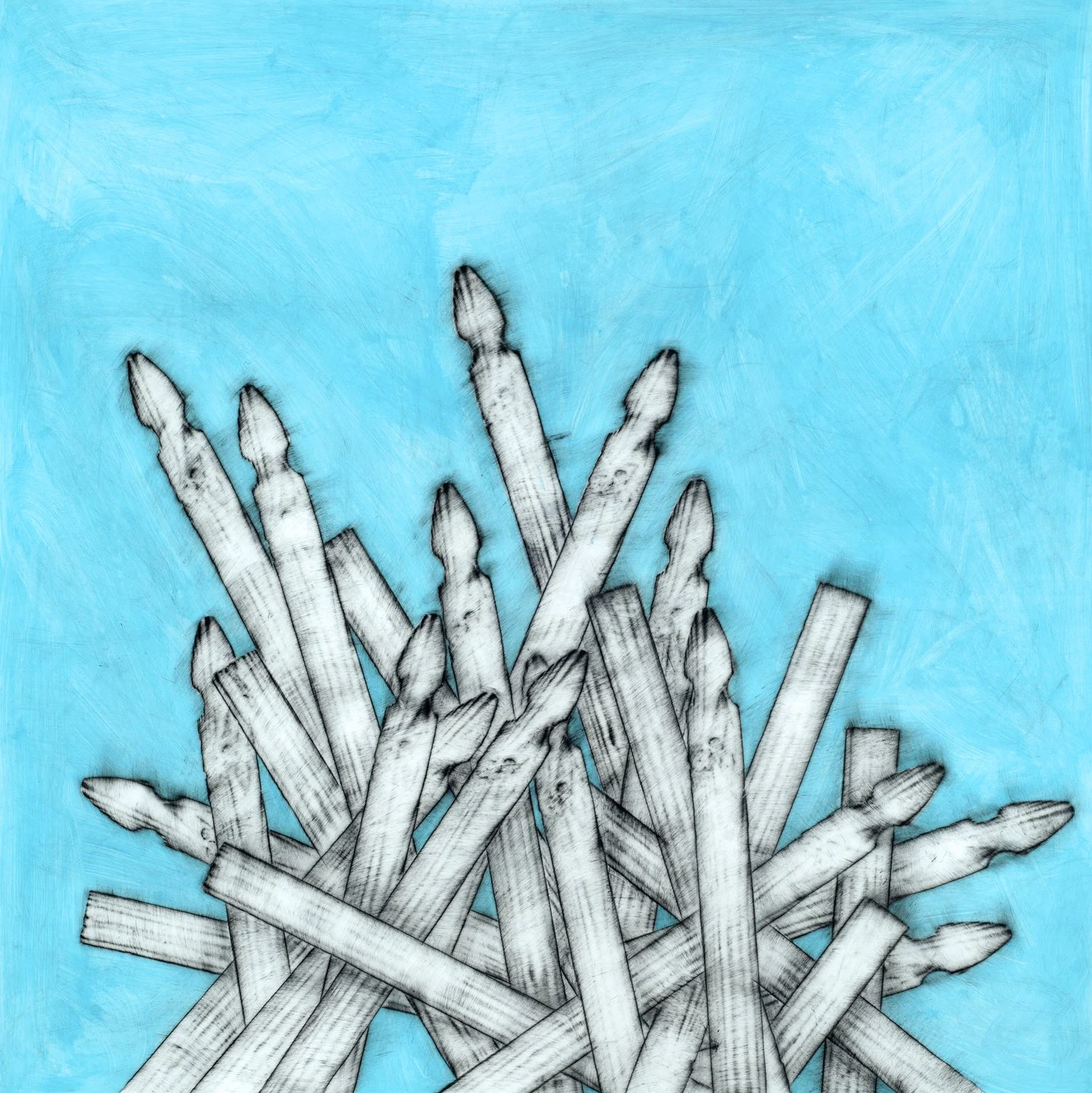
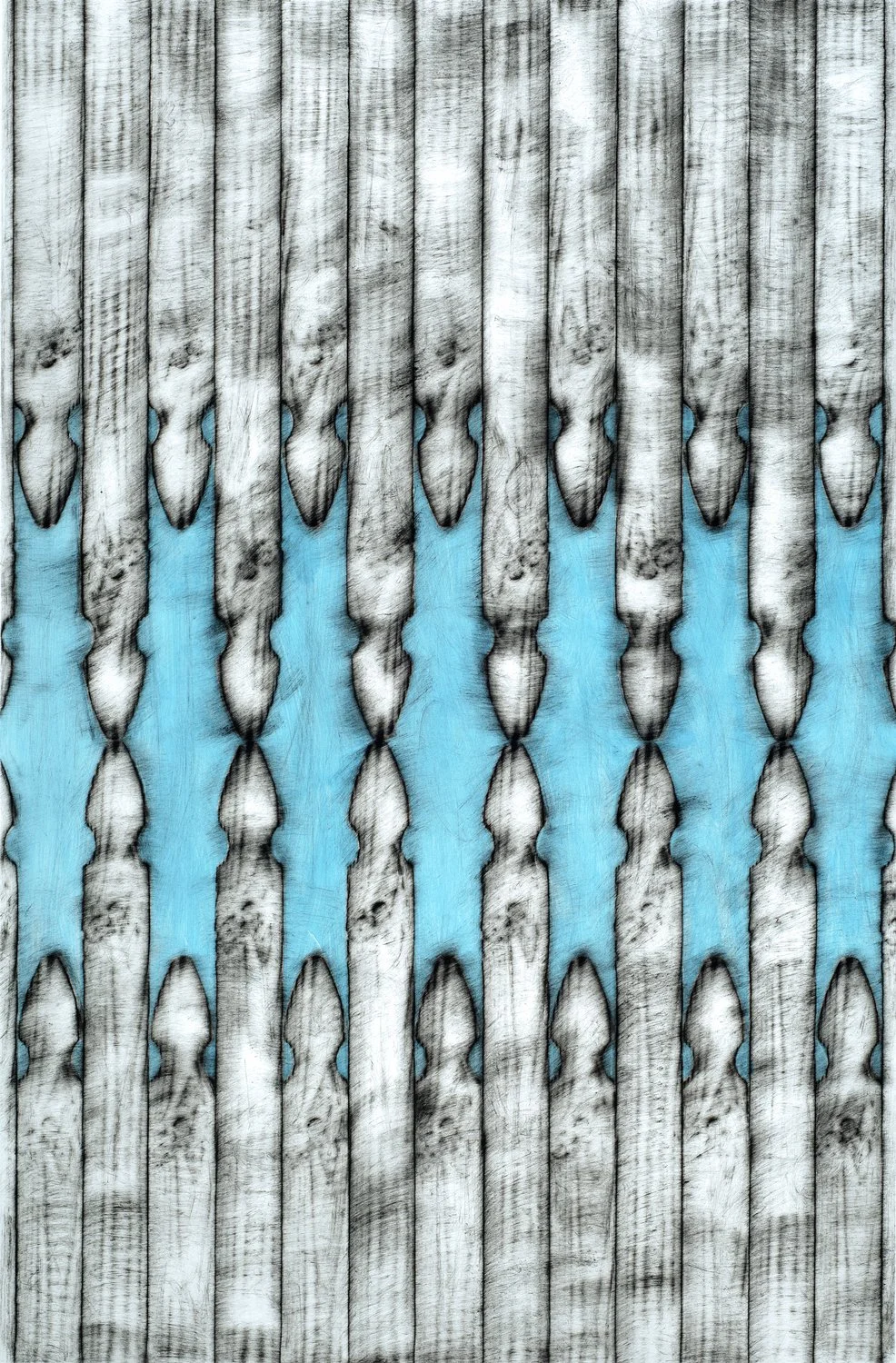
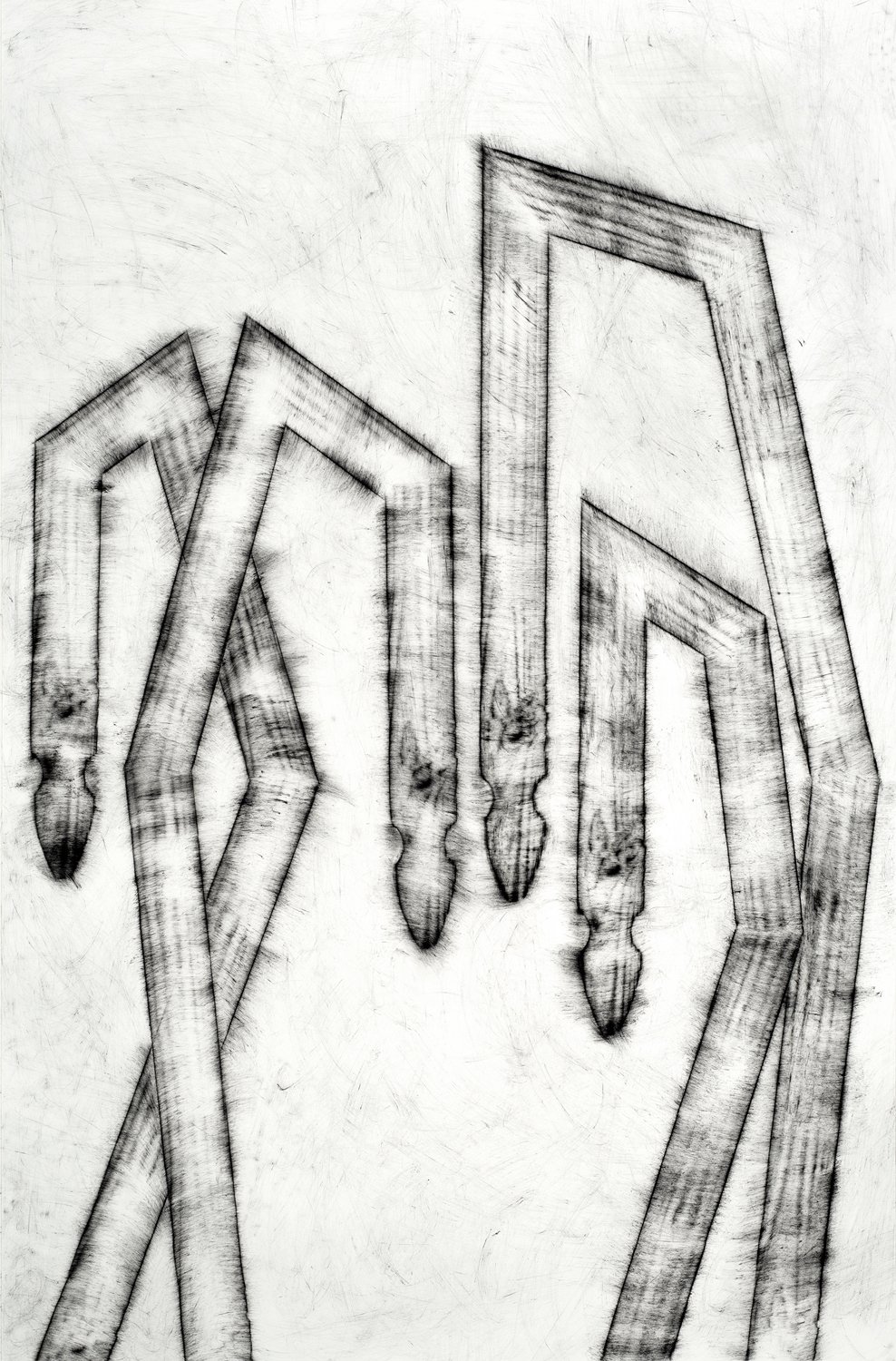
In the double parlor, large black-and-white Untitled drawings gathered vertical forms into loose groups. The forms could resemble pickets, figures, or bodies pressing against one another without fully becoming any of them. Nearby, En Masse multiplied the picket into a dense field. Repetition made the familiar shape increasingly unstable: fence became crowd; crowd became pattern; pattern returned to architecture. On the first-floor piazza, another Untitled work scattered white pickets across a blue ground. Instead of standing upright in their familiar sequence, the forms fell into a loose pile. Upstairs, the picket changed again. In two Untitled works, fragments of fencing formed openings—a diamond in one and a circle in another. The barrier had become a frame. Homegoing, formerly titled Gift to a Gardener, occupied the upper piazza. Williams combined salvaged tin roofing and an inverted wooden picket structure with thousands of handwoven palmetto roses. Repetition transformed the individual flower into a field. The palmetto rose—a familiar Charleston form made by hand and circulated throughout the city—was returned here to labor, accumulation, ritual, and remembrance. Placed within a house where generations of Black labor remain materially present but incompletely recorded, the work carried the weight of commemoration without functioning as a monument to a single person or event.
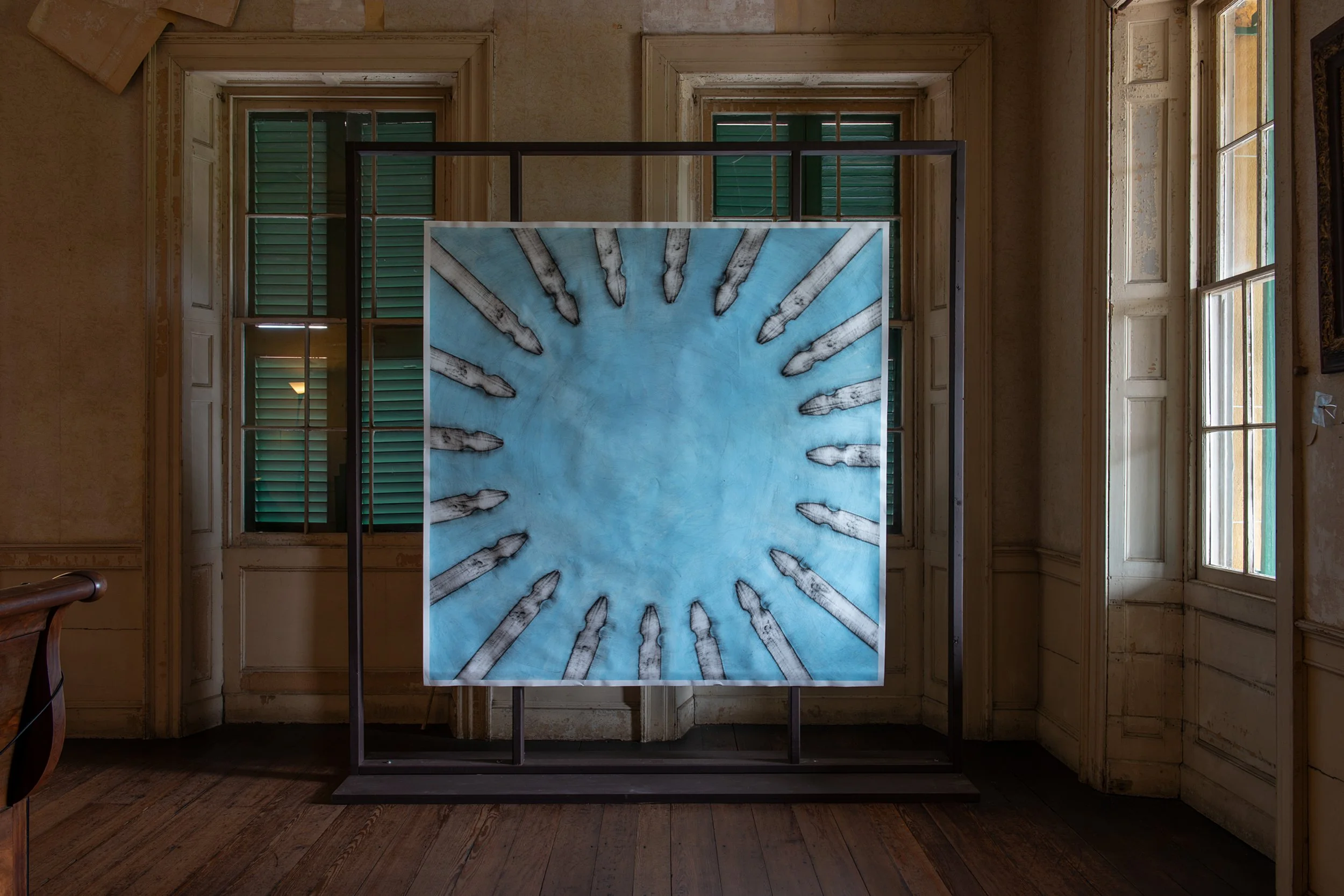
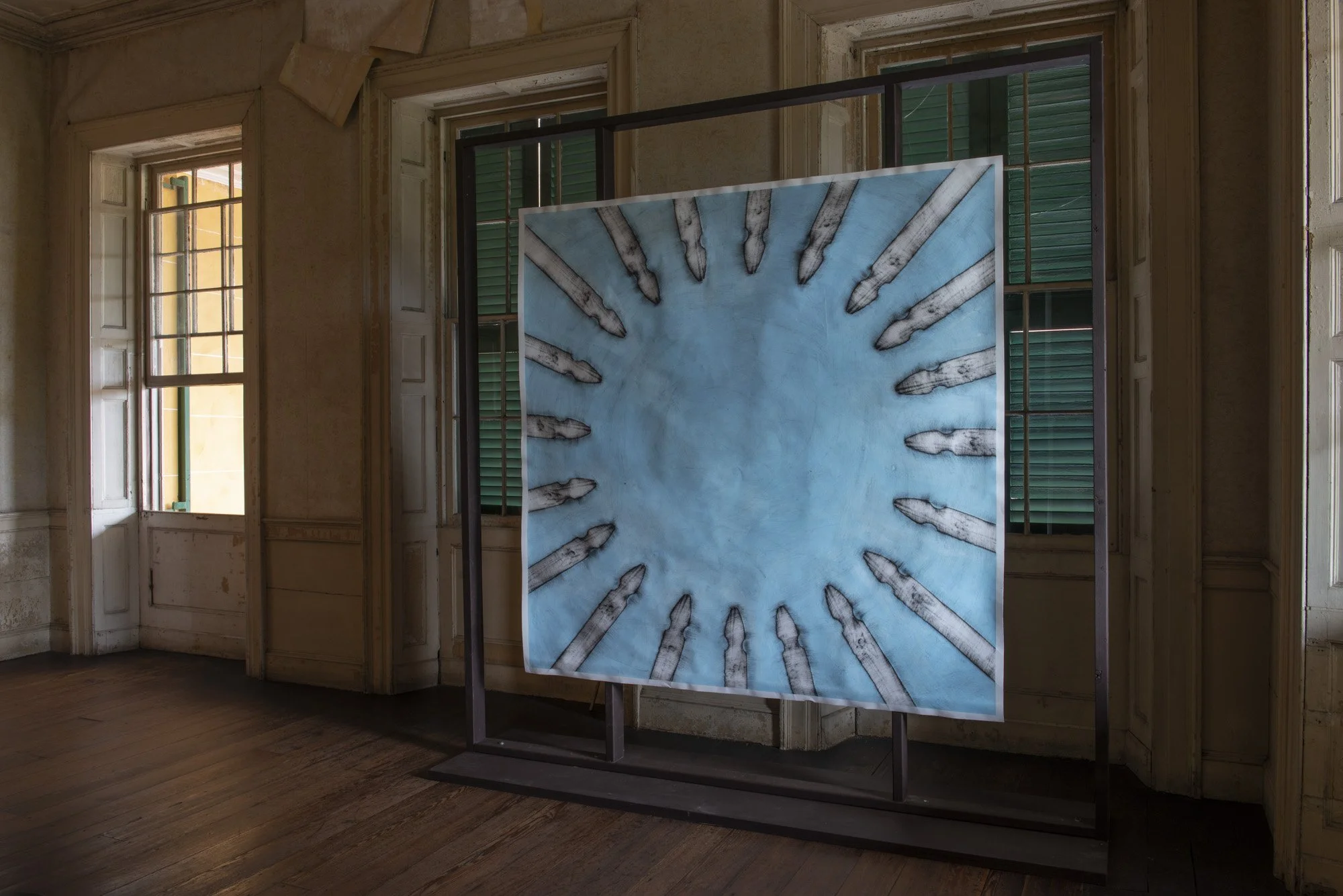
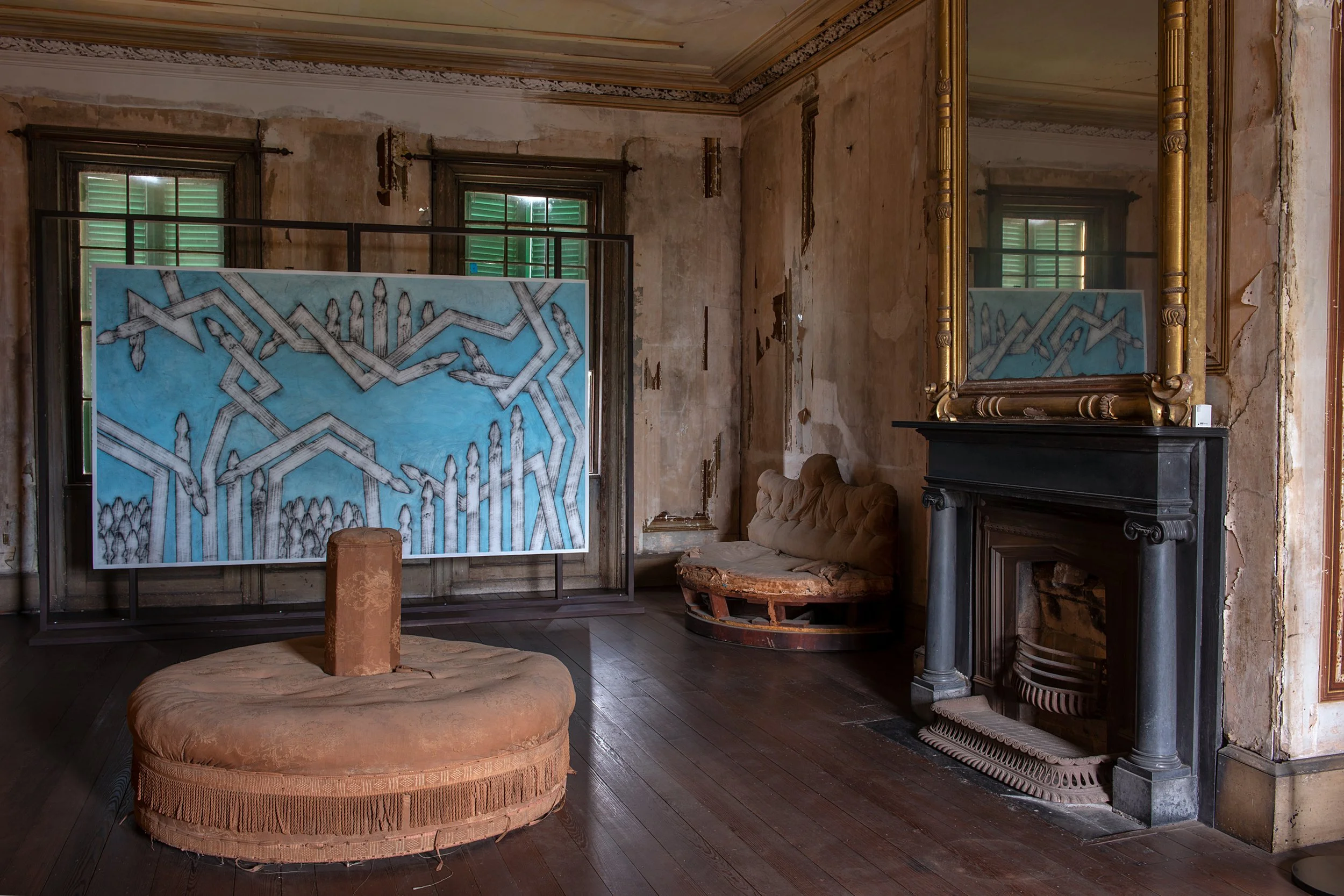
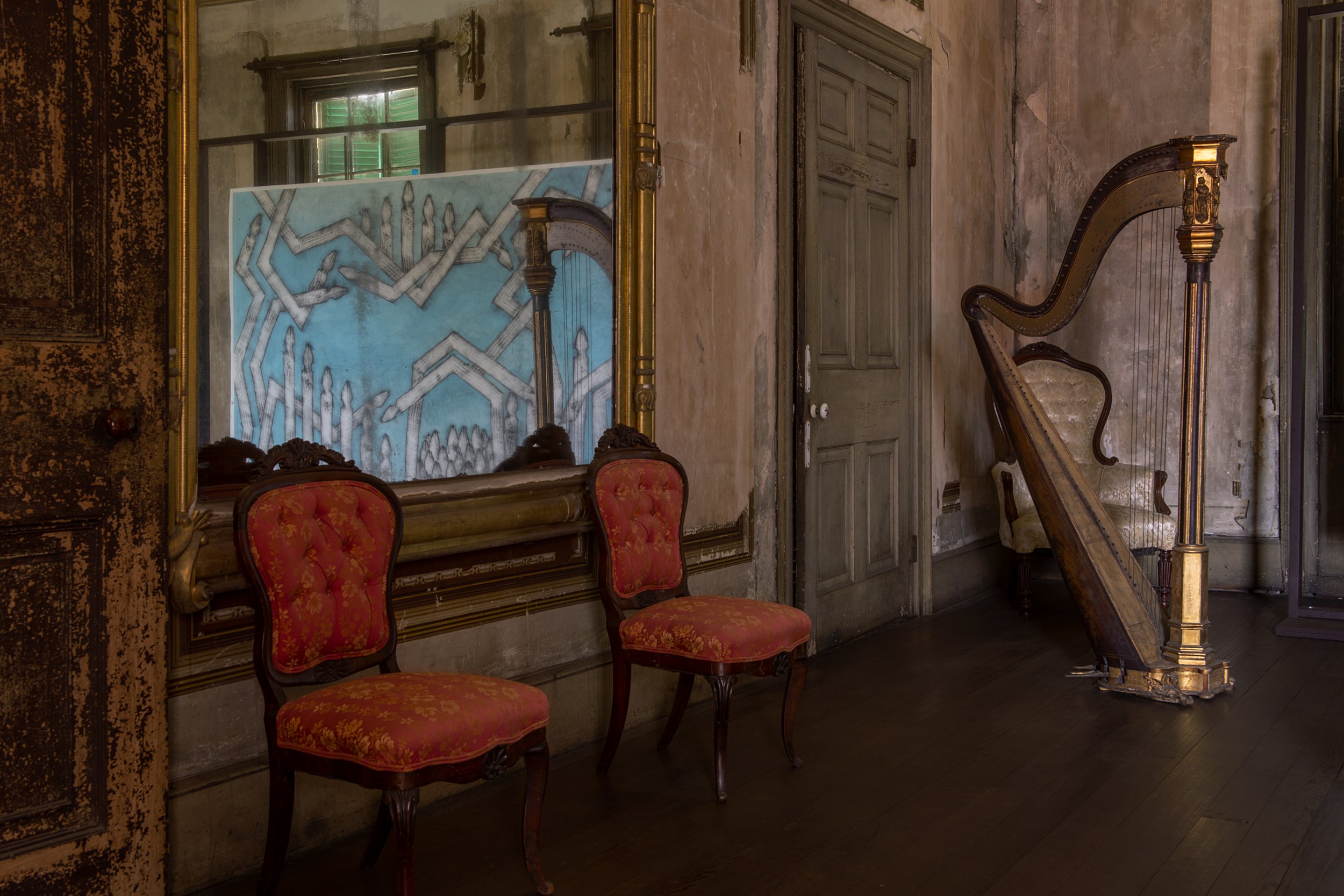
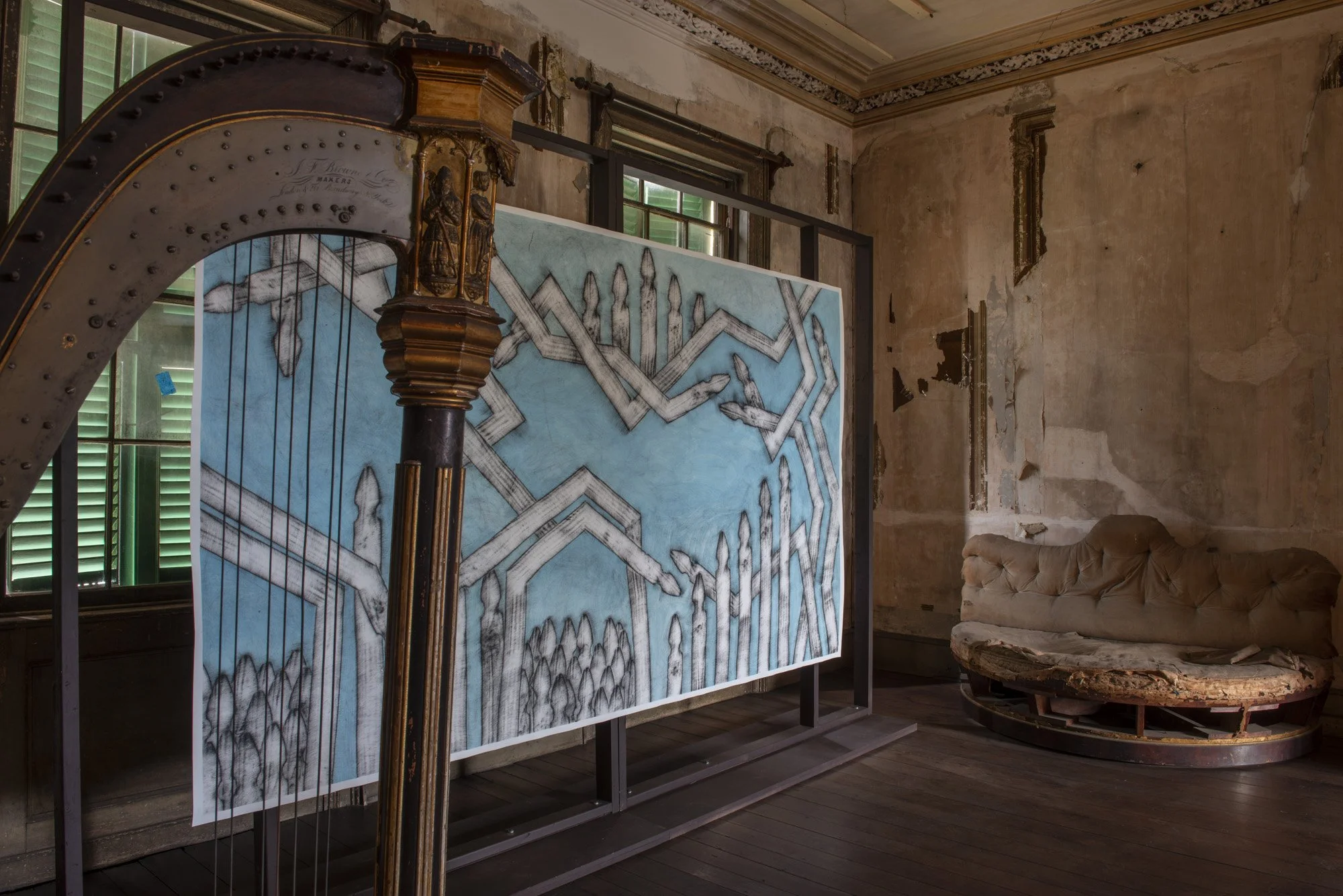
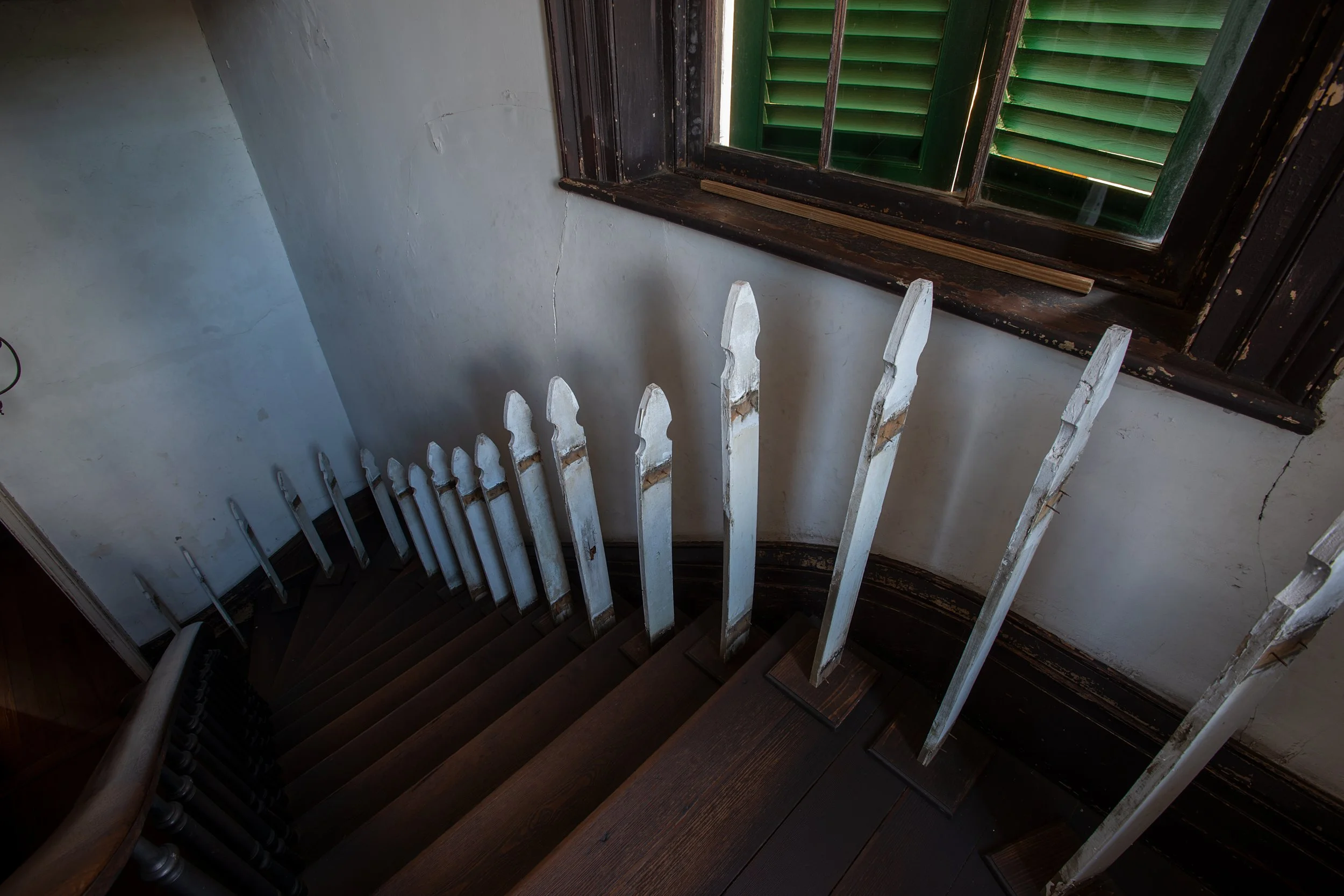
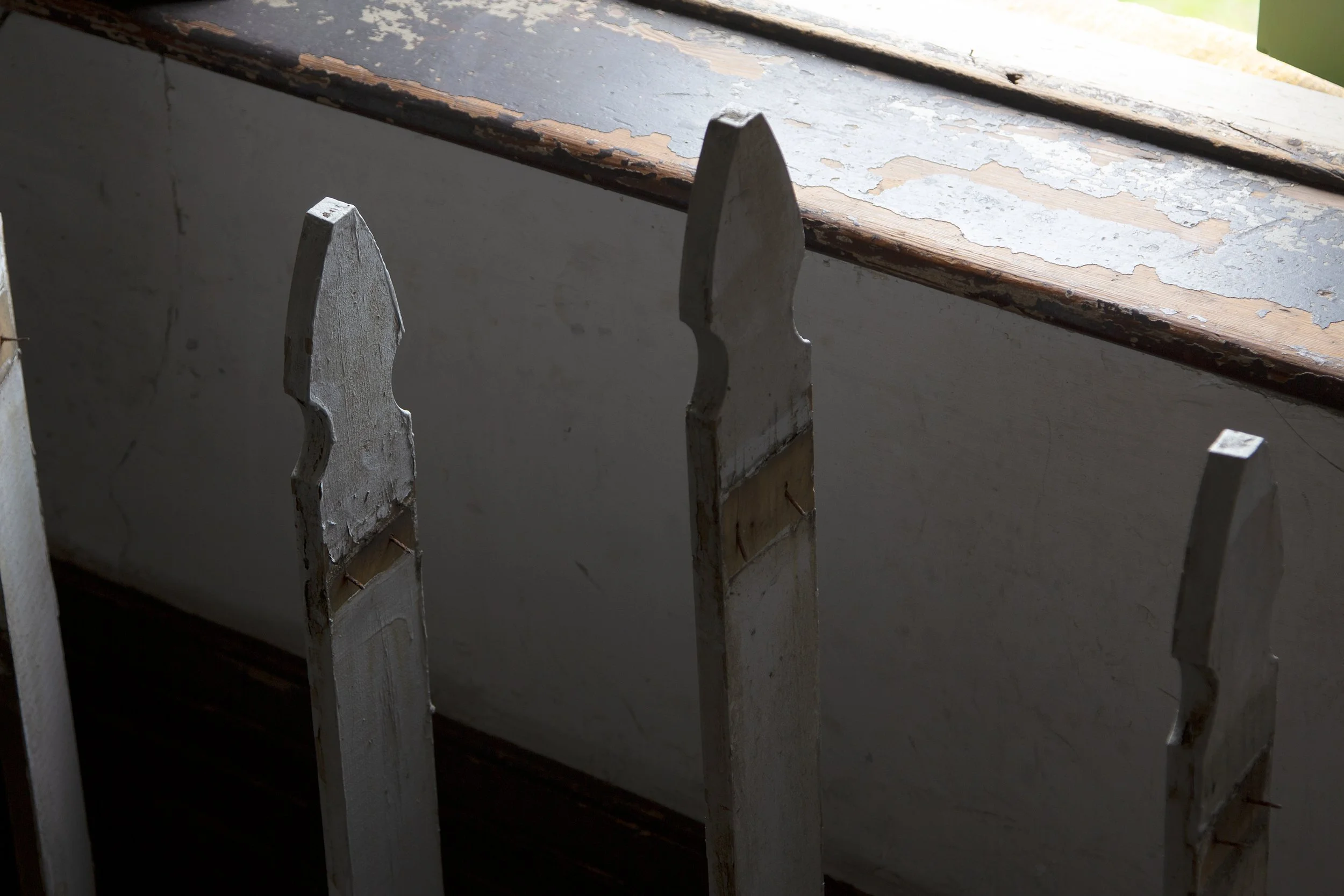
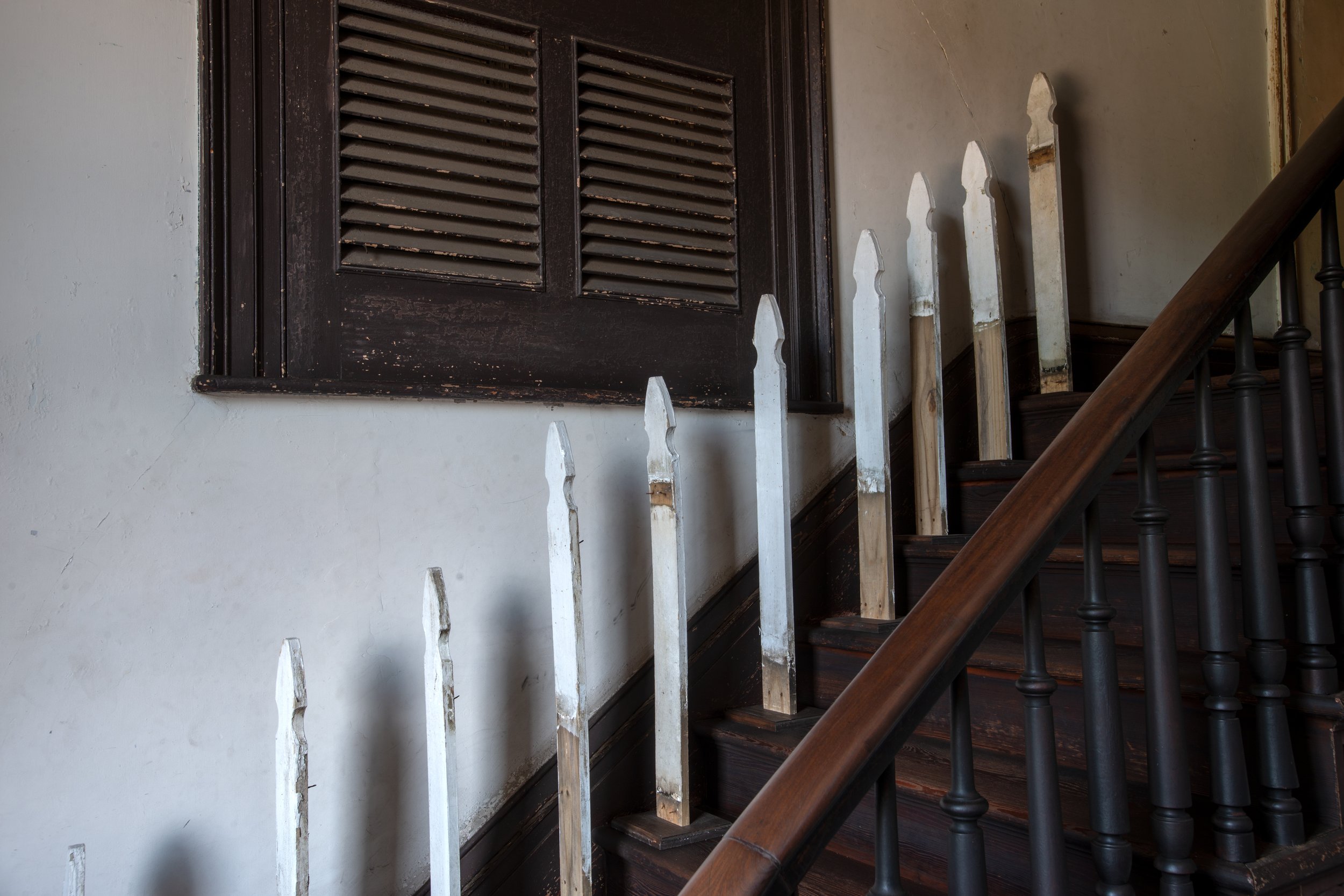
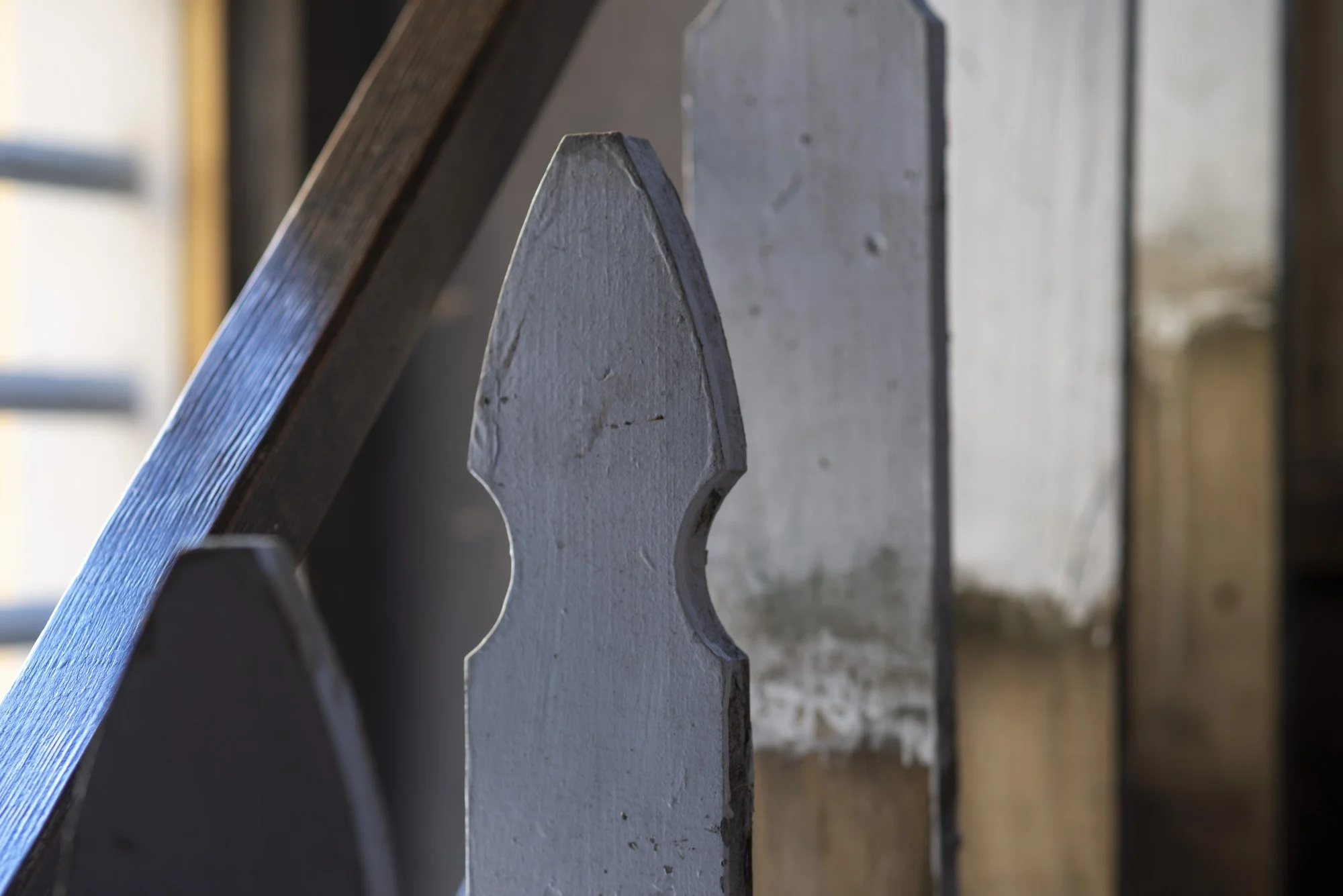
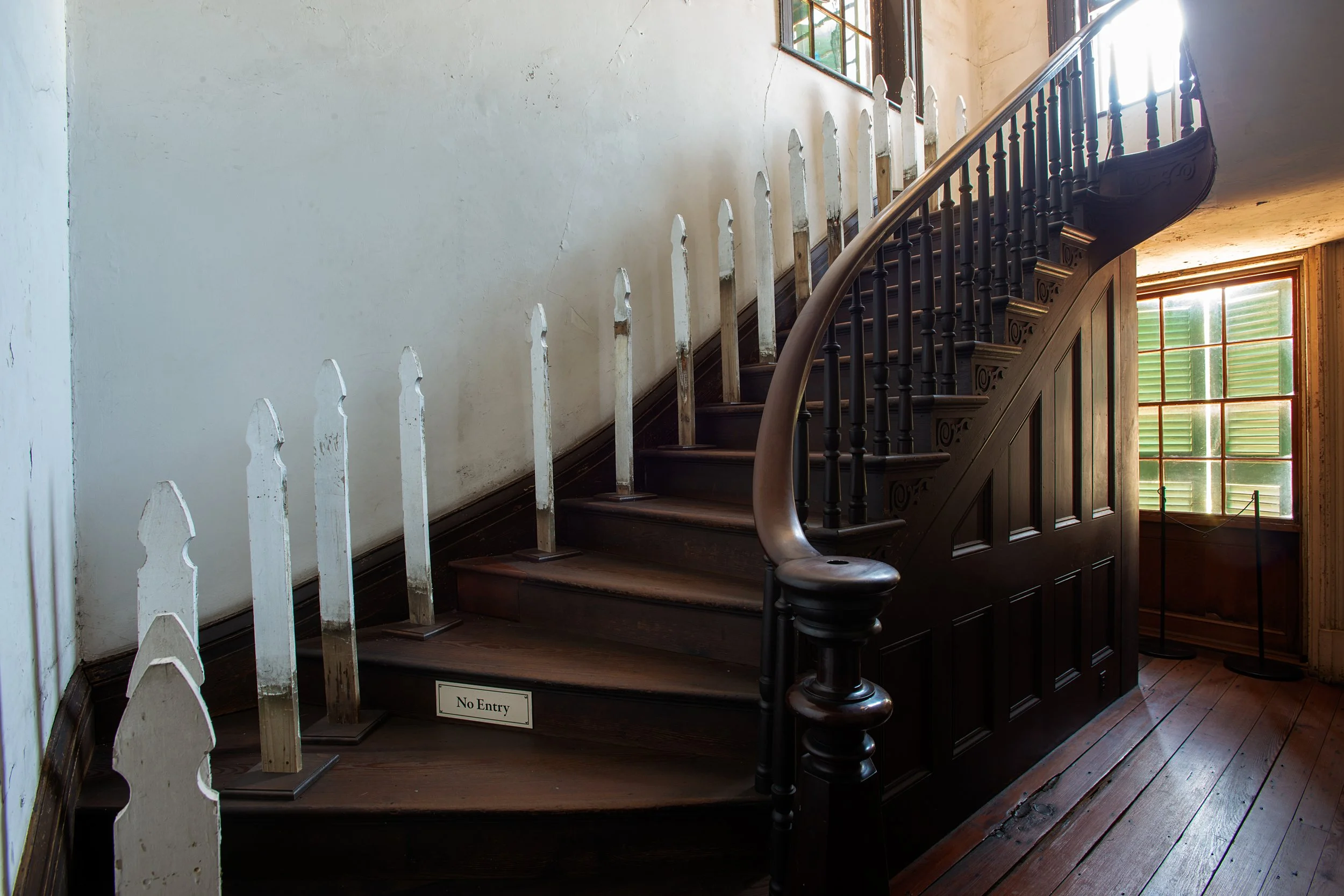
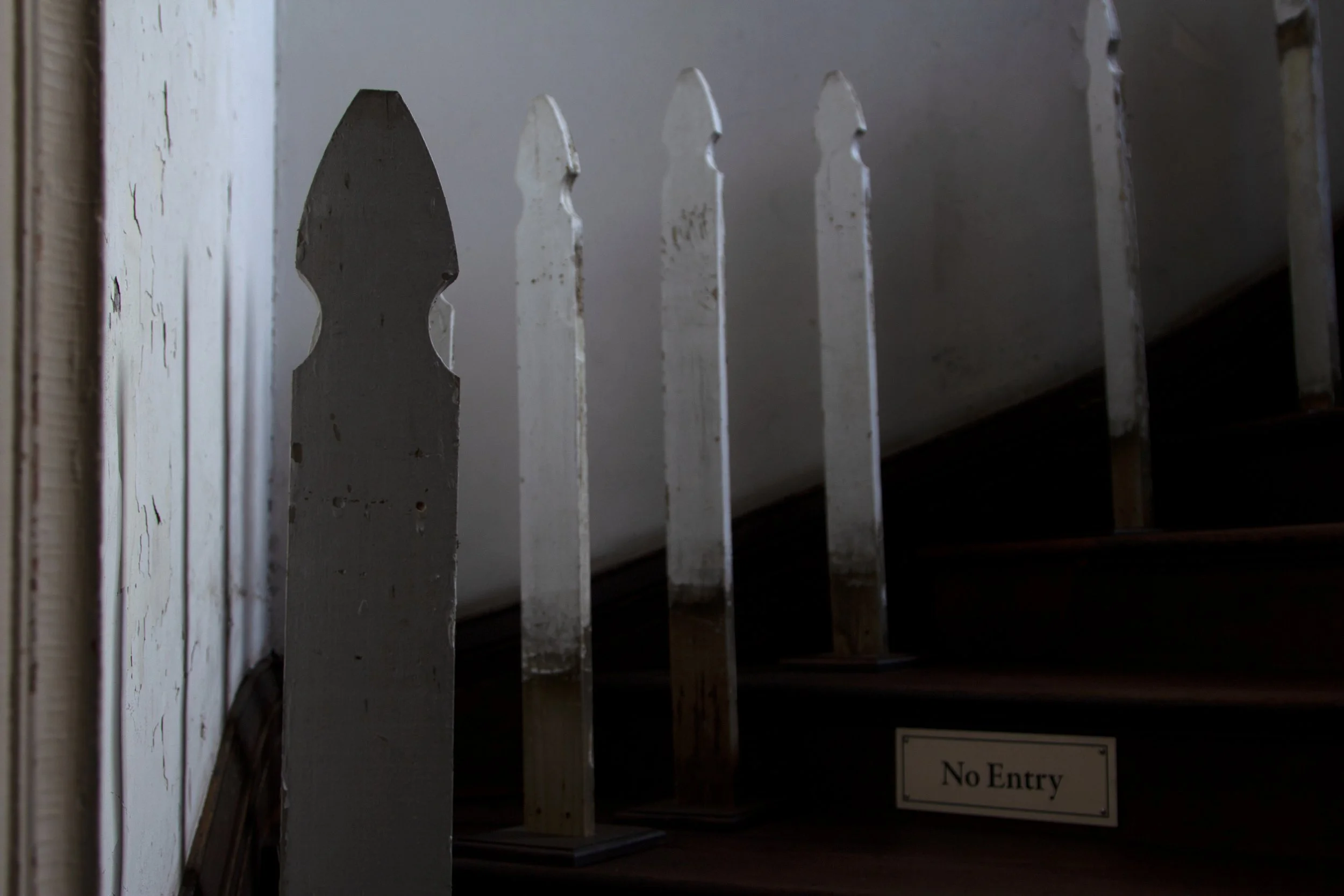
In the drawing room, Eden stretched fragmented white pickets across an expansive blue field. The title introduced paradise, desire, and the idea of a promised place, but the image refused to settle those ideas. The white forms could still be read as fencing, but also as fragments, openings, debris, ornament, or something suspended against an impossible sky. Inside one of the grandest rooms of the house, Eden placed the visual language of promise alongside the material evidence of property. After Eden, visitors descended the main staircase past reclaimed white pickets placed individually along its steps. The staircase followed part of the route through which enslaved servants moved between the Kitchen House, Servants Hall, Dining Room, and other spaces of the property. Here the picket no longer accumulated into a fence or image. Each piece occupied a step, allowing the architecture itself—and the visitor’s own movement through it—to carry the work.
Promiseland did not attempt to turn the Aiken-Rhett House into something other than what it is. The exhibition worked through proximity: contemporary objects beside historic surfaces, handmade forms inside inherited architecture, repetition against repetition, beauty beside violence, promise beside possession. The same picket could be attractive and threatening, protective and restrictive, decorative and architectural. Its meaning changed from room to room because its relationships changed. That instability was central to Promiseland. Williams returned to a form he could not exhaust and placed it repeatedly against a house whose history could not be separated from the objects, rooms, and materials through which visitors moved. Rather than resolve those relationships, the exhibition allowed them to accumulate.
Support & Funding
This exhibition is made possible by lead support from a The Dean Collection 20 St(art)ups grant. South Carolina Arts Commission, which receives support from the National Endowment for the Arts, the Expansion Arts Fund of The Coastal Community Foundation of South Carolina and the Lowcountry Arts Grants Program, administered by the City of Charleston Office of Cultural Affairs and the City of North Charleston Cultural Arts Program.
Special Thanks
Special thanks to Garden & Gun Magazine for their generous production support, press support, and for hosting additional works from Promiseland and Picket series at their headquarters. Historic Charleston Foundation and Fletcher Williams expresses appreciation to private donors for their generous financial support of the Aiken-Rhett House Museum and of the Promiseland exhibit and catalog.
Co-Curator
Kelly S. Turner
Writing on the Project
Jessica Mischner on Promise Land - “Portrait of an Artist as a Man,” The Current, Vol. 3, June 2021 Catalog, Urban Electric, pp. 202–215.
Download PDF Essay
Related Exhibition
Works Exhibited (Works on paper)
Exhibition Catalog
24 (6 x 8 in.) Full Color Plates
Catalog Edition Size - 250