When It Rains It Shines (W.I.R.I.S), 2023
International African American Museum (IAAM)
Charleston, South Carolina
About the Work
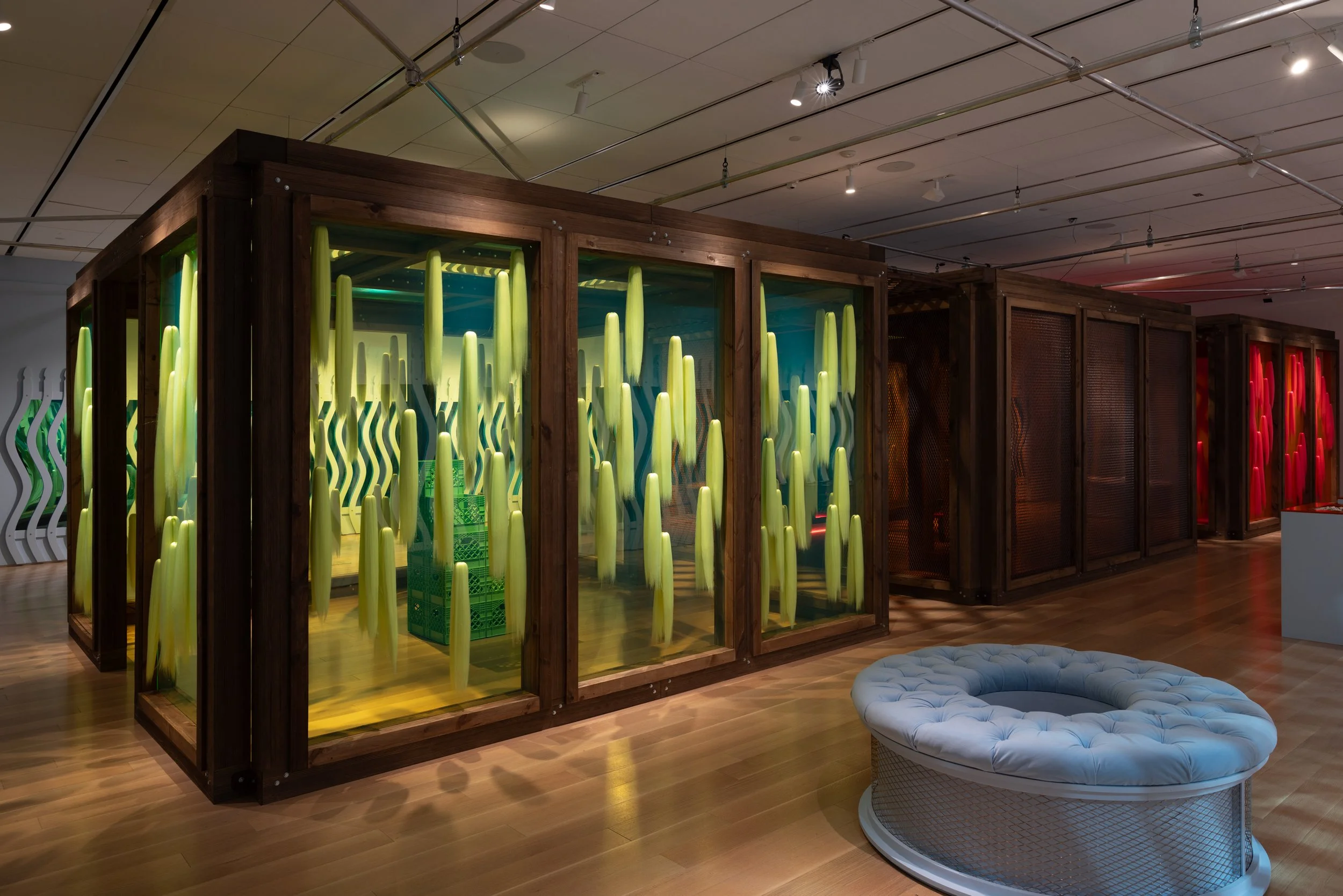
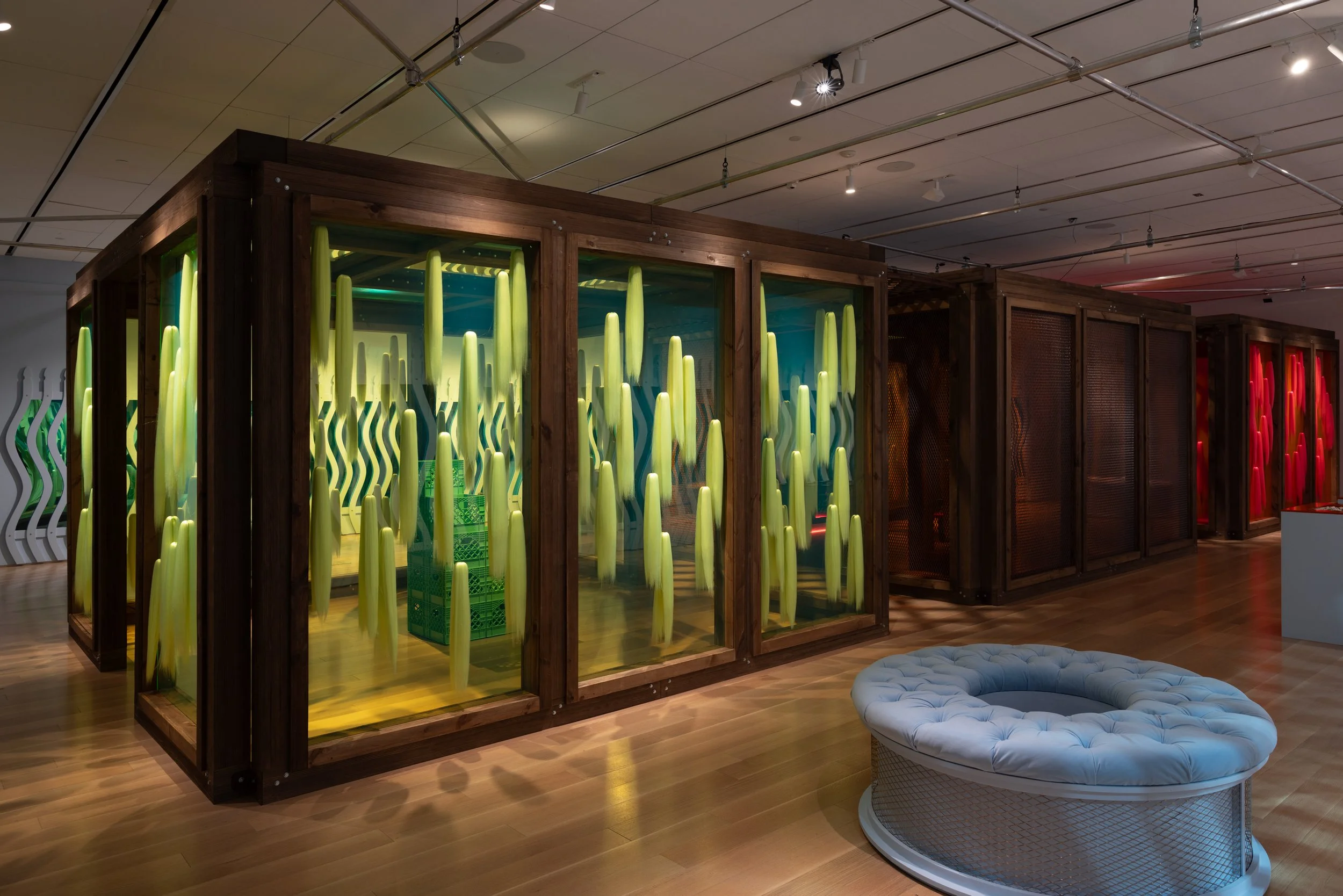
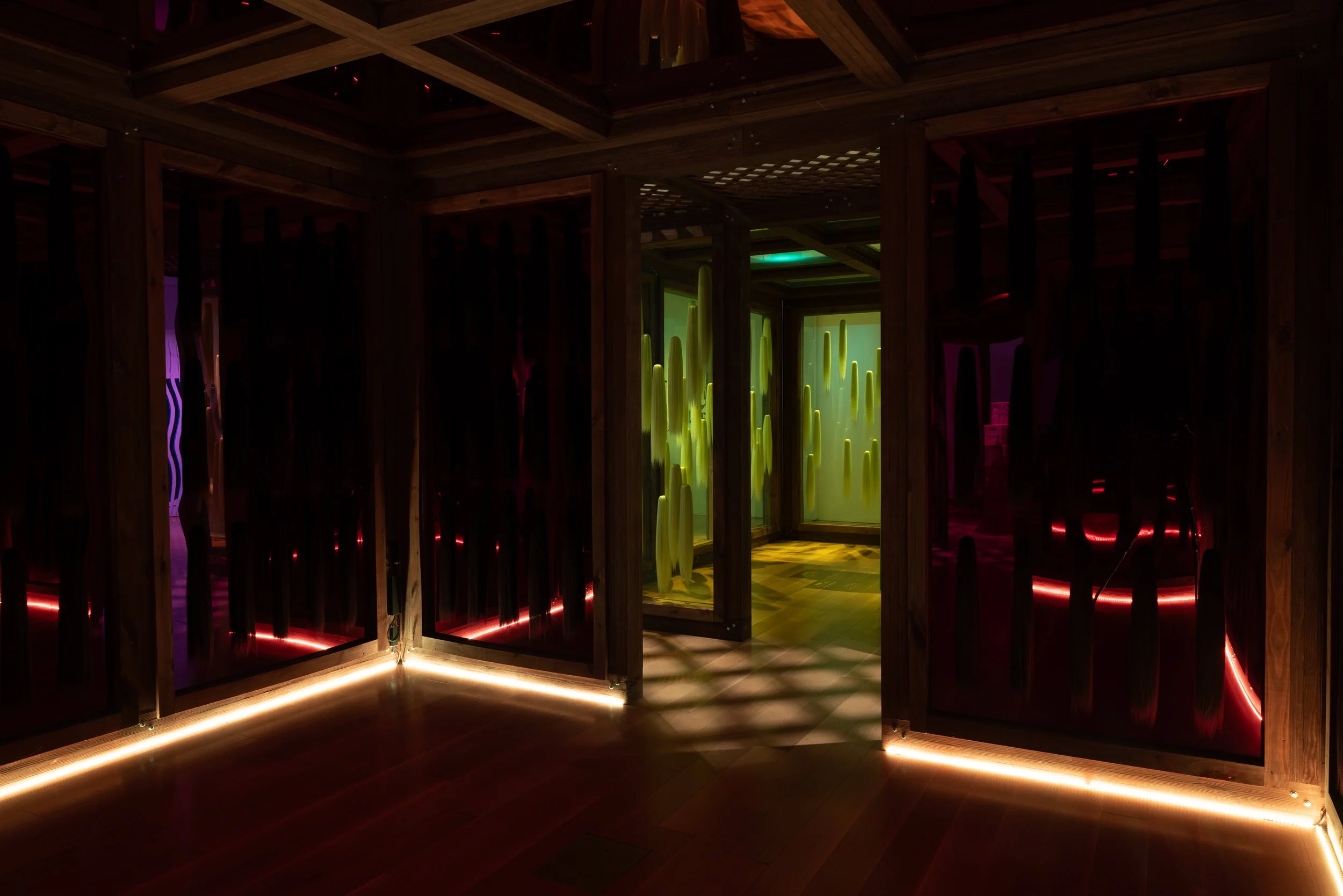
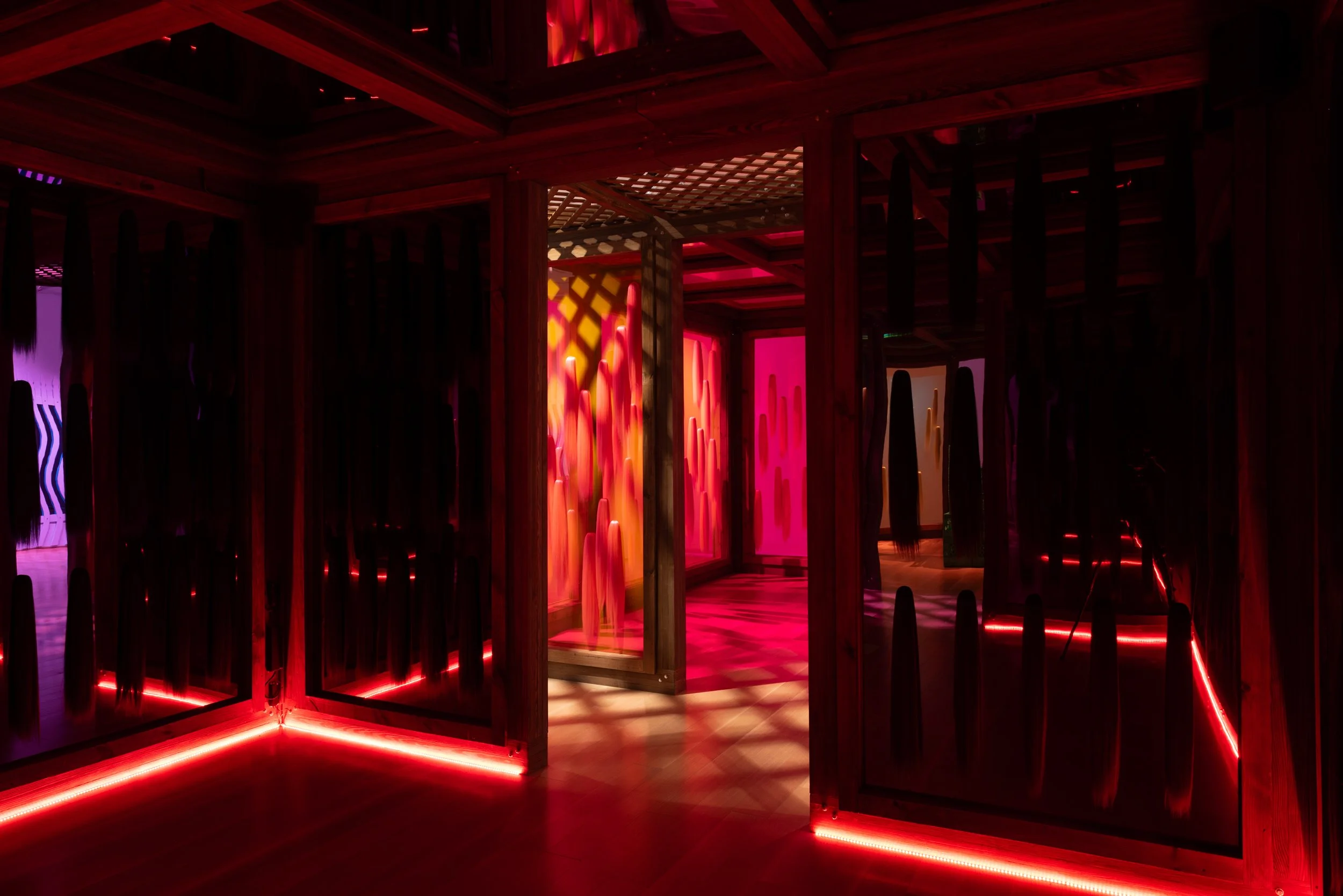
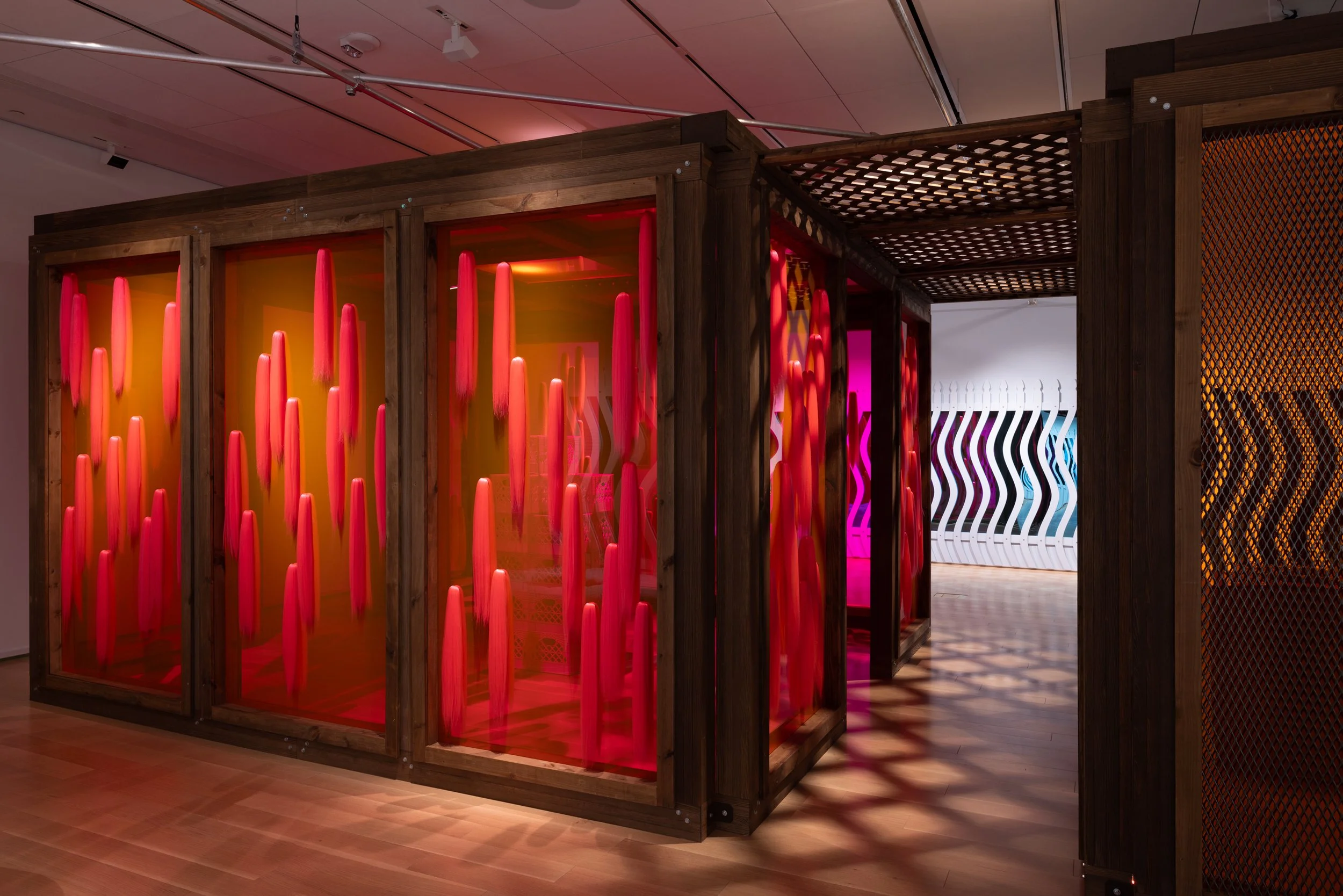
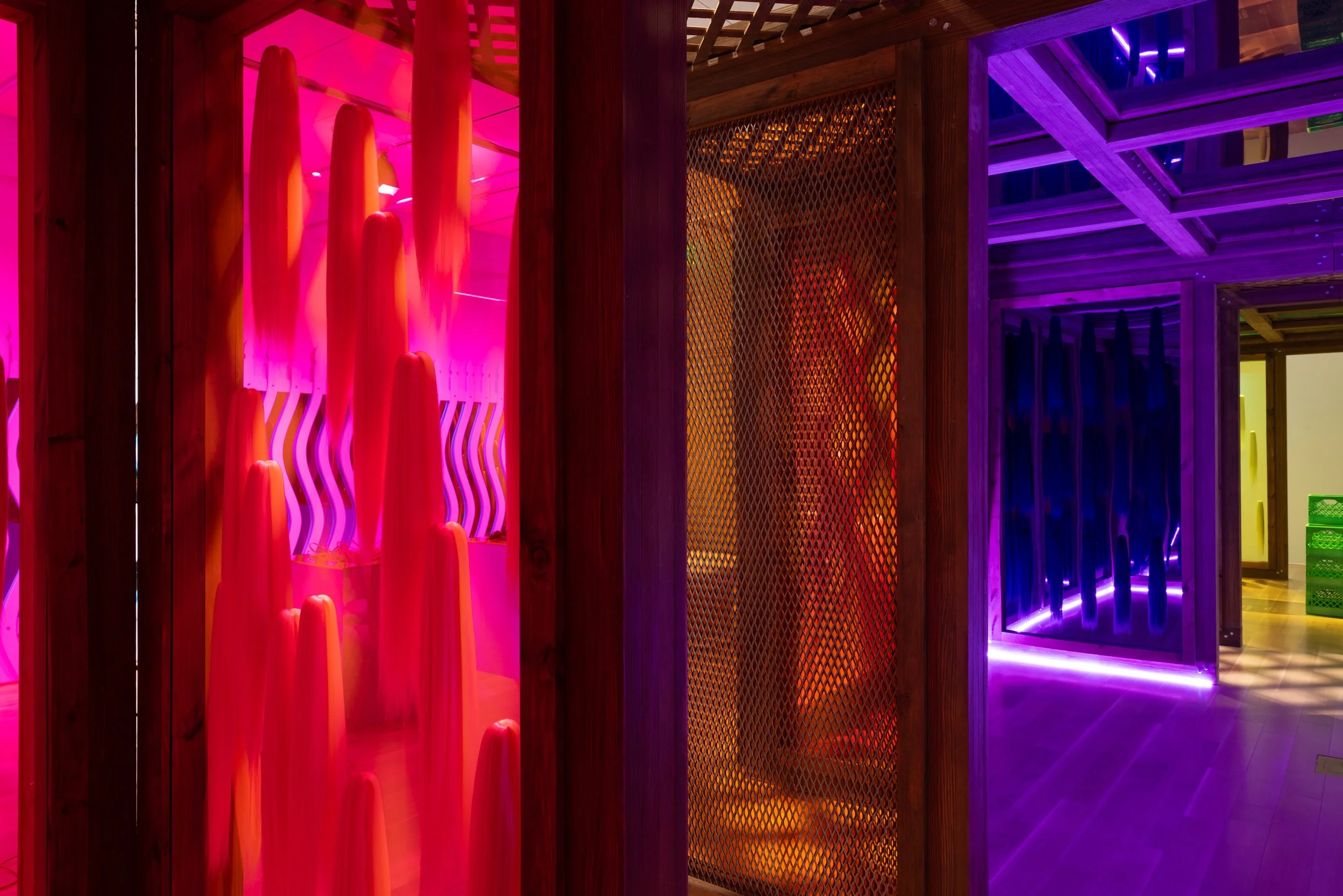
When It Rains It Shines filled the gallery with an architecture of colored plexiglass, stained lattice, synthetic hair, mirrored surfaces, expanded metal, light, sound, and shadow. Three large rooms stood along the center of the gallery, surrounded by long undulating picket walls, small collections of objects, and places to sit. Visitors could walk around the structures, pass between them, look through them, and see one room through another. Depending on where you stood, the installation could appear transparent, mirrored, illuminated, screened off, or nearly opaque.
The title comes from the strange weather that occurs when rain and sunlight occupy the same sky. Williams had long been attracted to those moments—the brightness of the sun against dark clouds, rain falling through light, the possibility of a rainbow and the heightened atmosphere even when one never appears. Rather than illustrating that phenomenon, the installation took its contradiction as a condition: darkness and brightness, shelter and exposure, familiarity and strangeness could exist at the same time.
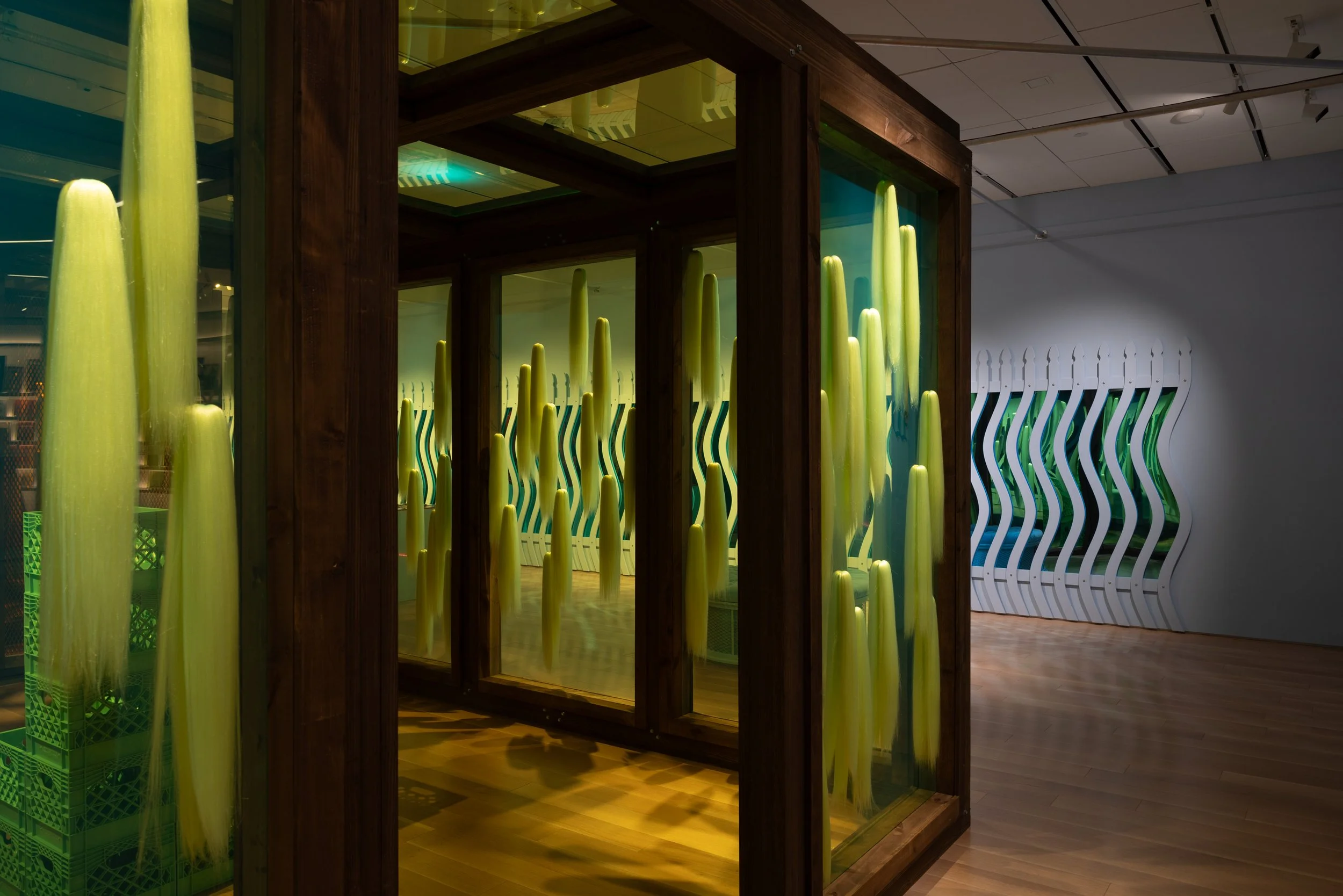
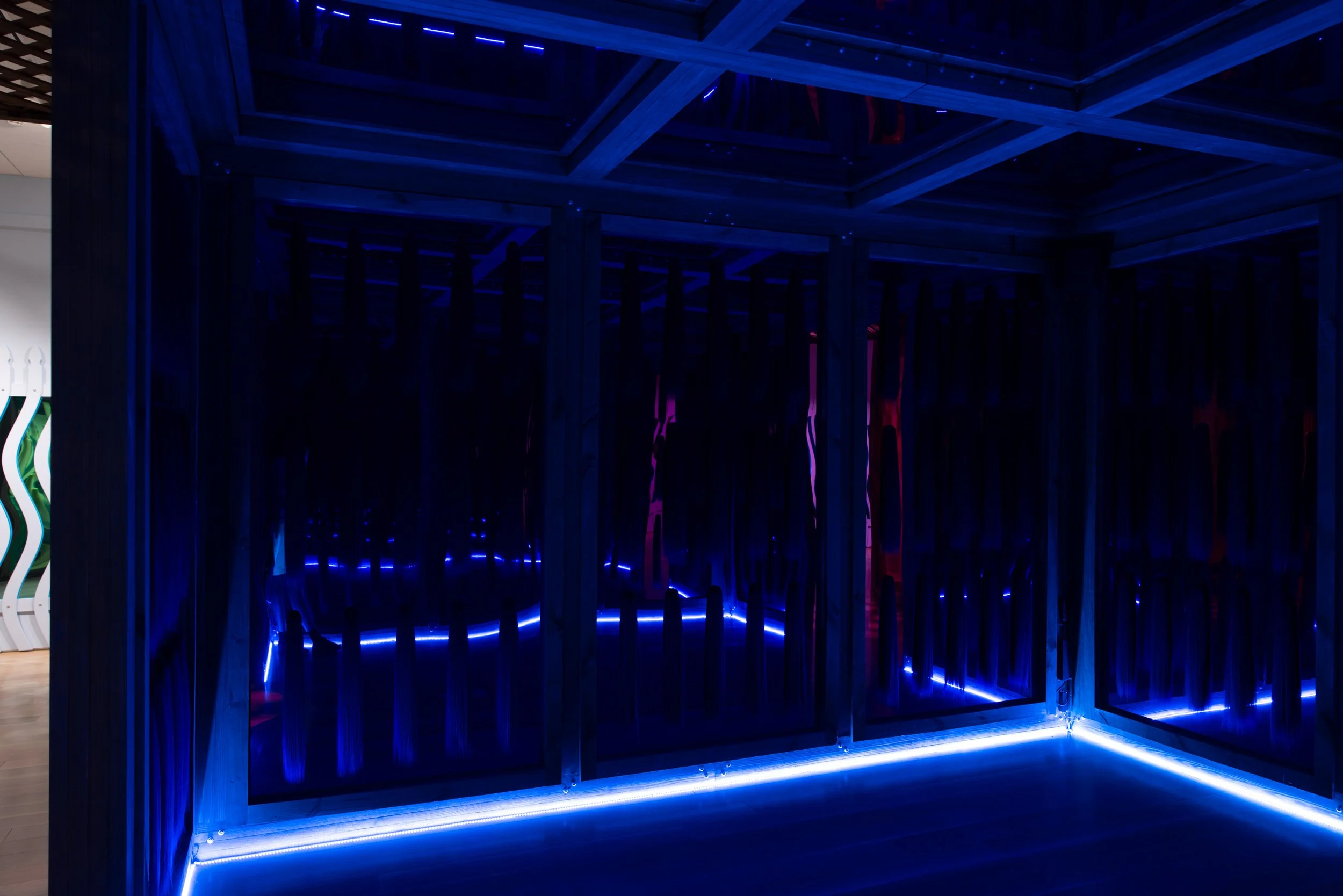
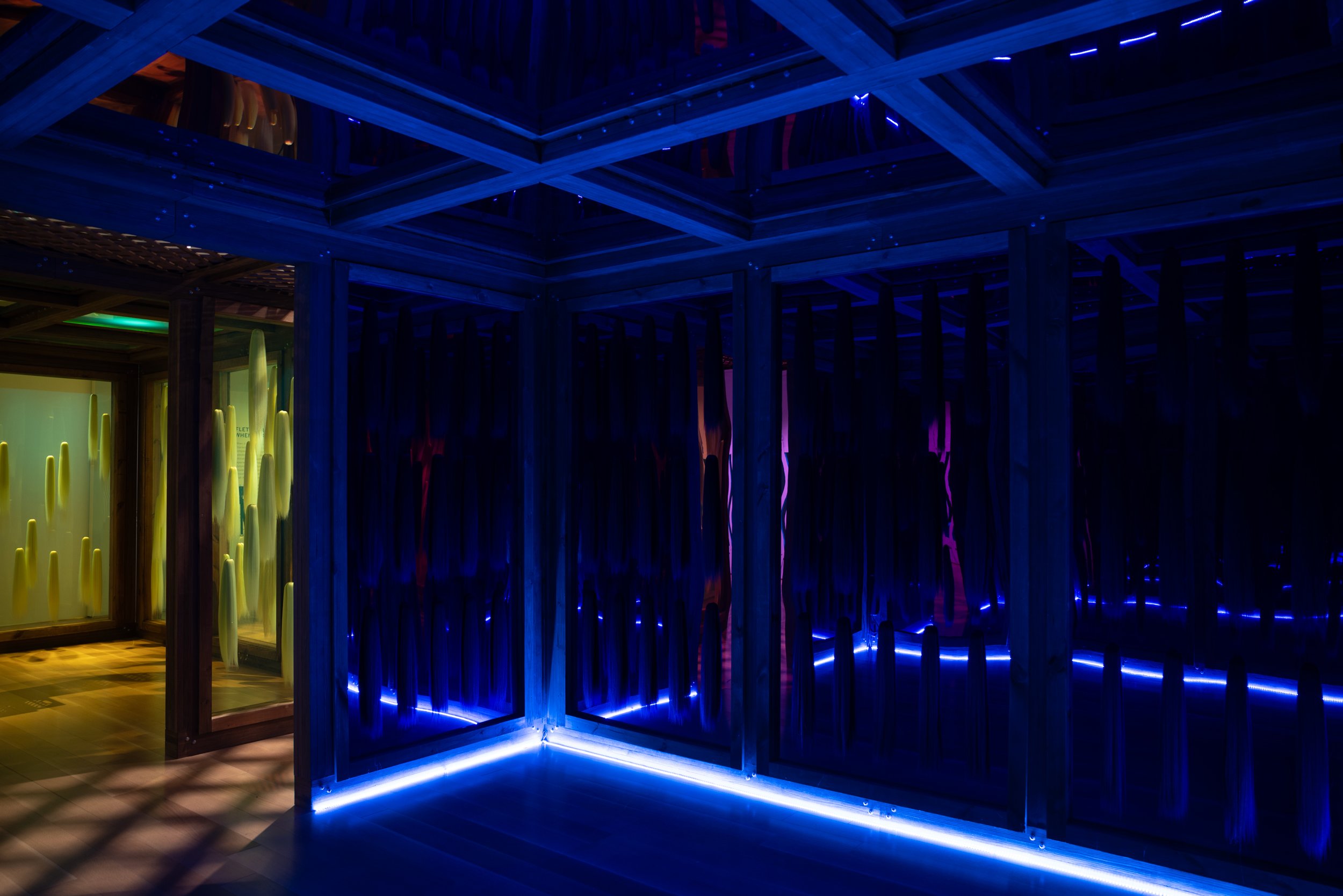
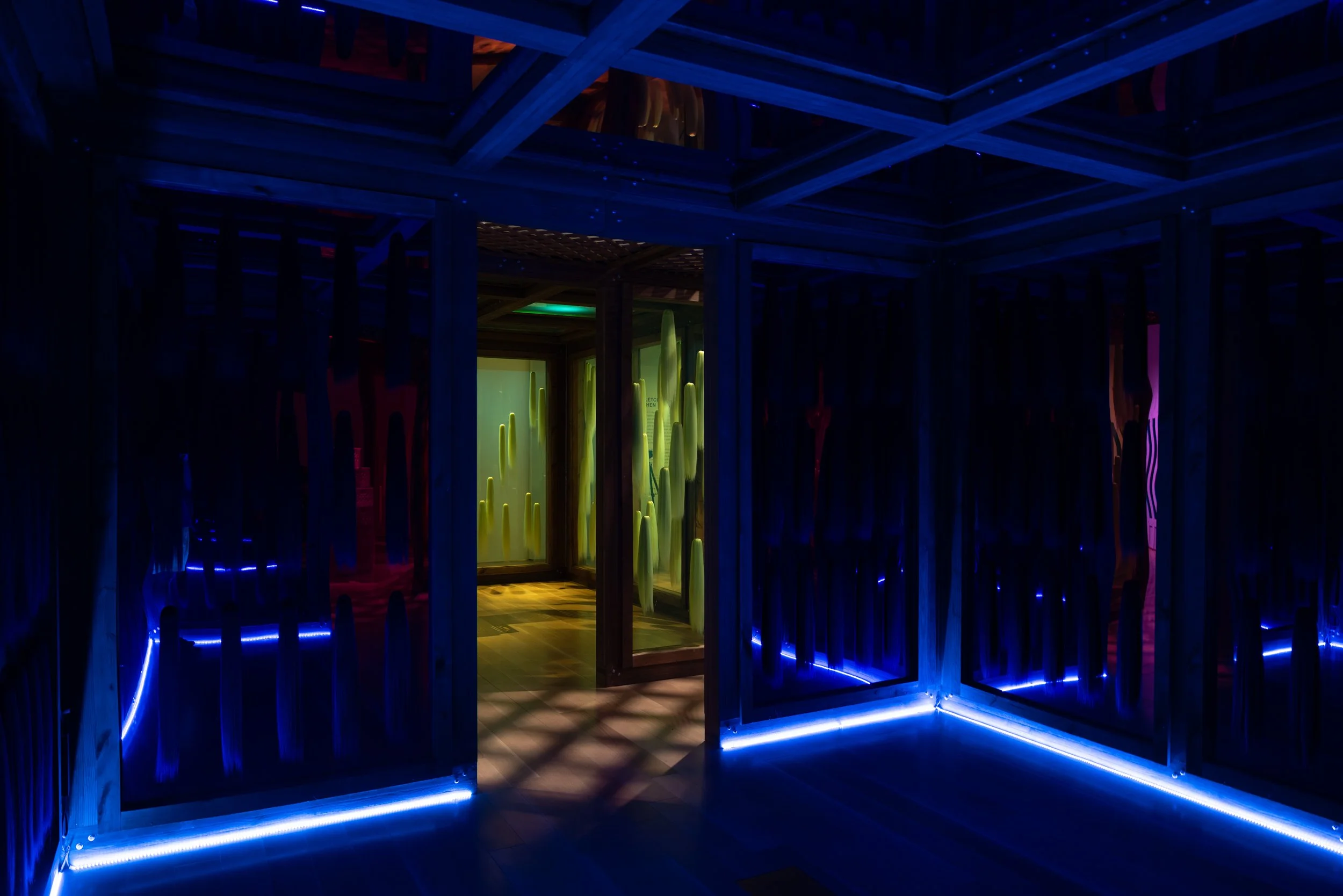
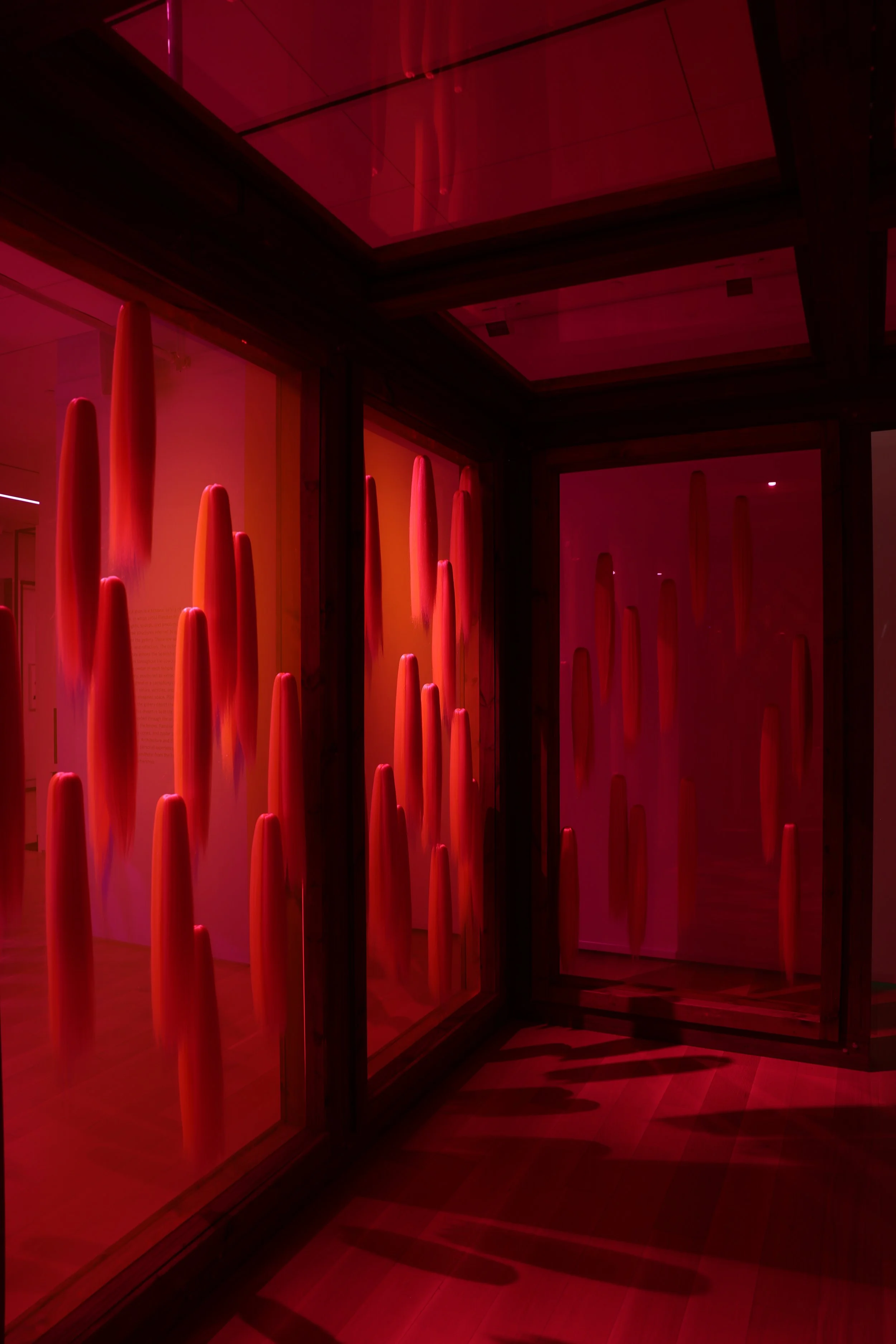
At the center of the gallery were three plexiglass structures, each measuring fifteen by fifteen feet and nine and a half feet tall. Together they formed a single architectural presence while remaining distinct rooms. Open passages between them created breezeways beneath lattice trellises. The arrangement borrowed loosely from porches, garden structures, courtyards, passageways, and the movement between interior and exterior spaces familiar to Southern architecture. But the building was never quite a house. Large sheets of colored plexiglass occupied frames made from plywood wrapped in strips of stained lattice. Bolts, joints, and supports remained visible. Some elements felt finished and decorative; others retained the bluntness of construction. The architecture moved back and forth between enclosure, stage, garden structure, storefront, sanctuary, and something invented from all of them.
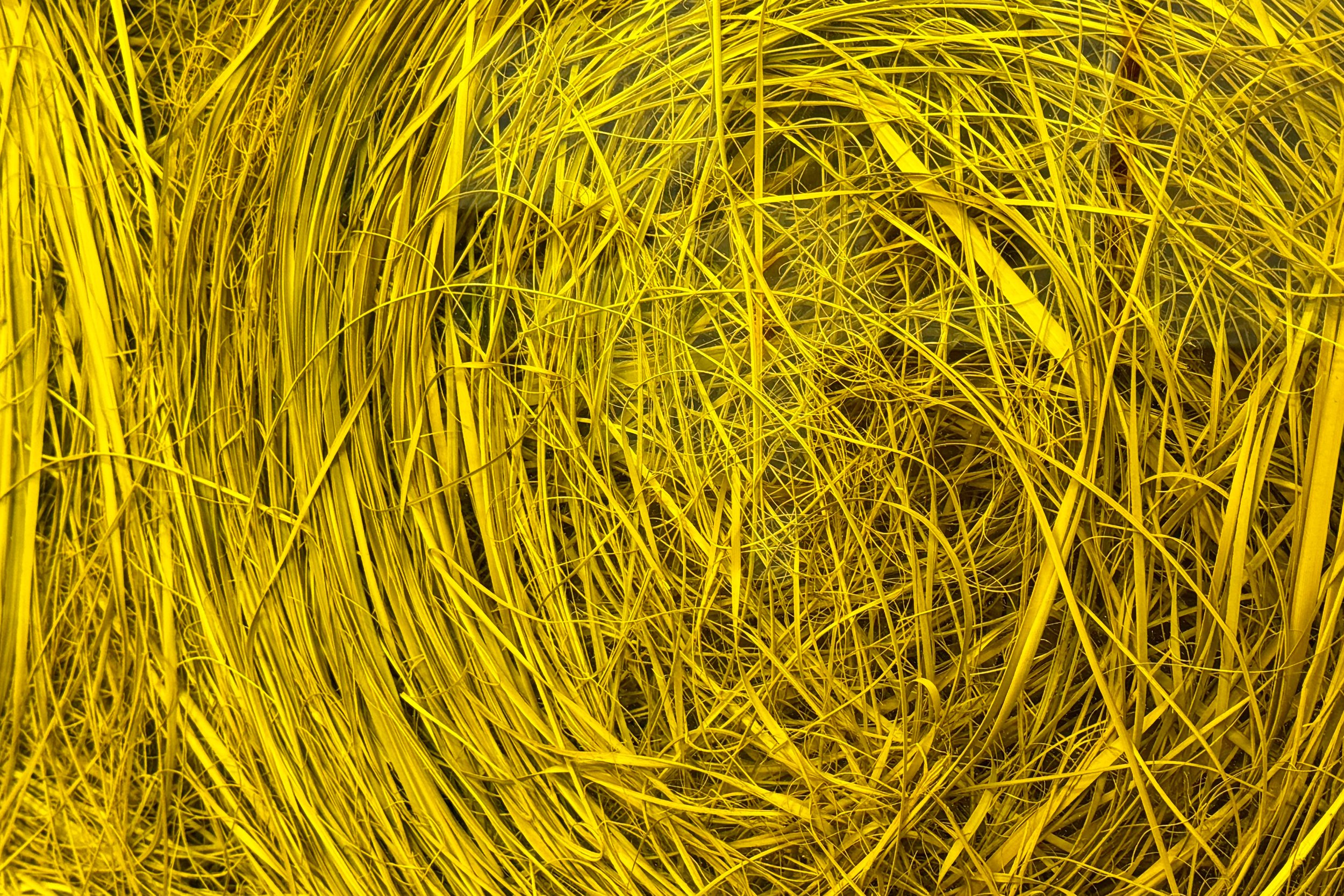
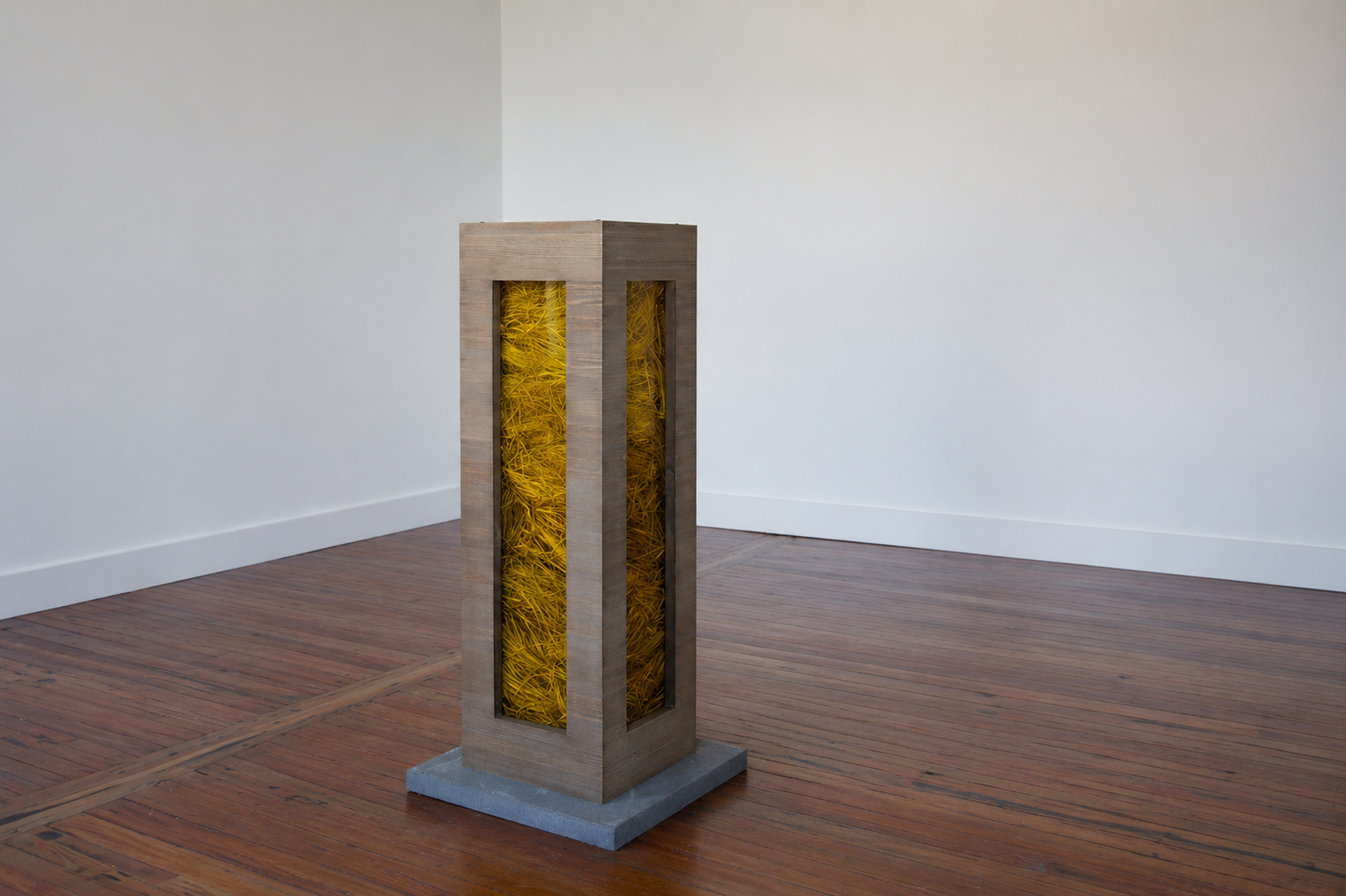
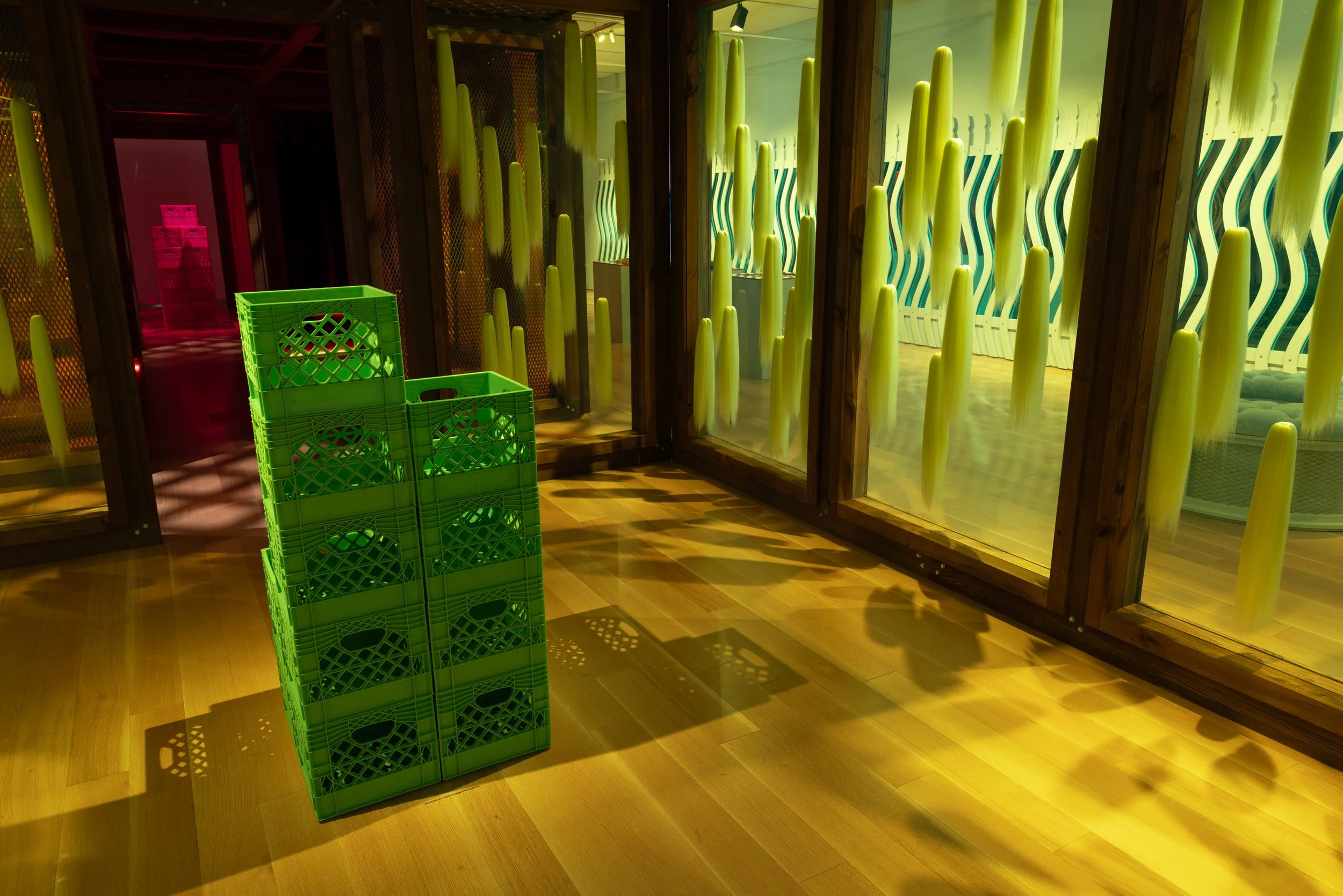
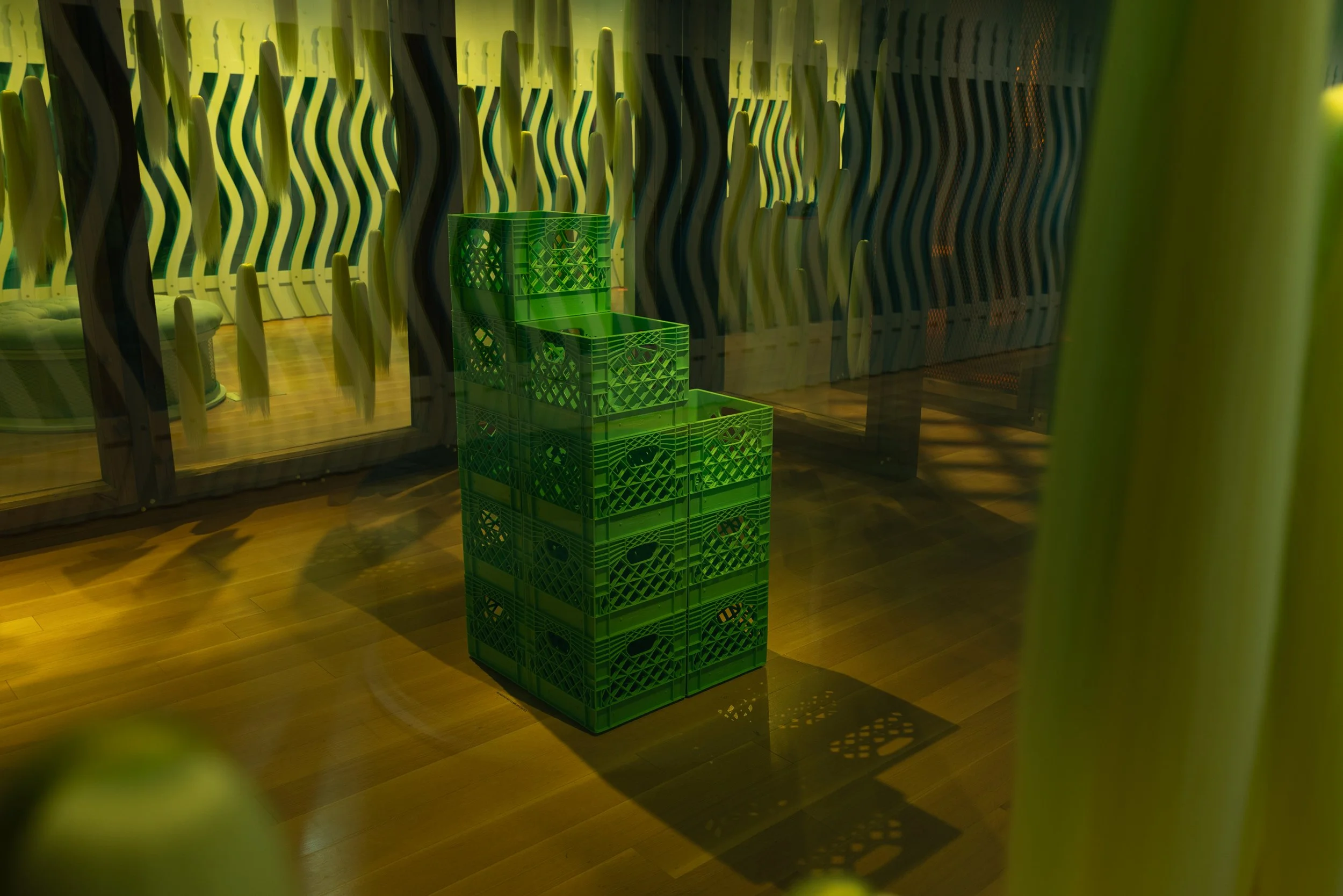
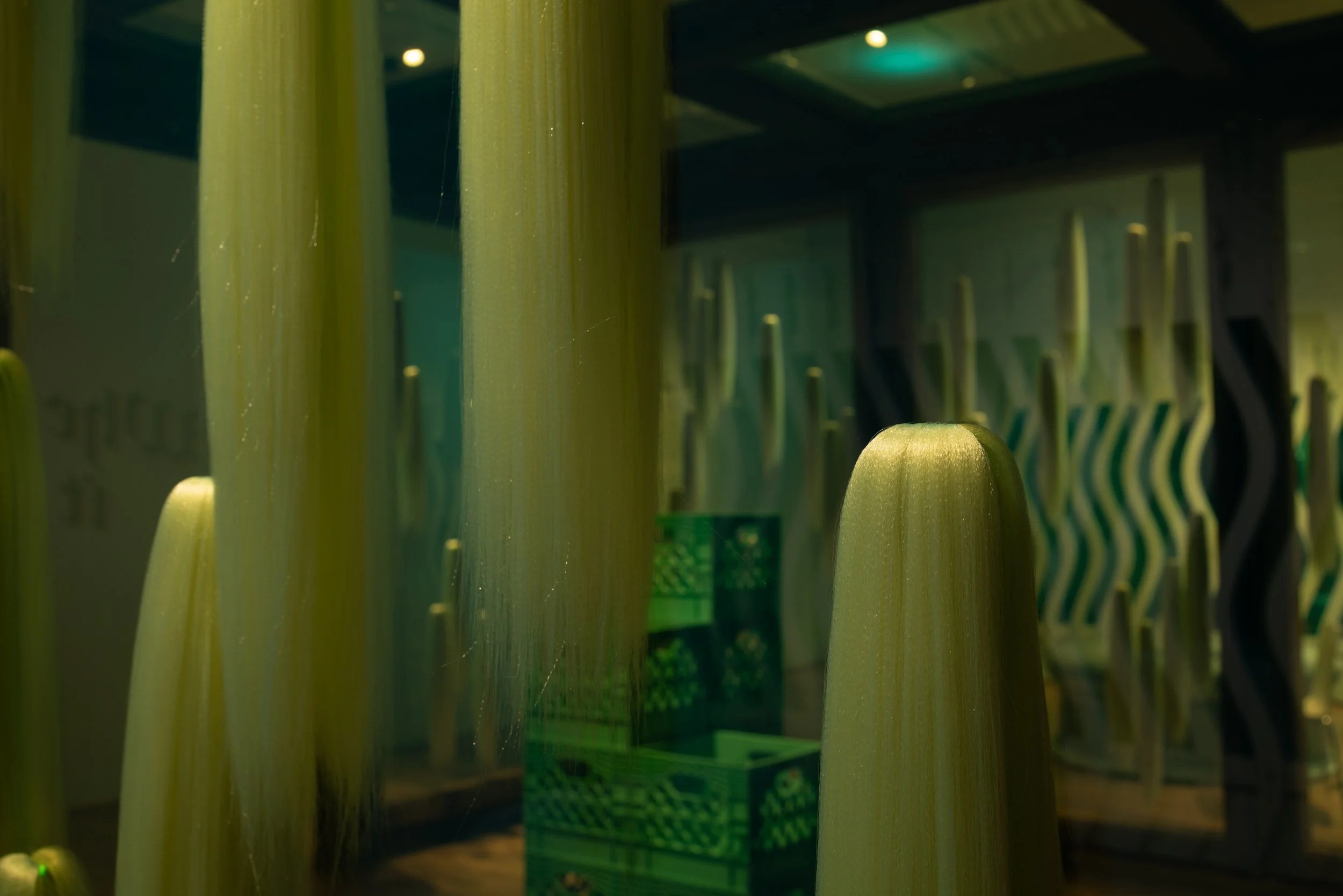
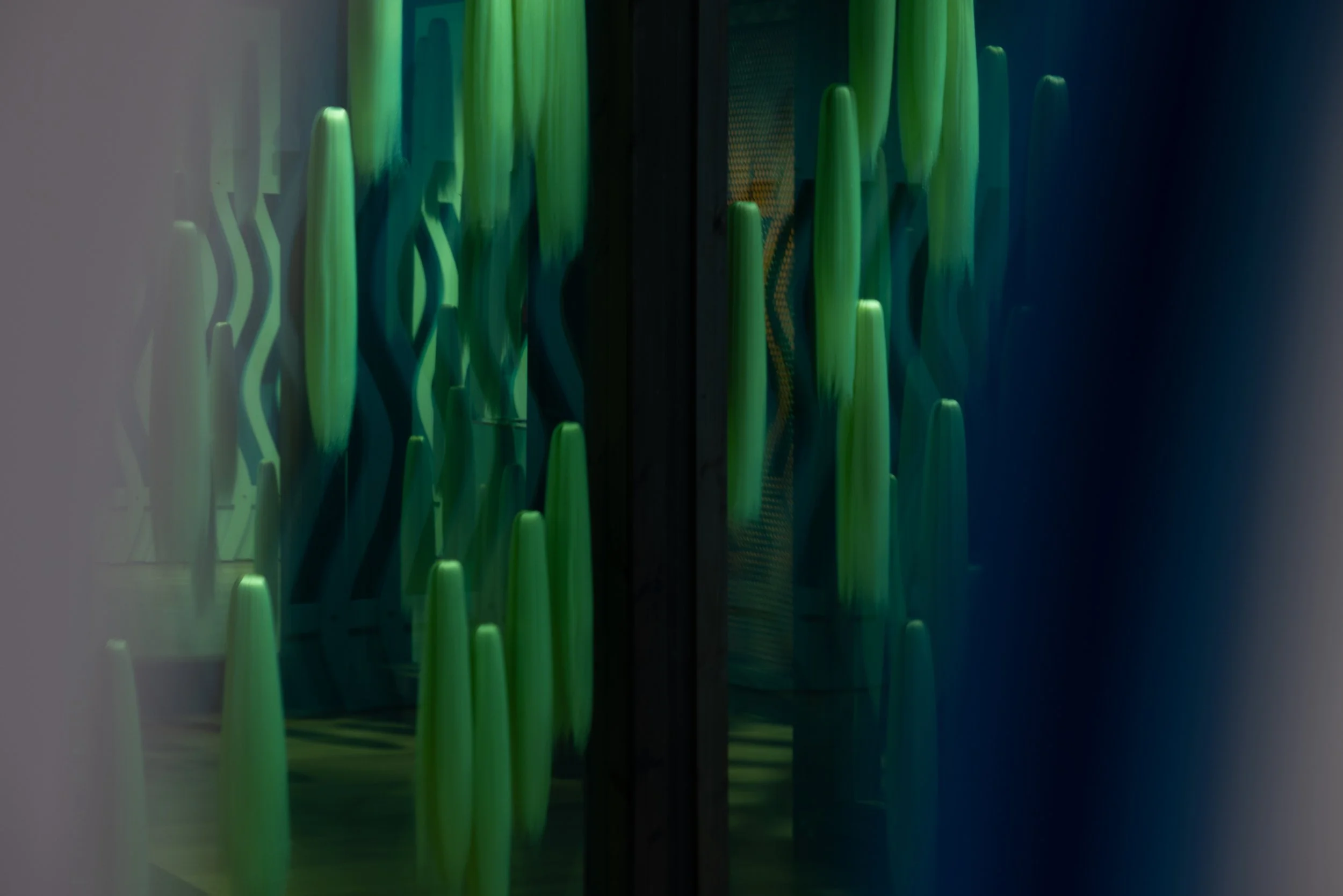
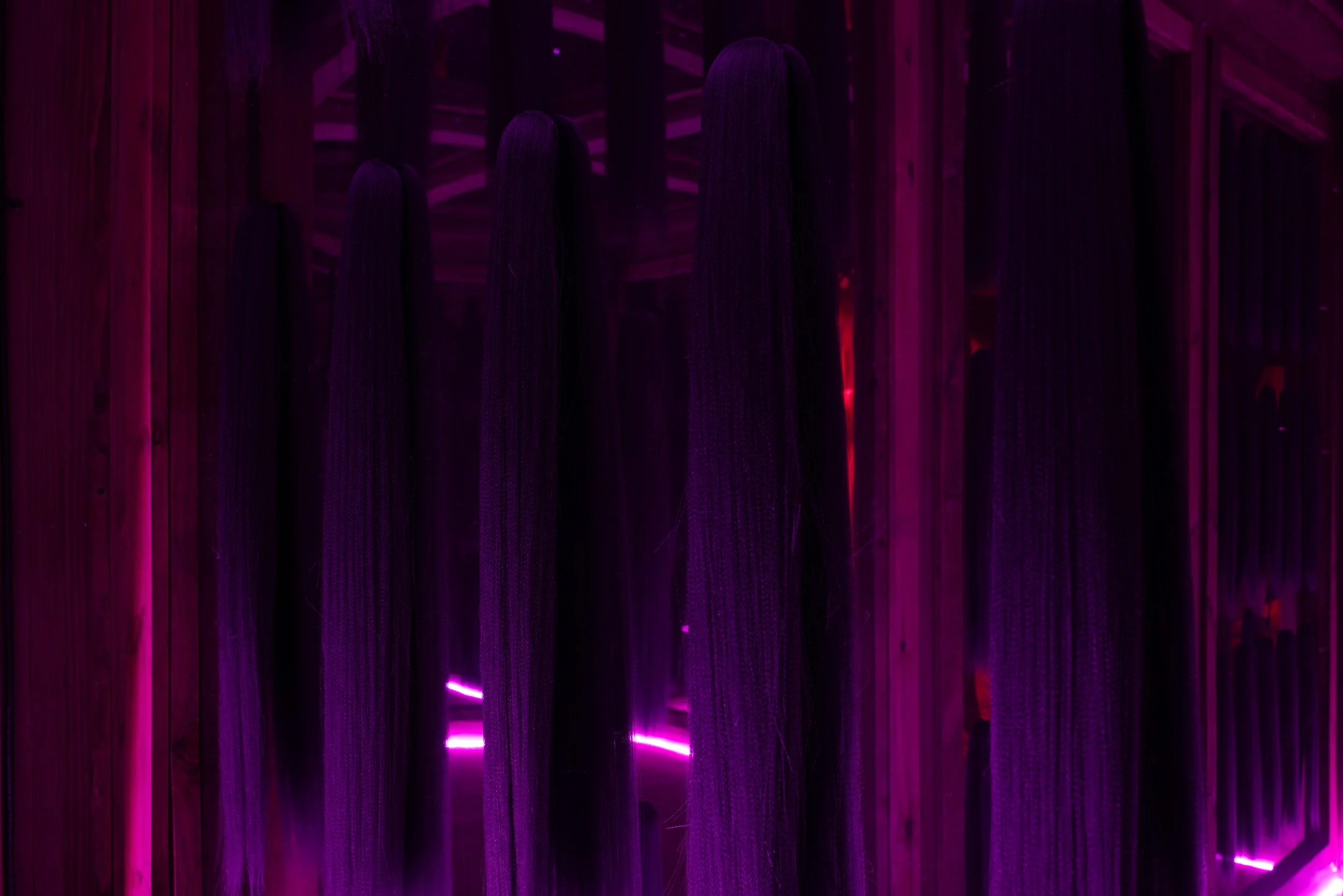
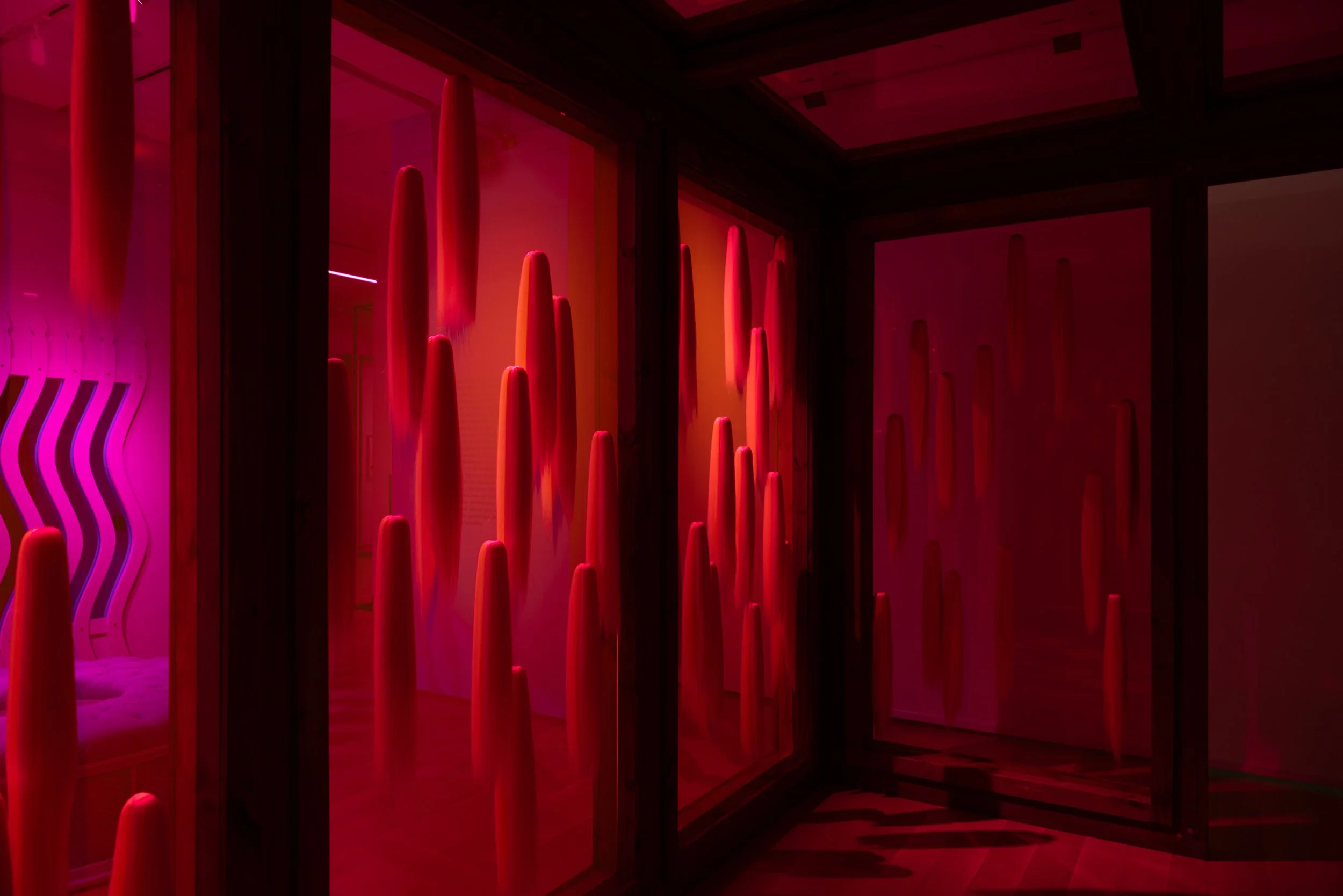
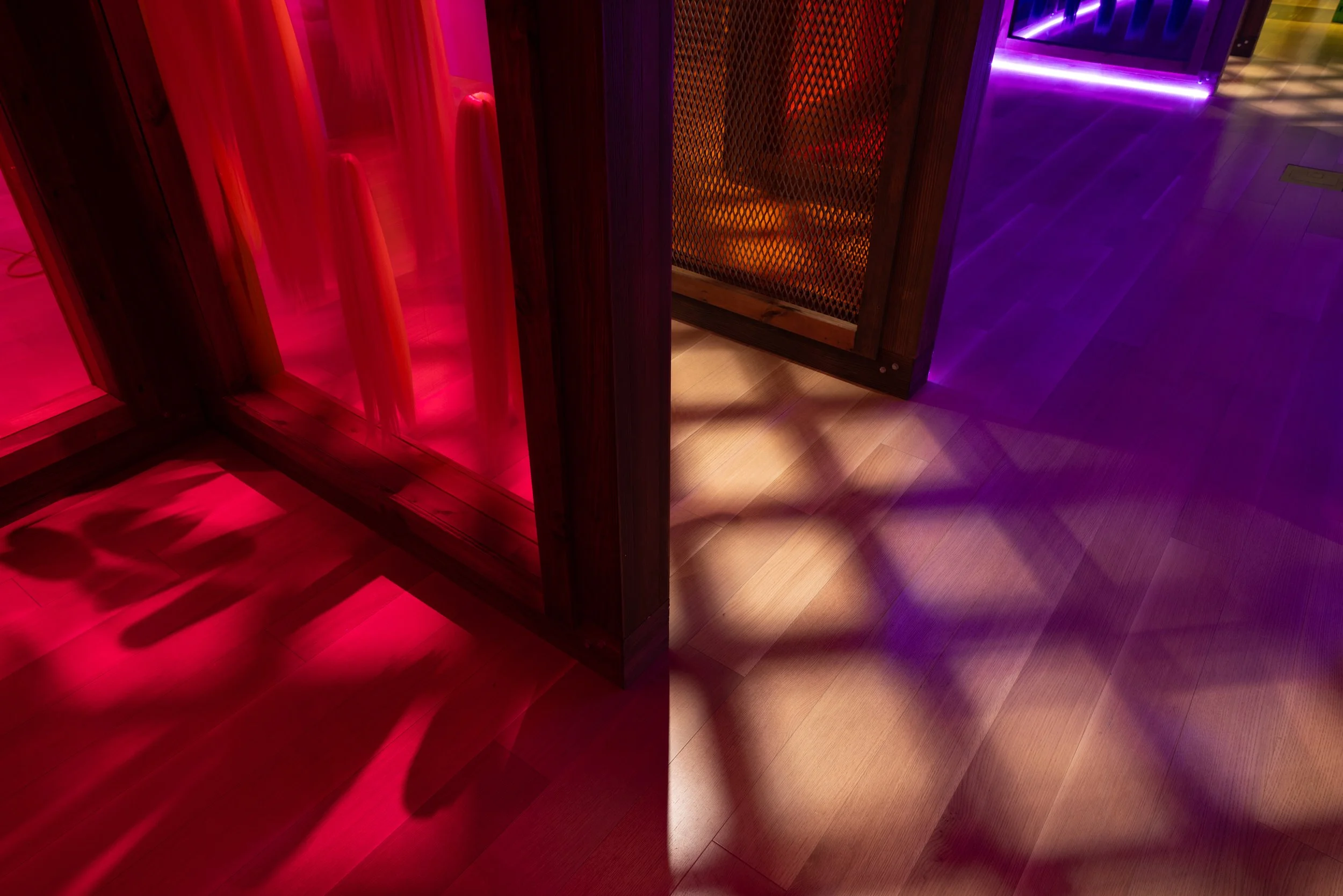
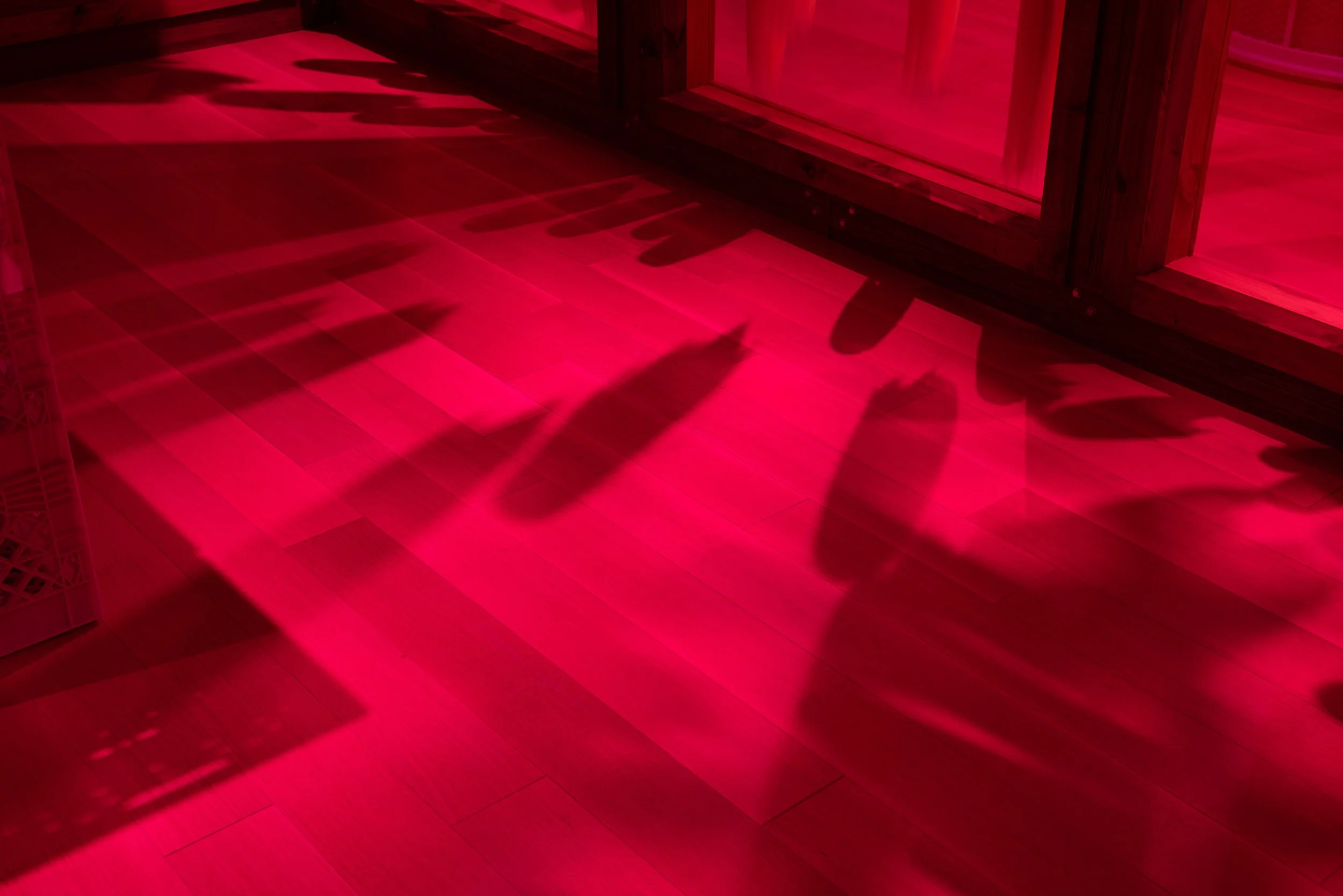
Synthetic ponytails hung from the plexiglass throughout the installation. Williams was interested in what happened when the hair was allowed to remain obviously artificial while beginning to resemble something botanical. Long strands tapered downward like Spanish moss, but their colors, shine, texture, and attachment points prevented the illusion from becoming complete. Hair could become moss without ceasing to be hair. What belonged to the body began to behave like landscape. Light complicated that relationship further. Passing through colored plexiglass, it altered the hair and cast it onto the gallery floor as shadow. Reflections multiplied the strands across mirrored surfaces. A material could appear several times at once: as object, reflection, silhouette, color, and movement.
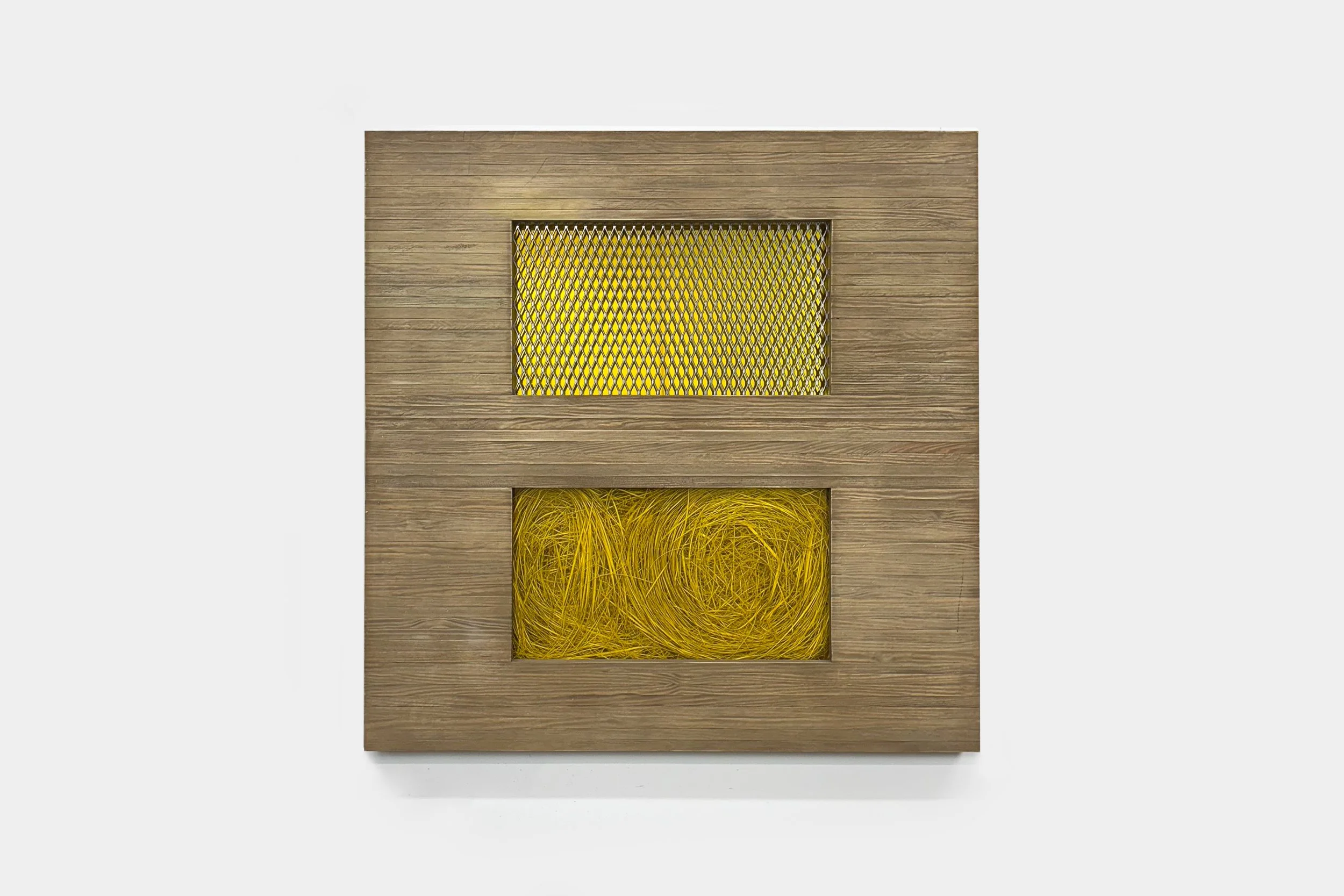
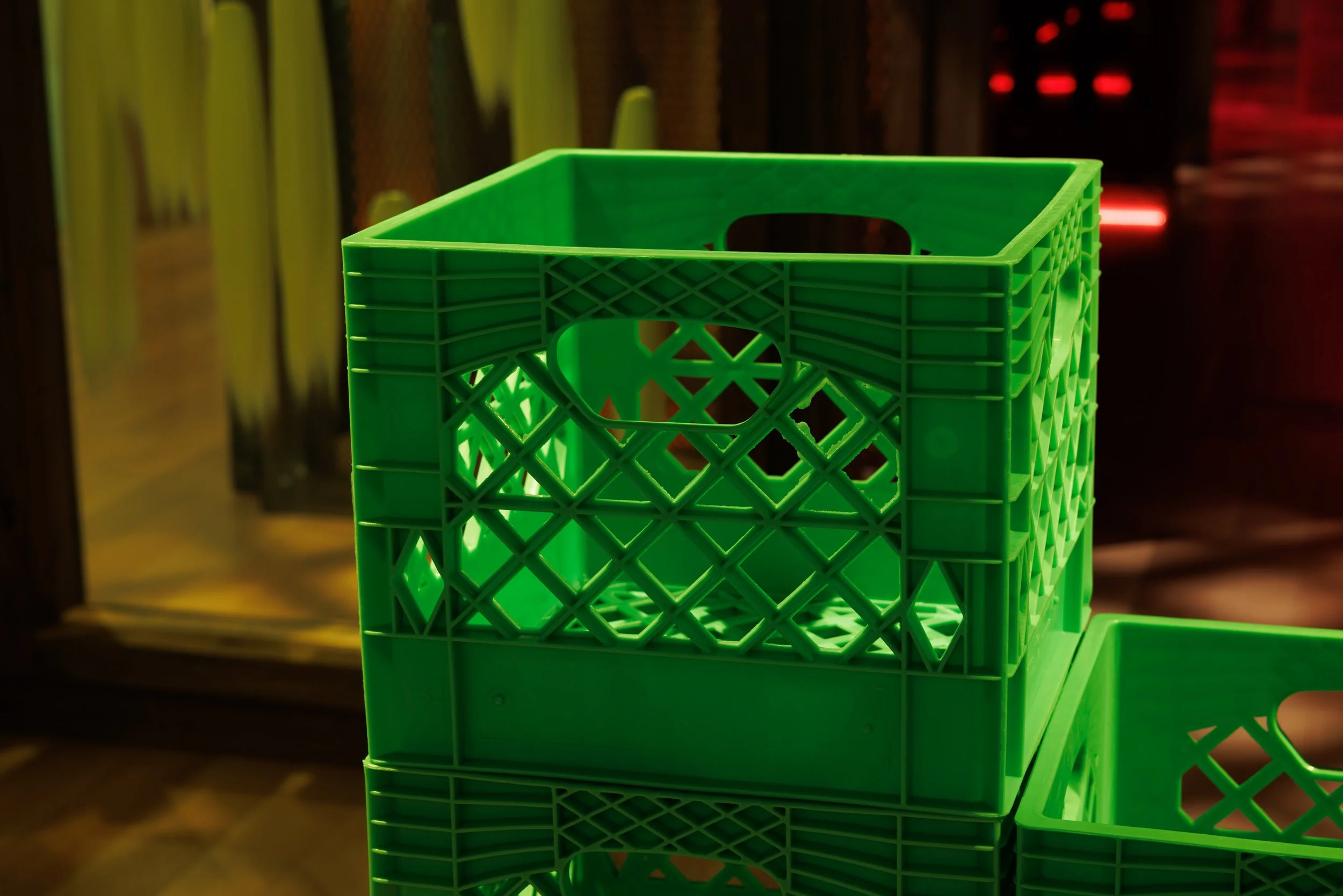
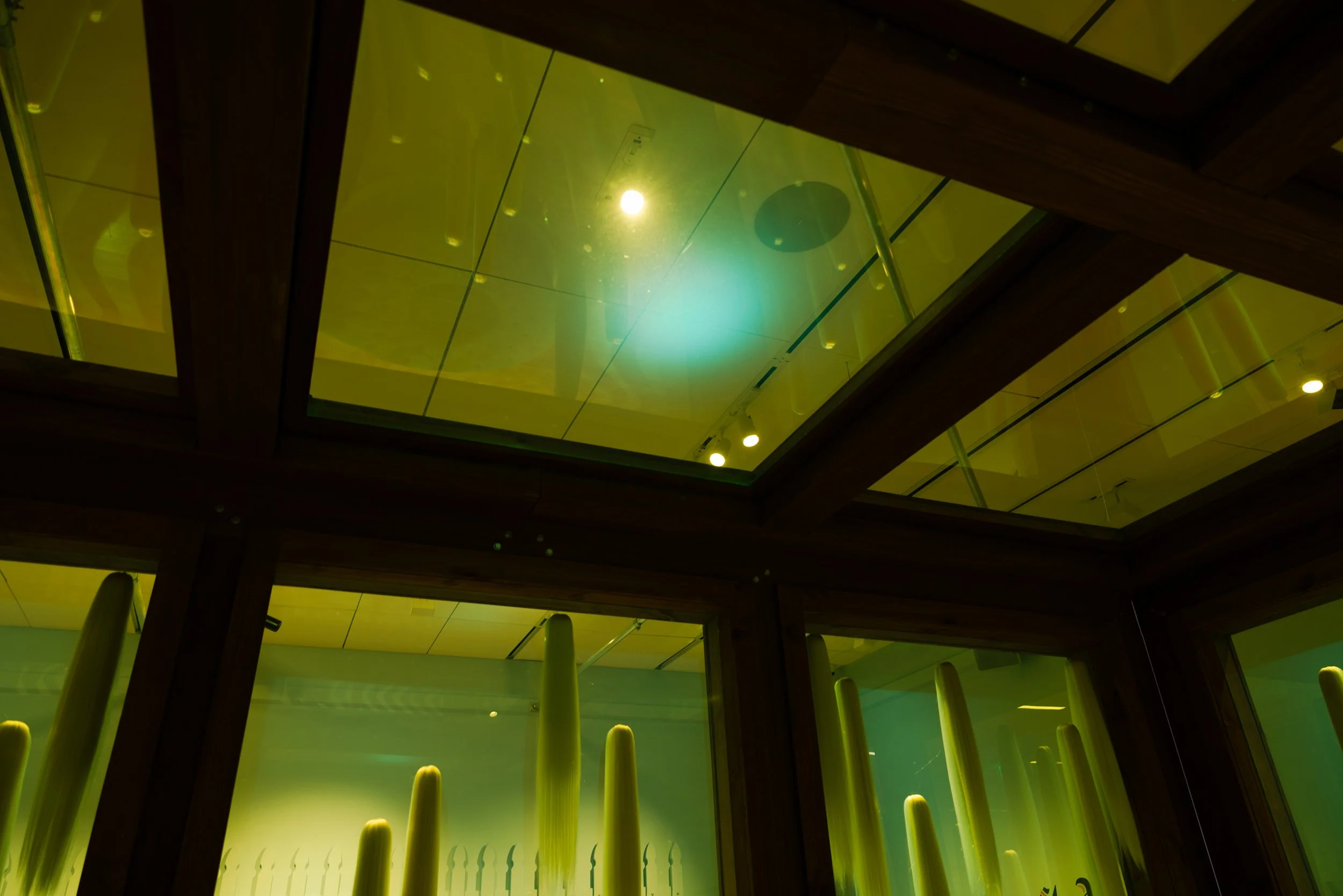
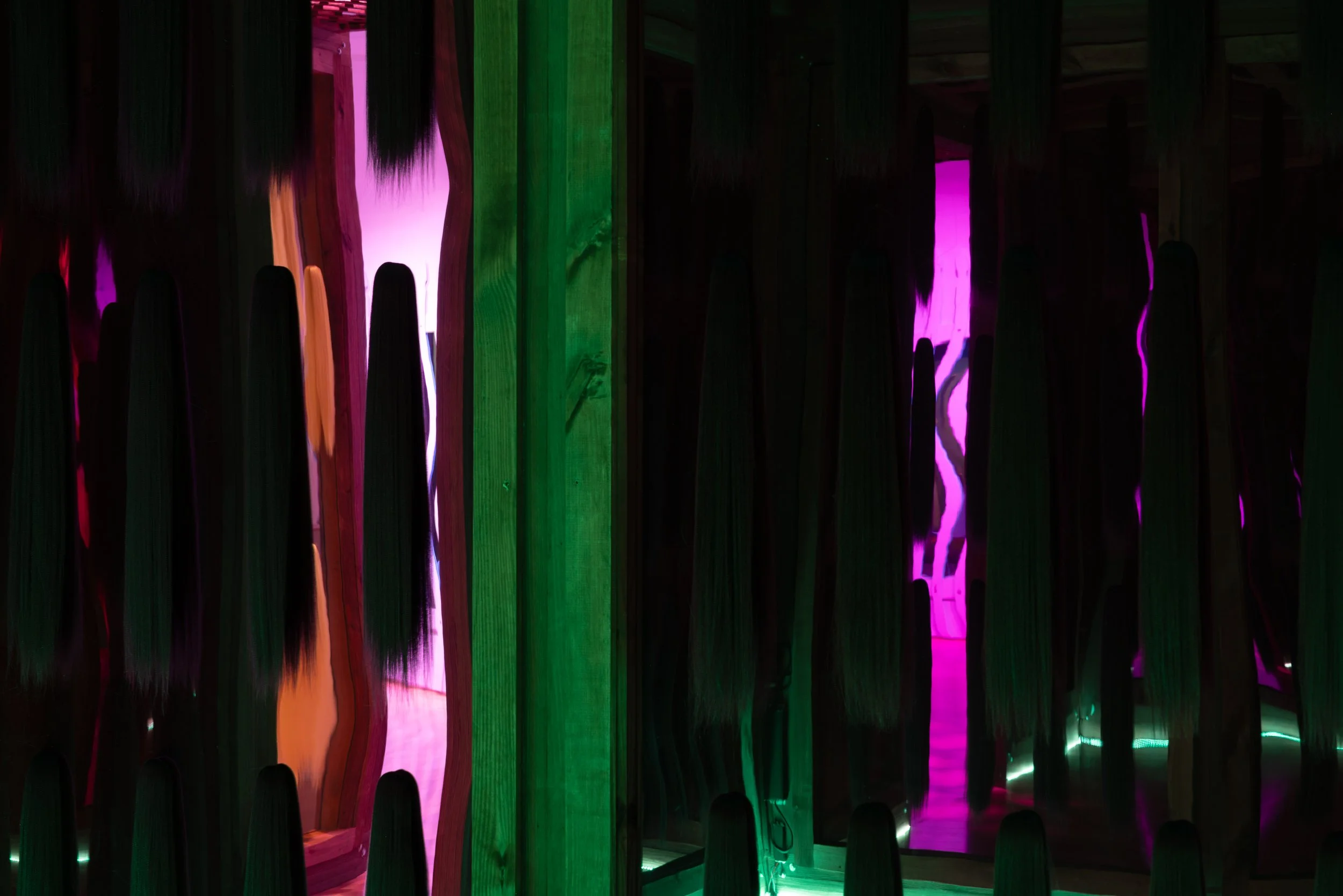
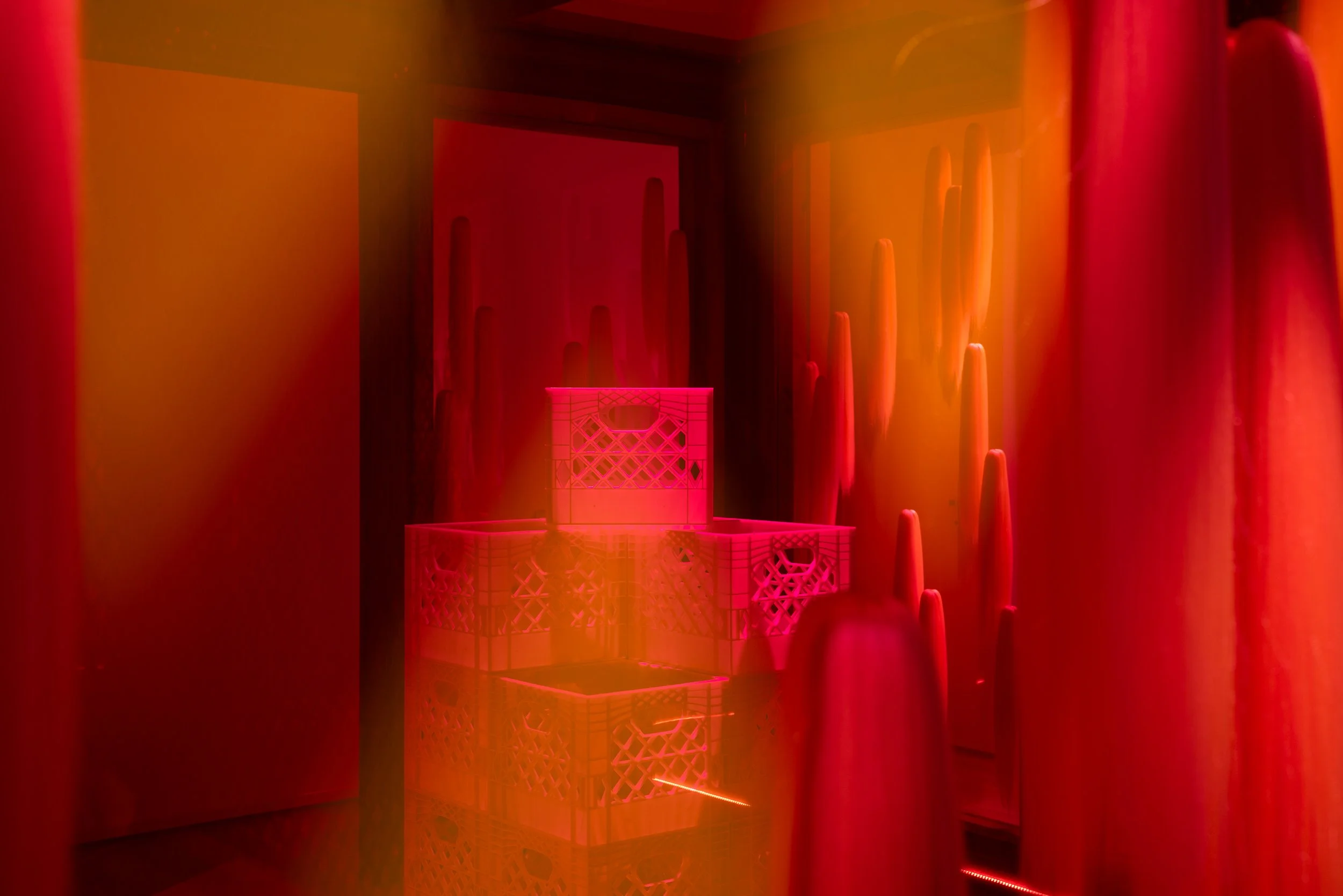
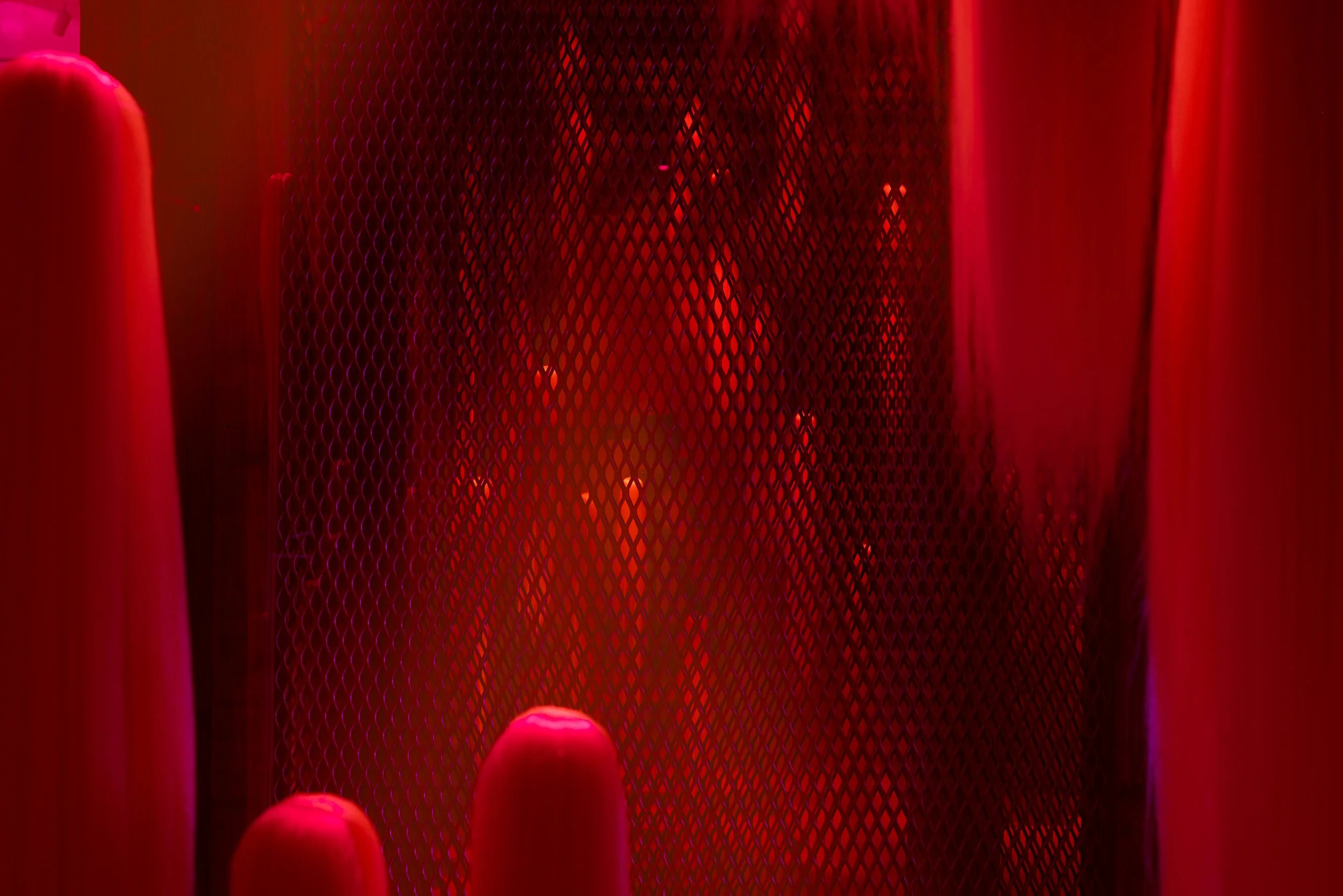
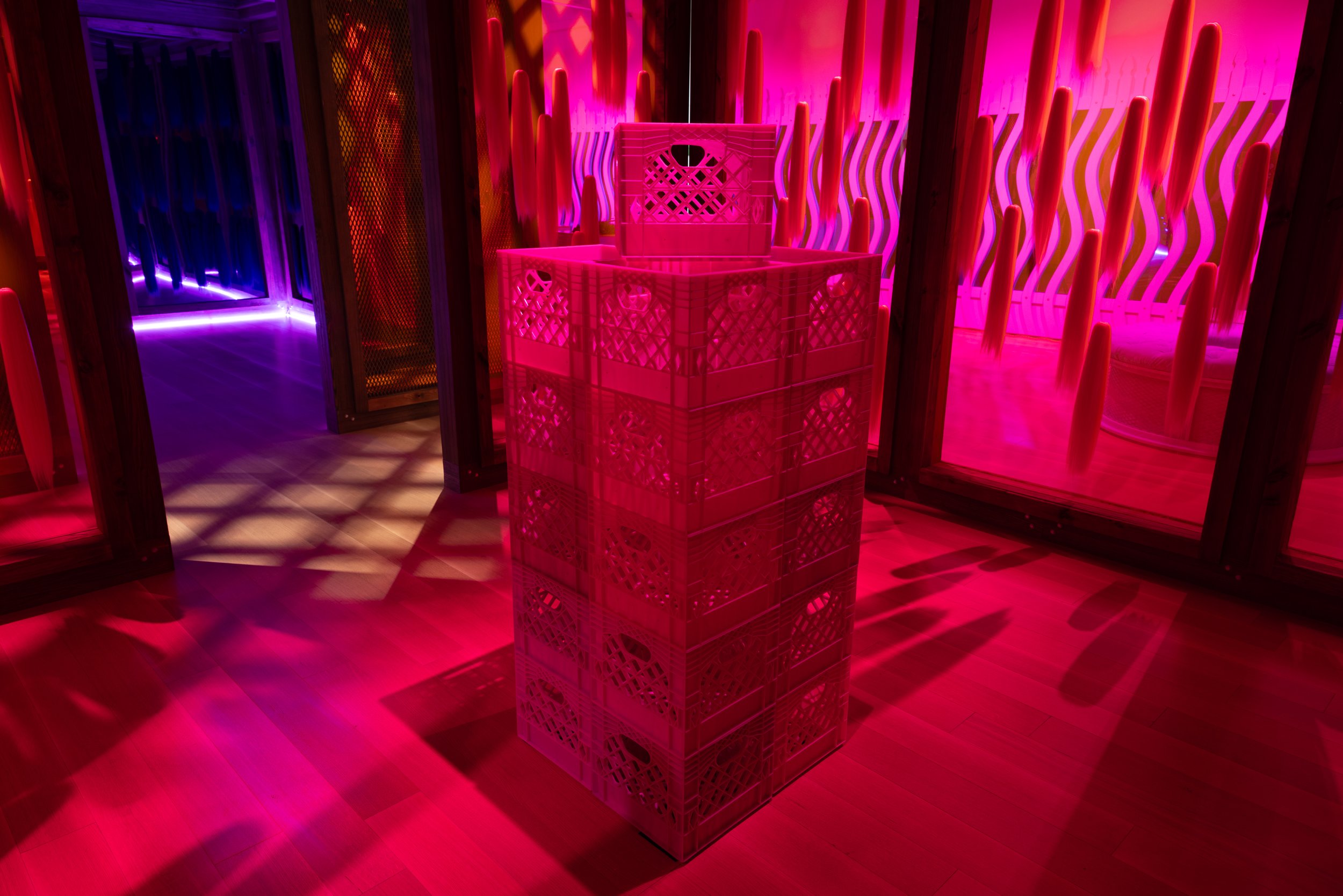
Above the rooms, plexiglass panels formed coffered ceilings. Architectural details associated with large Southern interiors were remade in transparent and synthetic materials, allowing daylight and gallery light to move through what would ordinarily be solid. Inside one room, a column of color-matched milk crates stood beneath the ceiling. The crates came from Williams’s memories of his uncles, whose vinyl records were stacked in milk crates in the garage where they played and scratched records. Their appearance in the installation was simple and direct: a familiar object from one architecture of Williams’s childhood inserted into another architecture built from memory. The middle room changed the atmosphere. Its outward-facing windows were orange plexiglass covered in expanded steel mesh. Inside, mirrored purple panels darkened and complicated the space. The mesh recalled the security screens of neighborhood stores, where protection and display often occupy the same surface. Bands of neon ran along the base of the structure and slowly changed color, bringing another familiar visual language into the room: the illuminated edges of corner stores after dark.
This was also where the installation’s 11-minute, 26-second sound composition was concentrated. Migratory ducks lifted into flight. Frogs and crickets appeared and disappeared. Rain and thunder moved through deep car bass. A stick scraped across chain-link and wooden fences. A small bell—the kind attached to a store door—punctuated the composition and opened onto other sounds. The result was not a recording of one actual place. Rural and urban sounds occupied the same environment. Marsh, yard, street, storm, car, fence, storefront, night, and animal life accumulated without resolving into a single landscape.
The synthetic hair changed here as well. Outside the central room, ponytails hung more loosely and gathered into the atmosphere of moss and vegetation. Inside, they were arranged in a strict five-by-three grid. The shift was enough to make the same material become something else. The grid recalled rows of packaged hair in beauty-supply stores, but the darkened mirrored room pulled the objects away from ordinary retail display. They could be merchandise, decoration, specimens, charms, or simply a repeated object whose purpose had become difficult to determine. Their familiarity remained, but certainty about what kind of room the viewer had entered did not.
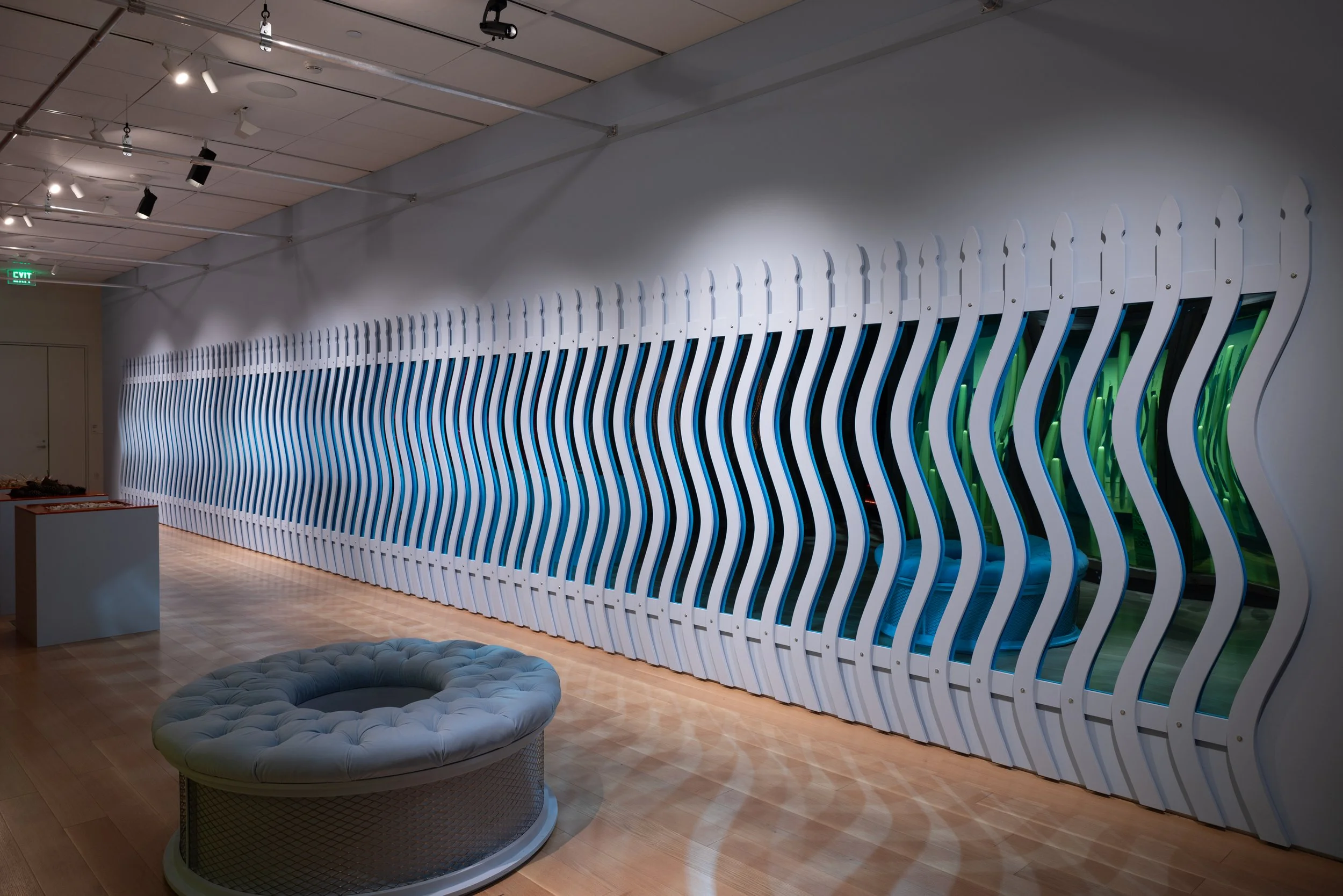
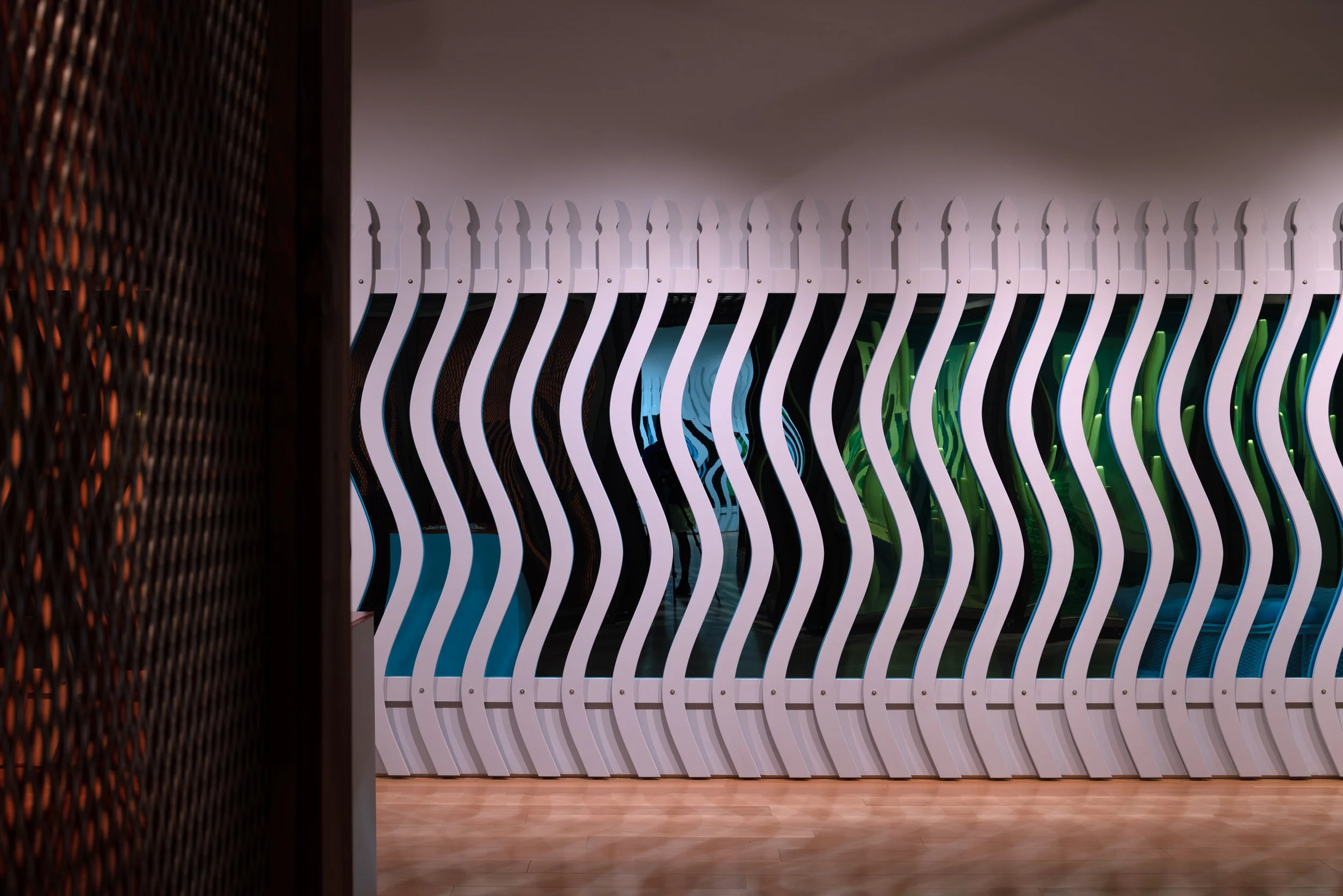
Along both sides of the gallery, sixty-foot walls of undulating pickets were painted haint blue and mounted over mirrored plexiglass. Williams had used the picket repeatedly in earlier work, but here the fence no longer behaved only as an edge or barrier. It became reflective, rhythmic, and almost atmospheric. Haint blue brought with it longstanding Lowcountry associations with protection and the supernatural, while the mirrored surface prevented the wall from becoming visually solid. The viewer and the rest of the installation continually appeared inside it.
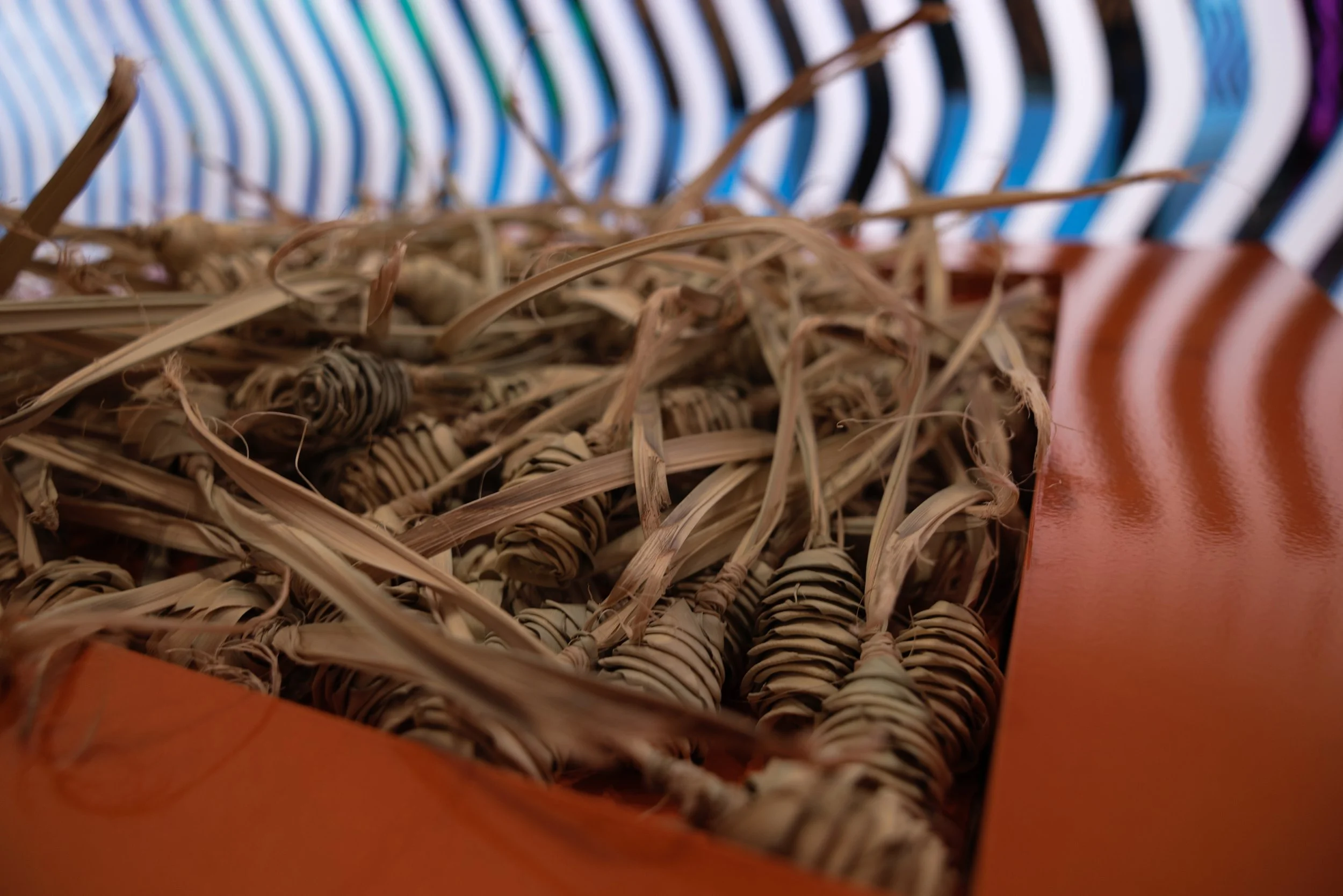
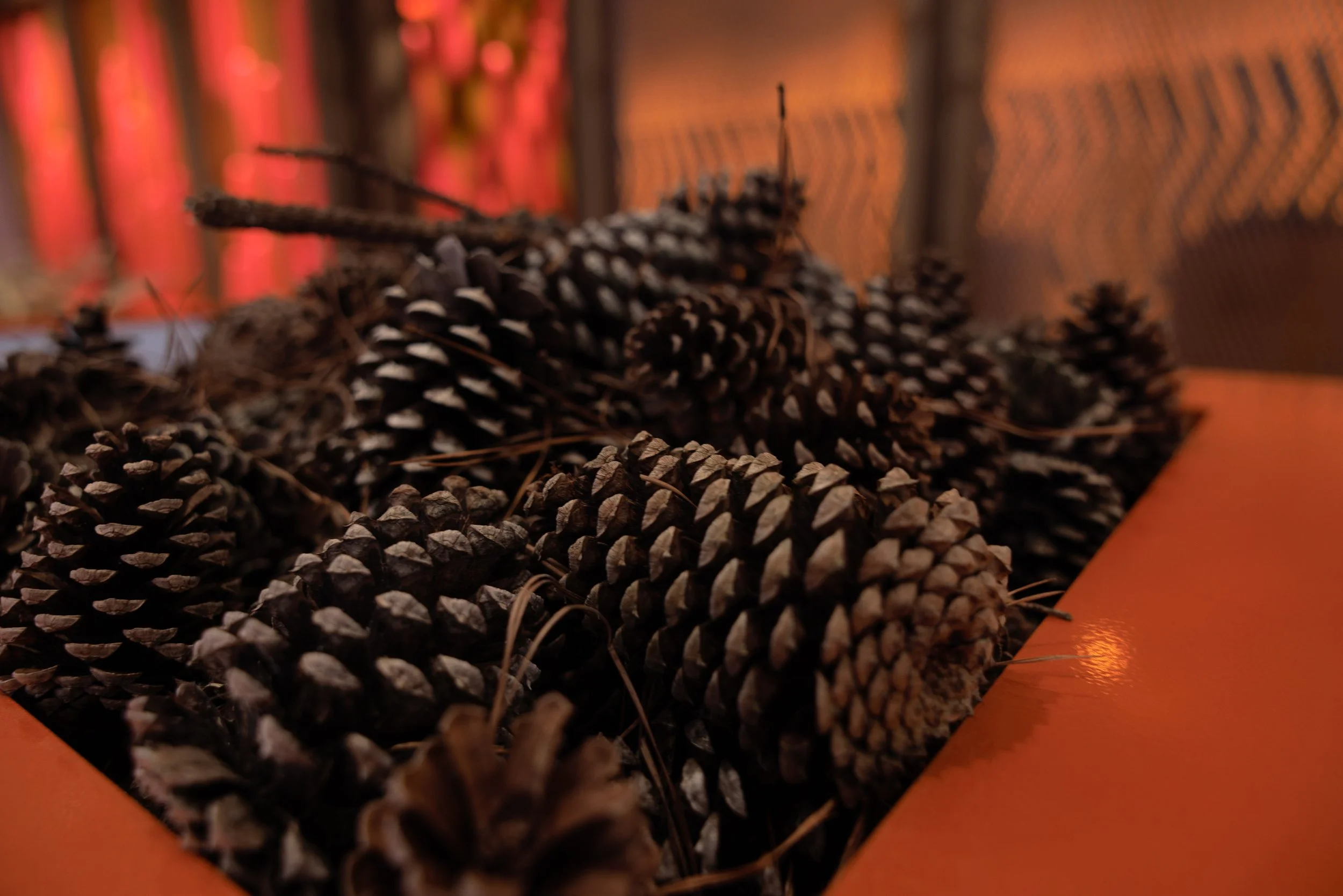
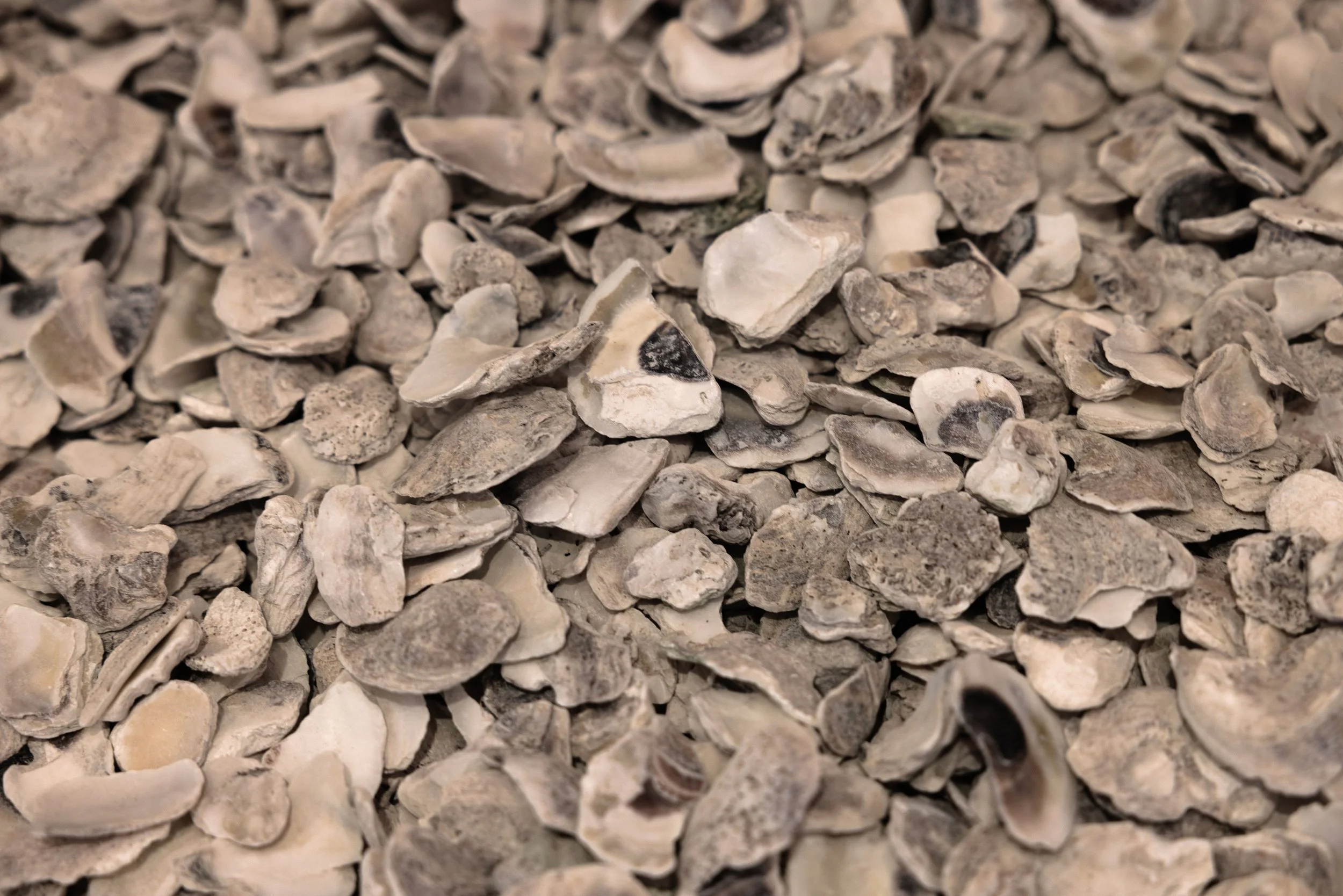
Between the central structures and these walls, small plinths held oyster shells, pine cones, and palmetto roses. The objects came from different parts of Williams’s experience of the Lowcountry. Pine cones recalled the yard of his grandmother’s house and the tree that continually dropped them onto the ground. Oyster shells belonged to the marsh, to eating, gathering, building, and the material history of the coast. Handwoven palmetto roses belonged equally to plant life, craft, street commerce, childhood familiarity, and Charleston itself. Williams did not attempt to make those objects represent the South in any complete sense. They were things he knew. Things he remembered. Things he remained attracted to. Bringing them together allowed personal memory, regional material, decoration, landscape, and architecture to occupy the same space without requiring them to tell a single story.
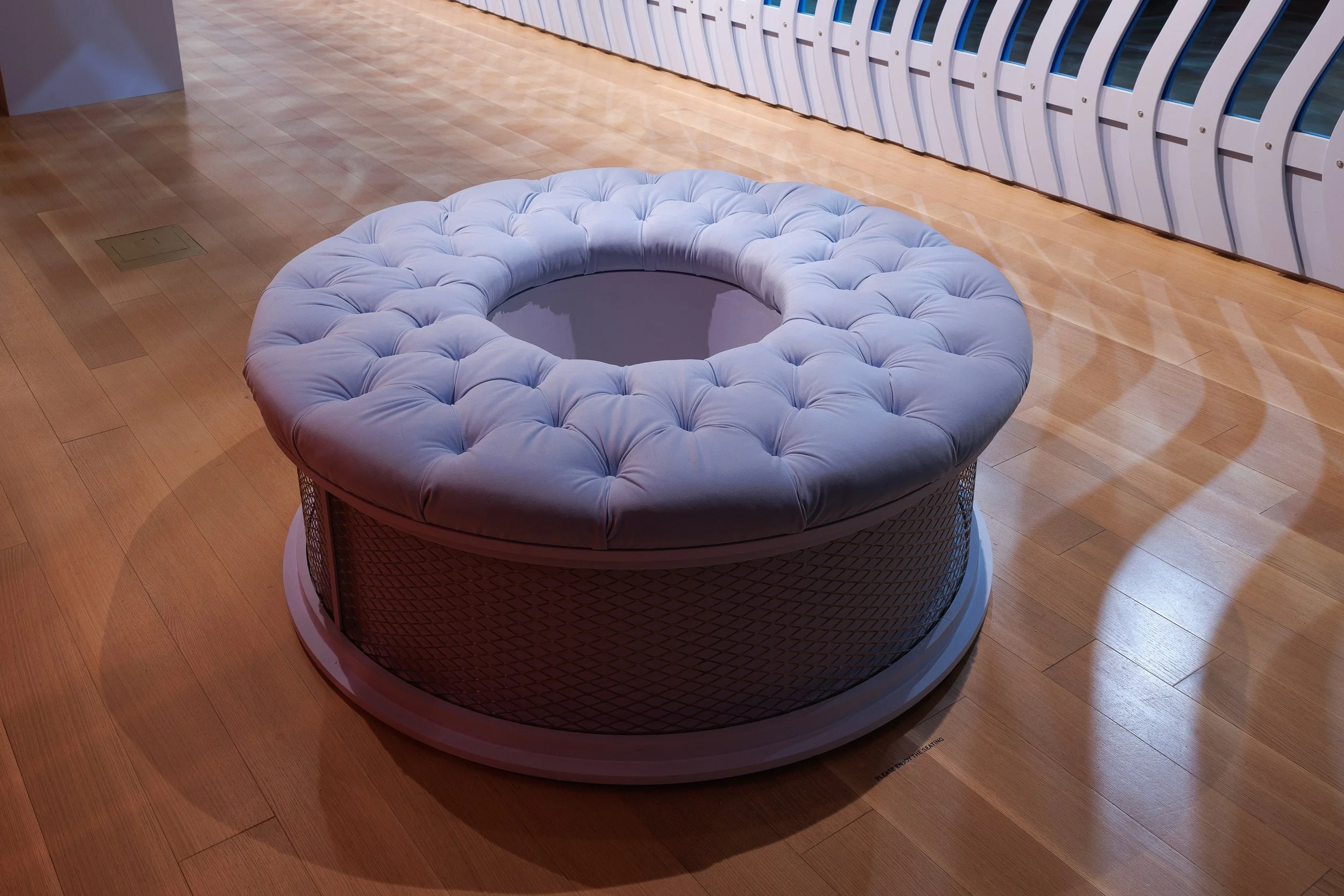
Four circular benches upholstered in pale blue suede sat at the corners of the gallery. Visitors could remain inside the installation rather than simply pass through it. From those positions, the architecture continued to change. Plexiglass layered one room behind another. Mirrors returned pieces of the gallery from unexpected directions. Hair moved between object and shadow. Screens interrupted views without completely blocking them. Light passed through one color and landed somewhere else. Orientation was never entirely stable.
That instability was important to When It Rains It Shines. Williams was working from things that were deeply familiar to him—lattice, pickets, synthetic hair, milk crates, palmetto roses, pine cones, oyster shells, storefront screens, neon light, porches, gardens, fences, marsh sounds, bass, rain—but he was not interested in reconstructing a place that already existed. He wanted to see what kind of place those things could make together.
The installation emerged from a Southern landscape Williams knew intimately while refusing the expectation that Southern material should remain documentary, nostalgic, or easily recognizable. Familiar things were enlarged, recolored, repeated, reflected, displaced, and brought into new associations. A beauty-supply display could become a forest. Hair could become moss. A security screen could become ornament. A picket fence could lose its ground. A milk crate could occupy the center of a monumental room. A porch, storefront, garden, sanctuary, and night landscape could inhabit the same architecture. Williams describes this way of working as Southern Surrealism: not a fantasy detached from the South, but a South reconstructed through attraction, memory, exaggeration, association, and invention. When It Rains It Shines was built from that possibility—a place assembled from things Williams recognized but had never seen together before.
Vitural Tour
Visit WIRIS Virtual Tour by Virtual America LLC
Soundscape
Listen to the 11:26 soundscape by Evan Matthew and Fletcher Williams III, while reading about the artwork or viewing the virtual tour.
Post-Museum Installation 2024
Accompanying Work

Related Work