Cathedral, 2021
Mill District Public Art Trail
Columbia, South Carolina
About the Work
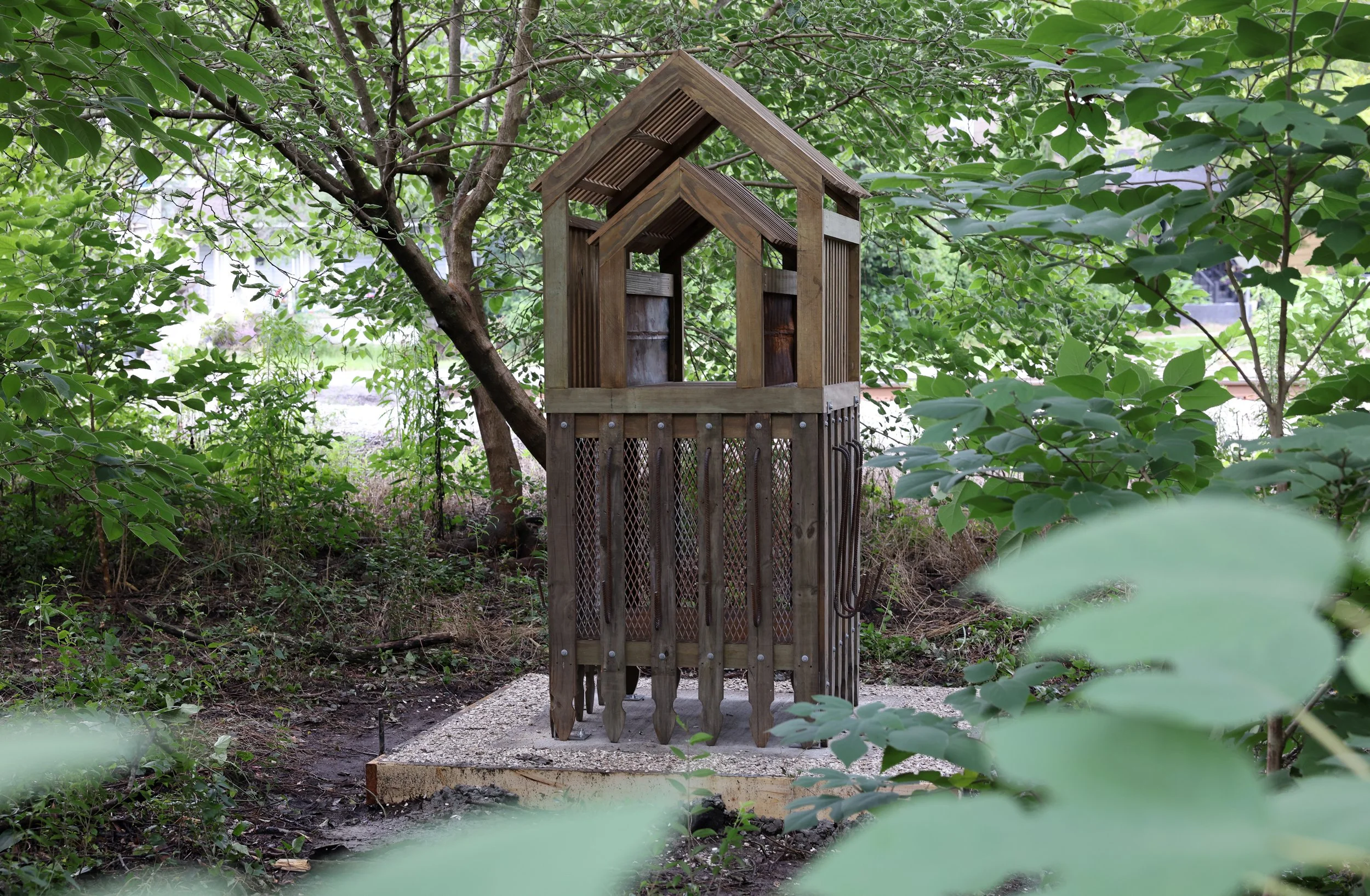
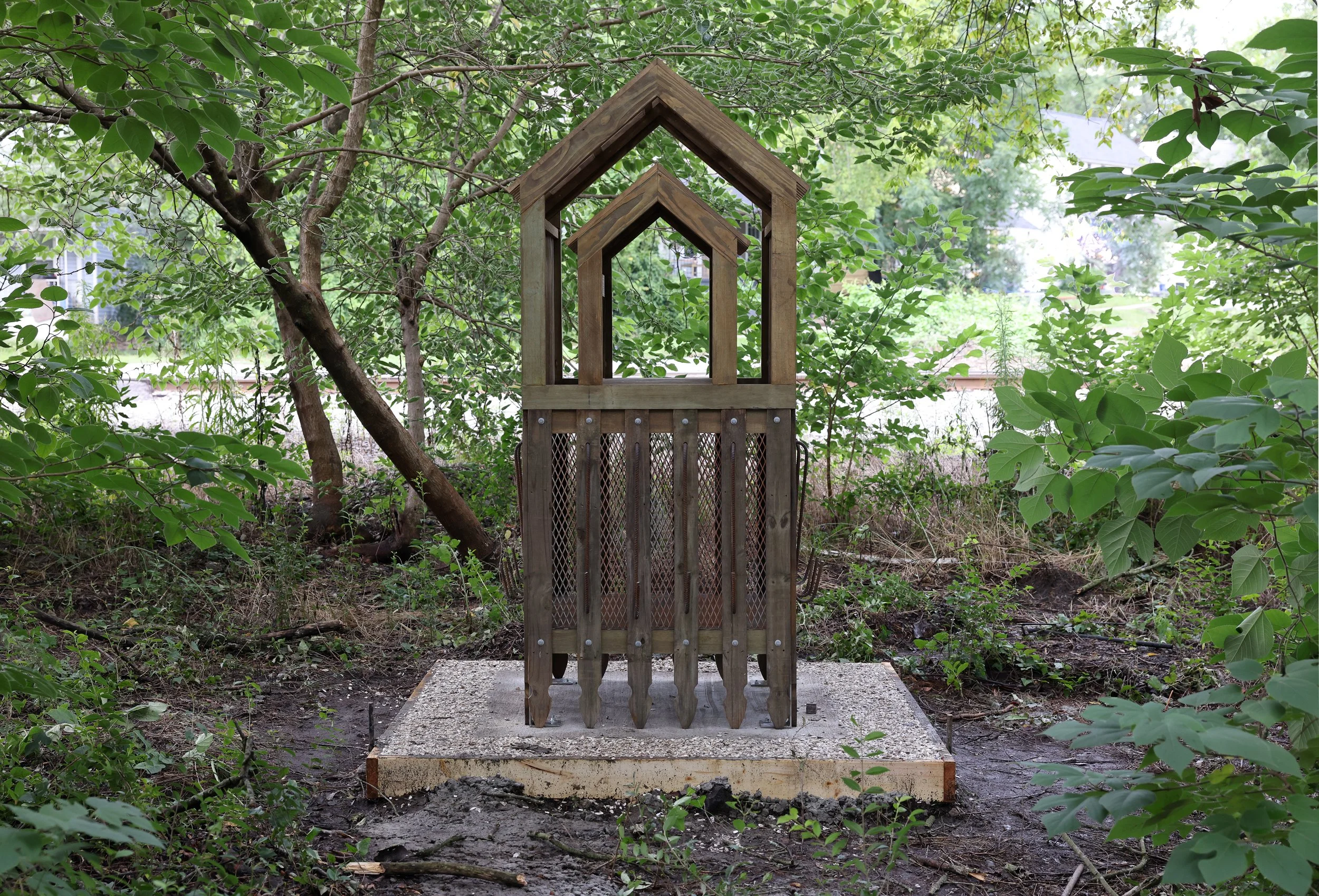
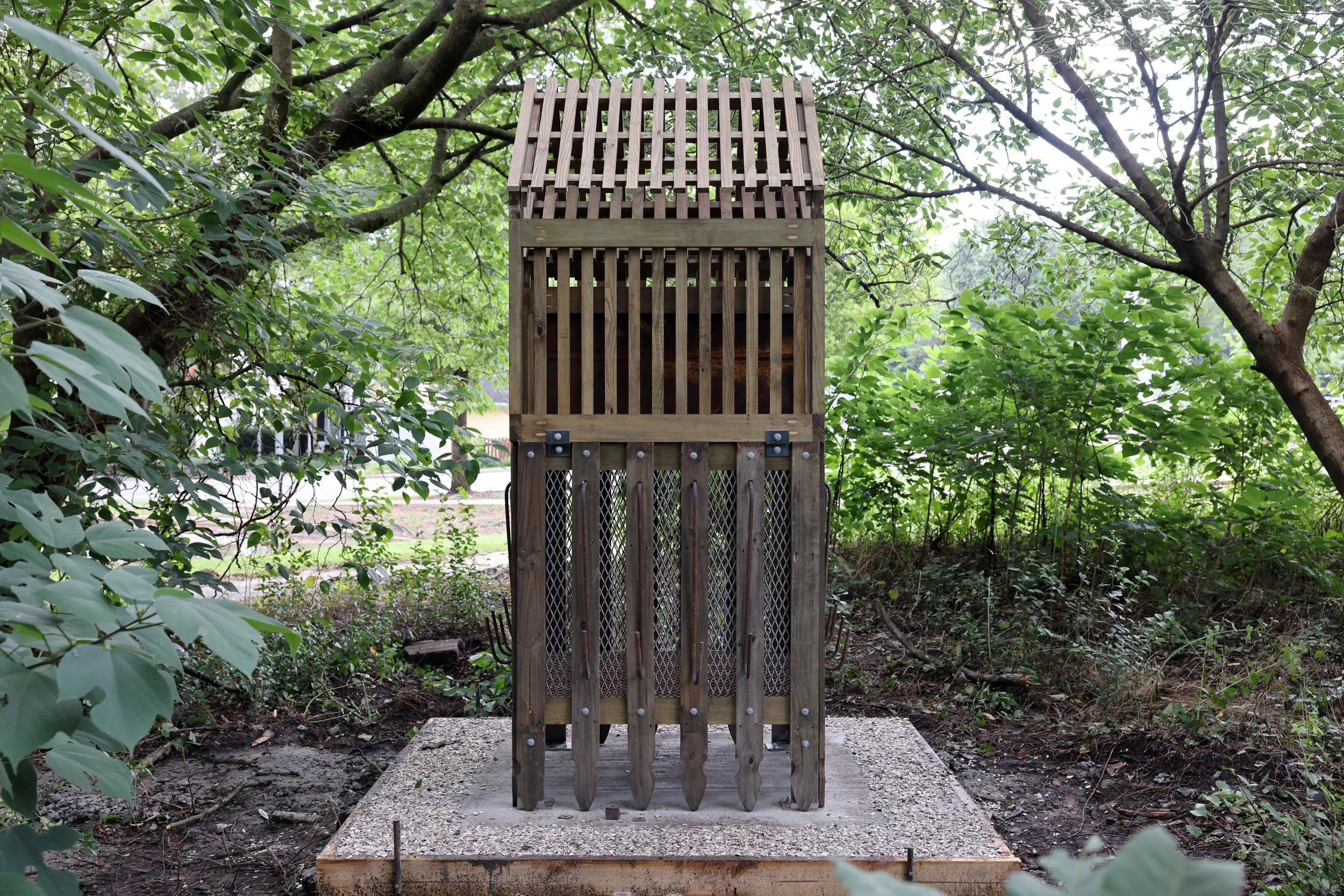
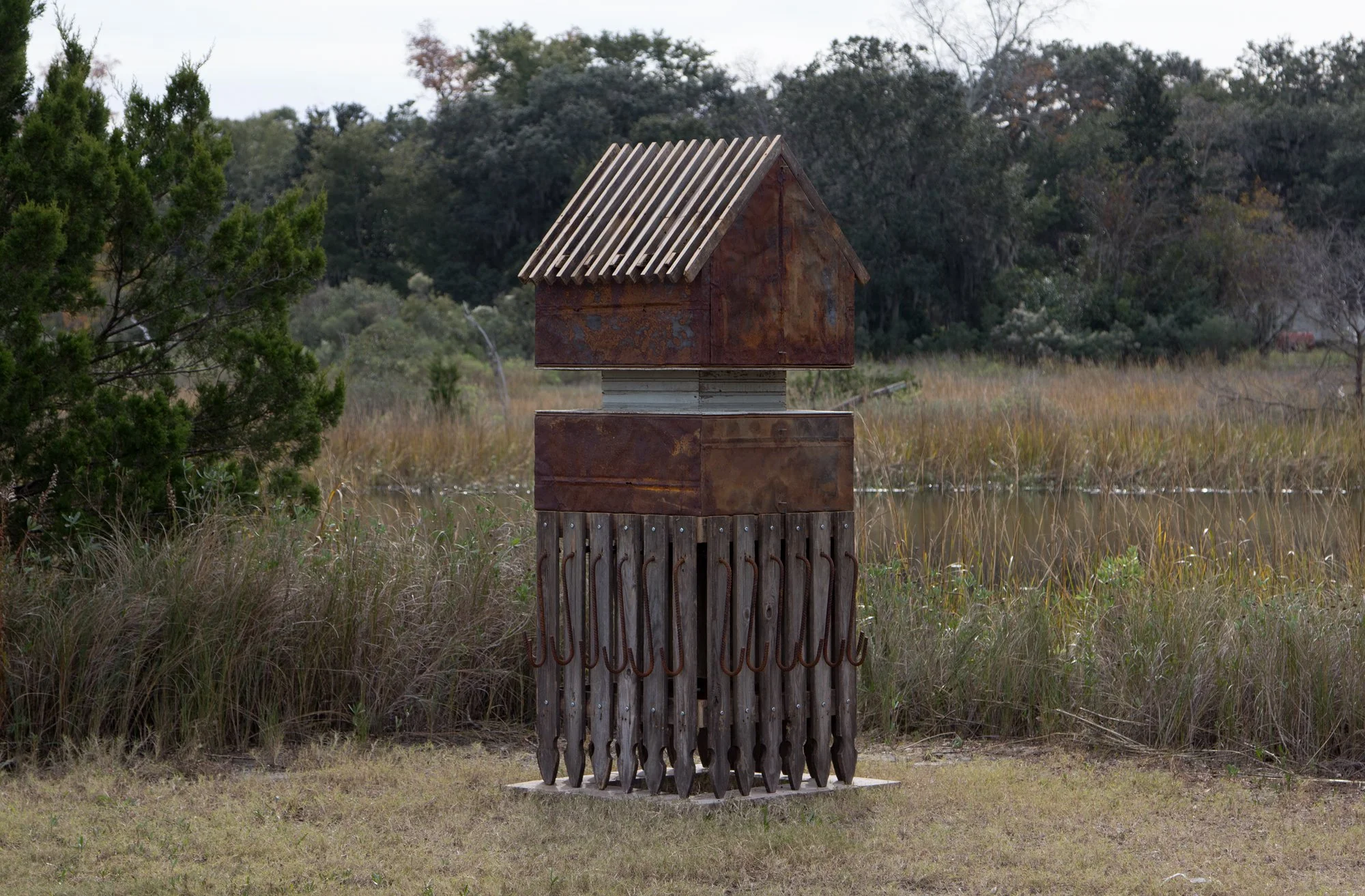
Cathedral is an ode to the African American spirit—its resilience, ingenuity, and enduring presence within the cultural and physical landscape of the American South. Through a careful assembly of reclaimed and utilitarian materials, the work honors the resourcefulness embedded in Southern Black traditions of making, building, and sustaining.
The sculpture incorporates rebar, expanded steel, and tin—materials rooted in labor, agriculture, and foodways. Rebar hooks, often used in butchering, and expanded steel or tin used in pit roasting, function here both as structural components and as cultural markers. In rural spaces, tin roofs shelter homes and barns; in urban neighborhoods, expanded metal becomes protective and decorative screens on storefronts, salons, and restaurants. These elements carry histories of adaptation, necessity, and aesthetic expression.
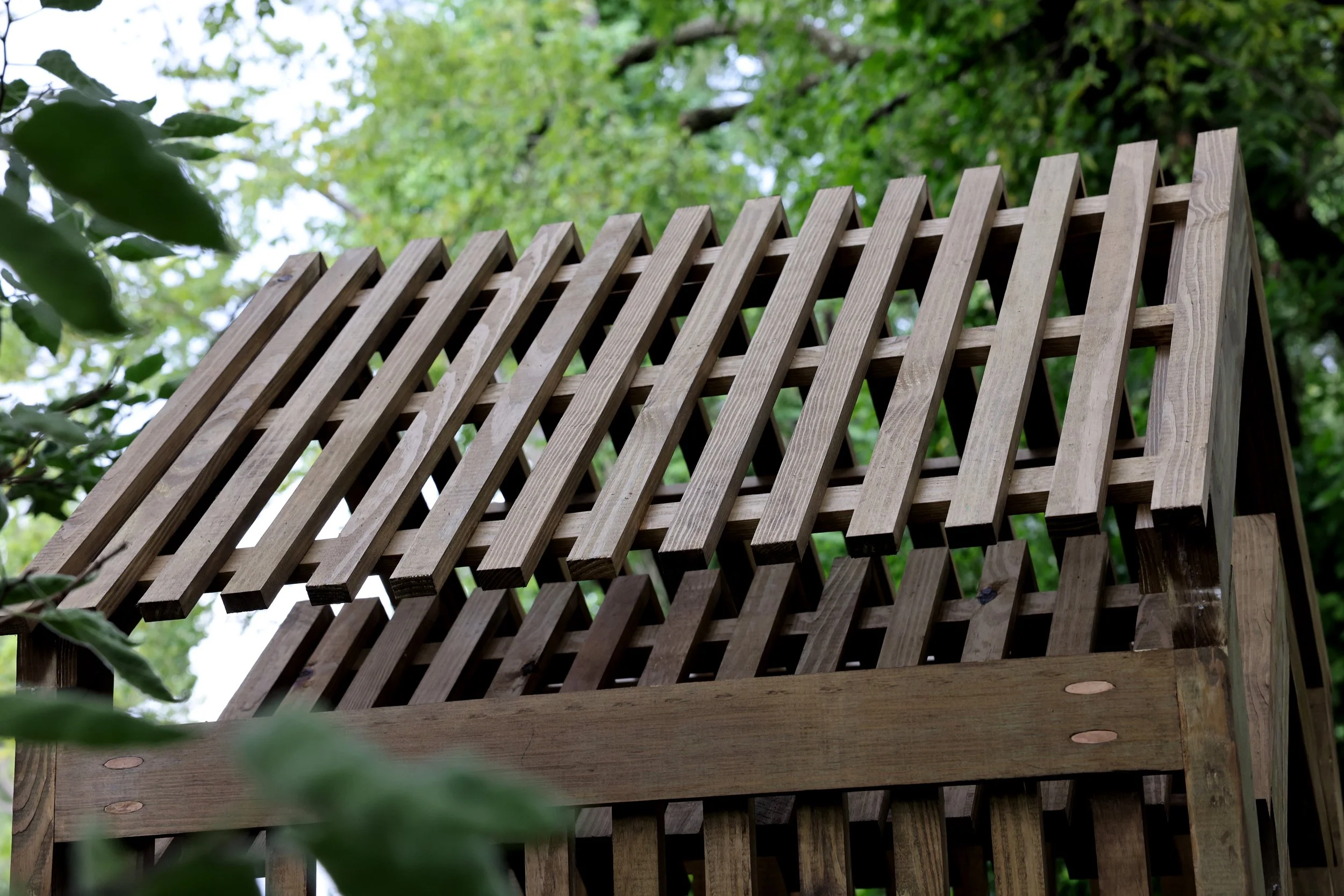
At its base, an inverted picket fence enclosure challenges the symbolism of the “white picket fence”—a longstanding emblem of the American Dream. Rather than reject it outright, Williams repositions it, transforming the fence into both structure and ornament. Crowning the structure is a house-like form that evokes the architectural lineage of the South—a barn, a praise house, a homestead. Its exposed framework allows light to pass through, casting shifting shadows that animate the work. As viewers move around the sculpture, intersecting lines of beams, joists, and pickets create a rhythmic interplay of light and form, recalling the experience of encountering a weathered structure tucked within the landscape.
Through material, form, and spatial experience, Cathedral becomes both a monument and a living structure—one that reflects the layered histories, improvisations, and quiet endurance that define the Southern Black experience.
About the Mill District Public Art Trail
The Mill District Public Art Trail is a site-specific outdoor exhibition organized by the 701 Center for Contemporary Artthat spans Columbia’s historic Olympia, Granby, and Whaley neighborhoods. Conceived in 2017, the project connects these mill communities through a network of installations created by South Carolina artists.
Comprising multiple sculptures and installations placed in residential, industrial, and unexpected locations—including historic guard houses—the trail invites visitors to experience art through a self-guided journey across the district. Each work responds to its specific site, contributing to a larger narrative that reflects the history of the textile mills and the communities that formed around them.
The artworks collectively honor mill workers, the labor of the hand, and the cultural and social conditions that shaped life in the mill villages, including issues of work, family, and community. At the same time, the trail participates in the ongoing transformation of the Mill District, using public art to preserve memory while amplifying voices and stories that have historically been overlooked.
Free and open to the public, the Mill District Public Art Trail reimagines the neighborhood as an accessible cultural destination—one where art, history, and community intersect in the shared space of the city.
ACKNOWLEDGEMENTS
701 CCA
This work was commissioned by the 701 Center for Contemporary Art as part of the Mill District Public Art Trail.
Related Work
Homestead, 2018
84 x 44 x 44 in. | 213 × 112 × 111 cm
Tin Roof, Picket Fence, Interior Wood Paneling, and Rebar
Private Collection
View Project