Beyond the rainbow, 2016
Cannon St. Arts Center
Charleston, South Carolina
About the Work
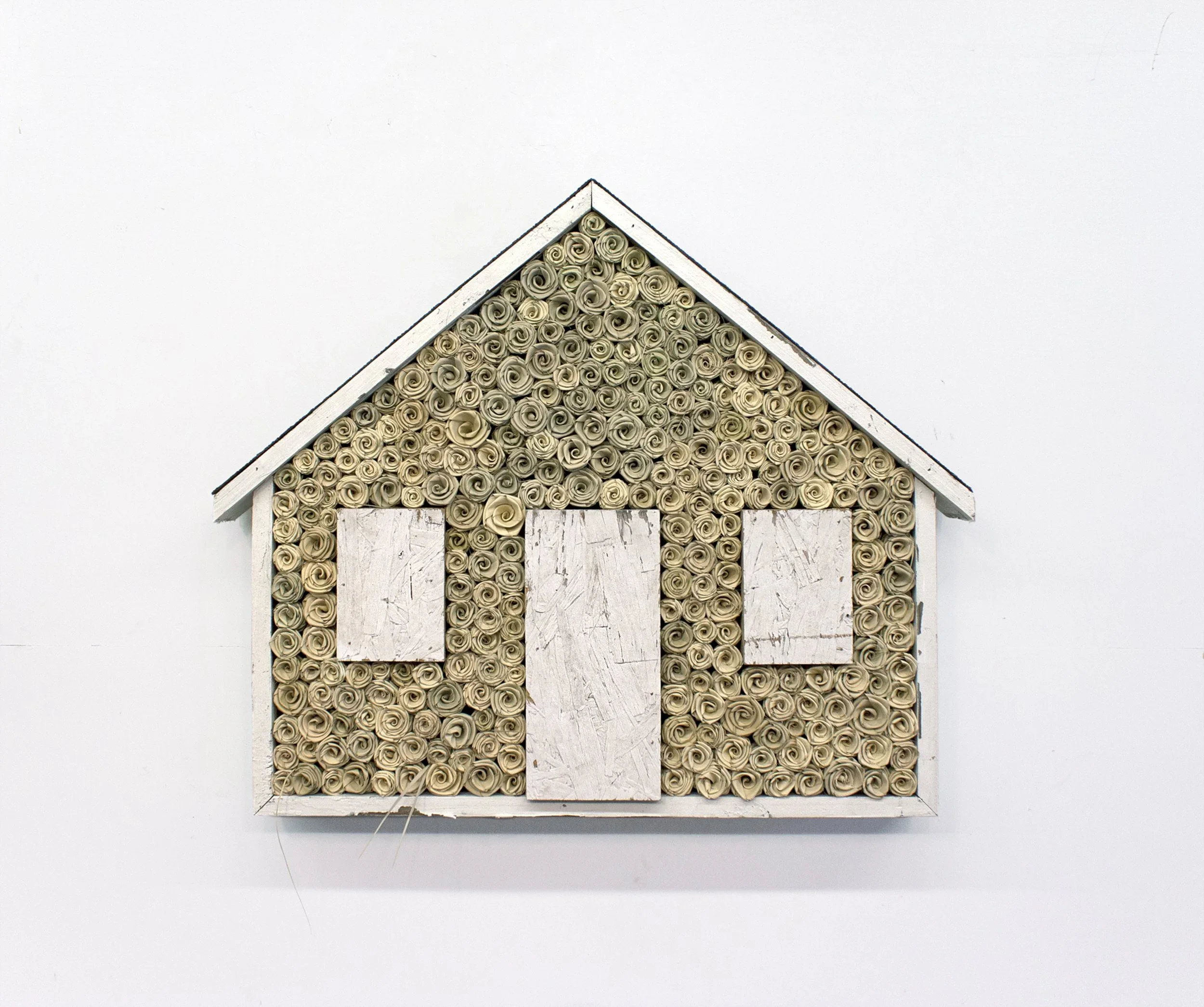
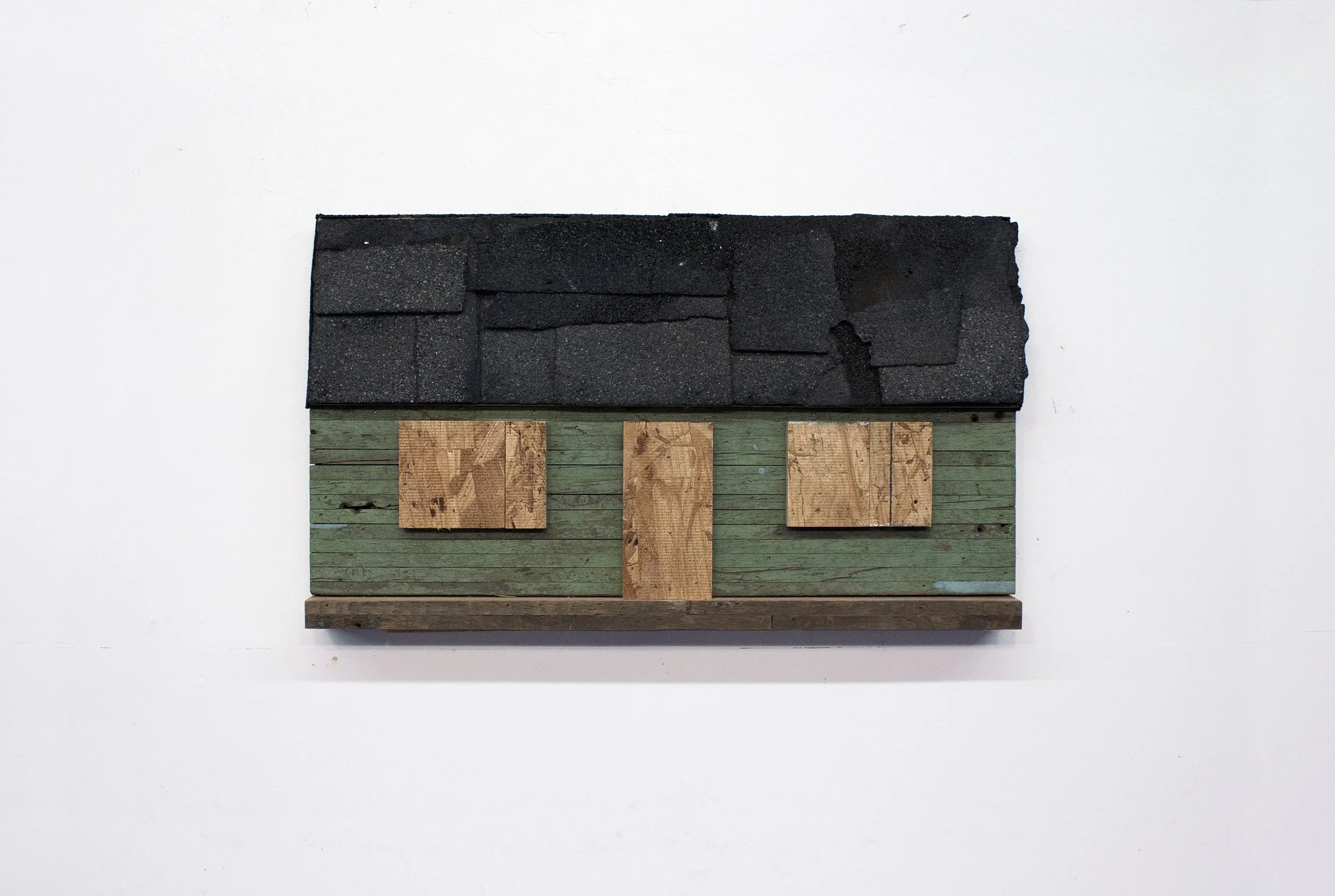
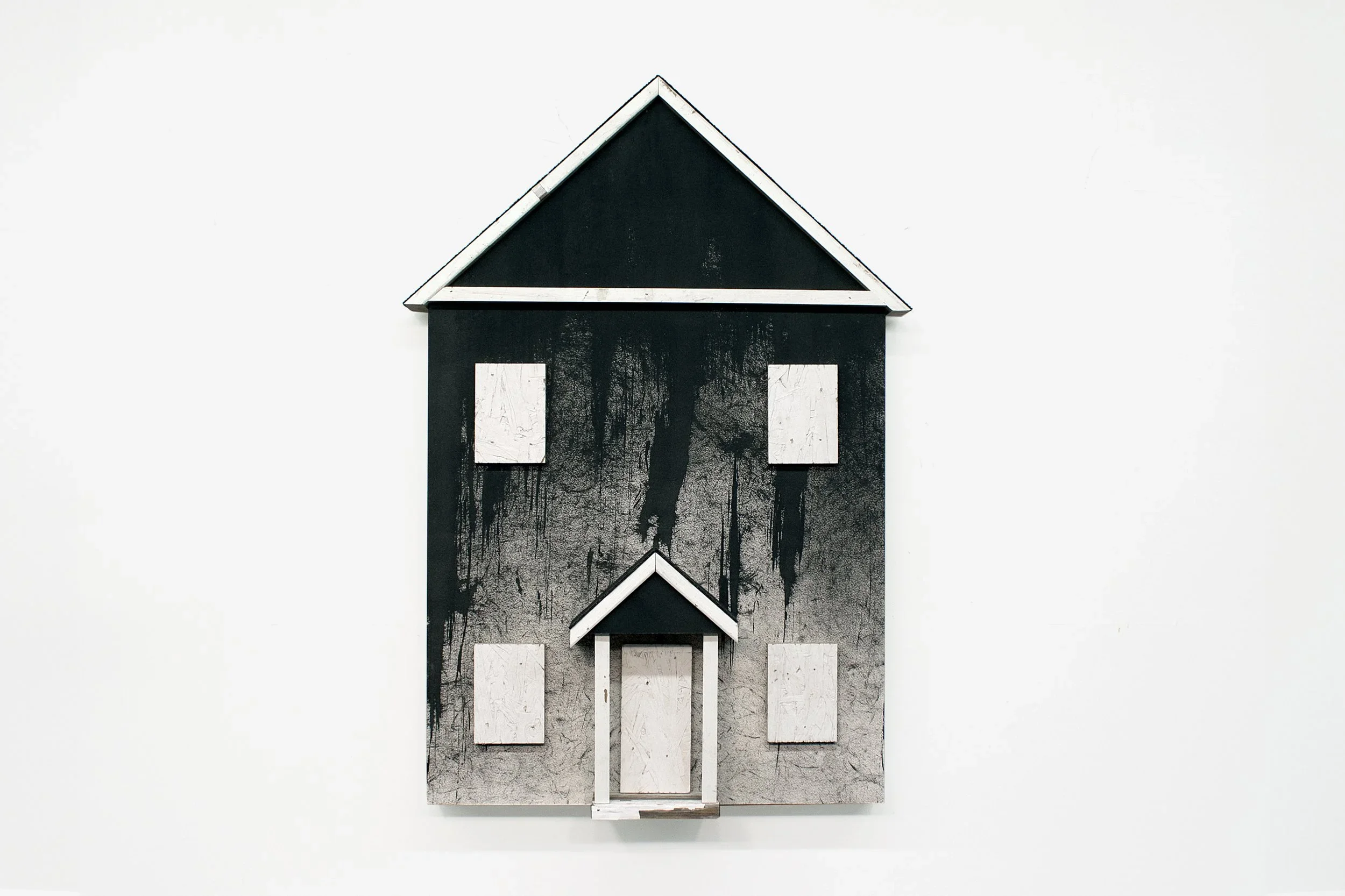
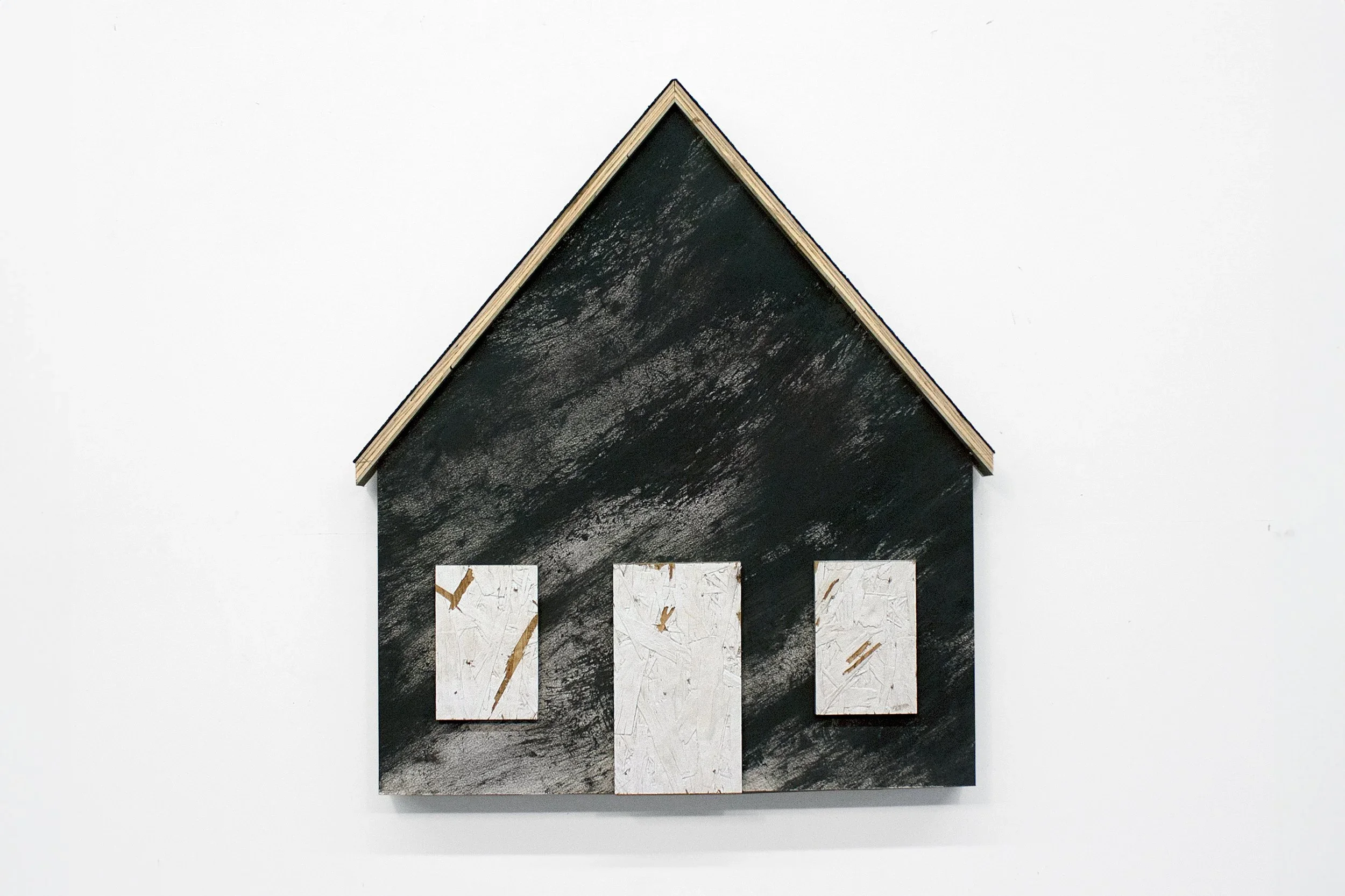
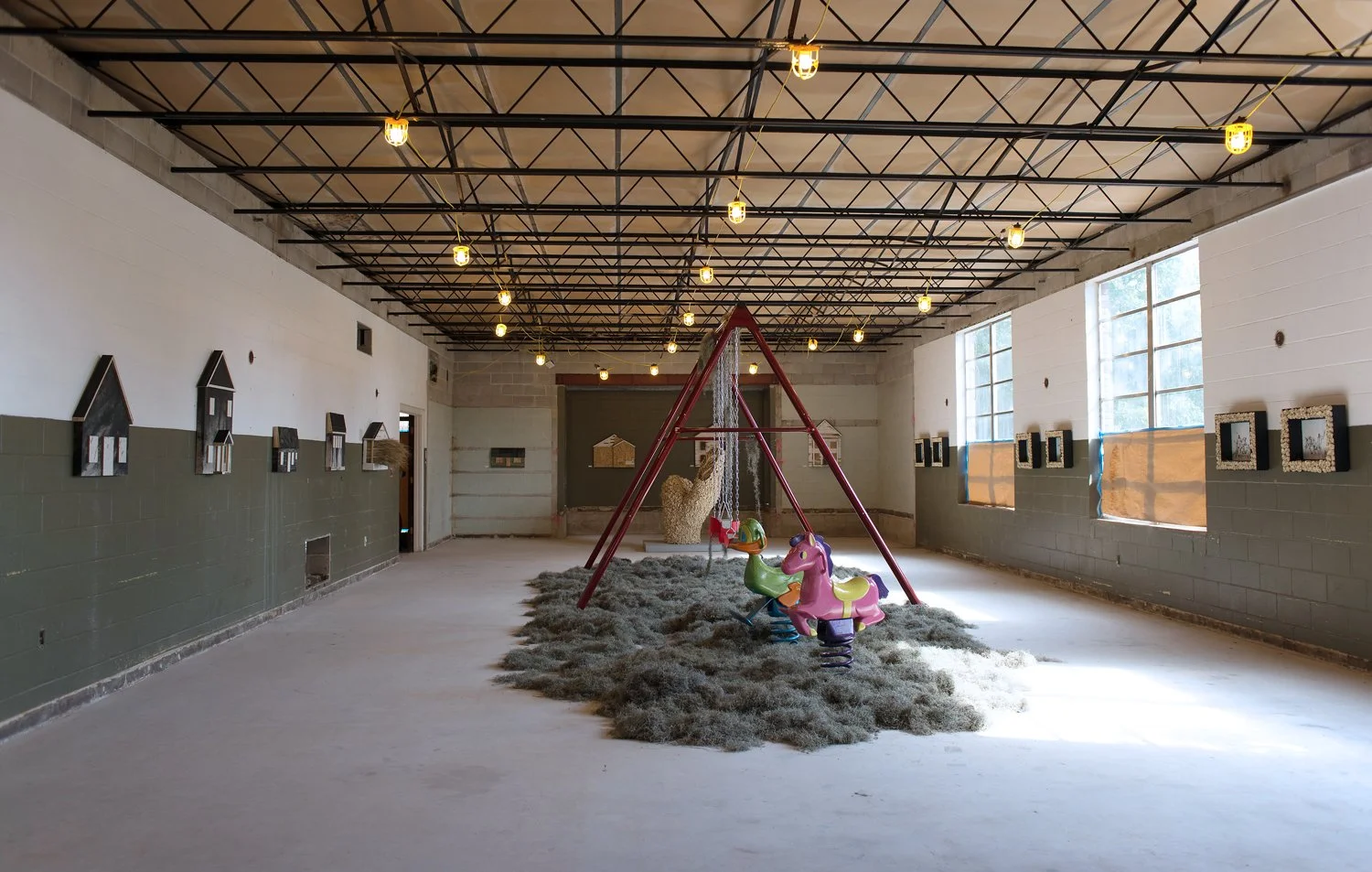
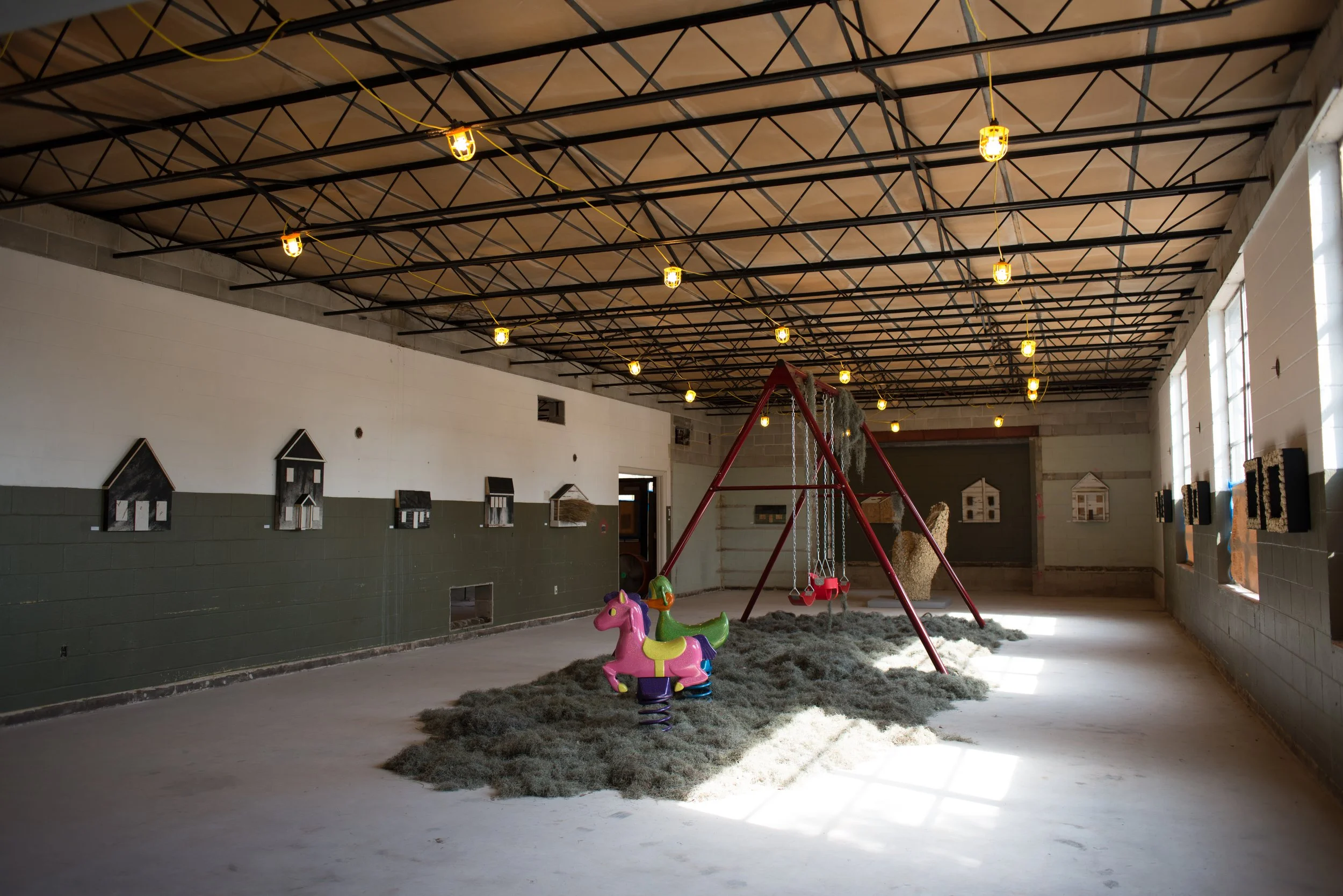
Beyond the Rainbow brought together house sculptures, wall-based works, drawings, and a central playground installation to form a loose, invented neighborhood inside the gallery. The title came from Rainbow Row, the brightly painted historic houses along East Bay Street in Charleston. Williams was interested in what happened when attention moved beyond that familiar image of the city toward houses and neighborhoods he knew elsewhere in Charleston and North Charleston.
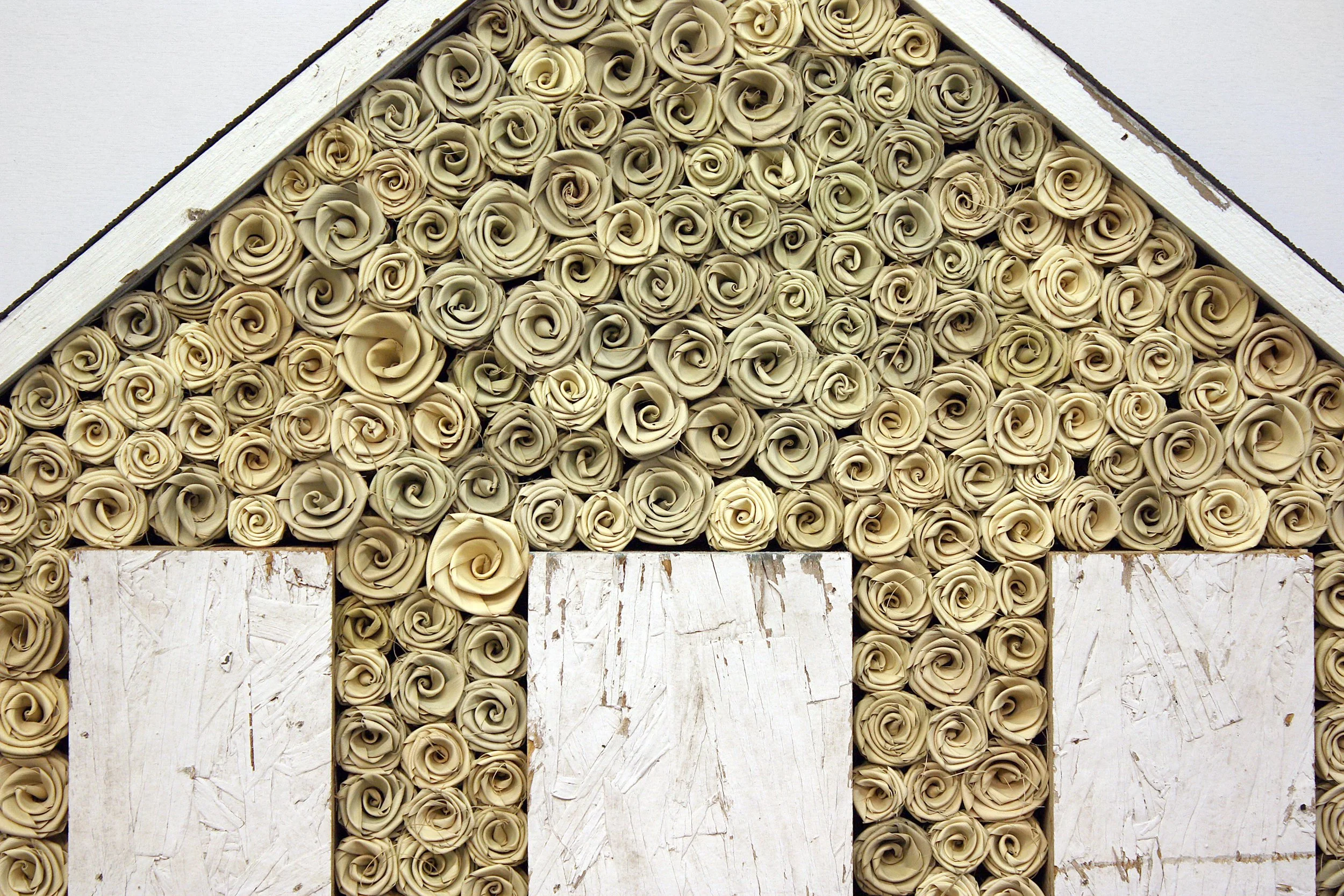
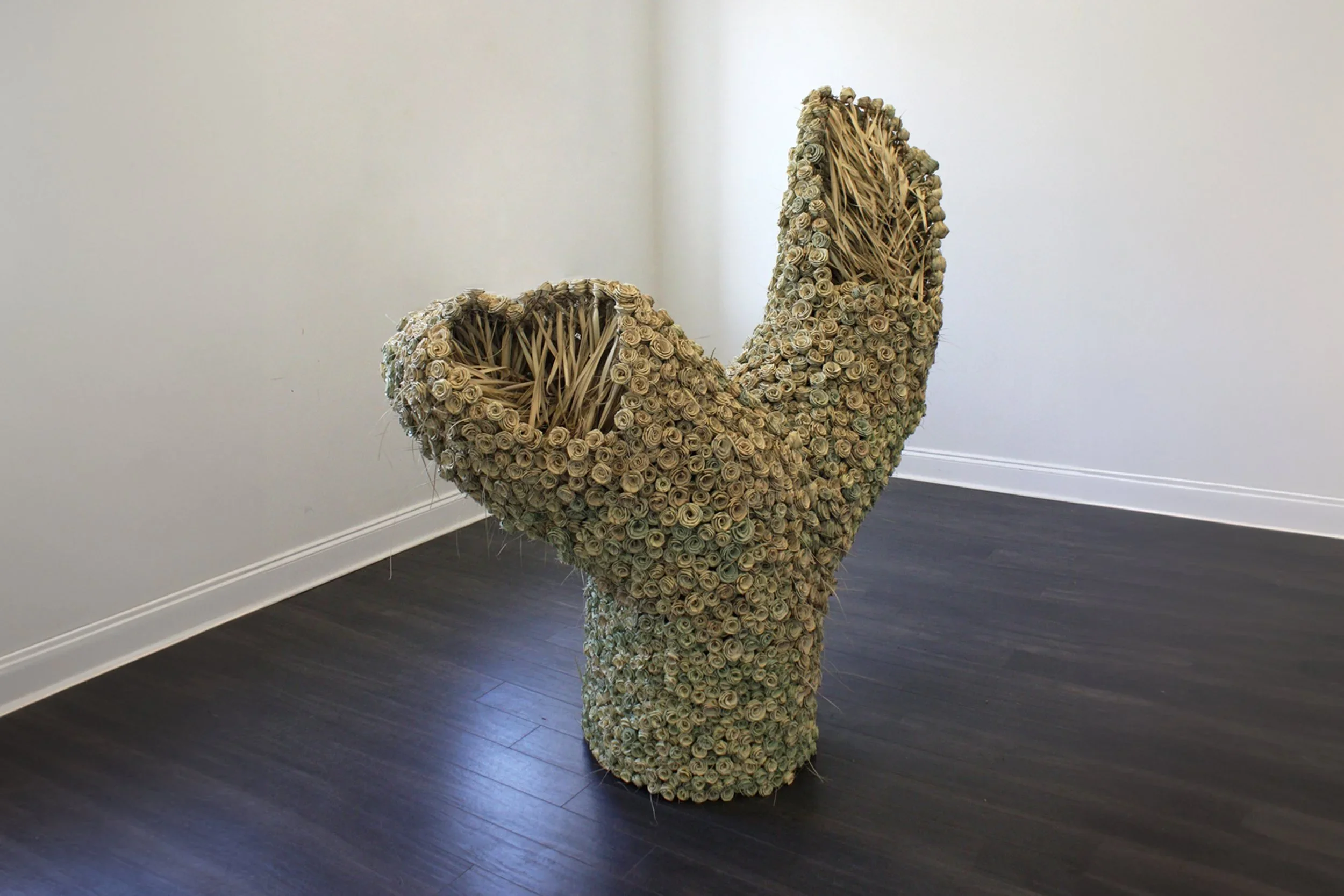
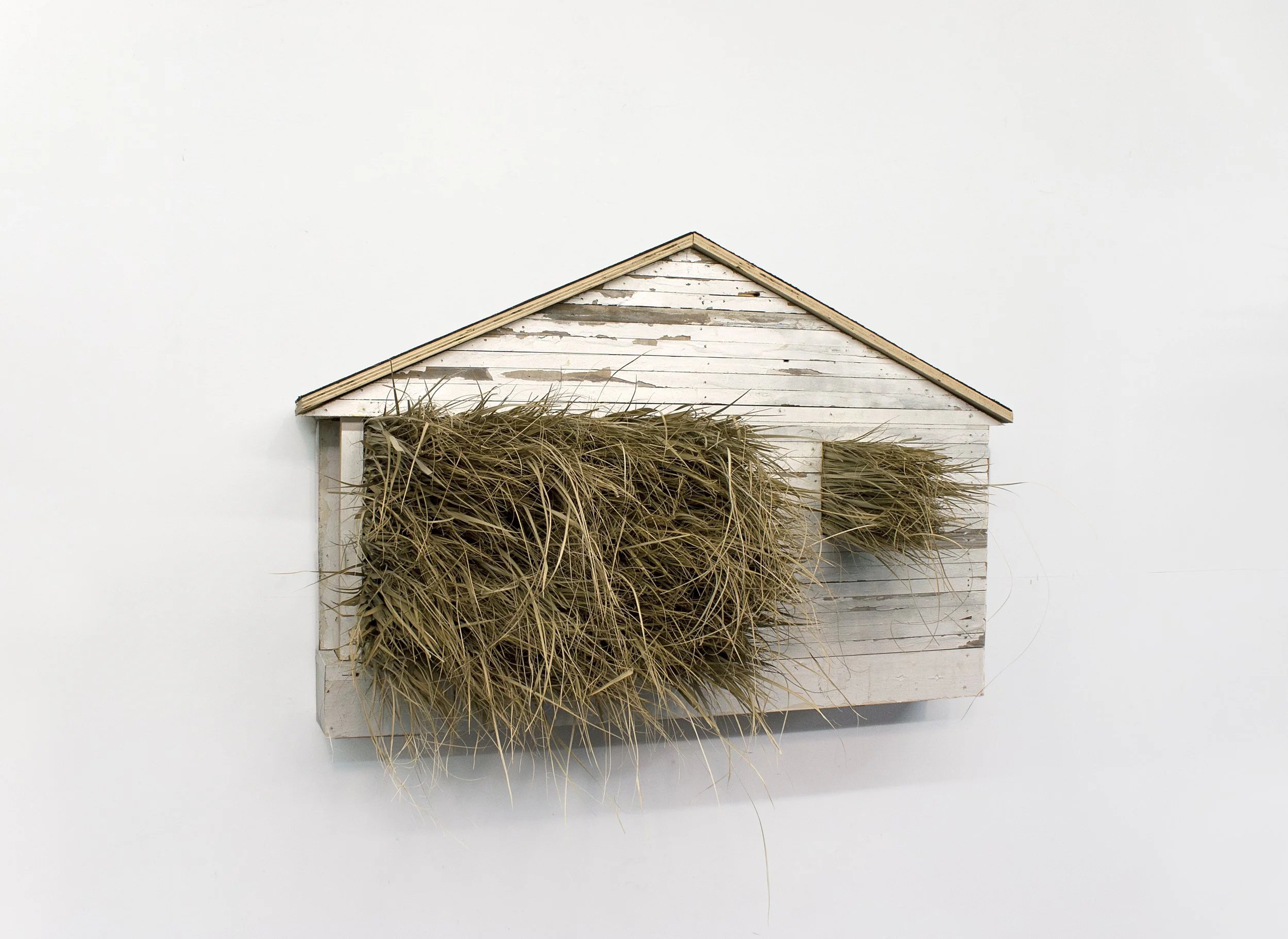
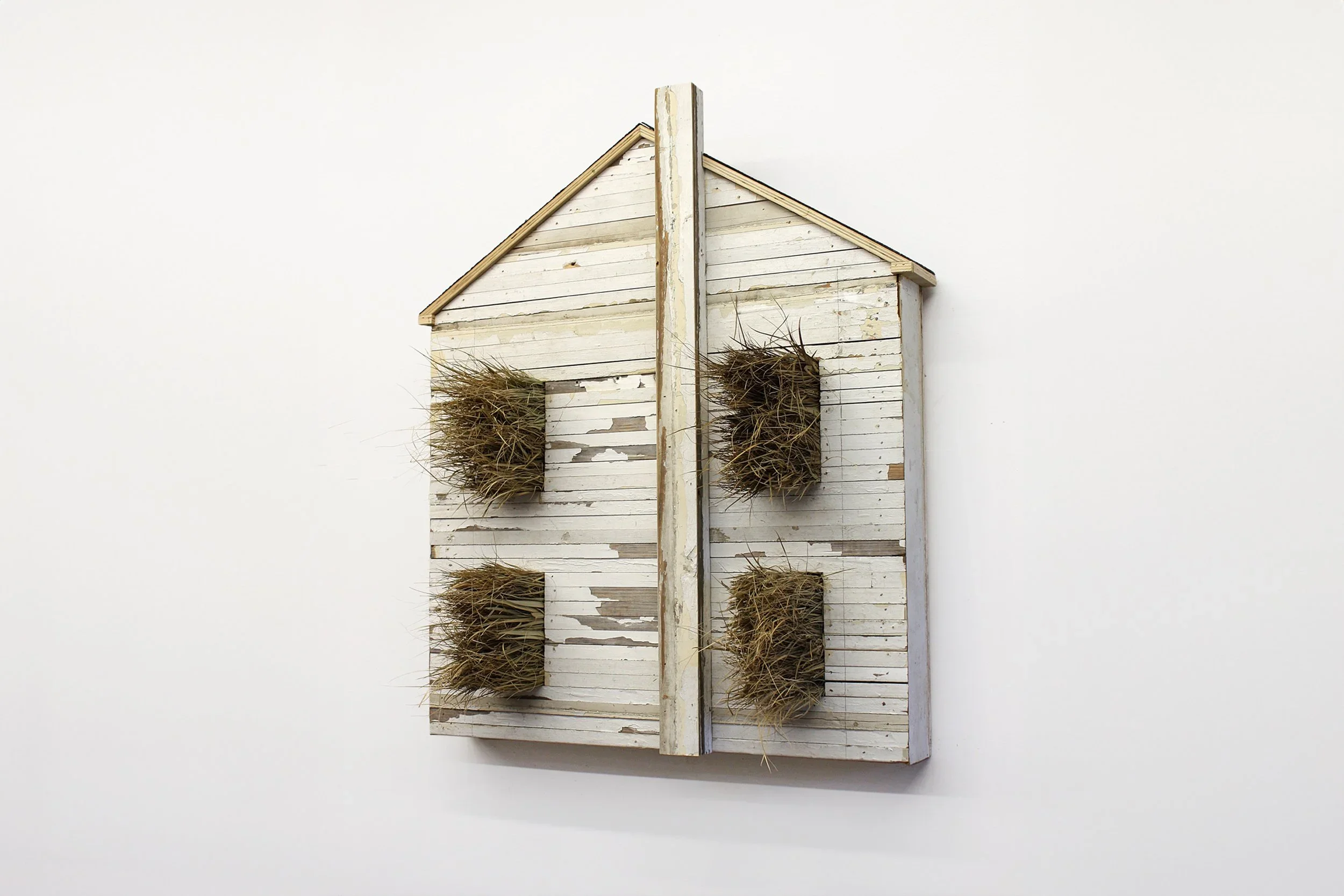
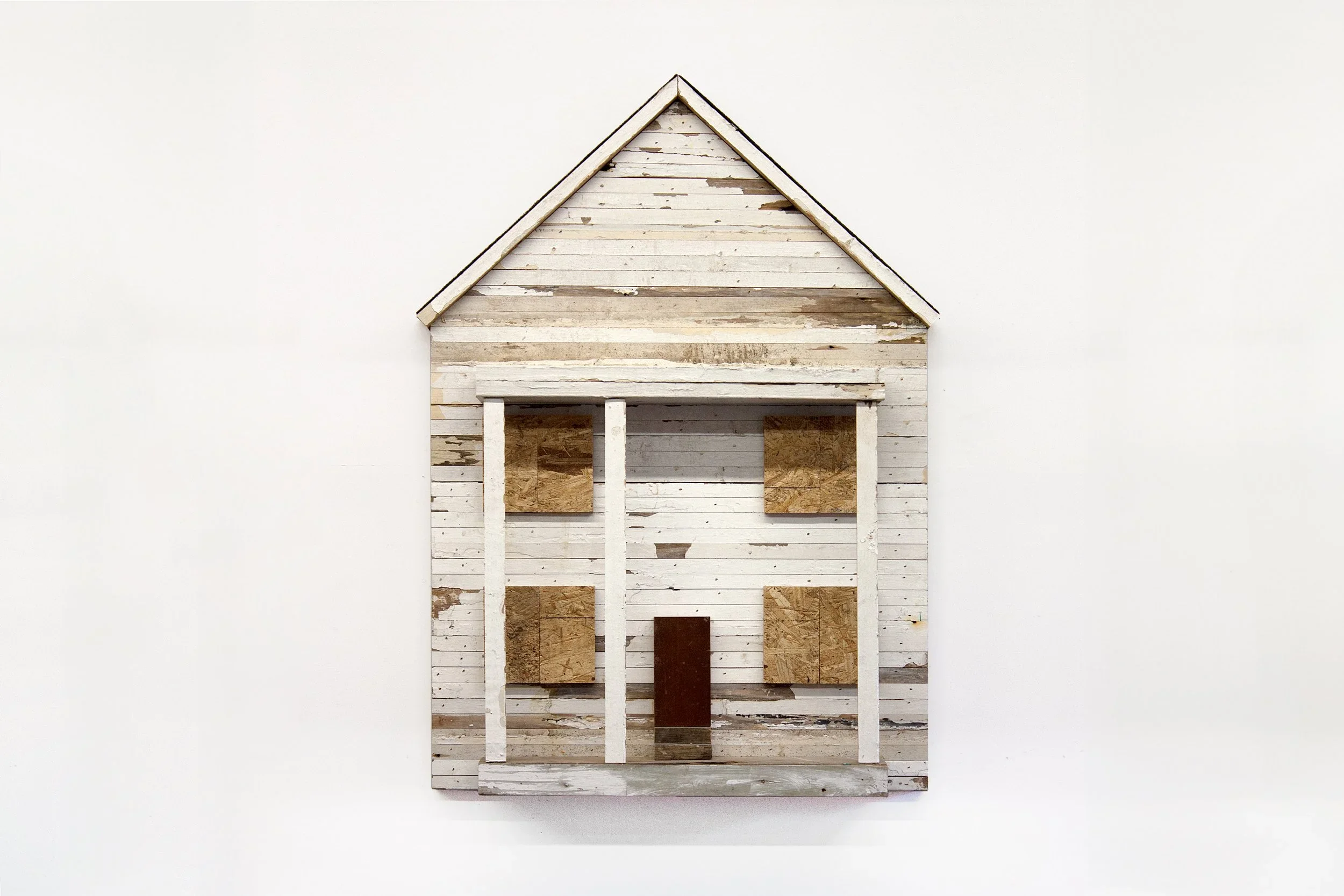
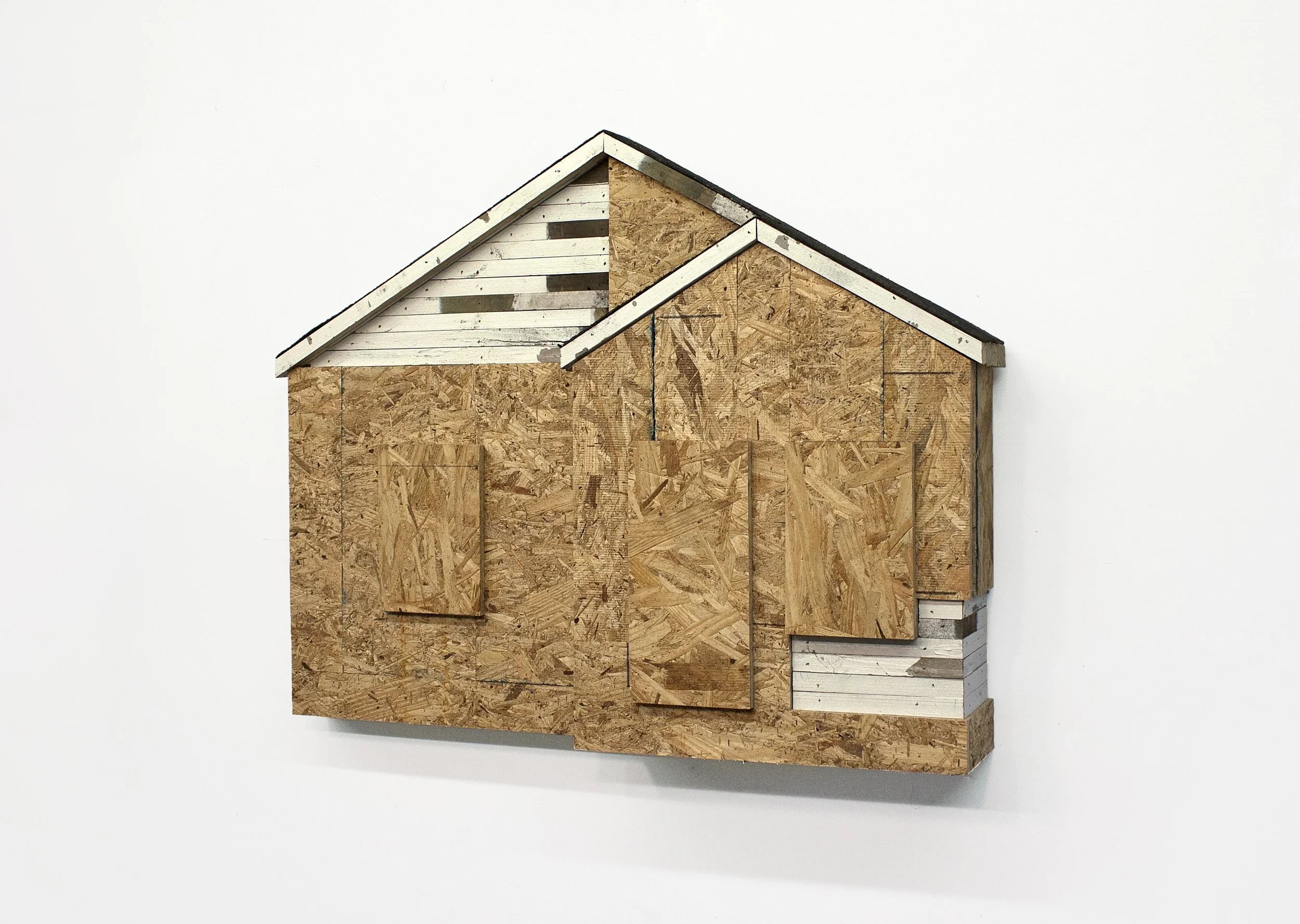
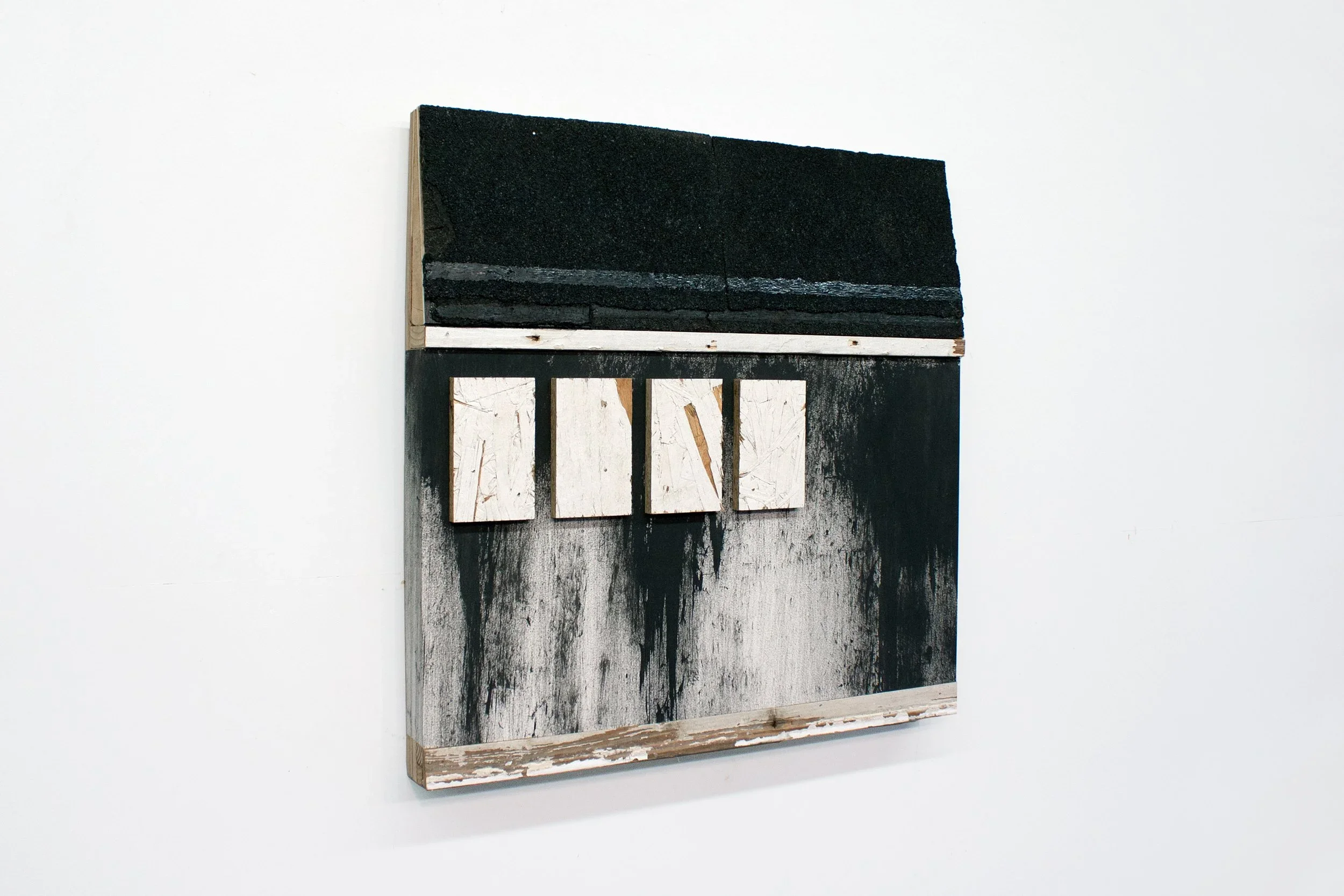
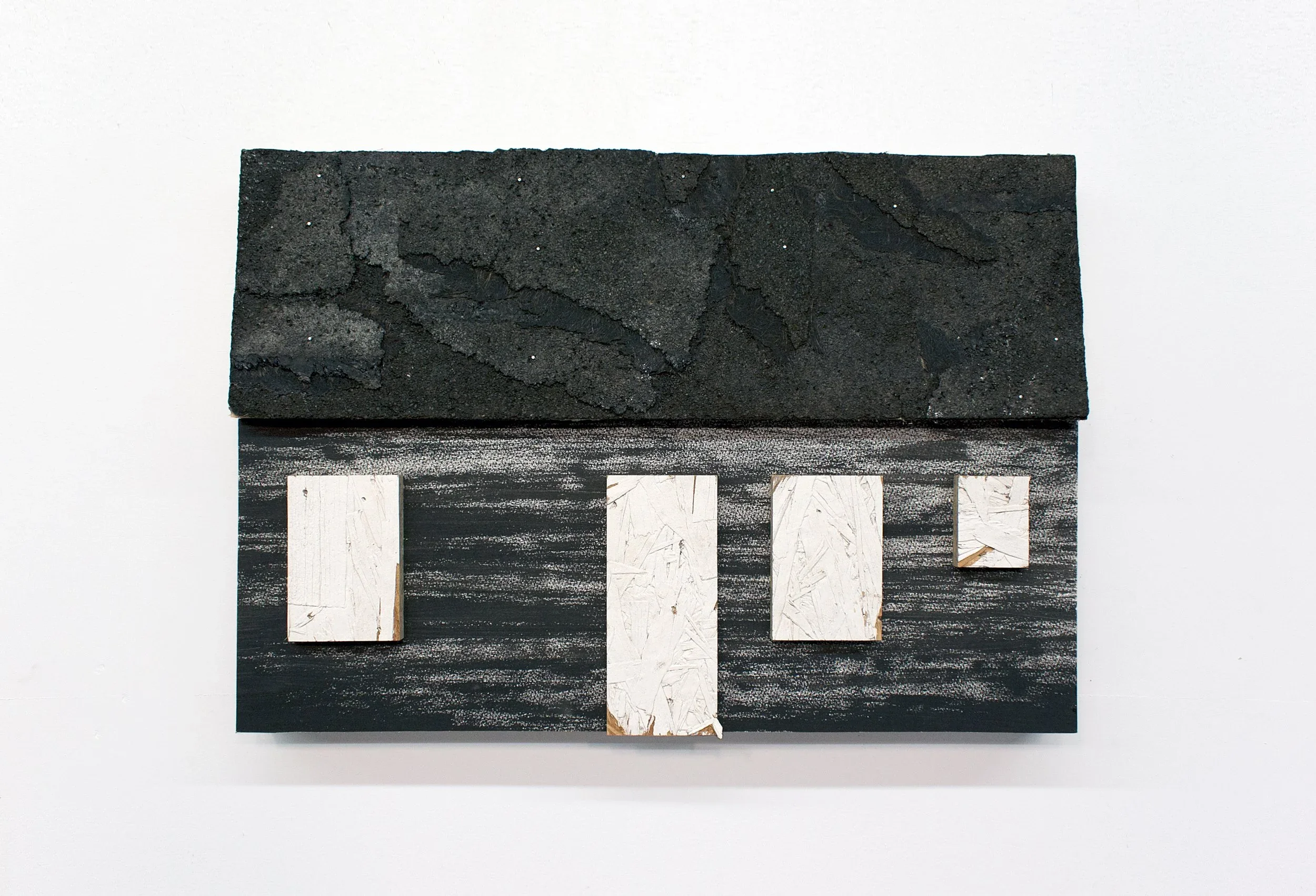
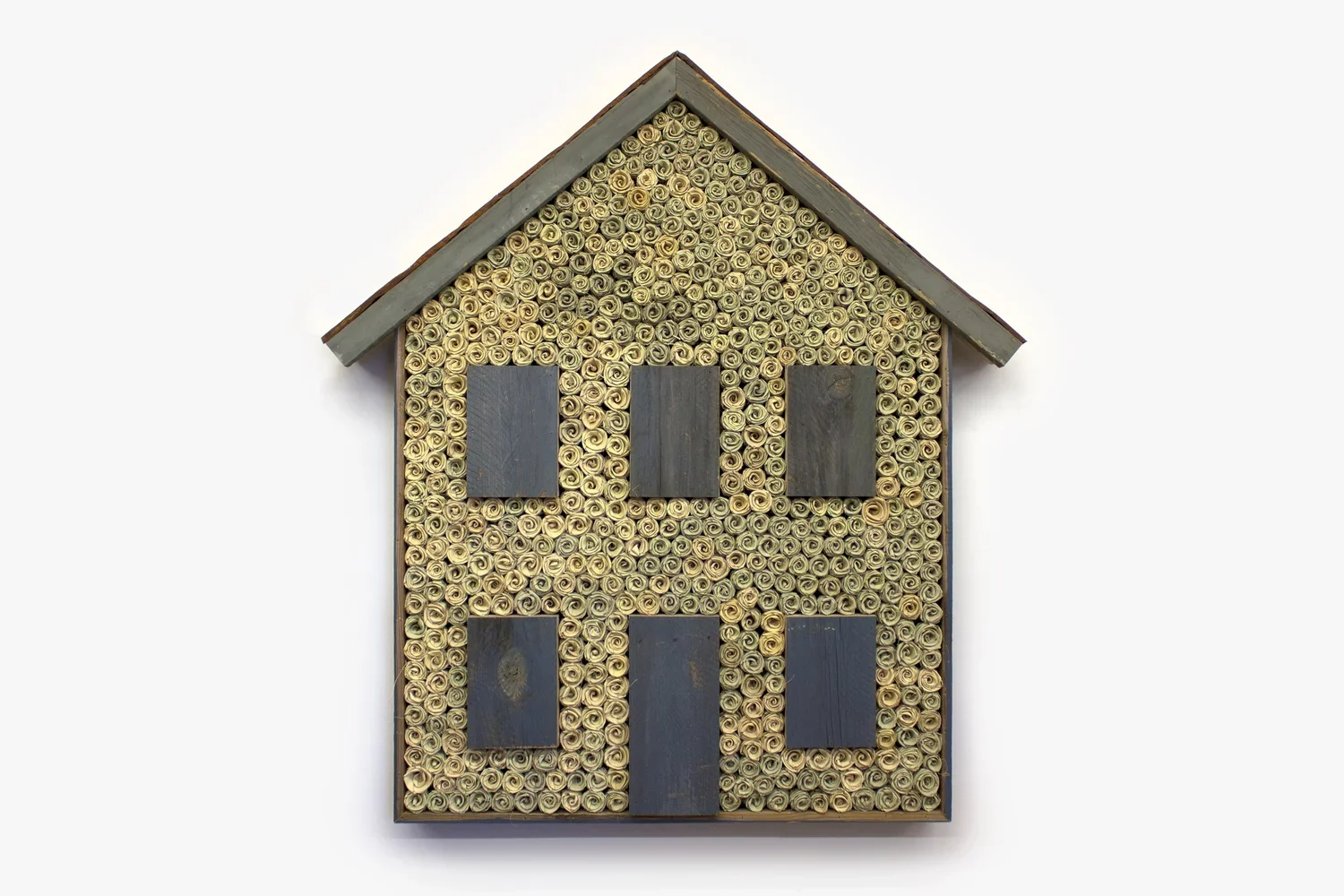
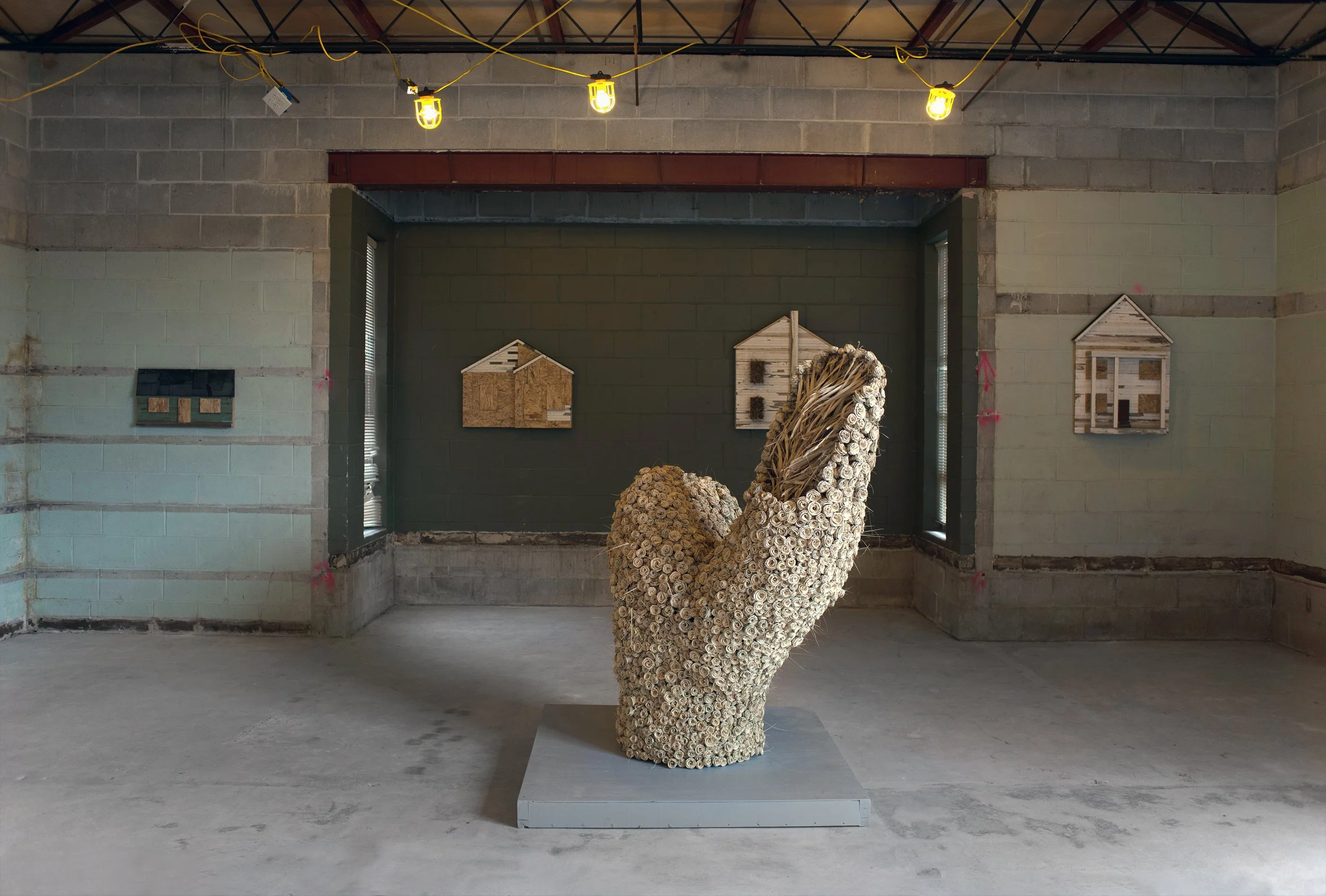
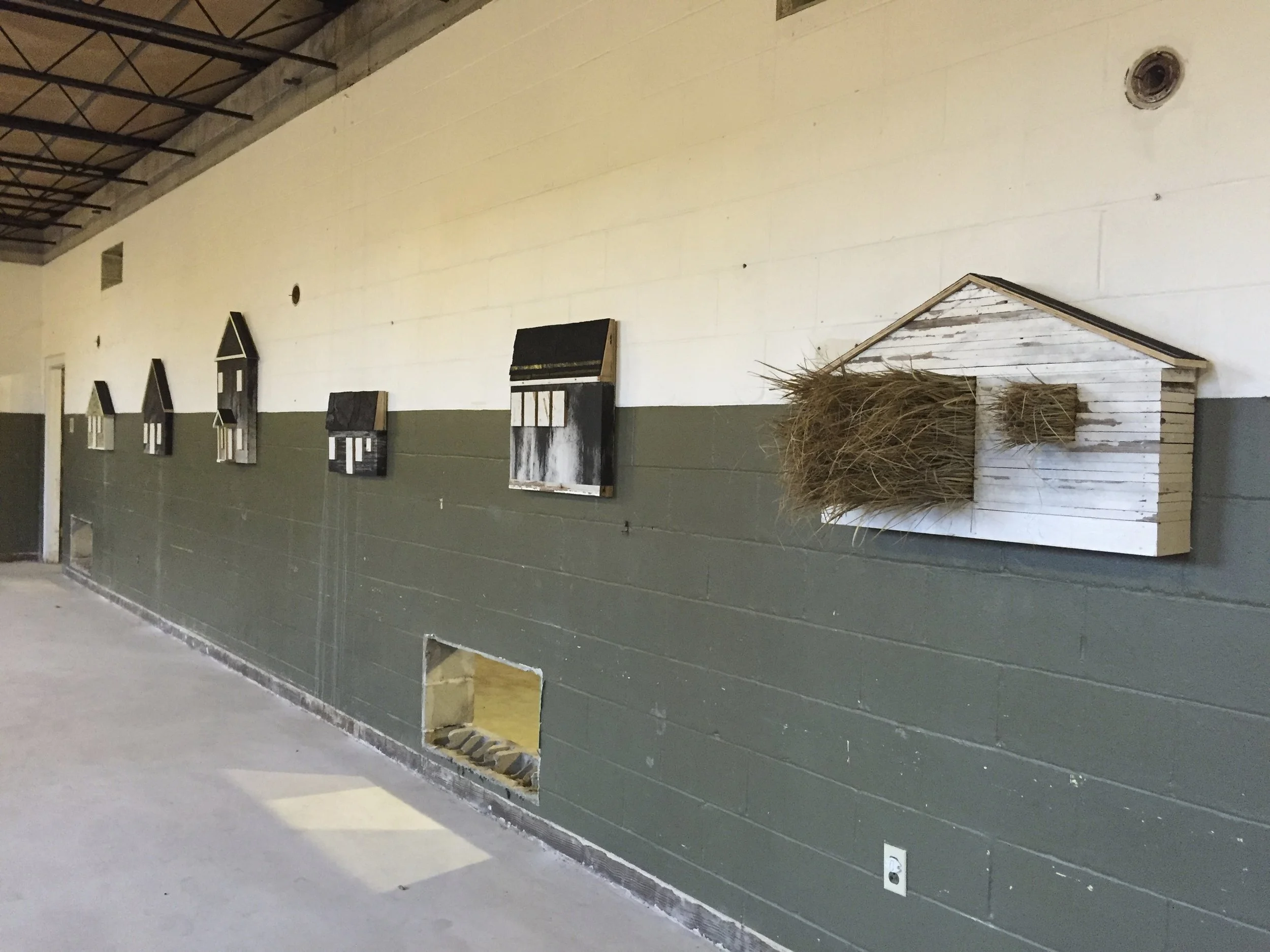
The sculptures began with actual homes Williams had spent time looking at. He paid attention to their shapes, additions, roofs, porches, siding, repairs, colors, yards, and the ways buildings changed through use. He rebuilt parts of that visual language with reclaimed wood, roofing shingles, palm fronds, painted paper, and handwoven palmetto roses. The resulting works were not architectural models. Proportions shifted, surfaces were patched or covered, and materials were used according to what they could become within each object.
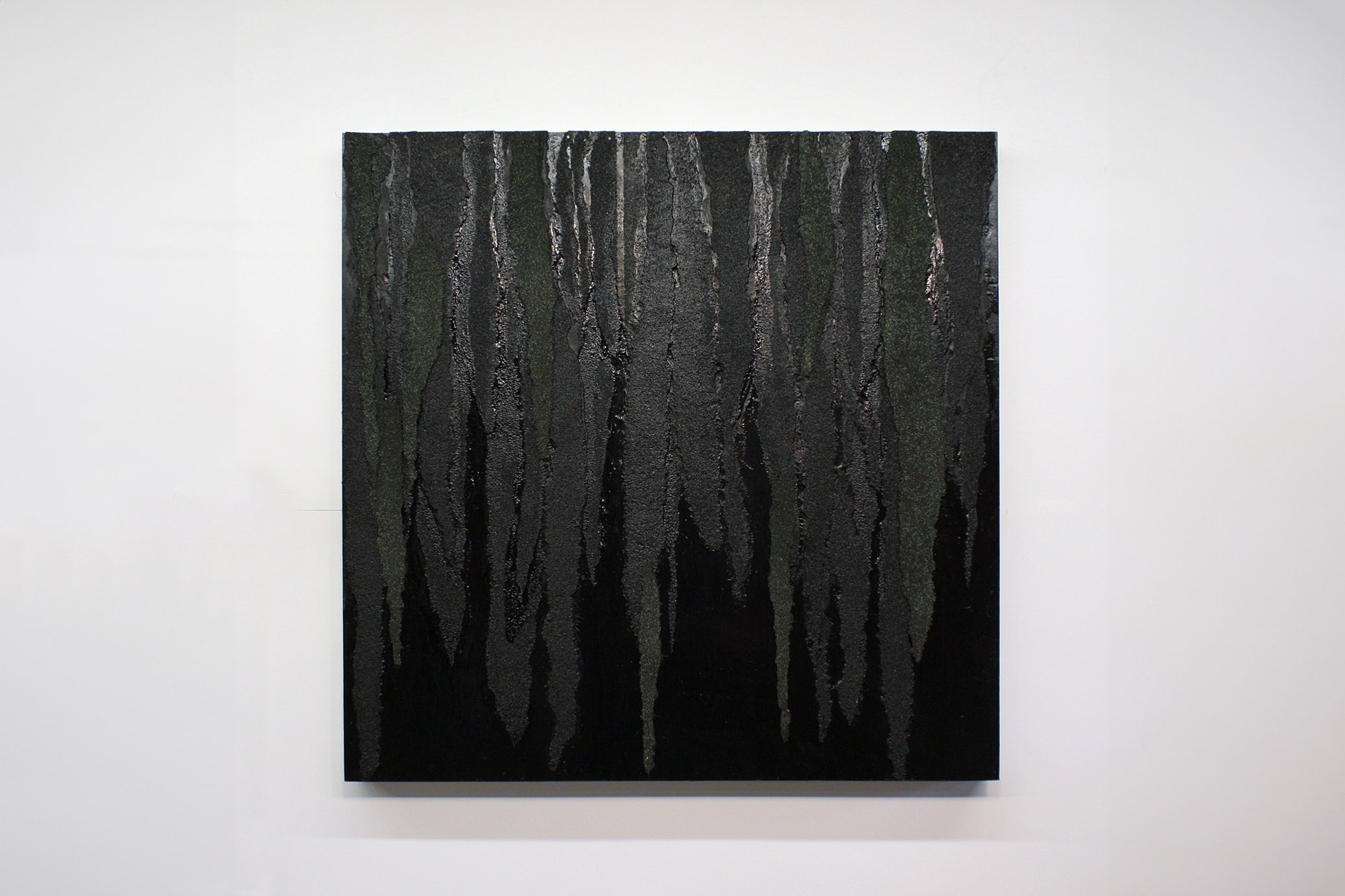
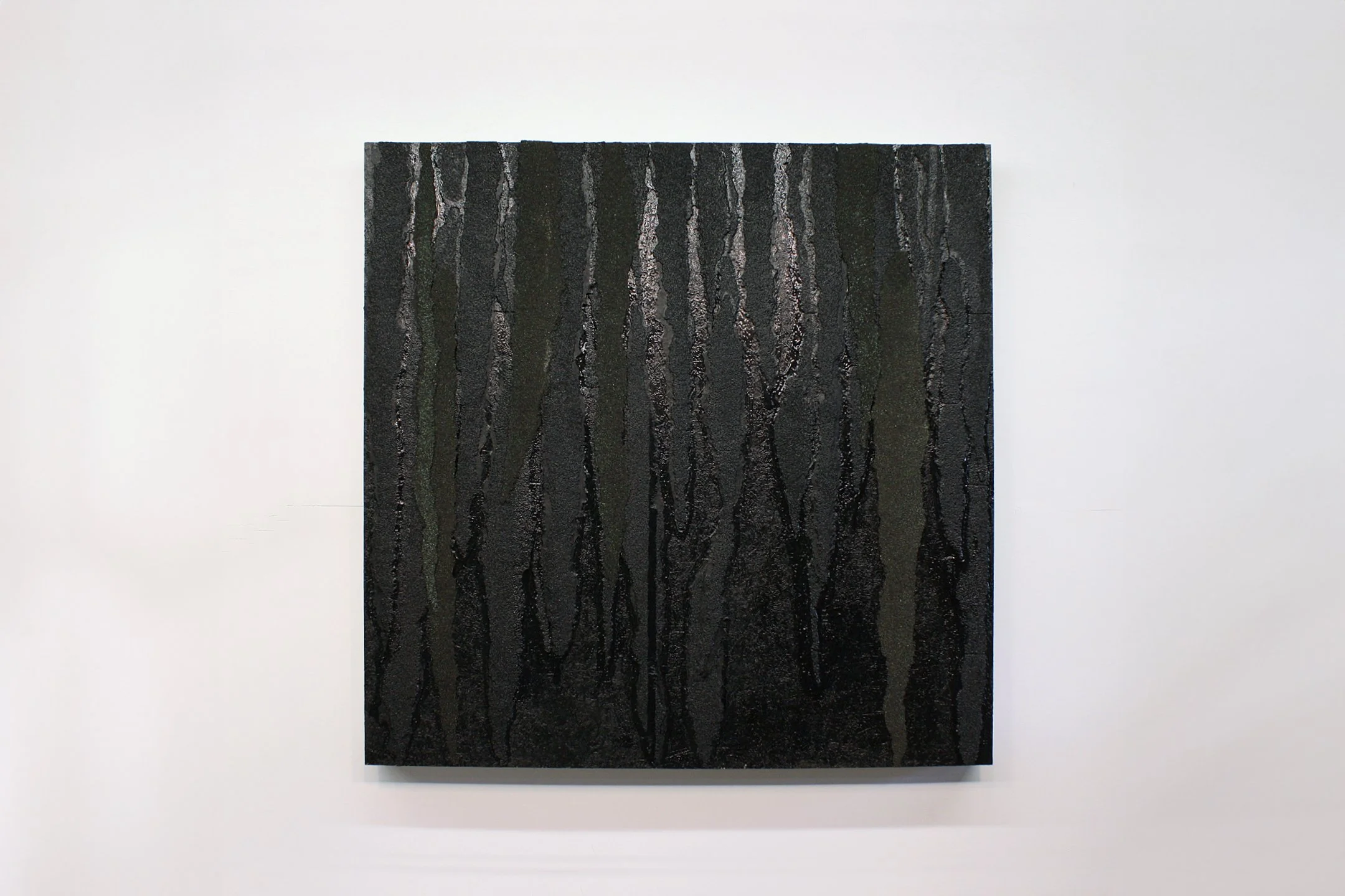
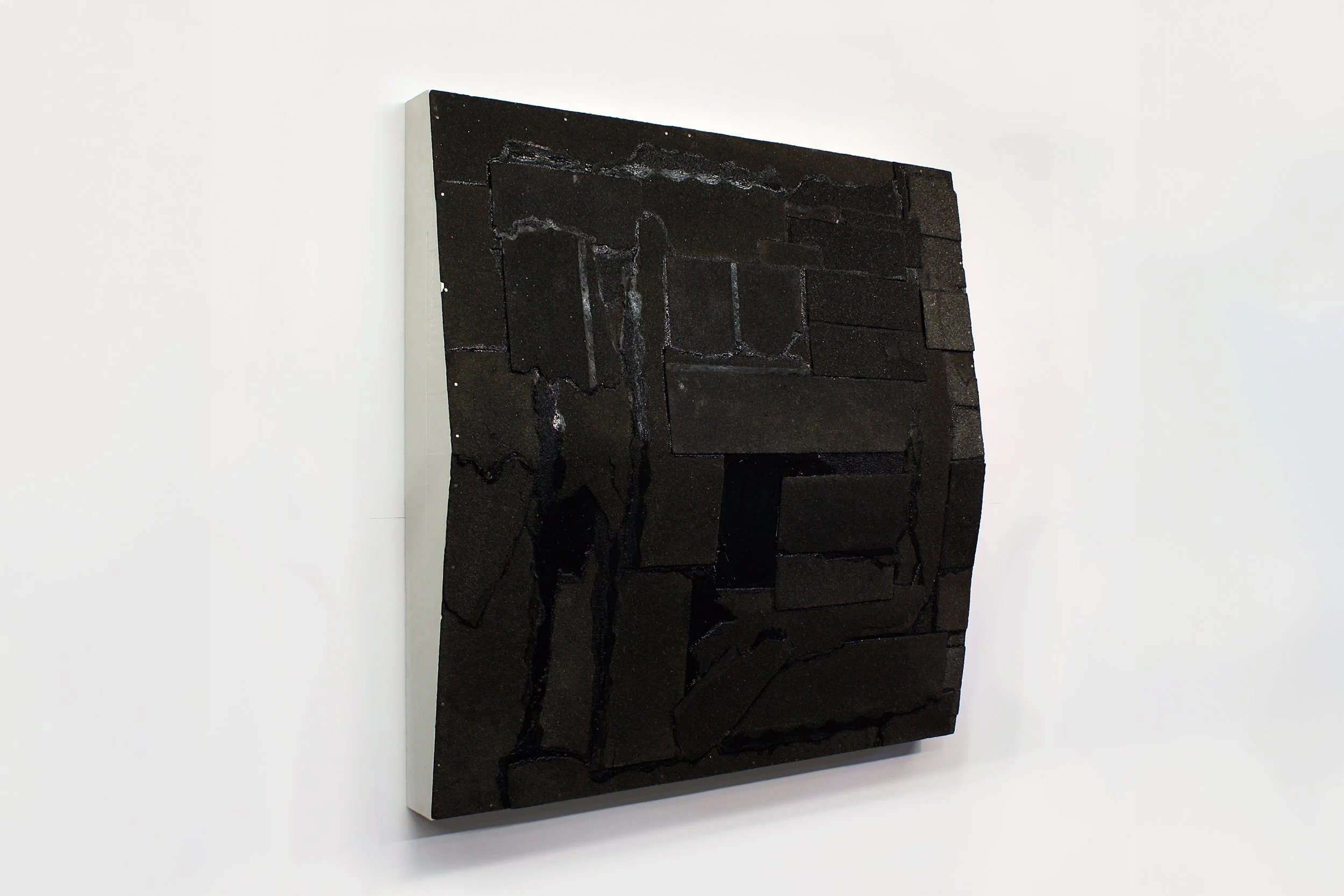
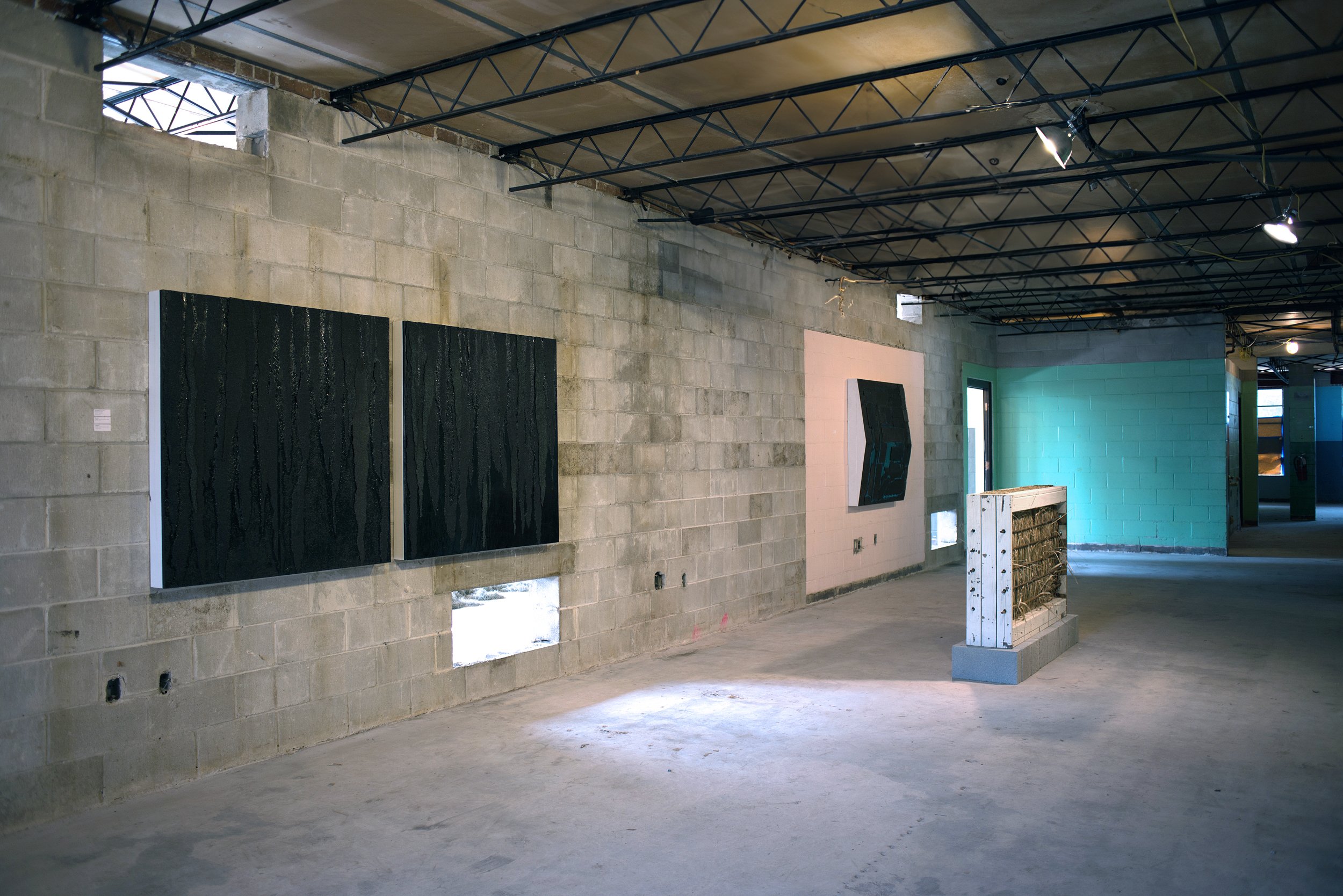
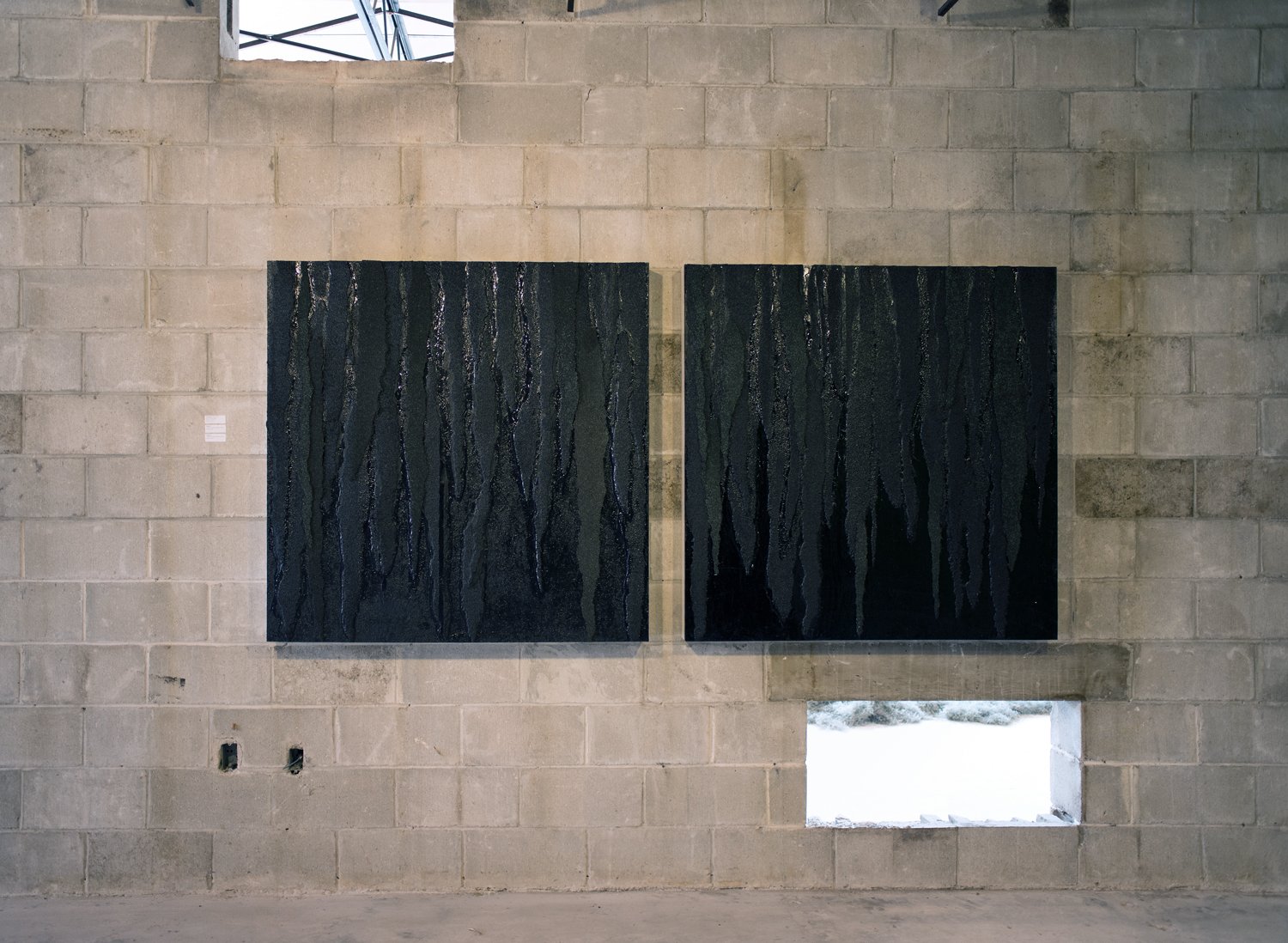
Several house facades were covered with black-and-white paintings Williams referred to as “moss.” Elsewhere, torn roofing shingles and latex paint were assembled into dark square works whose irregular surfaces recalled hanging moss without attempting to reproduce it. Palm fronds could belong to a yard, become decoration, or be compressed into the structure of a sculpture. Roofing material could remain recognizable as roofing while also becoming surface, pattern, or image.
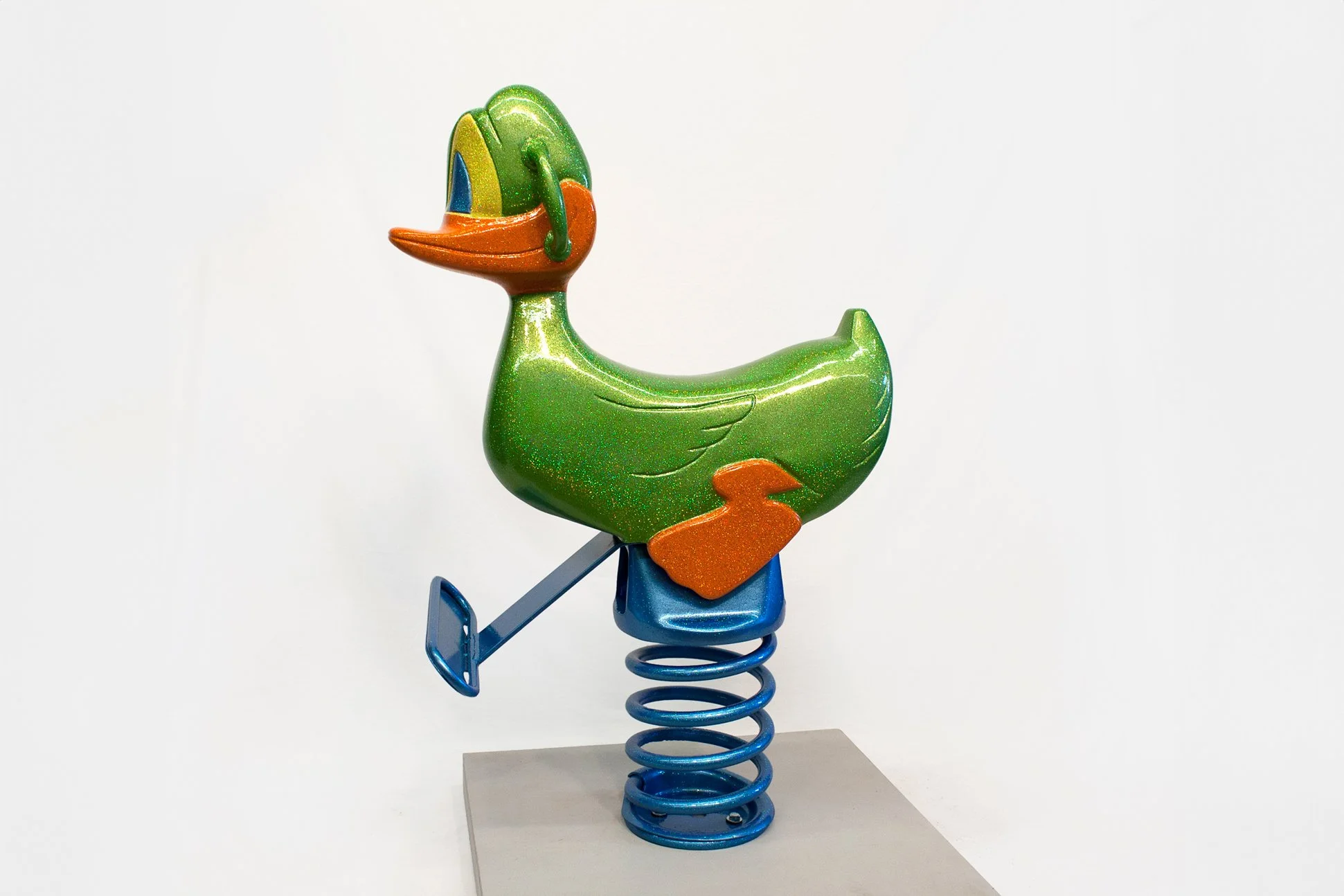
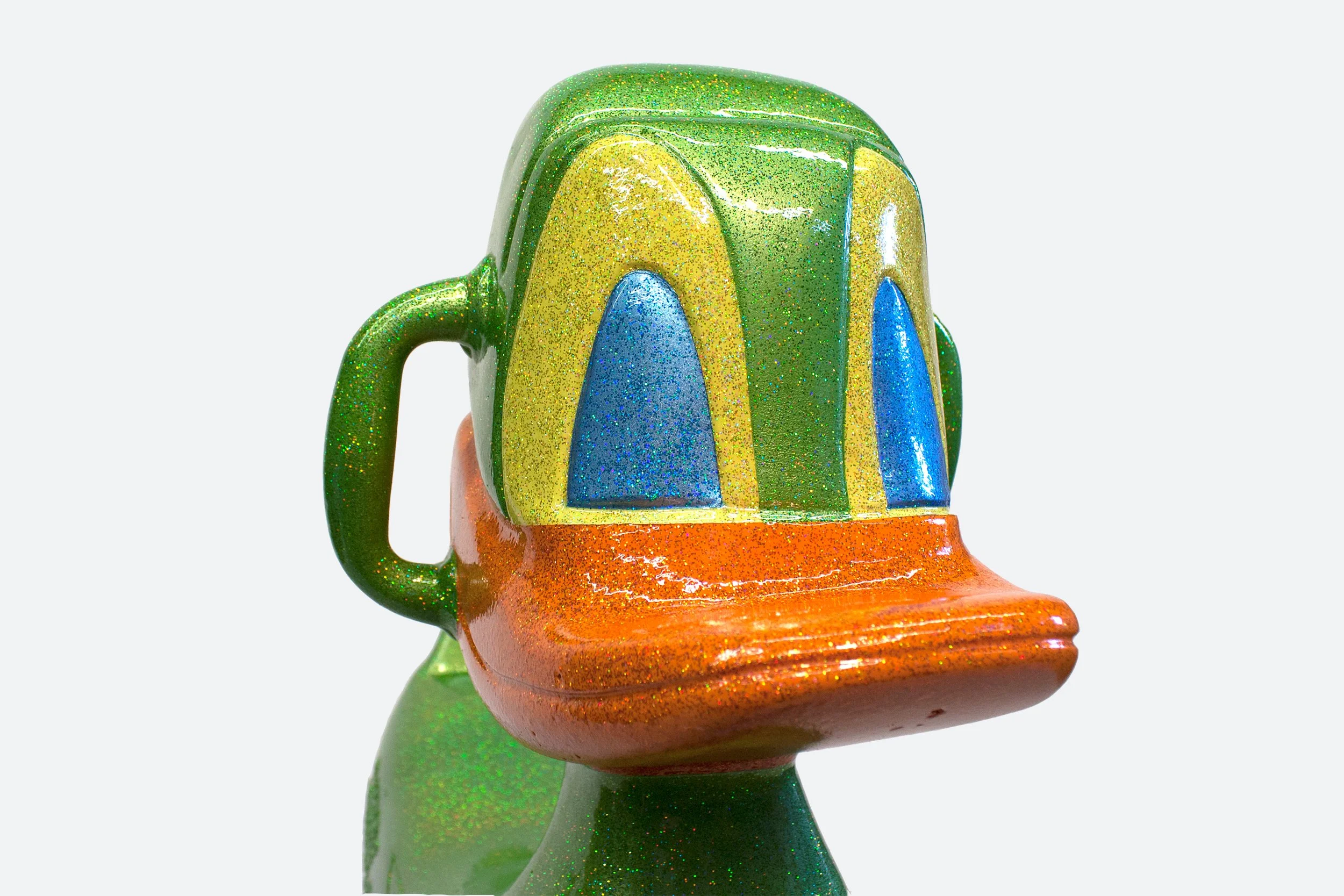
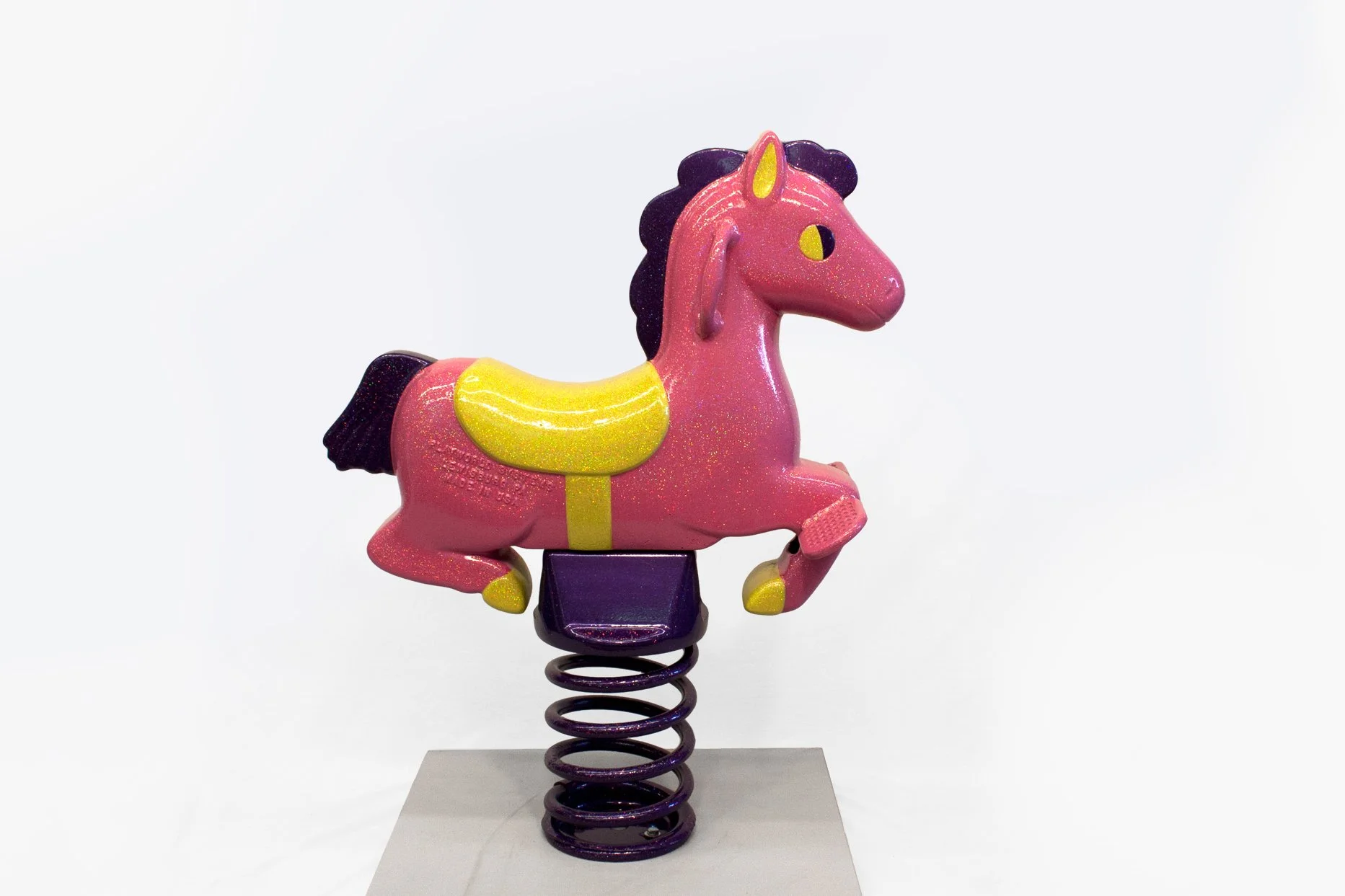
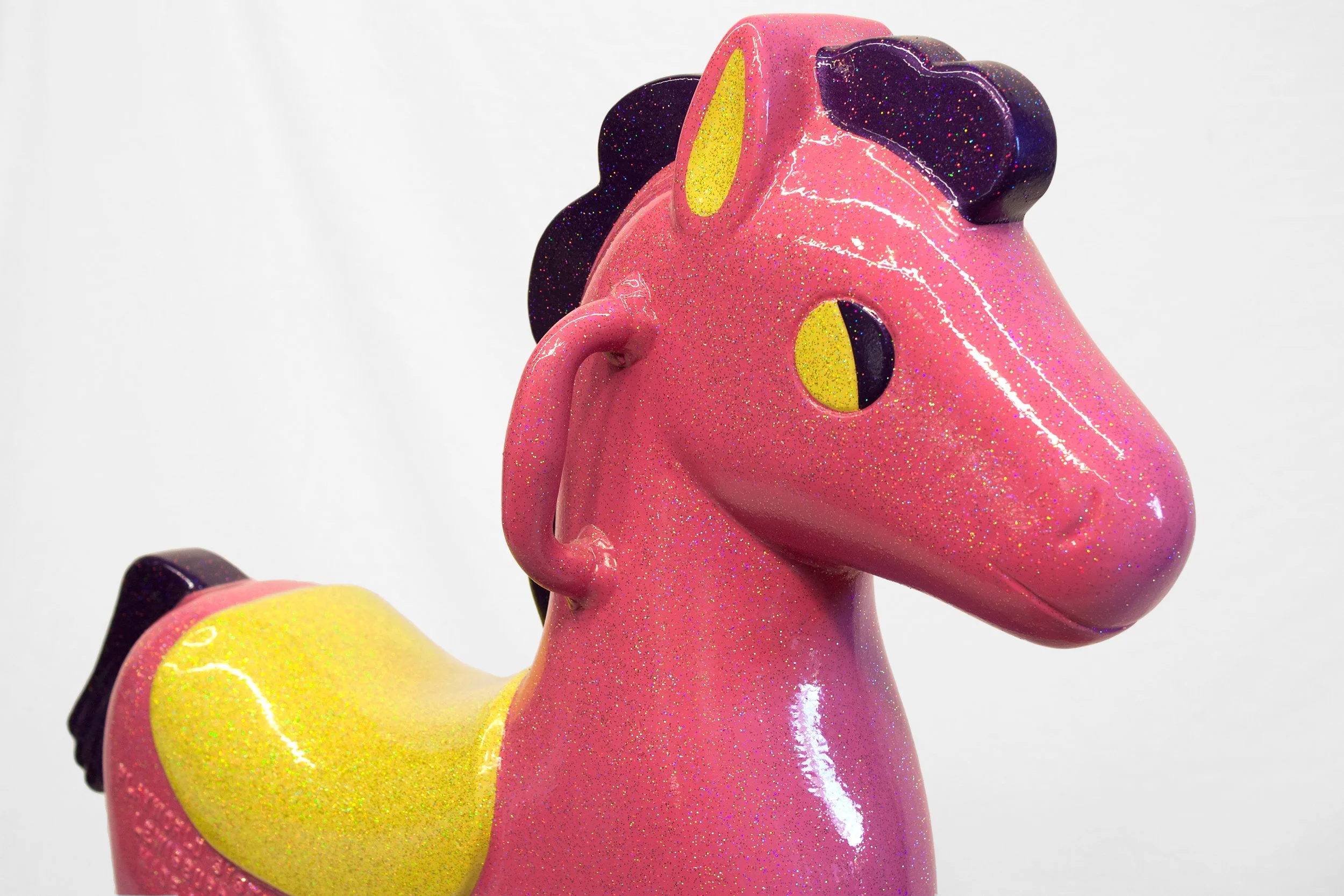
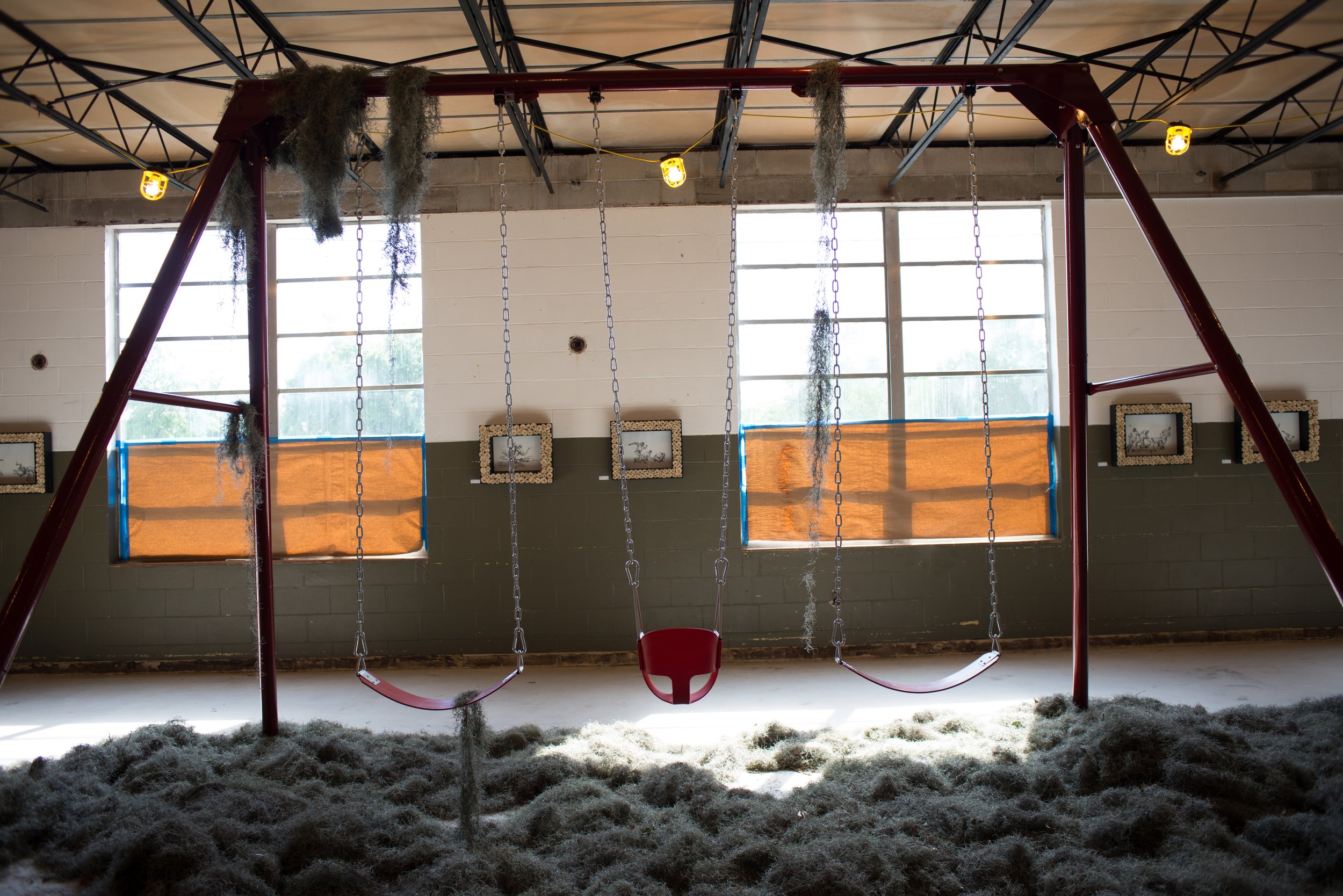
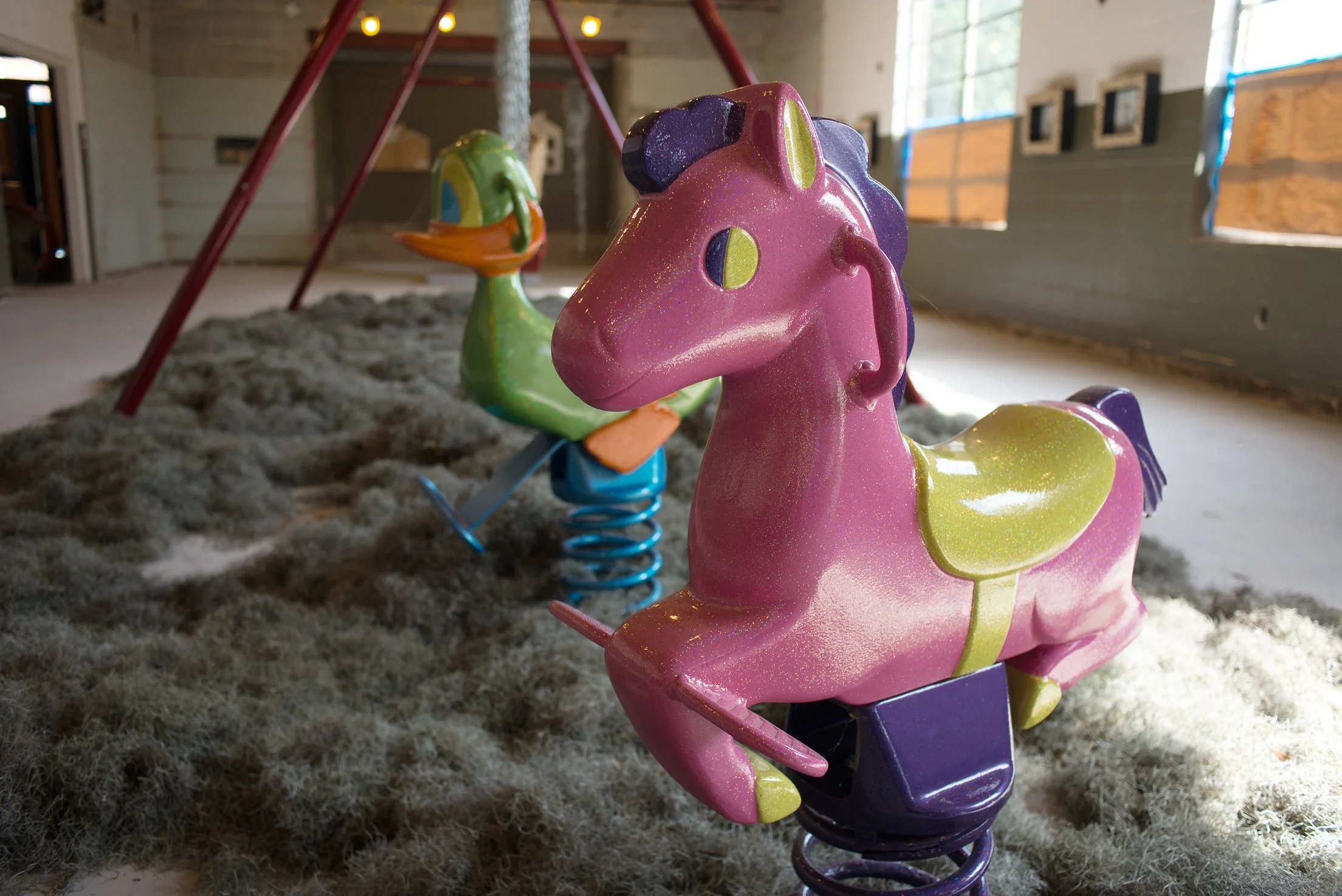
At the center of the exhibition stood Little Child Runnin’ Wild, titled after the Curtis Mayfield song. Williams built the playground structure in dark red automotive paint and metal flake and restored a group of brightly colored spring riders dating from the 1960s. The playground sat on a large bed of moss, its polished surfaces and saturated colors set against the reclaimed wood, roofing materials, and muted house forms surrounding it. Nearby drawings were densely filled with scenes of violence, allowing the familiarity and playfulness of the playground to coexist with a much less comfortable atmosphere.
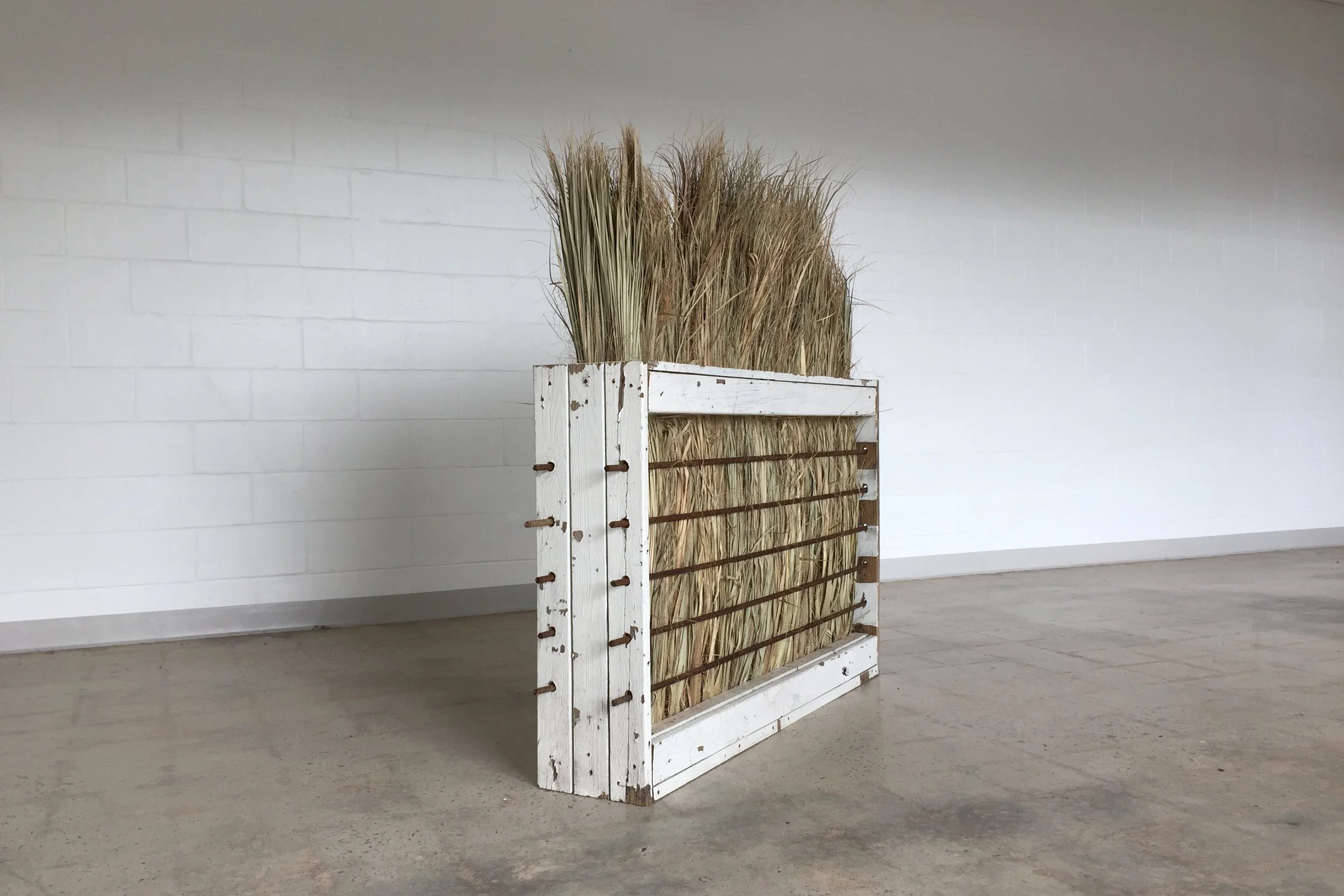
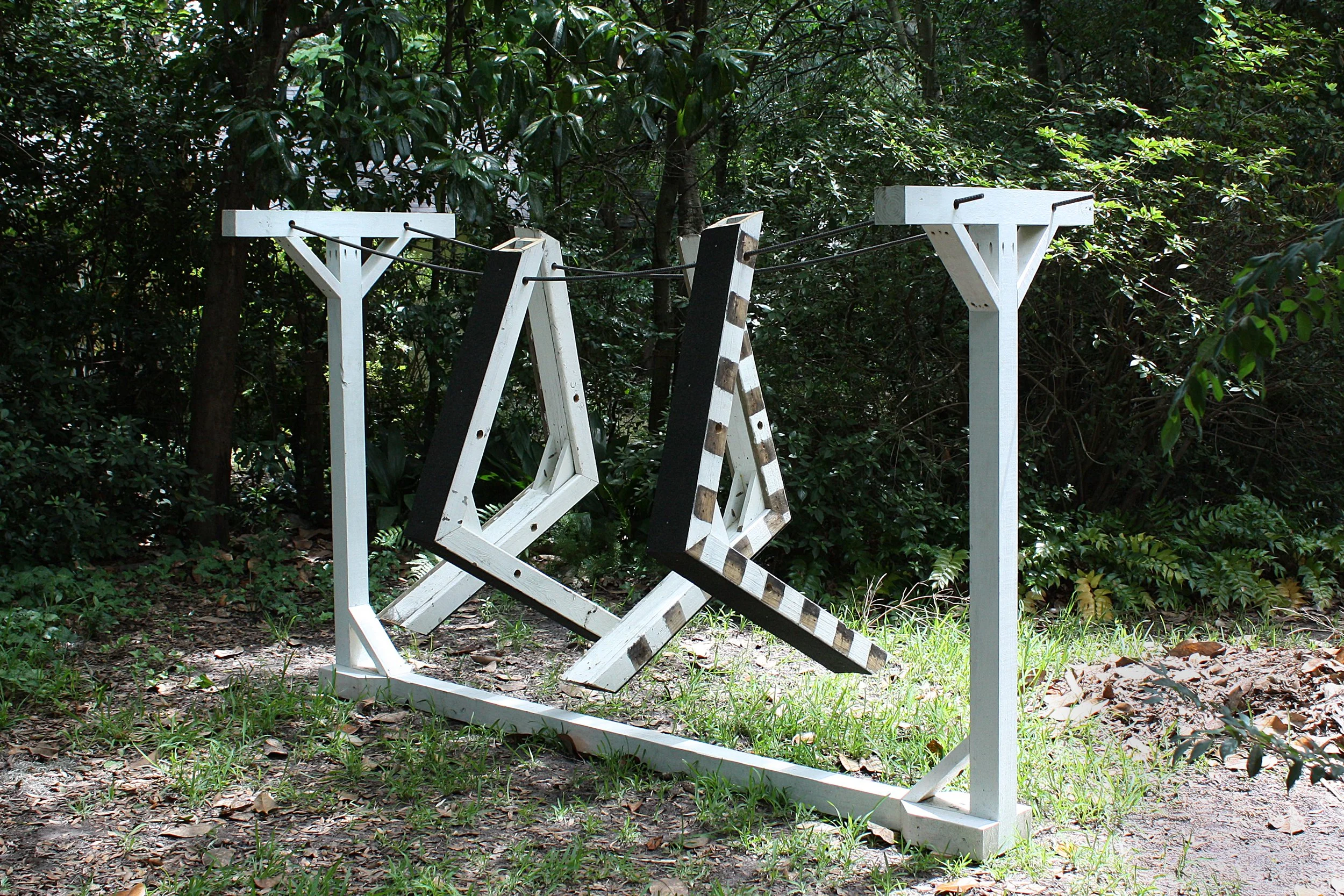
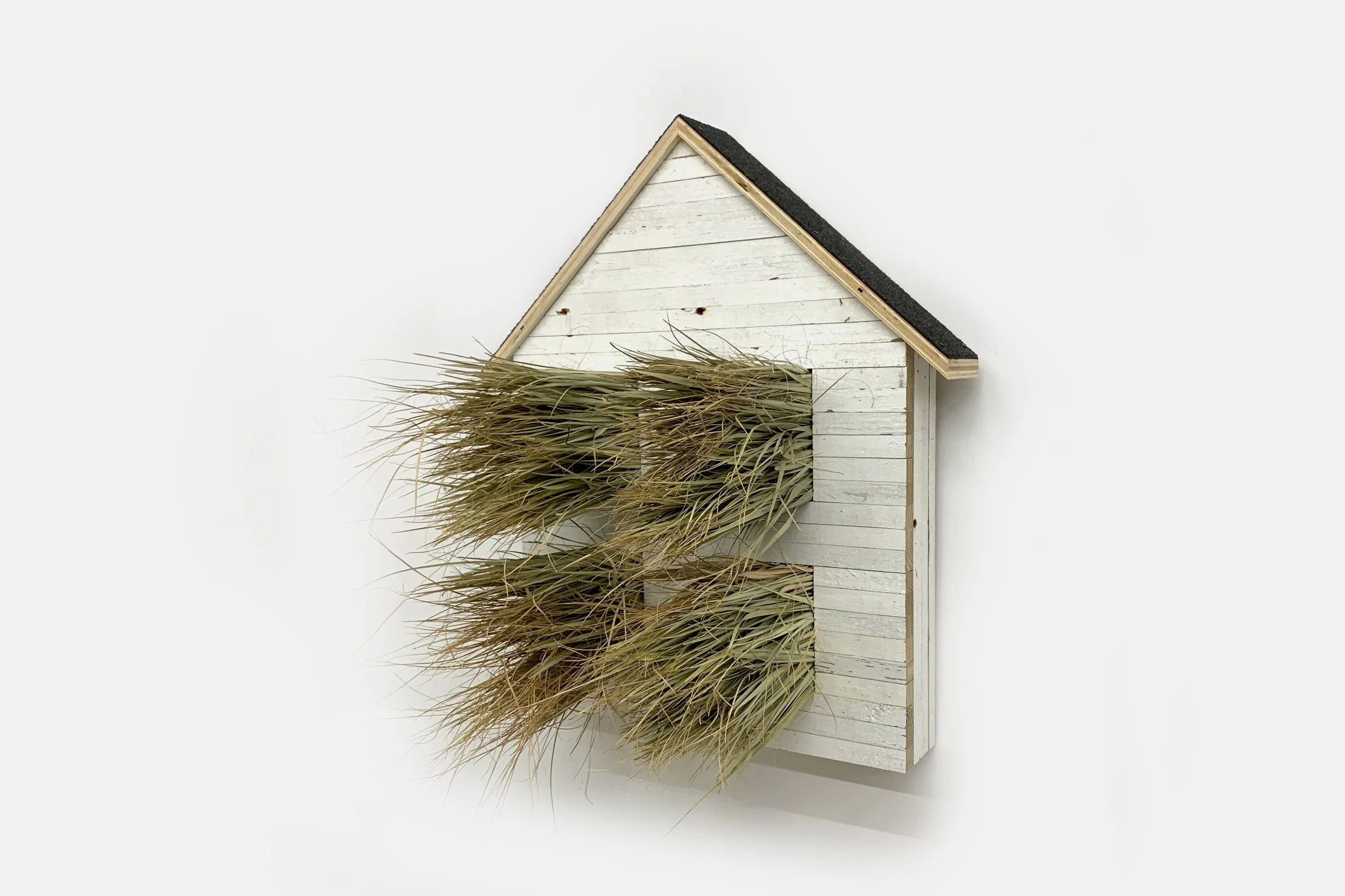
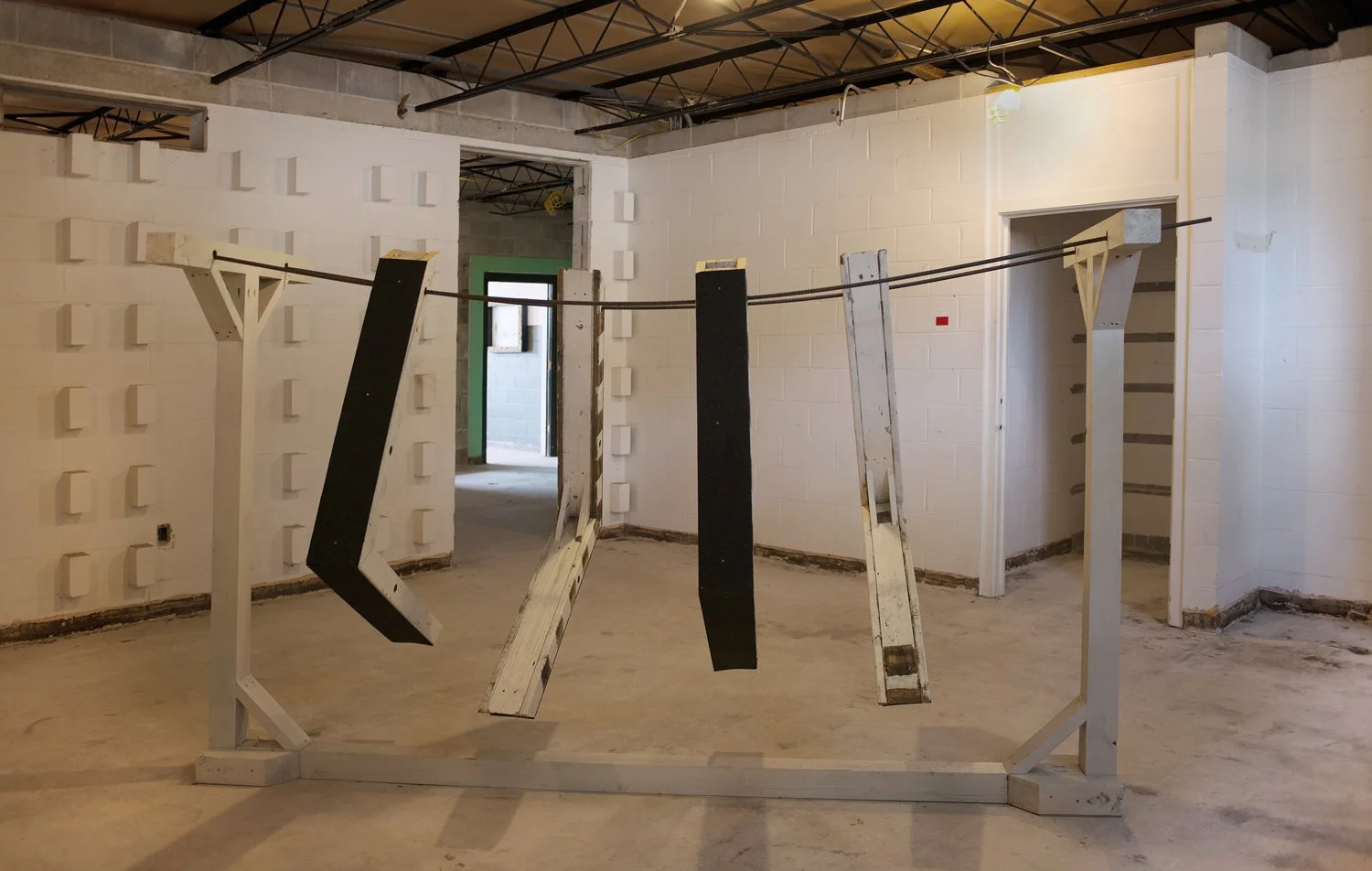
Other sculptures moved further away from recognizable houses while retaining pieces of their architecture. In one work, palm fronds were compressed inside a wooden frame and held by rebar. Another took on the spare structure of a clothesline. Walls, roofs, fences, frames, and supports appeared throughout the exhibition without always becoming complete buildings.
Williams was drawn to these ordinary structures partly because he had spent years looking at them. They belonged to neighborhoods he knew, but also to a broader language of building, repairing, decorating, improvising, and living with what was available. The materials already carried traces of previous lives: reclaimed wood, torn shingles, dried palm fronds, weathered surfaces, repairs, and imperfections remained visible after they entered the sculptures.
Beyond the Rainbow did not attempt to reconstruct a particular Charleston neighborhood. It began with Williams’s attraction to the houses, yards, materials, colors, and improvised structures he encountered around him, then rearranged those familiar elements into a place that had never existed.
Exhibition Supported by
City of Charleston Department of Cultural Arts
Works Exhibited (Sculpture)
For works on paper in this exhibition, visit Souvenir.