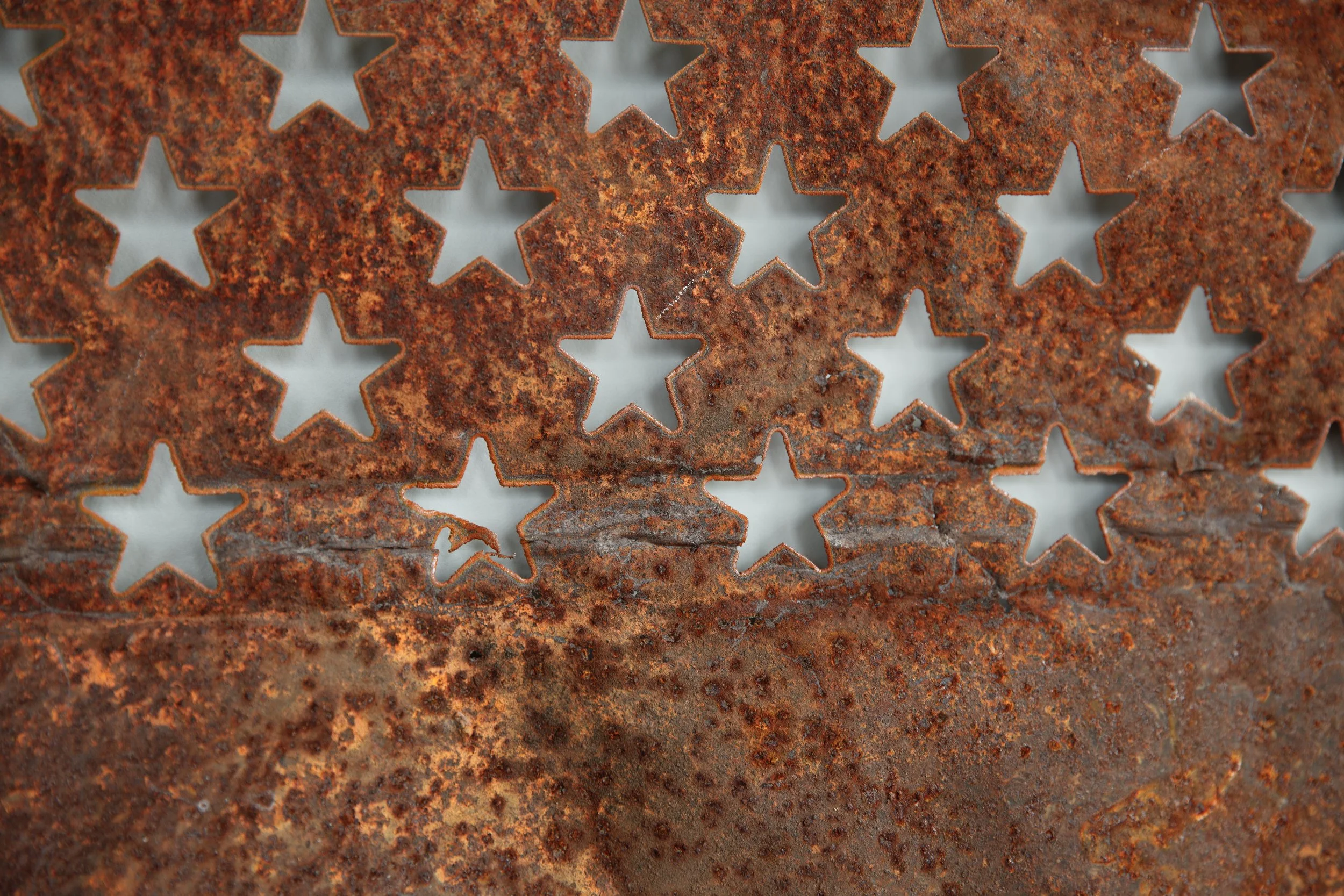
American Liturgy, 2025
Historic Navy Yard
North Charleston, South Carolina
About the Work
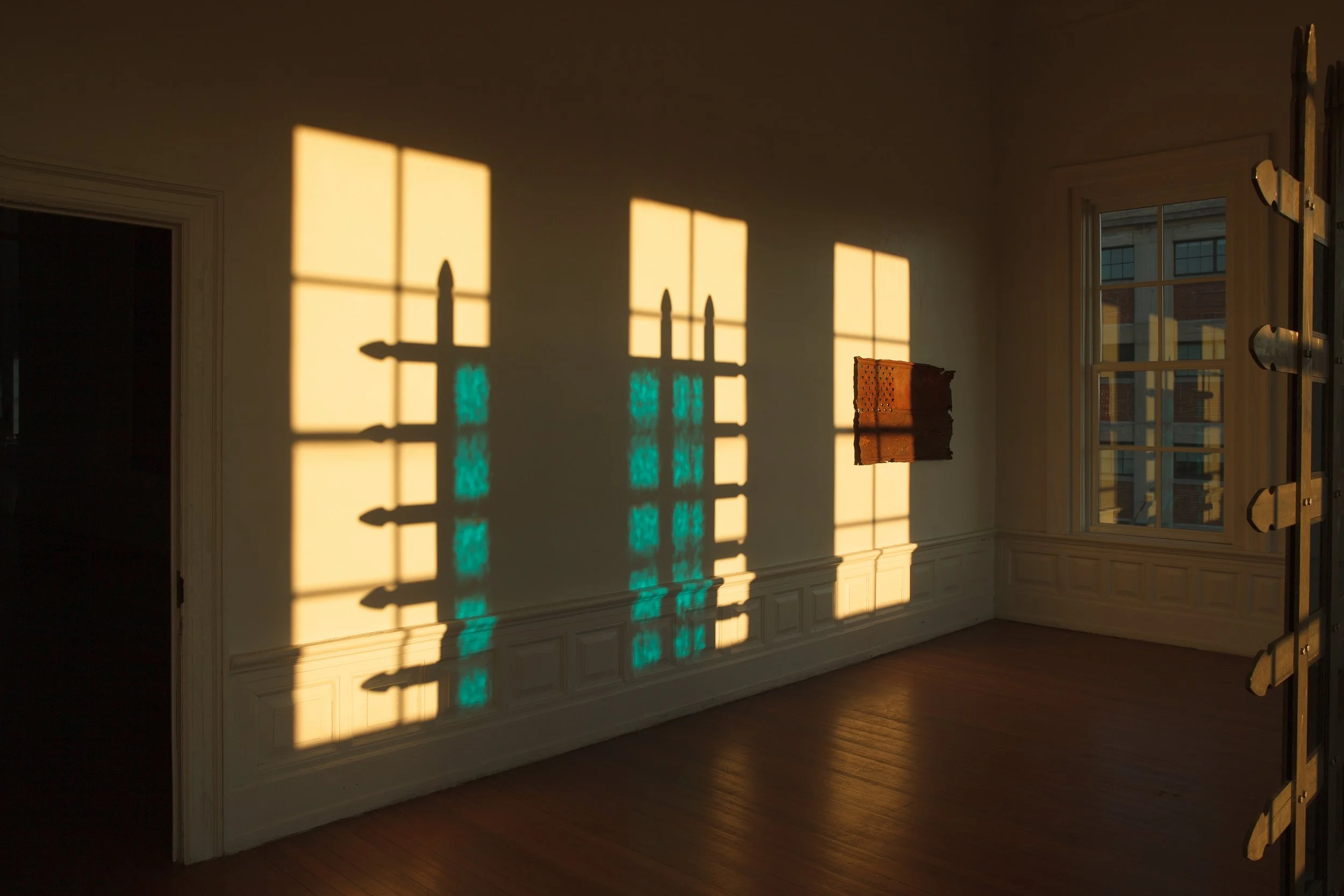
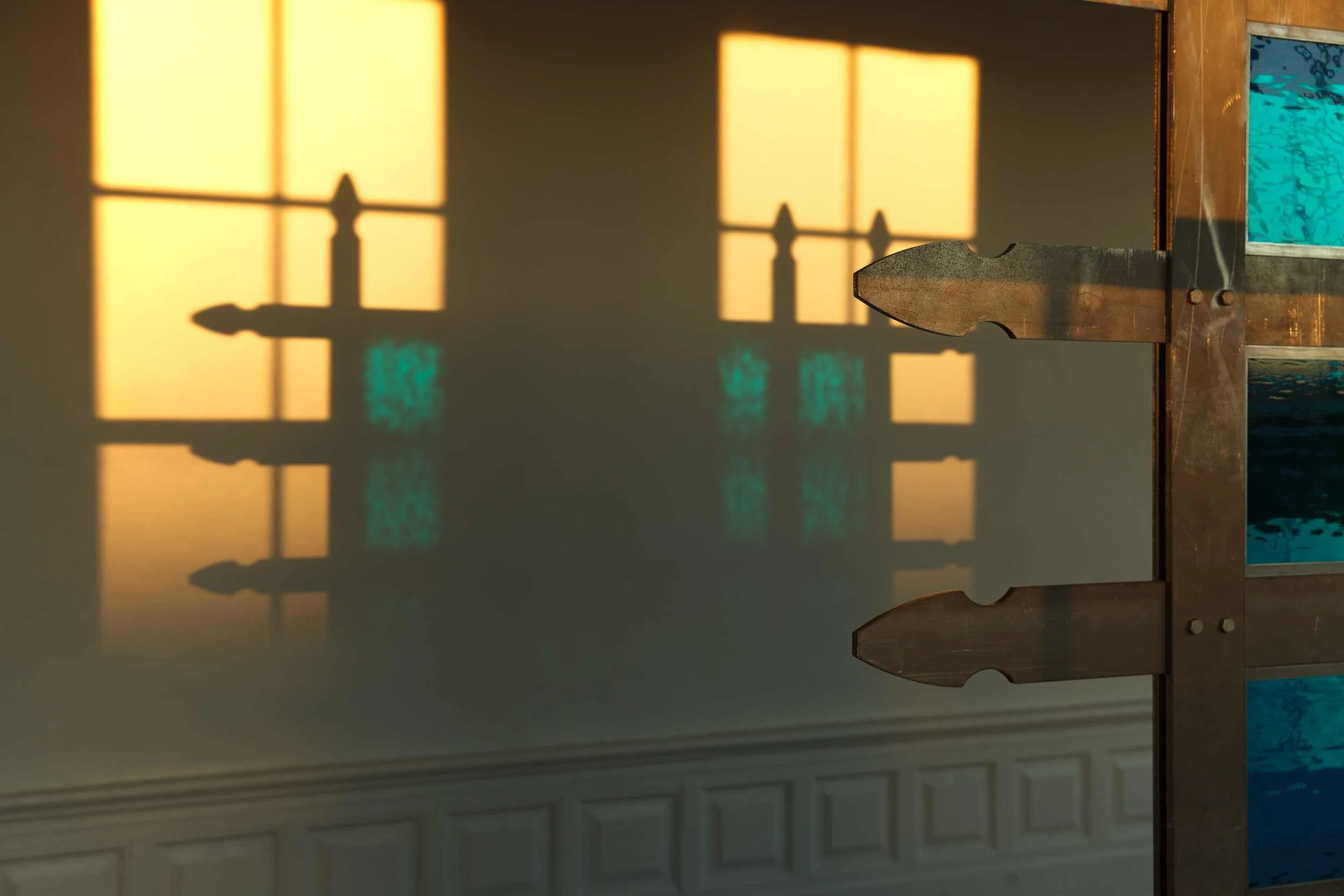
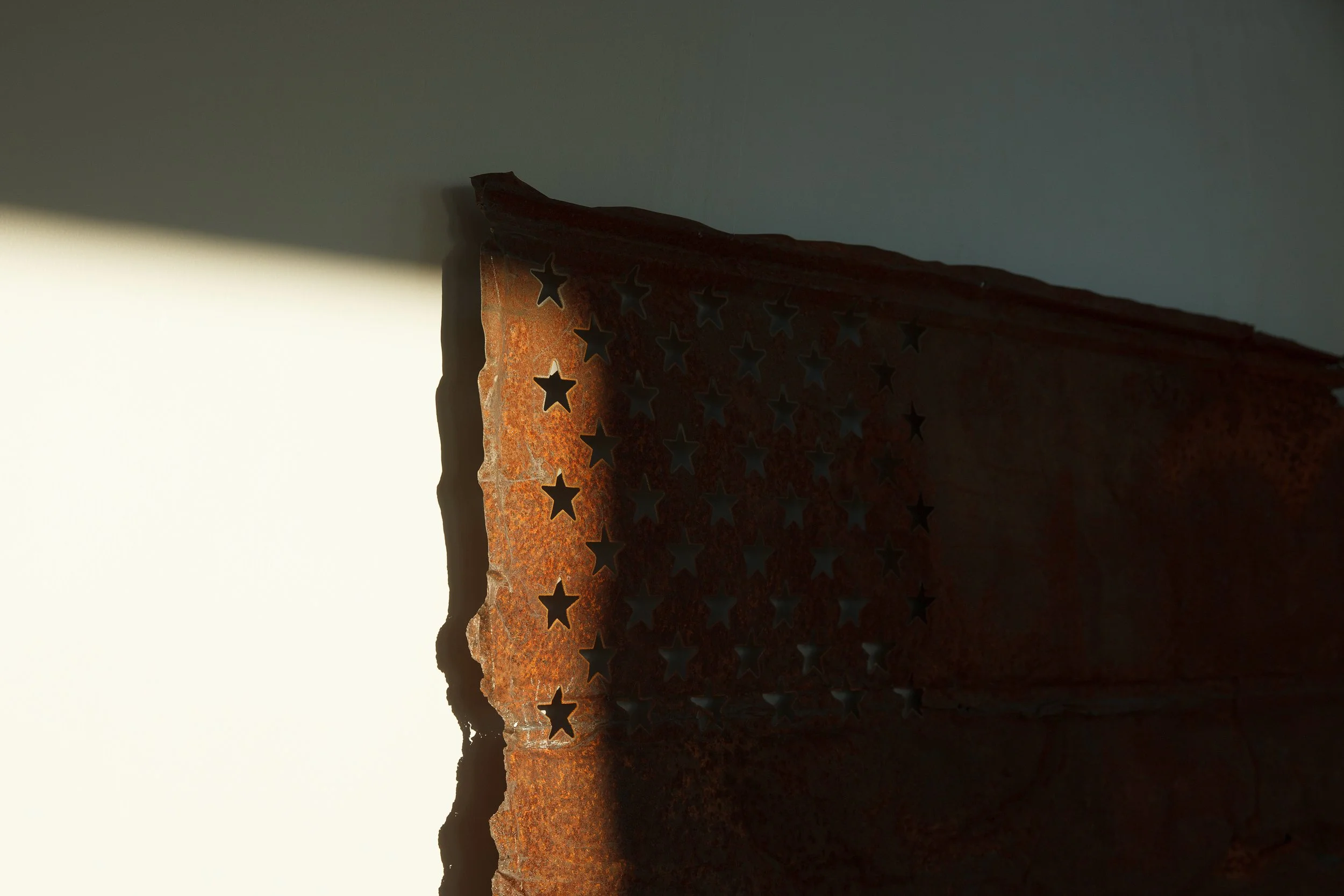
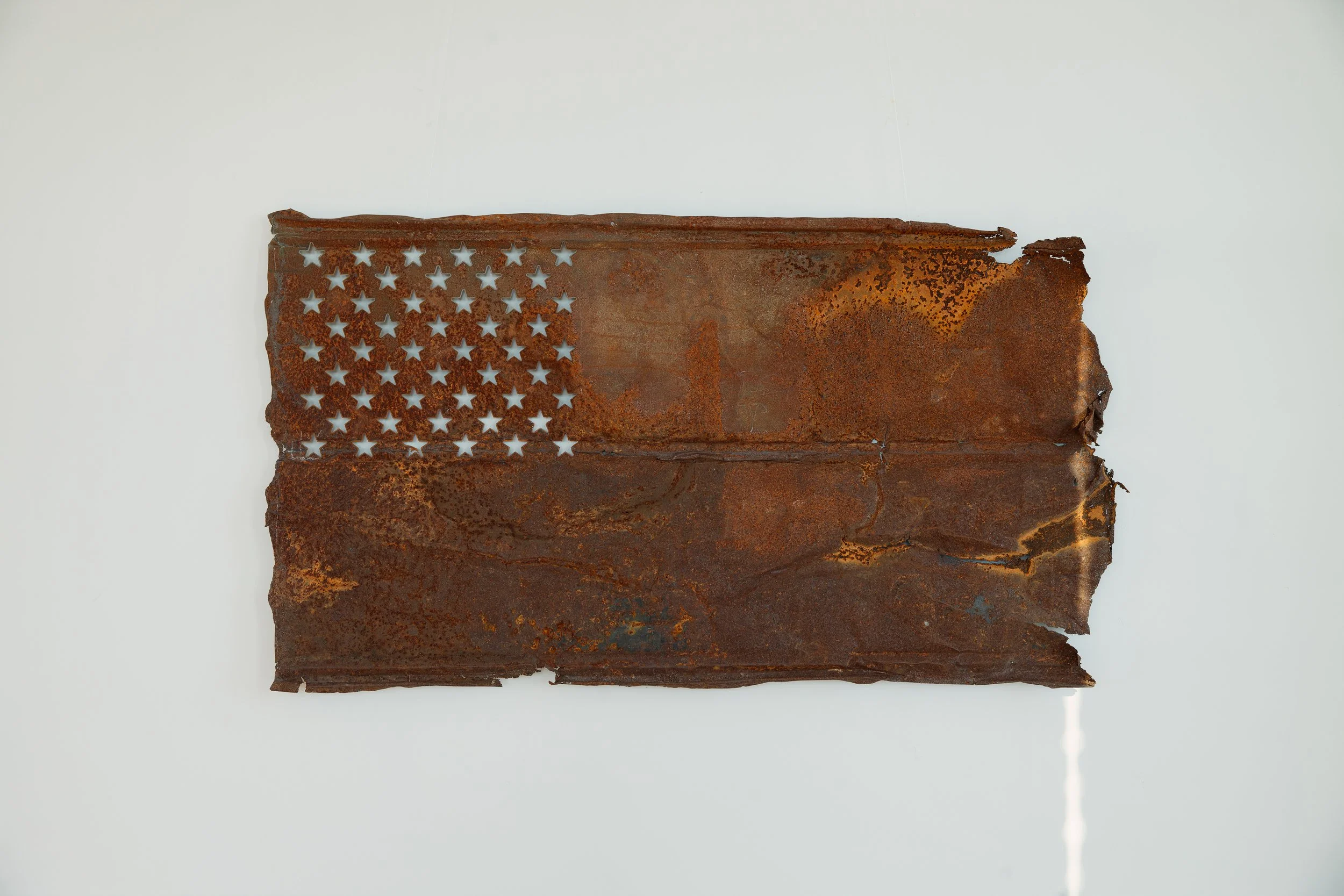
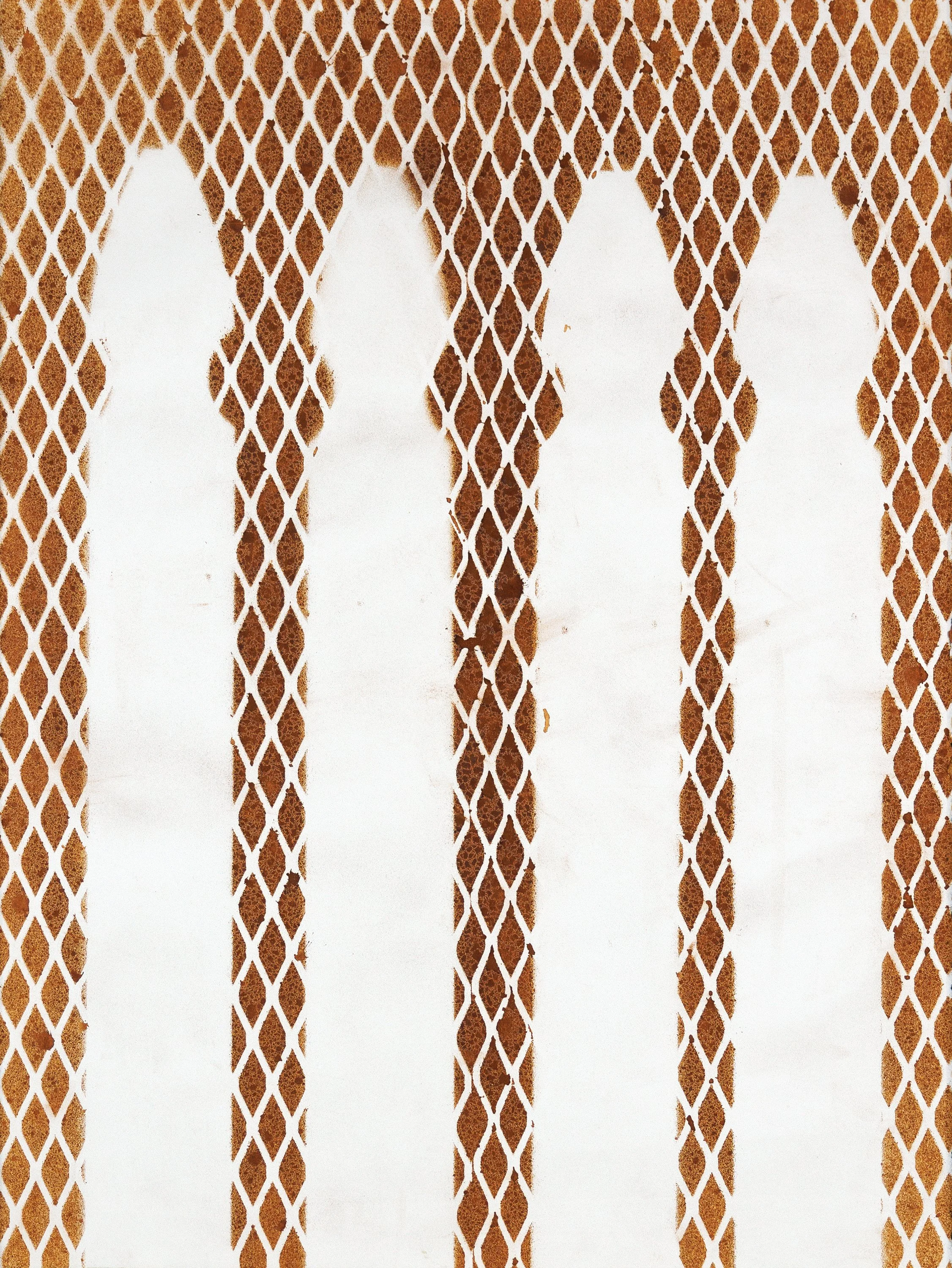
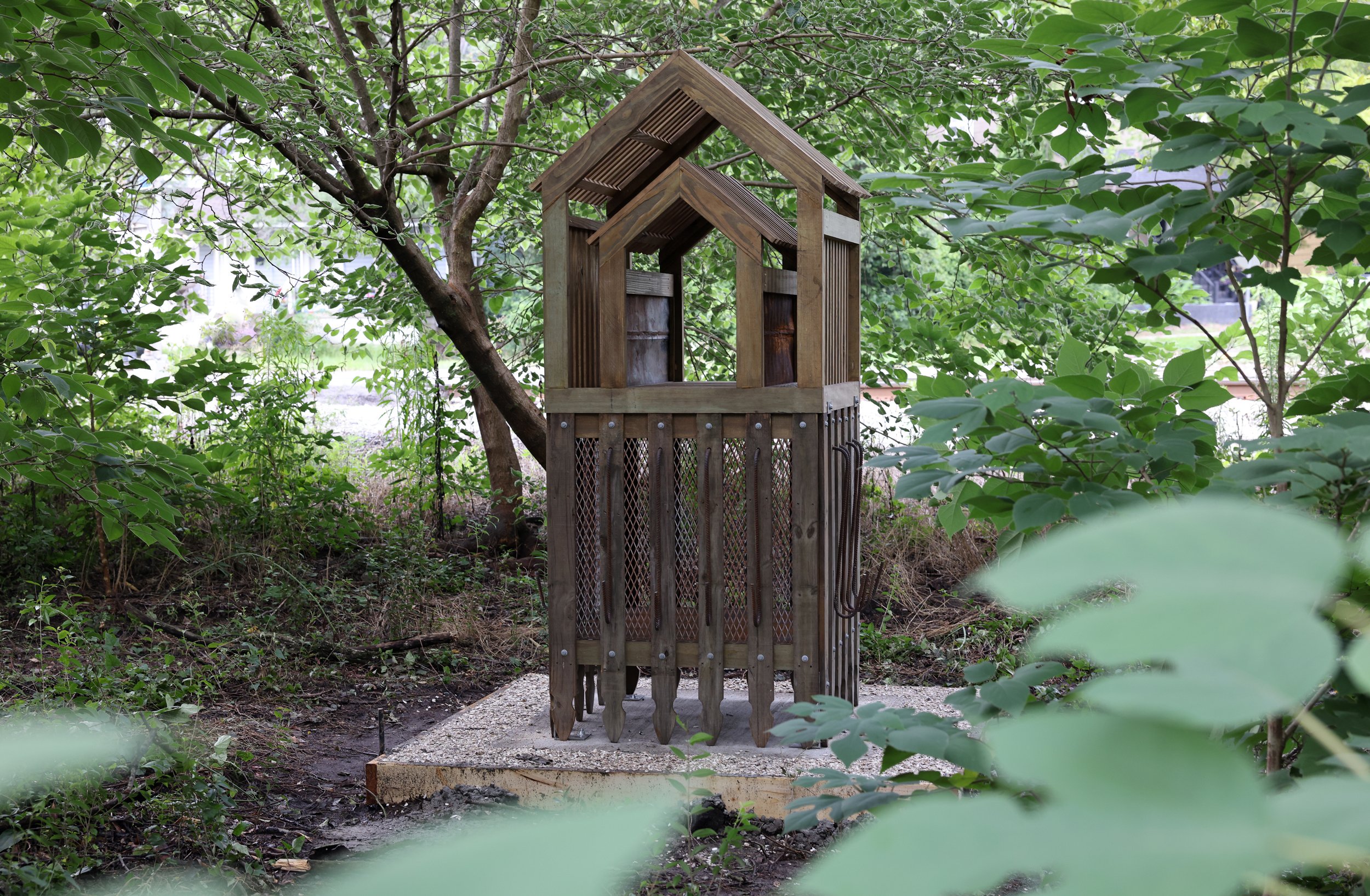
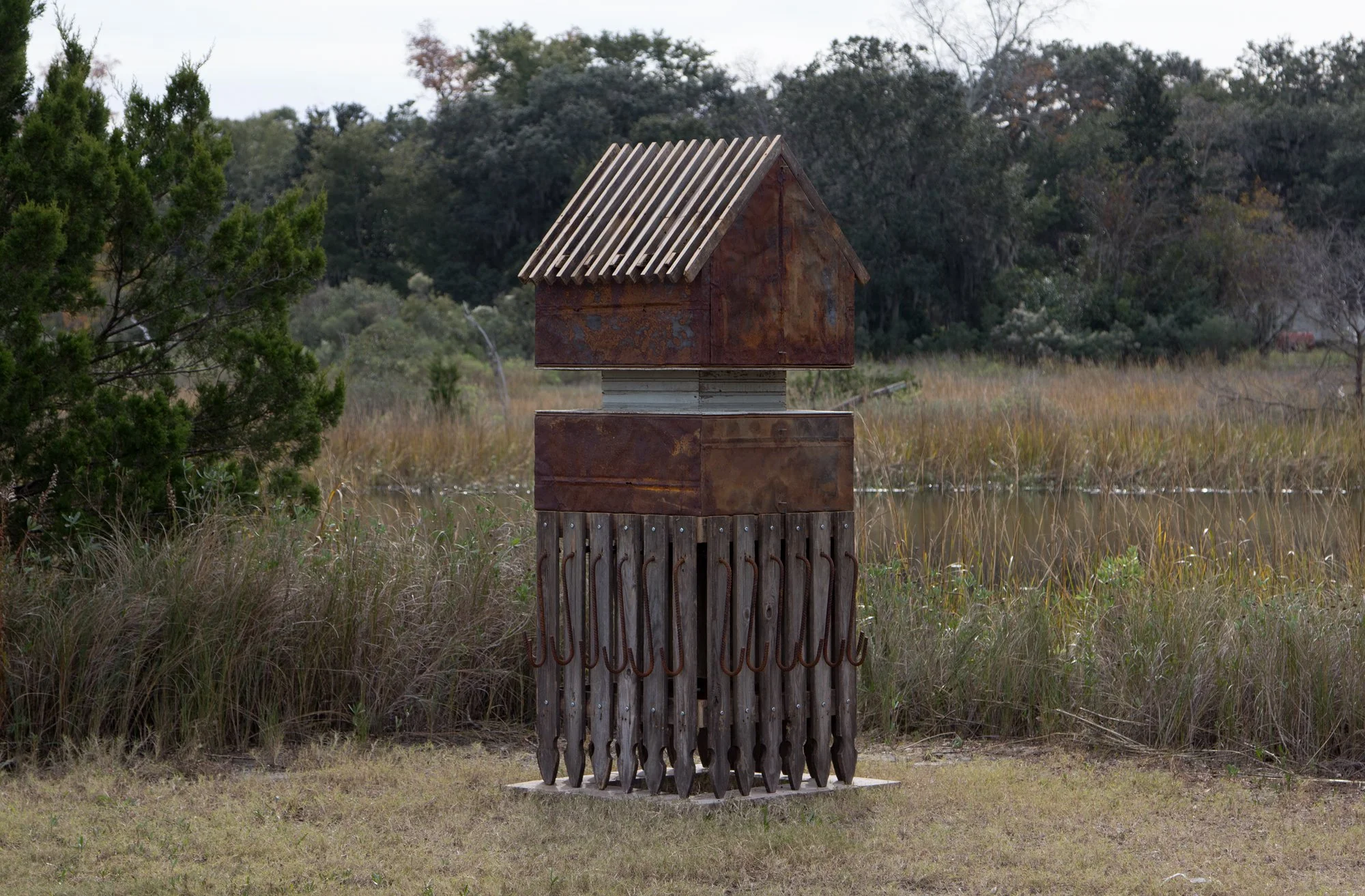
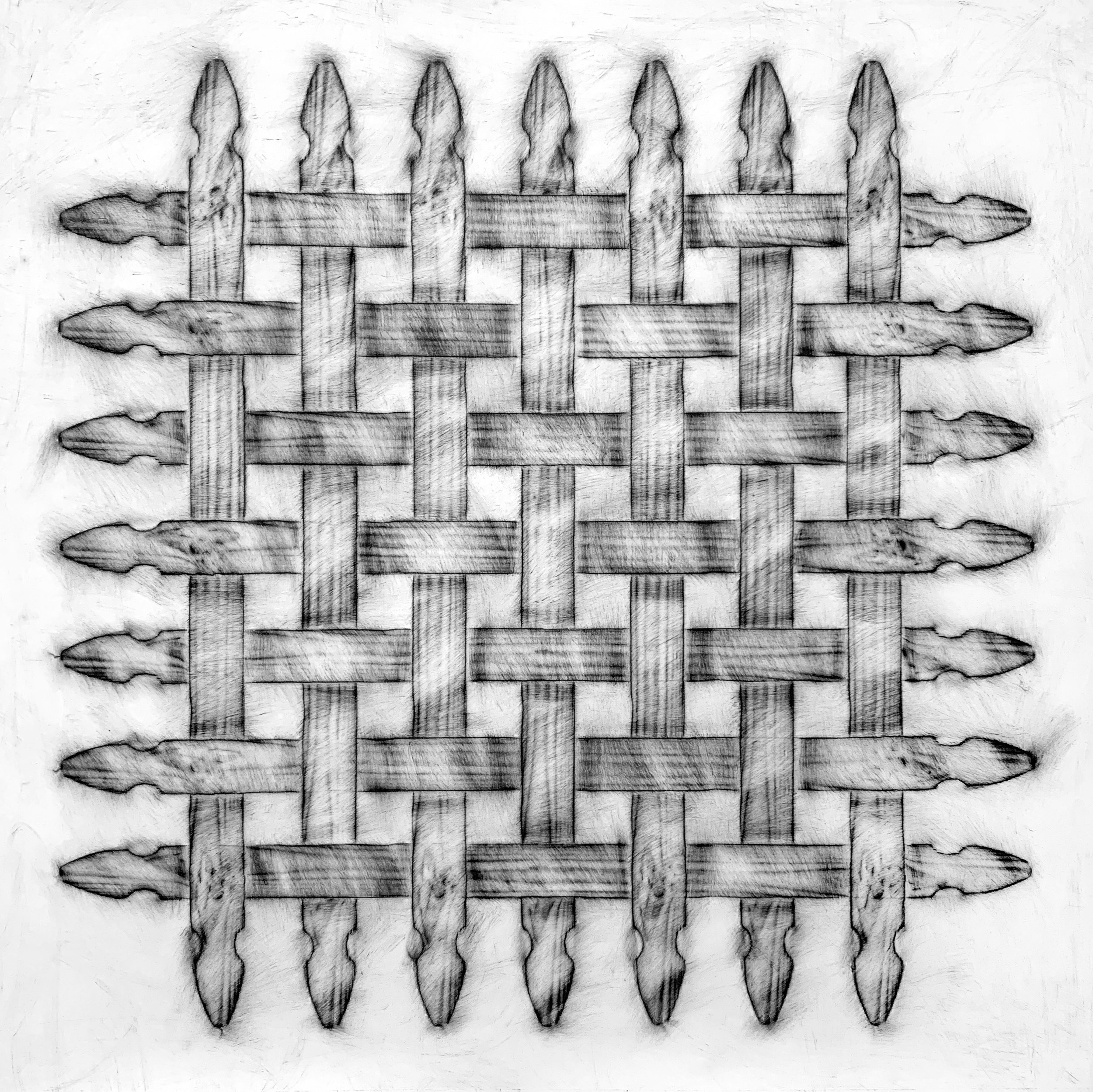
The flag, the fence, the American Dream, stars, stained glass—these are forms and phrases that have been repeated almost beyond measure. Their meanings are already overdetermined. They arrive carrying history, politics, nostalgia, aspiration, violence, decoration, and belief before an artist does anything to them. And yet there remains the strange fact that these things continue to carry meaning at all. Williams returns to them obsessively. Repetition is one of the mechanisms through which they enter memory, and repetition is also one of the ways Williams works on them. He remakes, rearranges, and materially alters familiar images without attempting to escape their familiarity. The shifts are often slight. A fence becomes a structure for stained glass, light, and shadow. A piece of rusted tin becomes a flag. A familiar phrase is rubbed repeatedly and strategically until other words begin to emerge.
There is a ritual quality to this return. Making another flag, another fence, another star, another iteration of the American Dream becomes a kind of challenge or power struggle with objects and phrases that already possess enormous powers of persuasion. The work asks how much an image can be altered before its inherited associations disappear—and, perhaps more importantly, how little alteration is necessary for those associations to begin moving somewhere else. That struggle is not purely political. These symbols are also attractive. They have pleasing proportions, ornamental qualities, recognizable geometries, and an ability to organize surfaces and spaces. A flag can be an ideological object and a beautiful arrangement of stars and stripes at the same time. A picket fence can carry social meaning while remaining a repeating decorative pattern. Stained glass can invoke belief while operating simply as color, light, and structure. Part of the work comes from refusing to resolve these experiences into one another.
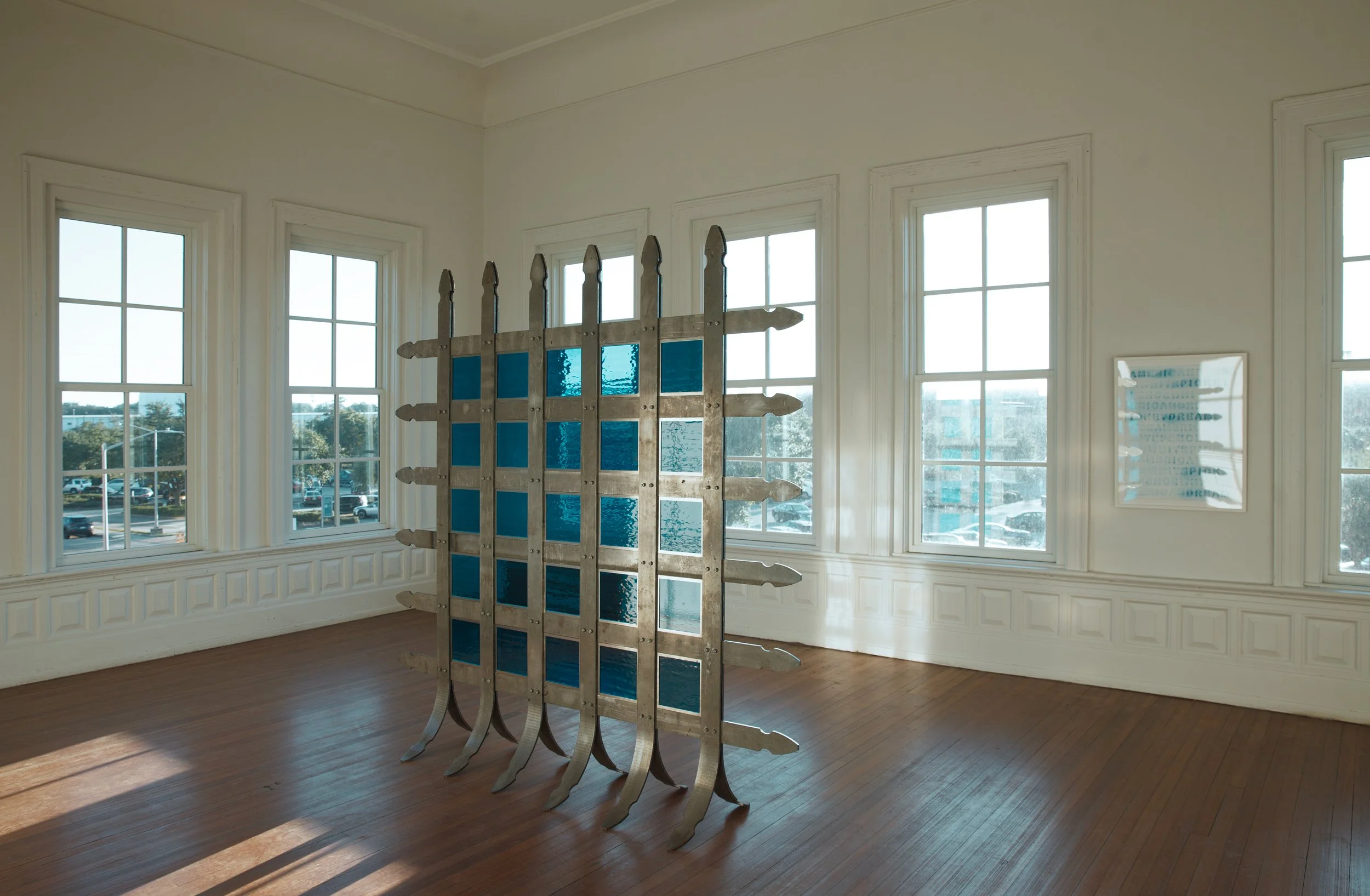
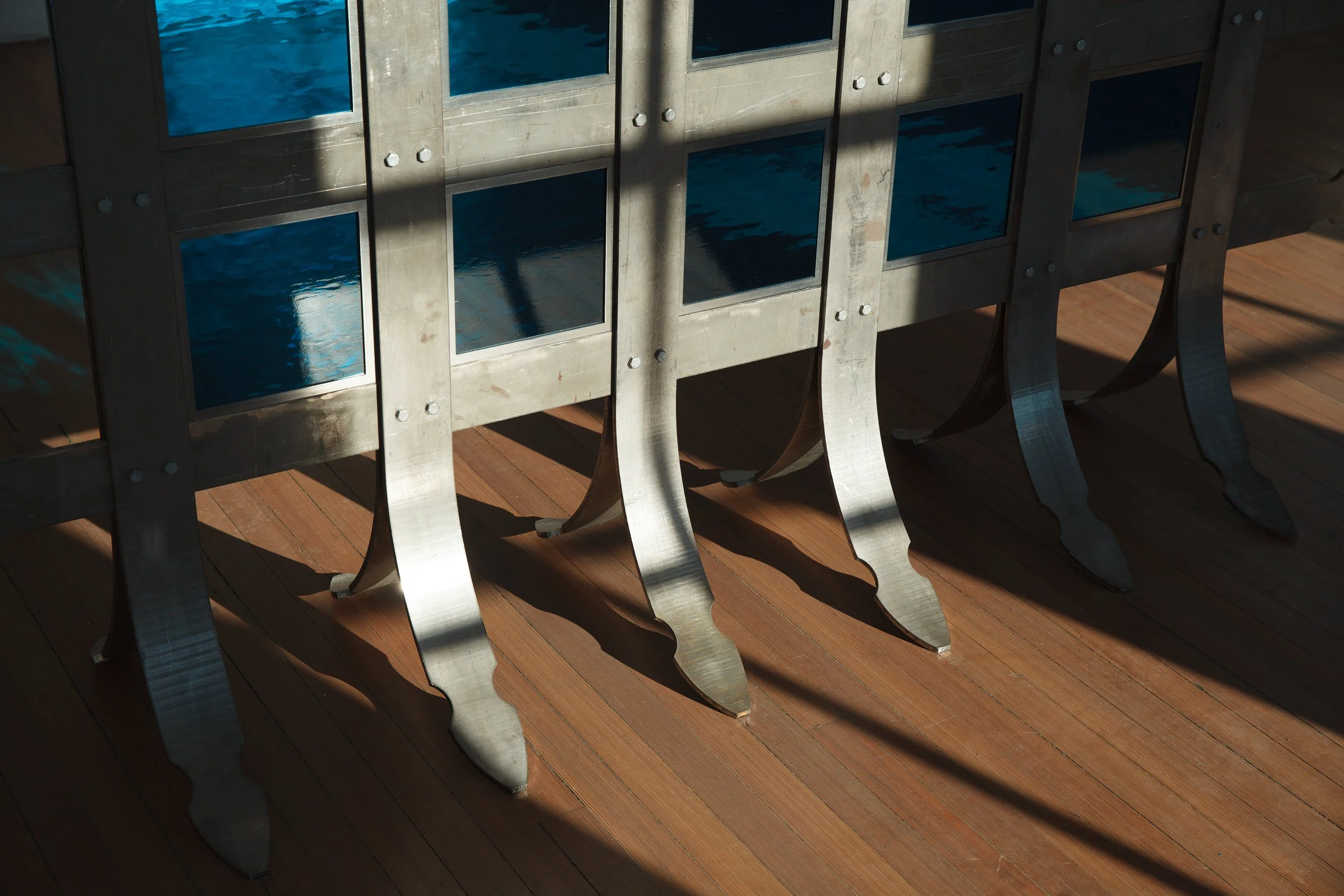
In American Divinity, blue stained glass sits inside a steel structure resembling a gate or fence. As daylight moves through it, the sculpture reproduces itself across the gallery walls as blue light and shadow. The fence becomes image, ornament, barrier, window, and projection without settling completely into any one of them.
Freedman’s Flag is cut from a rusted sheet of tin salvaged from the remains of a burned Freedman’s cottage in Charleston, South Carolina. The transformation is minimal but consequential: a damaged fragment of historic architecture enters the already familiar form of the American flag while remaining visibly attached to its previous life. The result sits somewhere between artifact and invention.
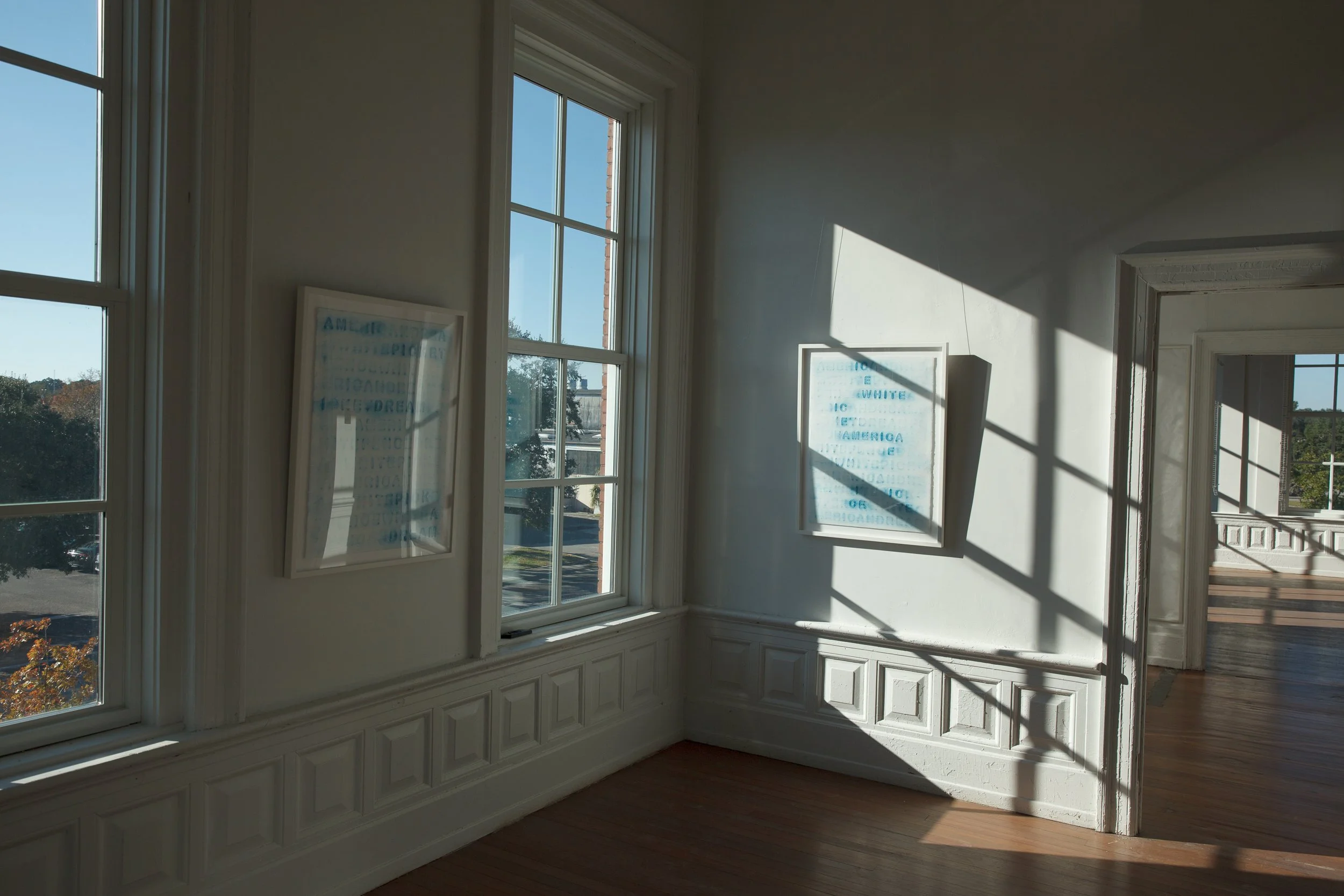
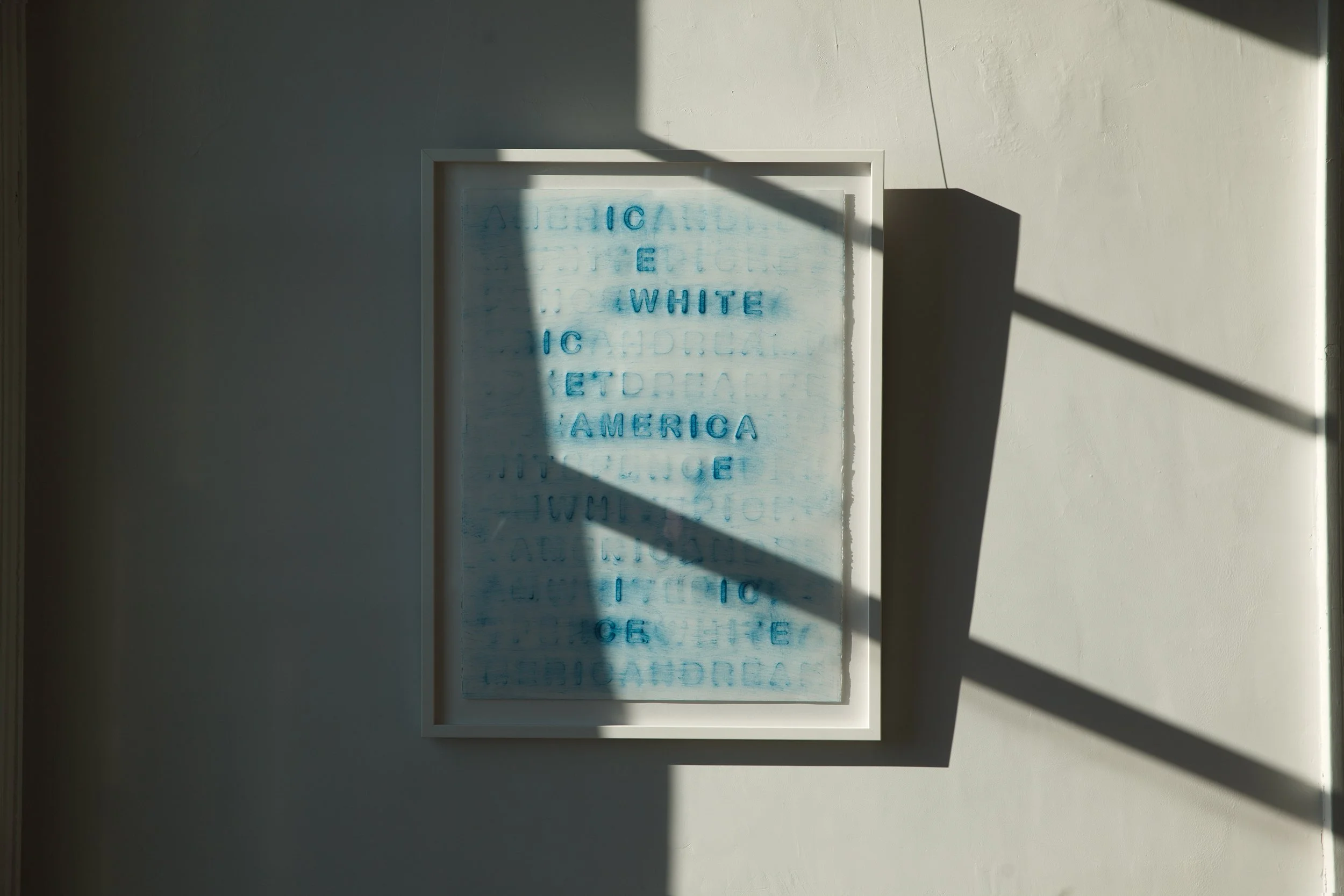
The rubbings Pick A Dream and White Ice begin with a plate engraved repeatedly with WHITE PICKET FENCE AMERICAN DREAM. Selective pressure causes phrases to surface—WHITE, AMERICA, DREAM, PICKET, ICE, I Can Dream and Am I A Picket. The original phrase remains present even as other possibilities are pulled from it. This process makes the language increasingly associative.
The social and political charge of these works necessarily changes with the moment in which they are encountered. That instability is part of their usefulness. Williams does not use familiar symbols to illustrate a fixed and cliche position about American life. He returns to them because their meanings refuse to remain fixed—because history, memory, politics, aesthetics, and personal association continually reorganize what they are capable of saying.
The work stays inside that struggle: repeating the image, altering it slightly, approaching it again, and testing how much power it still possesses.
Related Works
Works Exhibited
American Divinity, 2023
(Floor Sculpture)
Steel and Stained Glass
96 × 96 × 22 in. | 244 × 244 × 56 cm
Freedman’s Flag, 2025
(Flag)
Tin Roof
47 x 27 in. | 102 x 69 cm
Pick A Dream, 2025
(Framed Blue Rubbing, Left)
Acrylic on Paper
22 × 30 in. | 56 × 76 cm
White Ice, 2025
(Framed Blue Rubbing, Right)
Acrylic on Paper
22 × 30 in. | 56 × 76 cm