Exhibitions & SITE-SPECIFIC






American Liturgy
2025
Historic Navy Yard
North Charleston, South Carolina
-
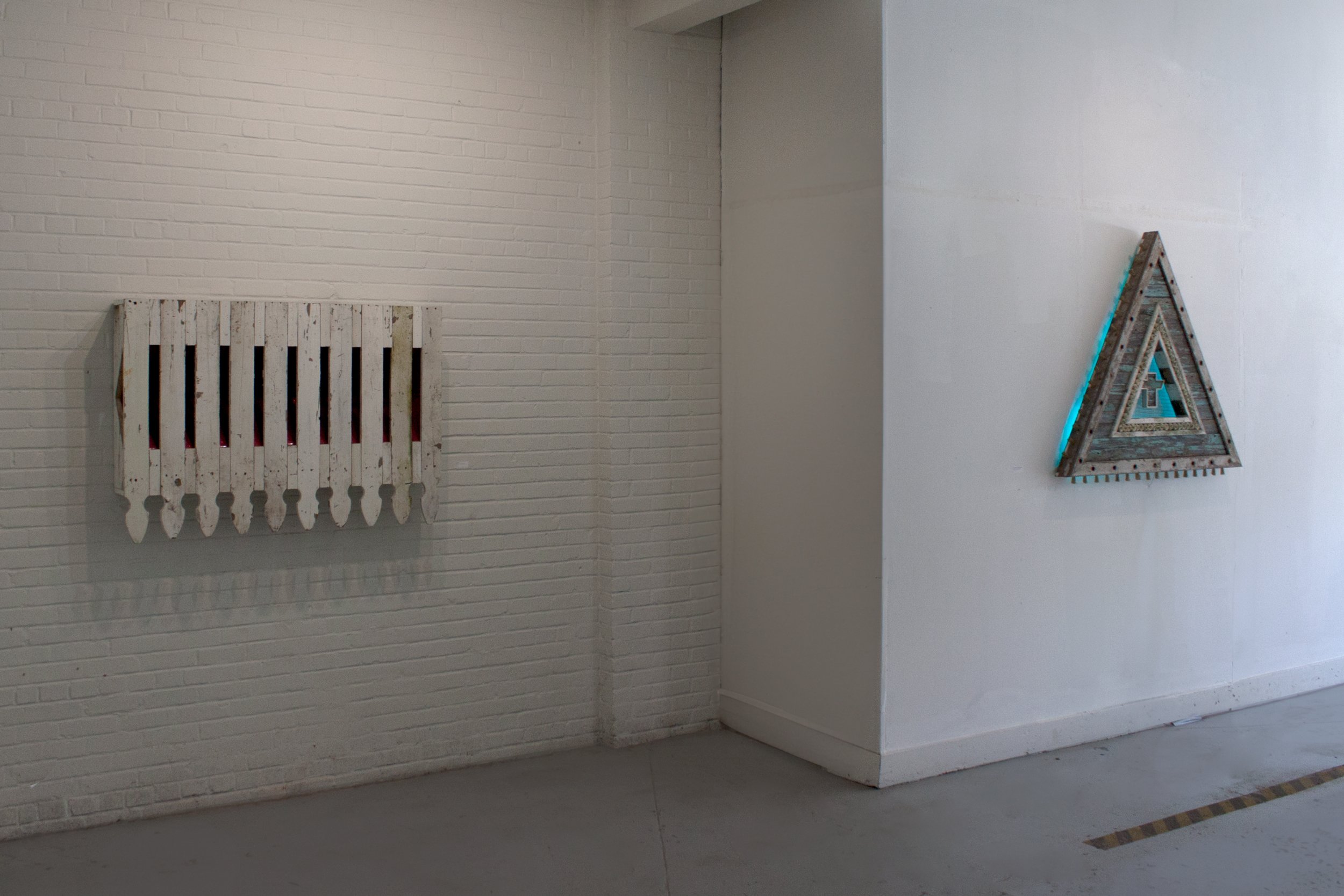
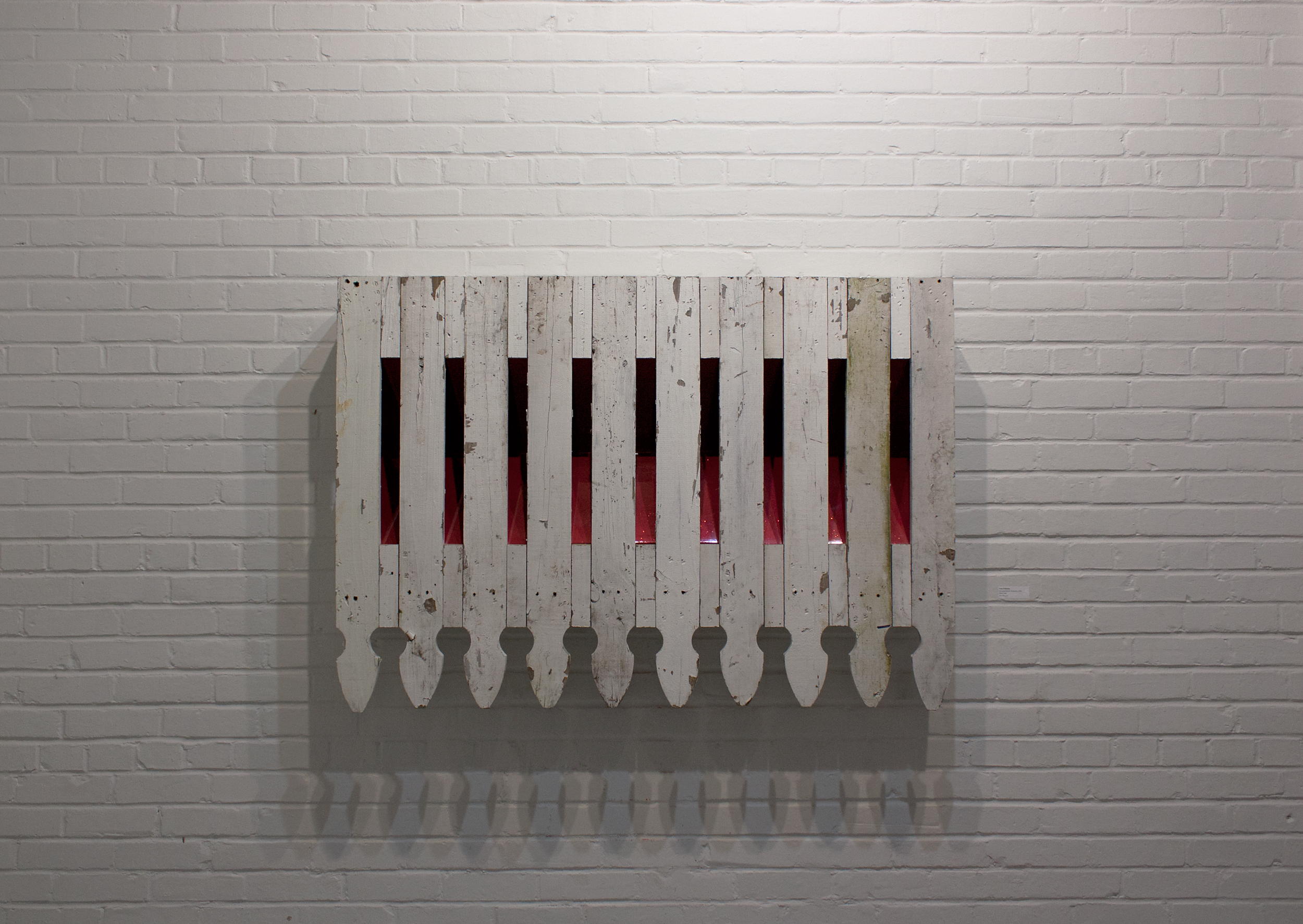
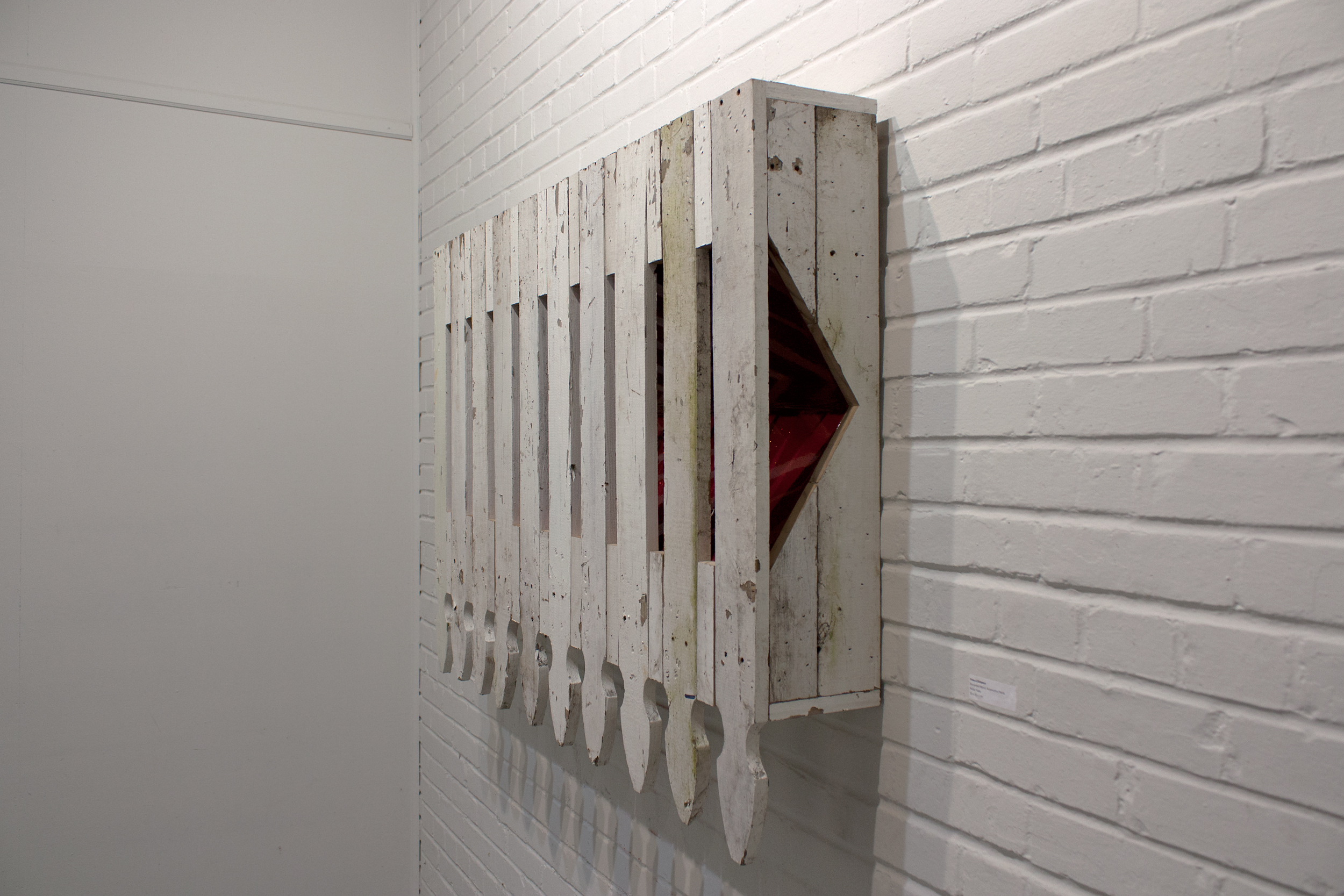
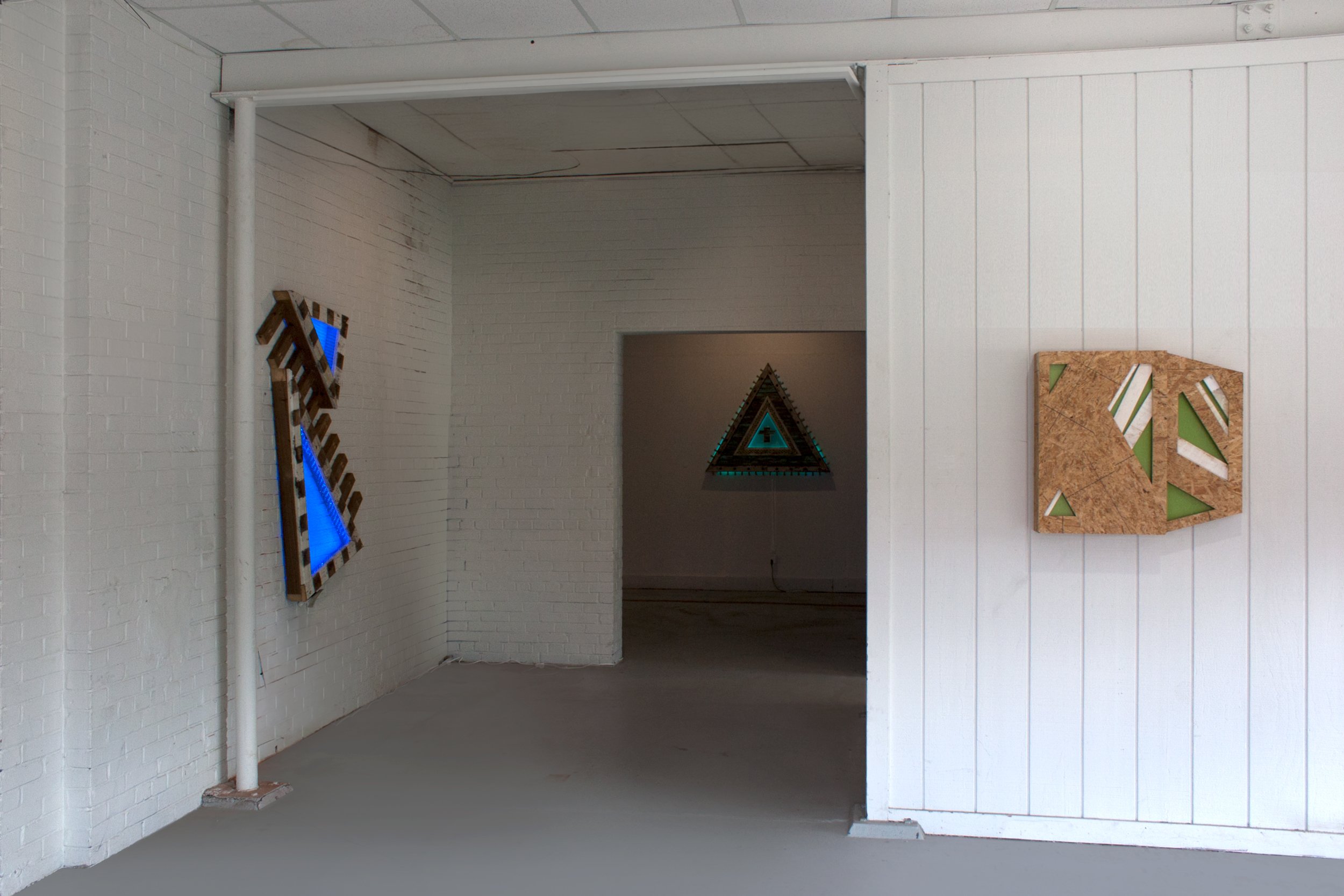
This body of work looks at American ideology as a kind of belief system—something worshipped and defended until it starts to resemble religion.
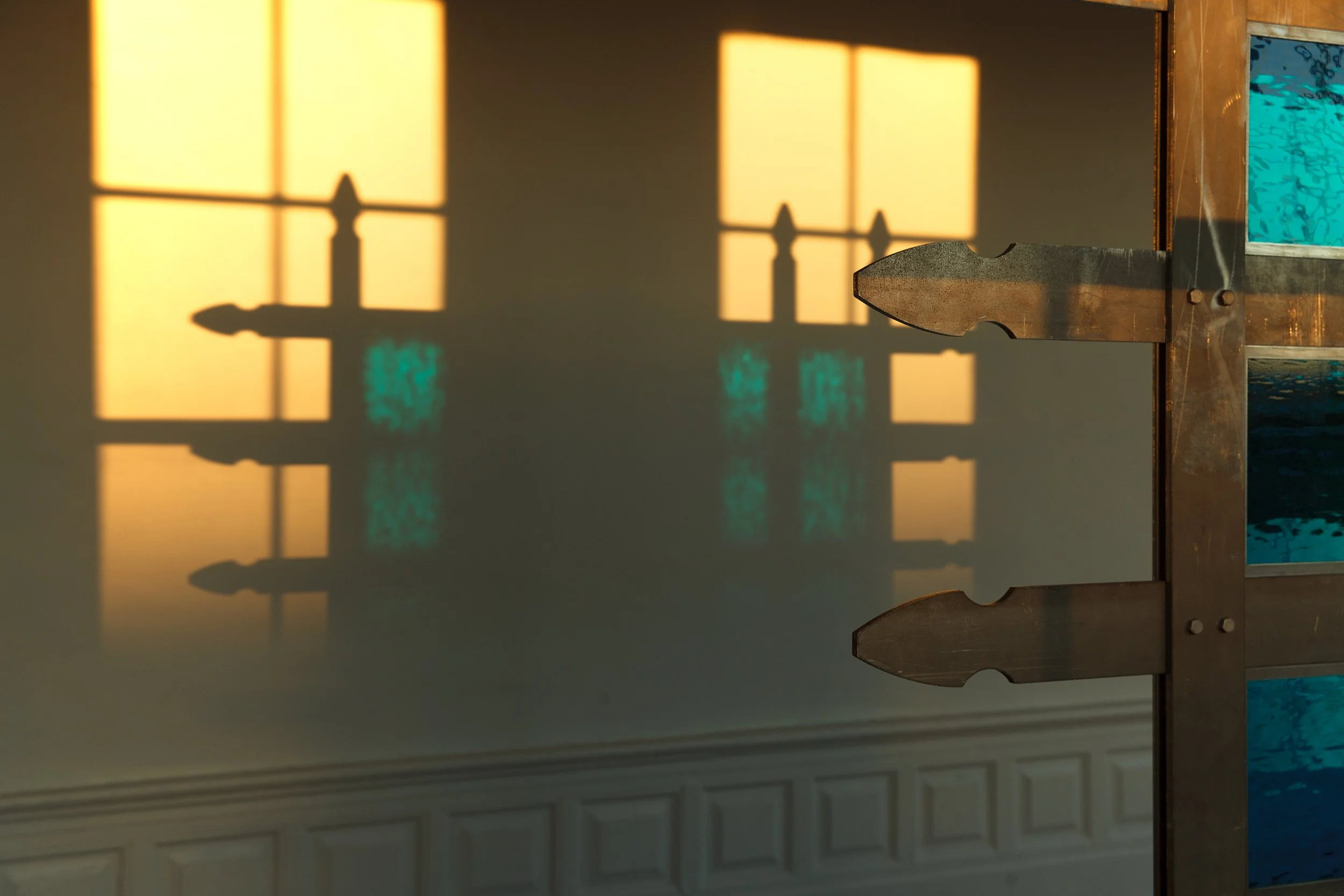
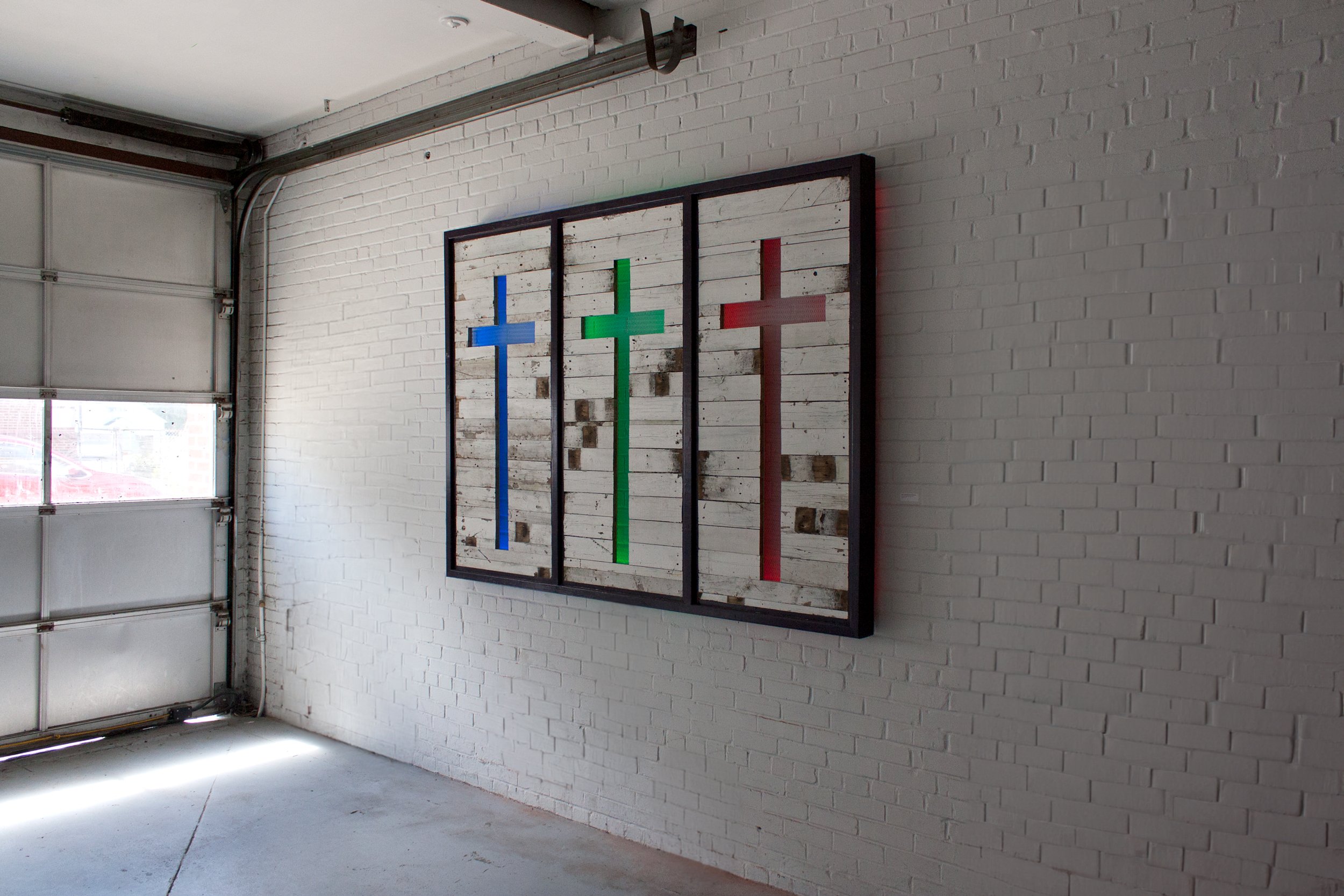
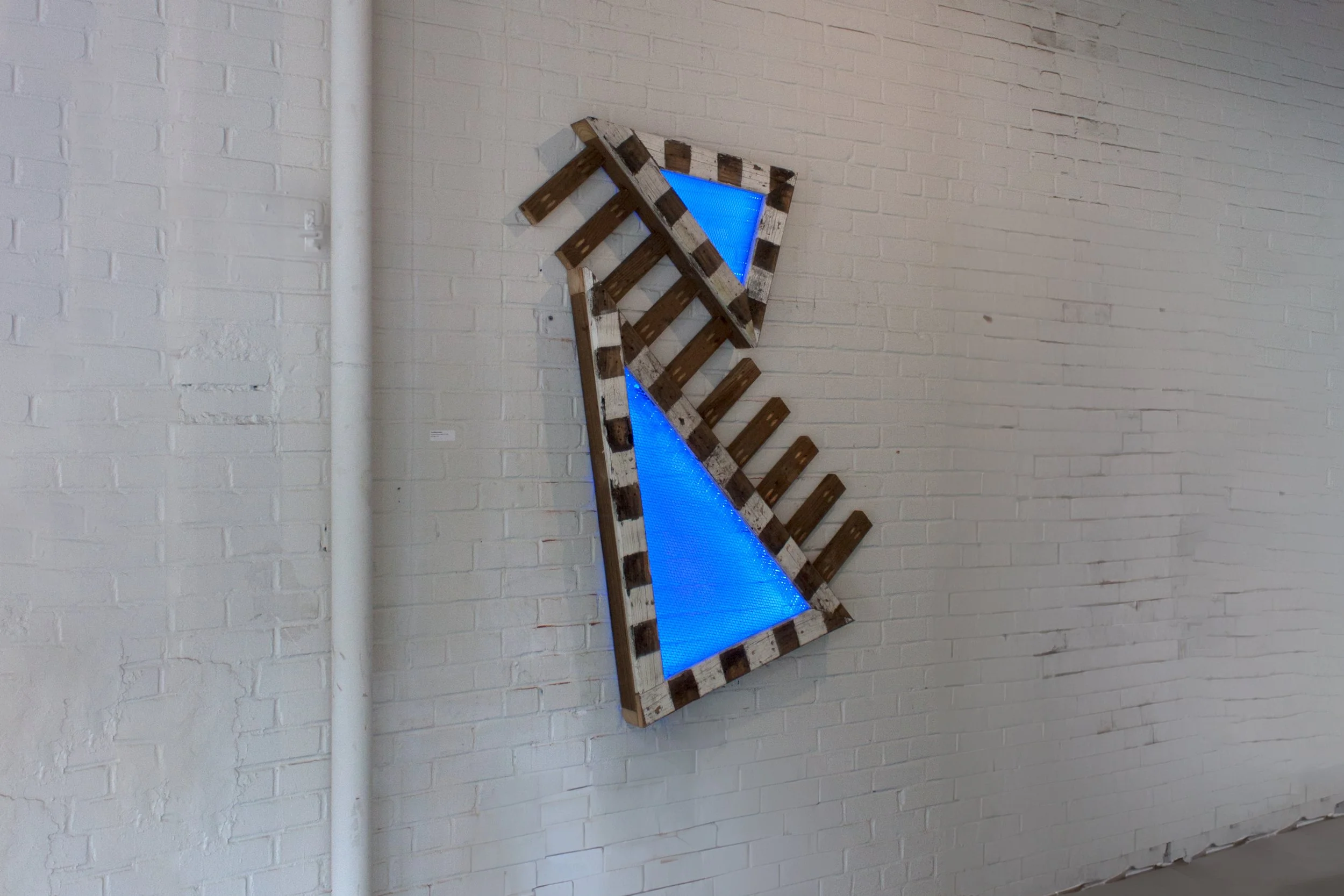
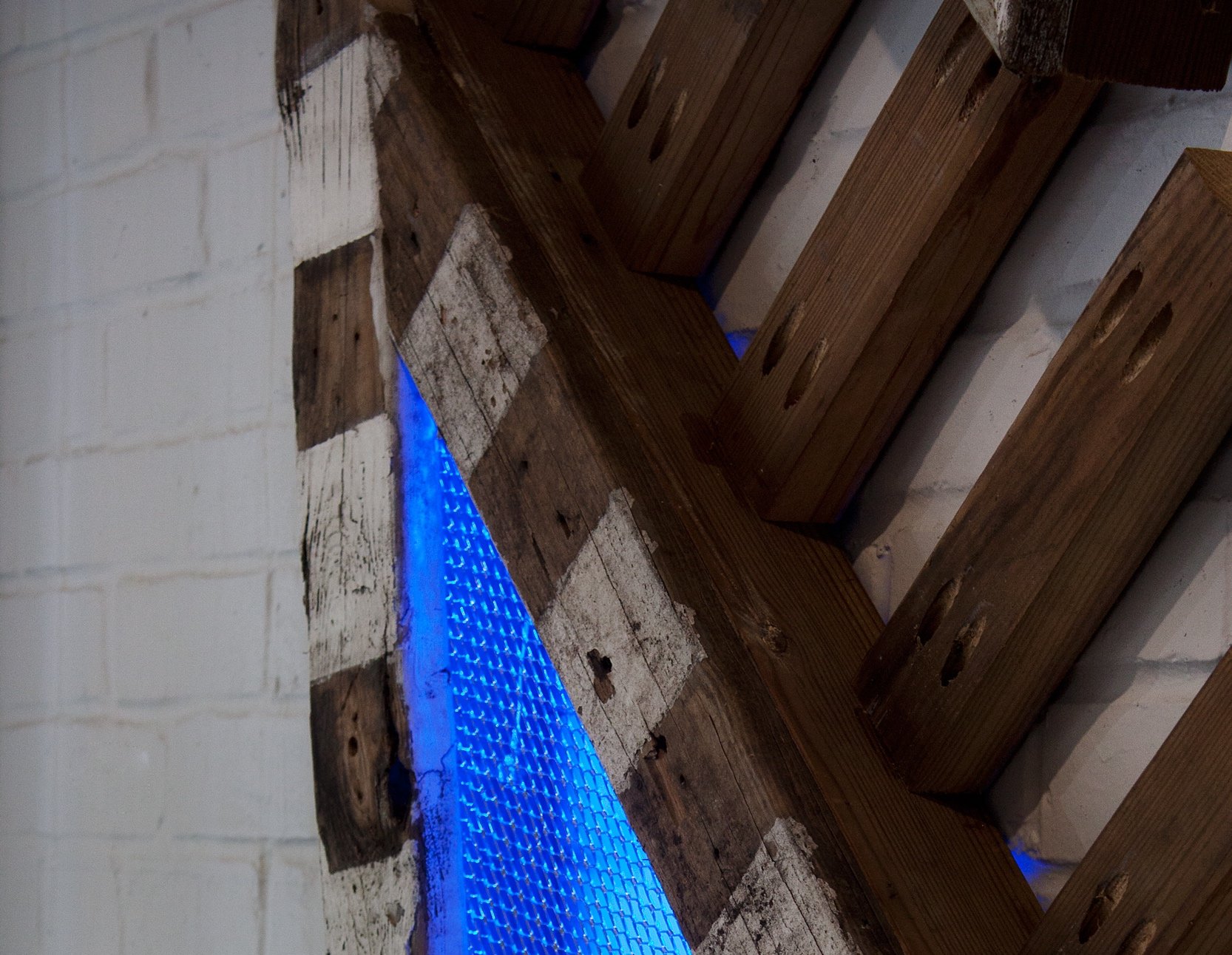
American Divinity borrows the visual language of stained glass, but the structure is less church window than barricade. Blue glass panels sit inside a steel frame that reads like a gate or fence. Light passes through it, but the structure itself feels defensive—closer to the iron barriers historically built to protect property and power. The piece reflects the intensity with which American ideals—liberty, property, nation—can be held and defended, often with a devotion that approaches religious faith.
Freedman’s Flag is cut from a rusted sheet of tin salvaged from the remains of a burned Freedman’s cottage in Charleston, South Carolina. The flag feels somewhere between artifact and invention—a relic from a personal mythology. The material carries the physical memory of a place tied to the promise of freedom after the Civil War, while the corrosion suggests how fragile and uneven that promise has always been.
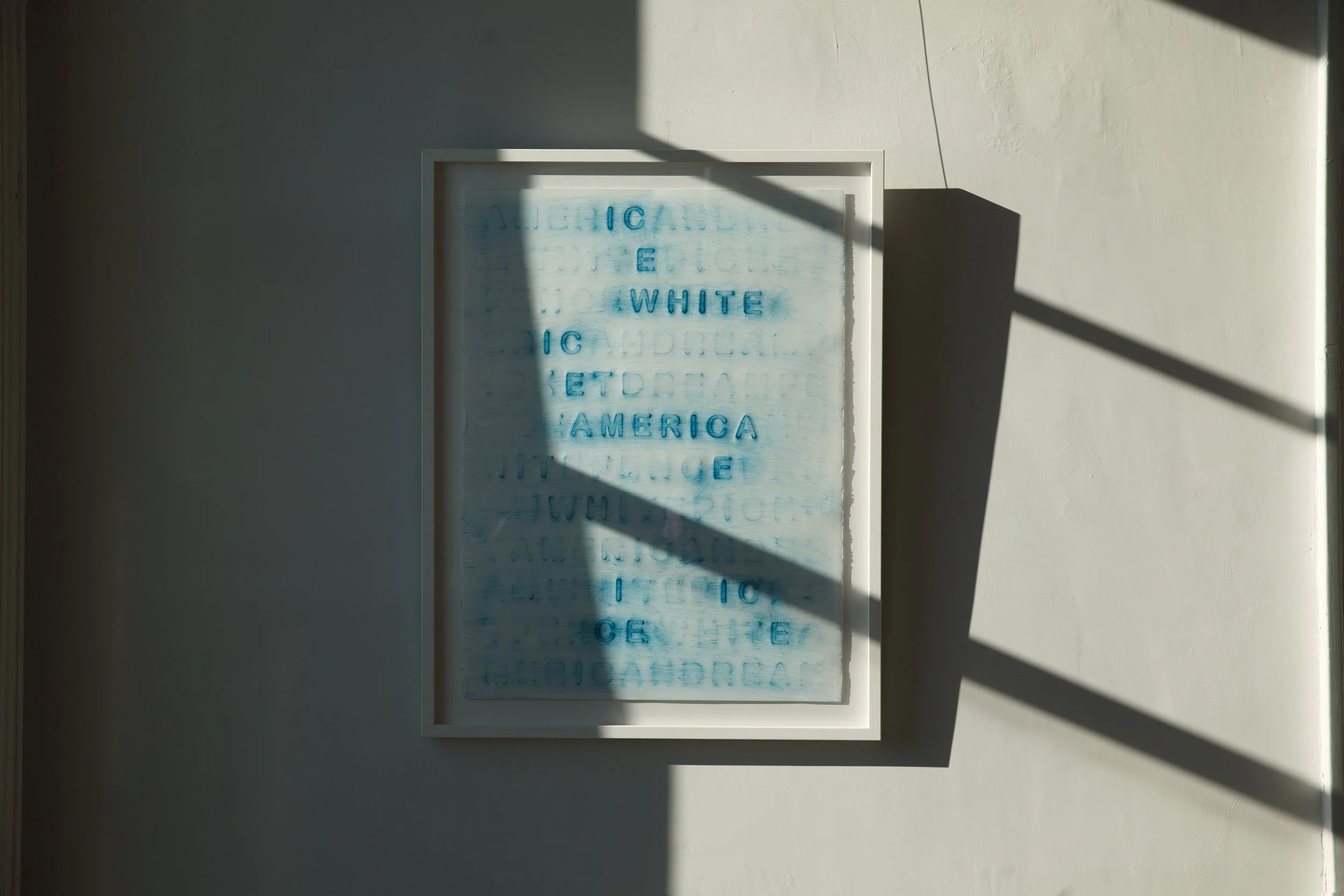
The text rubbings, Dreaming and White Ice, come from a plate engraved repeatedly with the phrase “WHITE PICKET FENCE AMERICAN DREAM.” By applying pressure selectively across the plate, fragments of text emerge—WHITE, AMERICA, DREAM, PICKET, ICE, along with phrases like “I Can Dream” and “Am I A Picket.” The rubbings work like a stream of consciousness—almost like a quiet chant or hymn—revealing the associations that surface when thinking through the mythology of American life.
Together the works treat the flag, the fence, and a national ideal as parts of a shared ritual—an American liturgy built from aspiration, property, identity, belief, and a devotion to the nation sustained as much by faith as by fear.








WHEN IT RAINS IT SHINES
2023
International African American Museum
Charleston, South Carolina
-
6 MIN READ
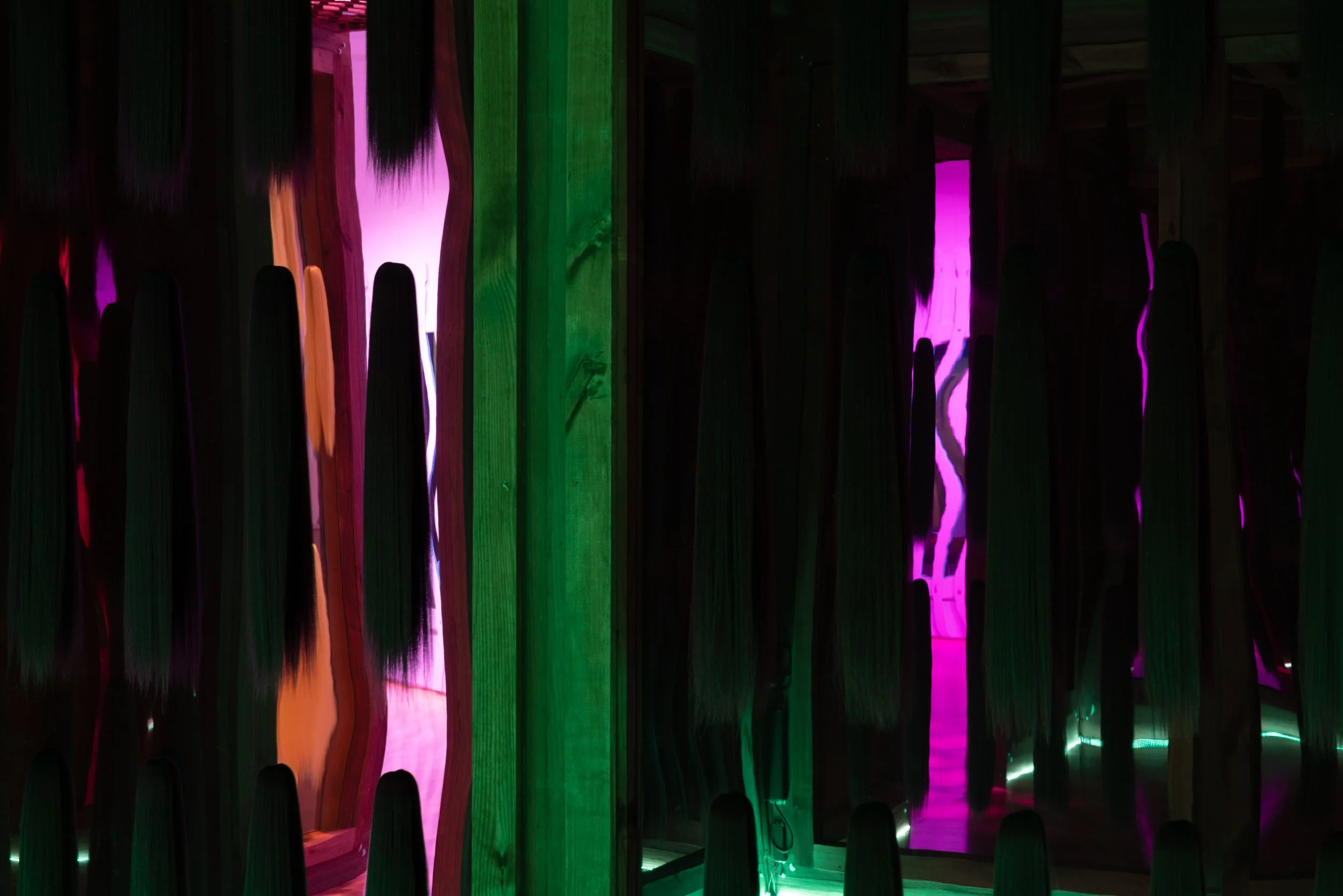
When It Rains It Shines is an experimental, gallery-wide installation that transforms the exhibition space into an immersive architectural environment constructed through sculpture, light, sound, reflection, and shadow. The work functions as a monument, sanctuary, and fictional sacred compound shaped by fragments of Southern landscape, vernacular architecture, and personal memory. The title refers to a familiar yet uncanny weather phenomenon: moments when rain falls while the sun remains visible. Sometimes these moments produce rainbows, but even without them the atmosphere feels luminous and strange. I have always been drawn to this contradiction—the coexistence of darkness and brightness, storm and sunlight. The installation draws from that sensation, creating an environment where opposing conditions exist simultaneously.
At the center of the gallery stand three plexiglass structures arranged symmetrically along a central axis. Together they operate as a single monumental form. Visitors move around and between the structures, weaving through the installation and gradually losing their sense of orientation. Because of the symmetry and layered views through plexiglass, mirrors, and metal screens, it can become difficult at times to determine one’s position within the gallery. Between the three structures are two open passageways that function like breezeways connecting the spaces. Above these corridors, lattice ceilings constructed from three trellis panels create overhead structures that recall the feeling of walking through a garden arbor or private courtyard. These transitional spaces introduce moments of pause between rooms and reinforce the architectural logic of the installation, referencing the porch and garden environments common in Southern homes. Moving through these breezeways, visitors pass from one atmosphere to another as if walking between interior rooms and sheltered outdoor spaces within the compound. The structures are built from large colored plexiglass windows framed within architectural supports constructed from plywood forms wrapped with stained lattice strips. This lattice treatment appears throughout my sculptural practice and has become a recurring material in my work. The framing gives the structures a dual character. The stained lattice evokes elements of Southern vernacular architecture—porches, trellises, and garden structures—while the exposed plywood framing and visible bolts retain the sense of assembled construction. The architecture exists somewhere between shelter and structure, domestic space and monument.
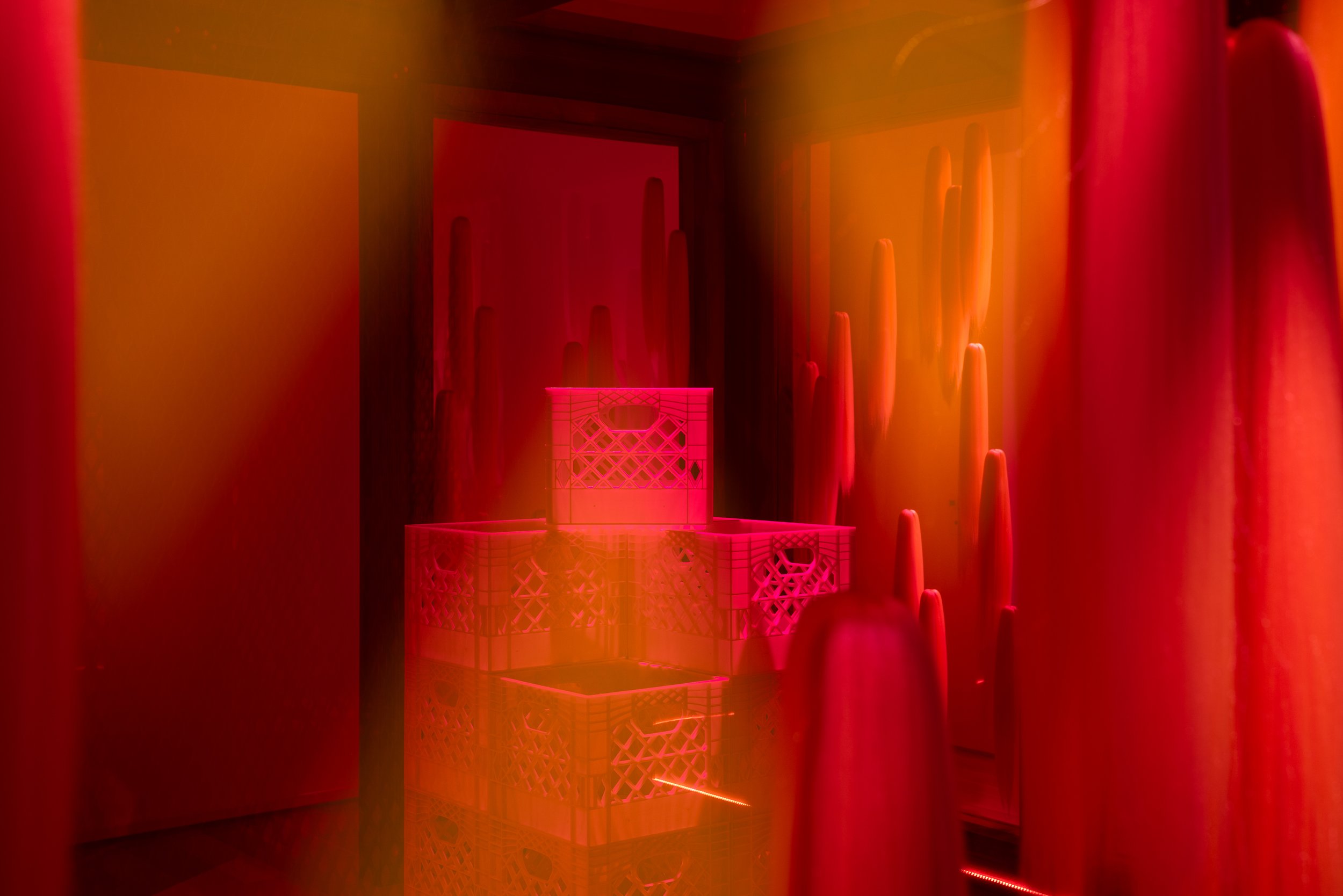
Within these frames, colored plexiglass panels shape the atmosphere of each room. Suspended from both sides of the panels are individual ponytails of synthetic hair. The hair retains its artificial coloration but iridescent fibers shifts dramatically as light passes through the plexiglass. These vertical tapered forms of hair evoke Spanish moss and create the sensation of moving through a dense Lowcountry forest. The effect is ghostly and blurs the boundary between landscape and presence. The use of synthetic hair introduces an additional cultural dimension. The ponytails are made from brightly colored hair weave, a material strongly associated with Black Southern culture and everyday life. Hair has long carried complex associations around identity, aesthetics, and expression—natural versus artificial, subdued versus expressive, personal versus public. Within the installation this familiar material becomes landscape and atmosphere, transforming an everyday object into an environmental sculptural form. Above the structures, plexiglass panels form a coffered ceiling that recalls the large decorated rooms found in many Southern homes and interior spaces. At the center of one structure a stack of color-matched milk crates forms a small monument. The crates refer to my uncles, who kept extensive collections of vinyl records stacked in milk crates in their garage where they played and scratched records. In the installation the crates function simultaneously as personal memorial and cultural artifact.
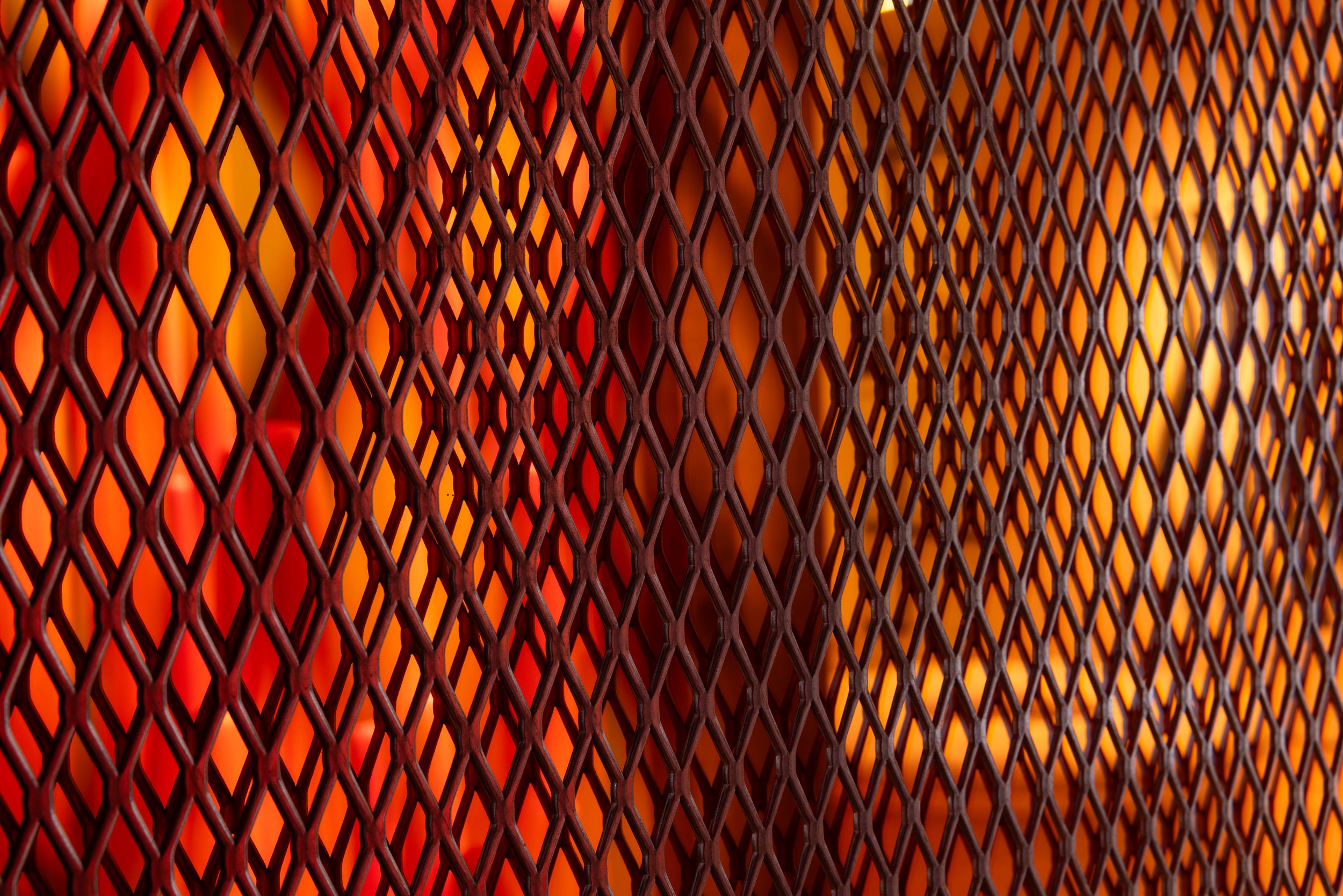
The central structure introduces a different spatial atmosphere. Windows facing outward toward the gallery are orange plexiglass covered with expanded steel mesh, while interior windows are mirrored purple plexiglass. The mesh references security screens commonly installed on neighborhood storefronts and corner stores. Within the installation these screens operate both as protective barriers and stylistic surfaces, transforming utilitarian materials into sculptural elements. Neon lighting traces the base of the structure and slowly shifts color. The neon references the visual language of neighborhood corner stores throughout the South, where bands of flashing colored light often mark storefronts after dark. Within the installation the lighting becomes an architectural element that shapes the atmosphere of the space. The central room also houses the installation’s soundscape and functions as the atmospheric core of the environment. It is the darkest space within the installation—a stormy, urban forest-like night-scape at the center of the compound. An eleven-minute audio composition loops continuously throughout the gallery, combining recordings of migratory ducks taking flight, frogs, crickets, rain, thunder, deep car bass, the distorted sound of a stick dragged across chain-link and wooden fences, and a shopkeepers bell of a corner store door. The bell acts as a cue that triggers new sounds within the composition, creating a rhythmic sequence that moves through the space. Inside this structure the suspended ponytails are arranged differently than in the other rooms. Rather than hanging loosely like moss, the hair is organized in a strict five-by-three grid. The arrangement recalls the orderly display of hair in beauty supply stores, but within the installation the grid takes on another meaning. The room begins to resemble a chamber containing collected objects—materials gathered, preserved, and placed with intention. The hanging forms suggest talismans or fragments of a ritual, objects kept for safekeeping. The space feels like a private interior belonging to an unknown inhabitant, as if the viewer has entered a room containing the remnants of a ritual practice.
Surrounding the installation is an eighty-foot wall on each side of the gallery made from undulating pickets painted haint blue and installed over mirrored plexiglass. In Southern Black vernacular traditions—particularly in the Lowcountry—haint blue has long been used as a protective color intended to ward off spirits or “haints.” Within the installation the fence forms a protective boundary, transforming the gallery into a guarded compound and reinforcing the sense of the space as a sanctuary. Between the fence and the central structures sit plinths containing oyster shells, pine cones, and palmetto roses. These materials function like offerings placed within the installation. Pine cones recall the yard of my grandmother’s home, where a tall pine tree regularly dropped cones across the ground. Oyster shells reference coastal waterways, marsh ecosystems, food culture, and tabby construction throughout the South. Palmetto roses—handcrafted from palm fronds and commonly sold by young street vendors in Charleston—appear frequently in my work and operate here as symbolic objects within the environment. Four circular benches upholstered in light blue suede are positioned in the corners of the gallery. Their bases are painted the same haint blue as the fence and wrapped in expanded metal mesh, encouraging visitors to remain within the installation and spend time inside the environment. Throughout the space, reflections, shadows, and transparent surfaces create layered views between the rooms. Visitors see through multiple spaces at once—through plexiglass panels, mirrored surfaces, and metal screens. Suspended forms cast elongated shadows across the floor, extending the installation beyond the structures themselves. As viewers move through the gallery, these layers constantly shift.
At its core, the installation functions as an act of preservation. Many of the visual languages referenced within the work—corner store aesthetics, vernacular architecture, regional materials, and neighborhood soundscapes—belong to a Southern cultural landscape that is gradually fading, particularly within Black communities of the Lowcountry. Through sculpture, architecture, and sound, When It Rains It Shines becomes a life-sized vessel designed to hold and protect fragments of landscape, memory, and cultural practice that might otherwise disappear. It gathers and preserves pieces of personal history, relationships, and lived experience and reassembles them into an environment that can be entered and inhabited. Rather than reproducing existing architecture, the work proposes a speculative form of Southern architecture. Familiar elements—lattice framing, picket fencing, porch-like structures, security screens, and vernacular materials—are reorganized into an imagined environment. I describe this approach as Southern Surrealism: a method of constructing fictional environments from the architecture, materials, and cultural landscapes of the American South. Created in Charleston, When It Rains It Shines represents an ambitious expansion of my sculptural practice and contributes to contemporary conversations around immersive installation, cultural memory, and spatial storytelling.
Artist
Fletcher Williams III - Concept, Design, and Artistic DirectionDesign and Fabrication Partners
Datum Workshop - Lead Fabrication
TTS Studios - Fabrication Support and InstallationSpecial Thanks
Friends, family, volunteers, fellow artists, tradesmen, and the staff of the International African American Museum

Dusk
2022
Dock St. Theatre
Charleston, South Carolina
-
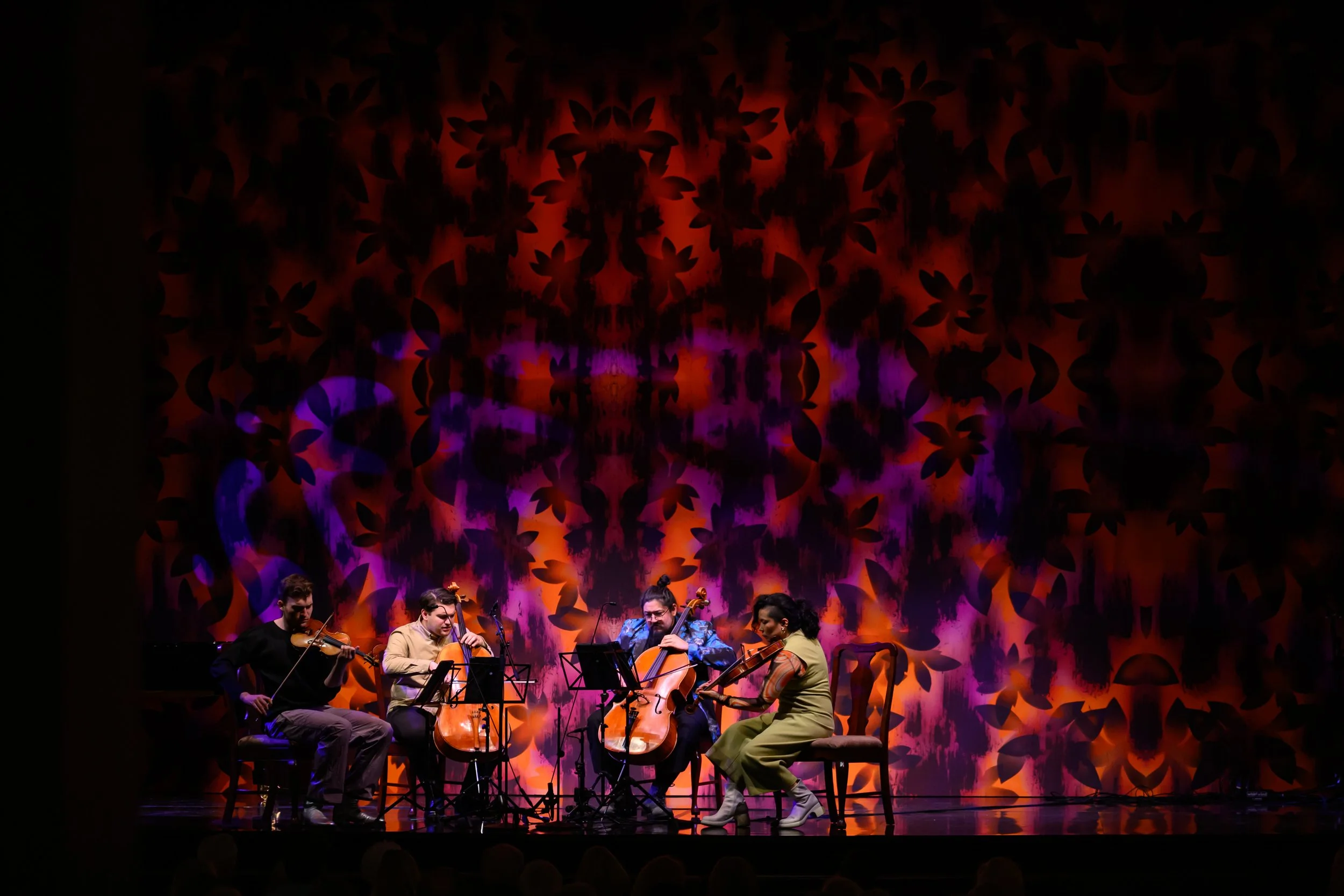
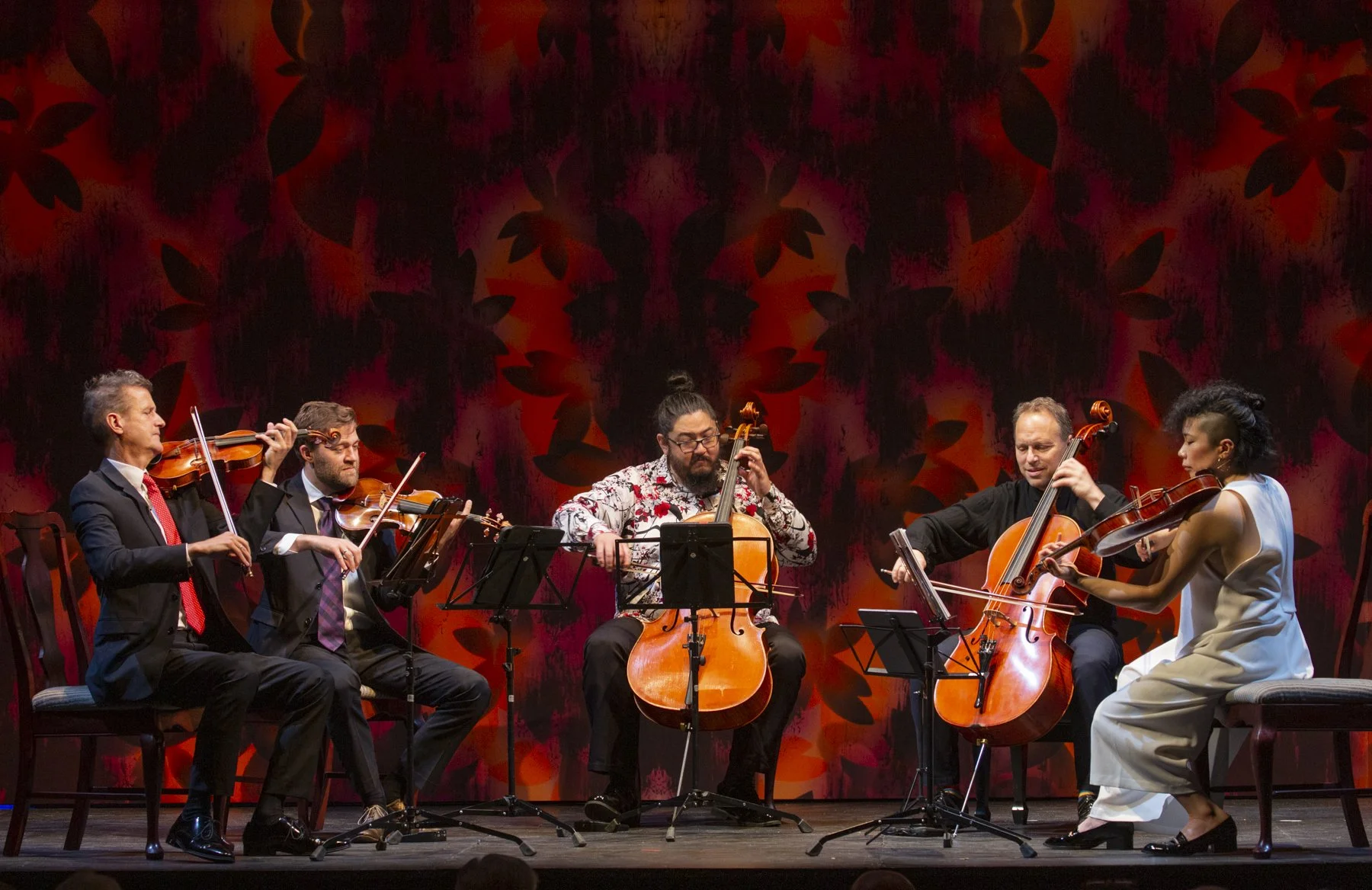
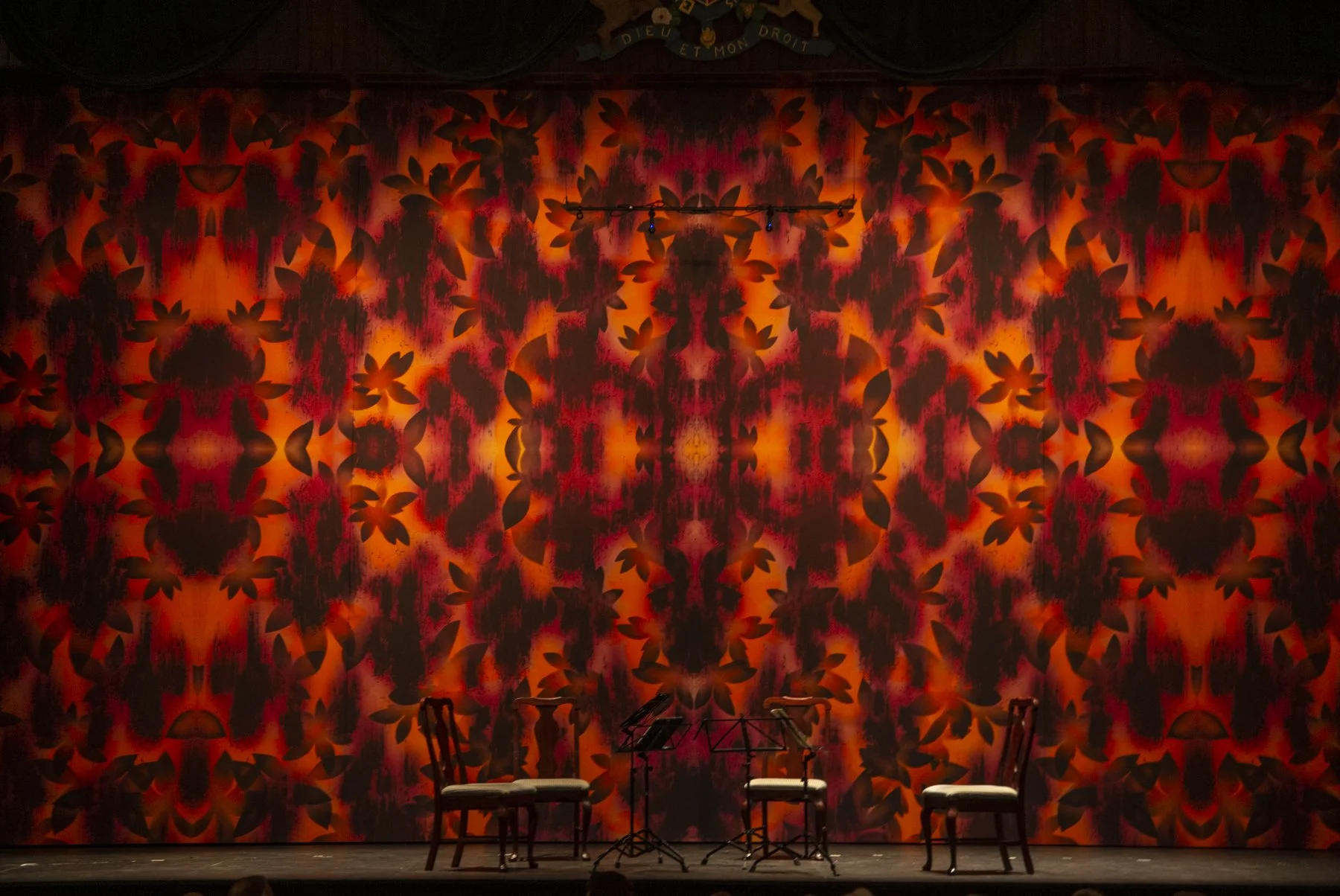
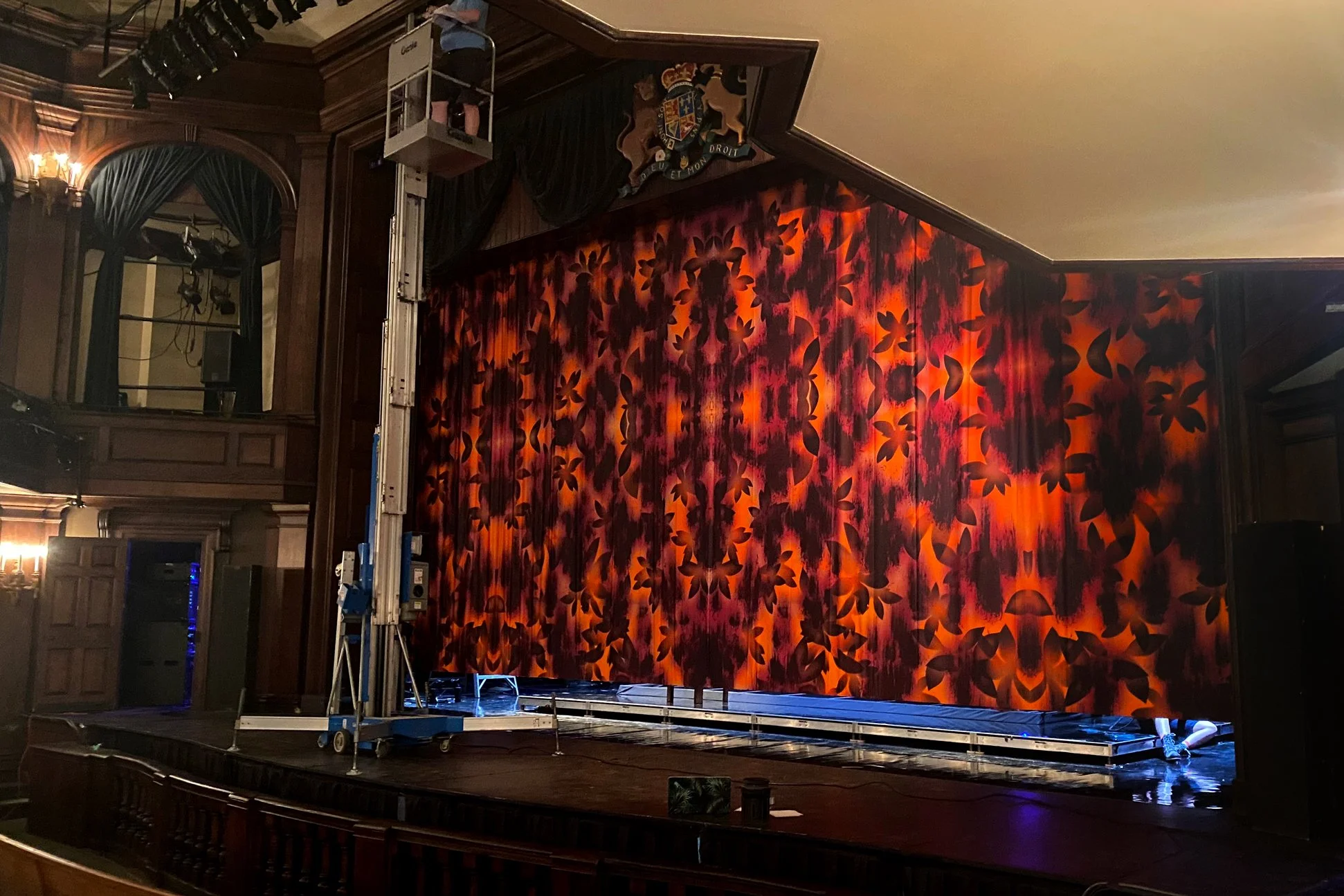
Dusk, created in 2022 as a stage backdrop for the Bank of America Chamber Music series at Spoleto Festival USA, was installed at the Dock Street Theatre in Charleston and continues to serve as the backdrop for chamber music performances through the 2026 season. The original painting on paper (50 x 38 in.) began with a layer of painted Spanish moss, followed by a layer of azalea leaves. Finally, a dense layer of airbrushed reds, oranges, and magentas fused the composition into a dusk-like landscape. The final backdrop was created by digitally mirroring the original painting multiple times, transforming the shapes into a larger, symmetrical, patterned structure that suggests a dense forest—magical and mysterious, with an almost ghostly presence that envelopes the performers.
This patterning echoes qualities found in chamber music: repetition, variation, and the way small gestures build into a larger whole. During performances, Dusk provides a constant visual presence—warm in color, yet layered with shadow. Rather than depicting the Lowcountry landscape literally, it evokes the region through dense foliage, hanging moss, and the distinctive intensity of evening light. Festival coverage described the backdrop as framing the chamber music series, surrounding the performers in bright, warm hues.¹
¹ Spoleto Festival USA. “With ‘a sweeping achievement’ at its center, Spoleto Festival USA’s 46th season carries renewed energy and artistic vitality.” Press Release, June 14, 2022.








PROMISELAND
2020
Aiken Rhett House of Historic Charleston Foundation
Charleston, South Carolina
-
4 MIN READ
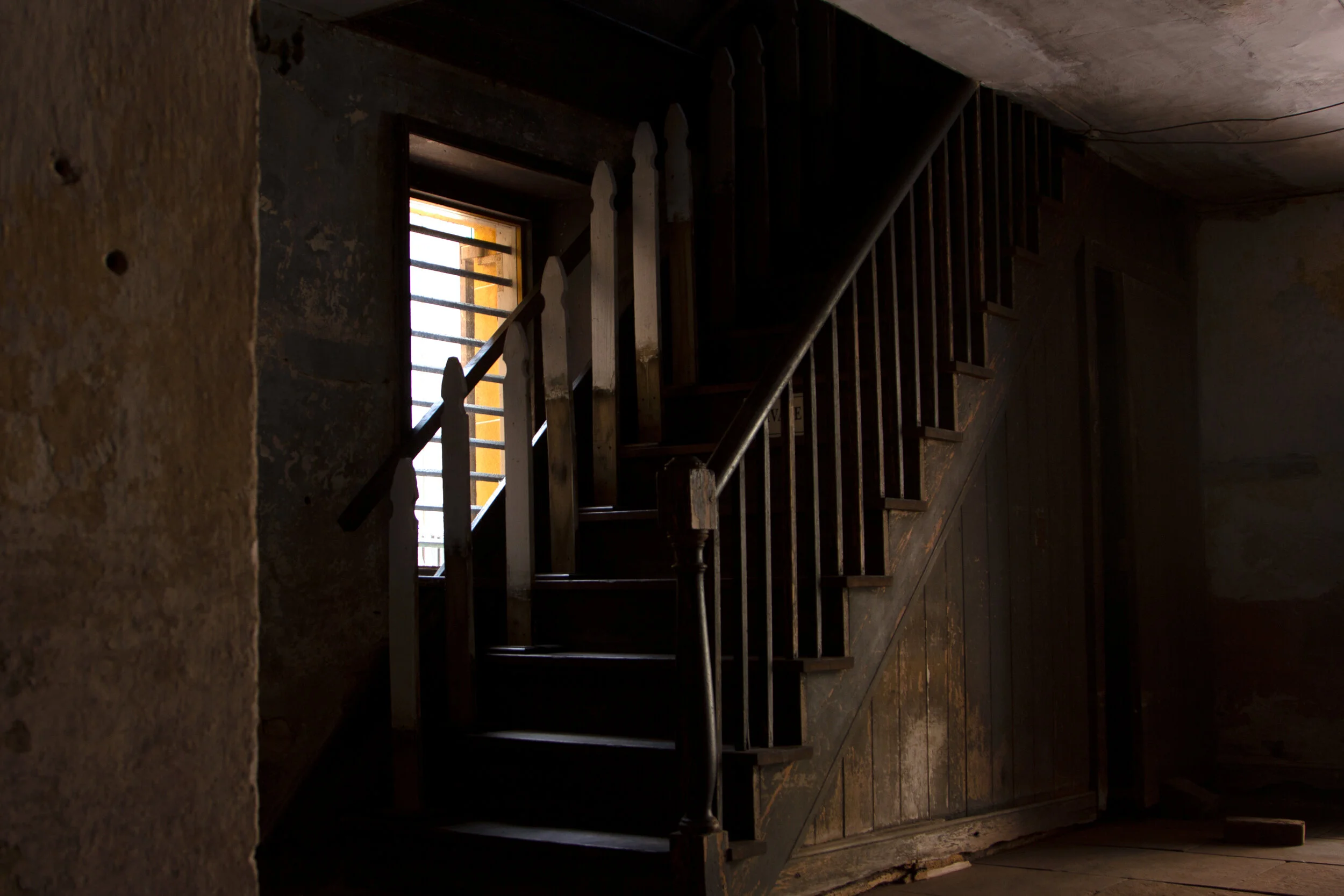
Promiseland is a site-specific installation that transforms the historic Aiken-Rhett House in Charleston, South Carolina, into a landscape of memory, critique, and reflection. Installed along the museum’s guided tour path, each artwork in the exhibition directly responds to the house’s architecture and history, prompting visitors to reconsider the narratives embedded in its walls and grounds.
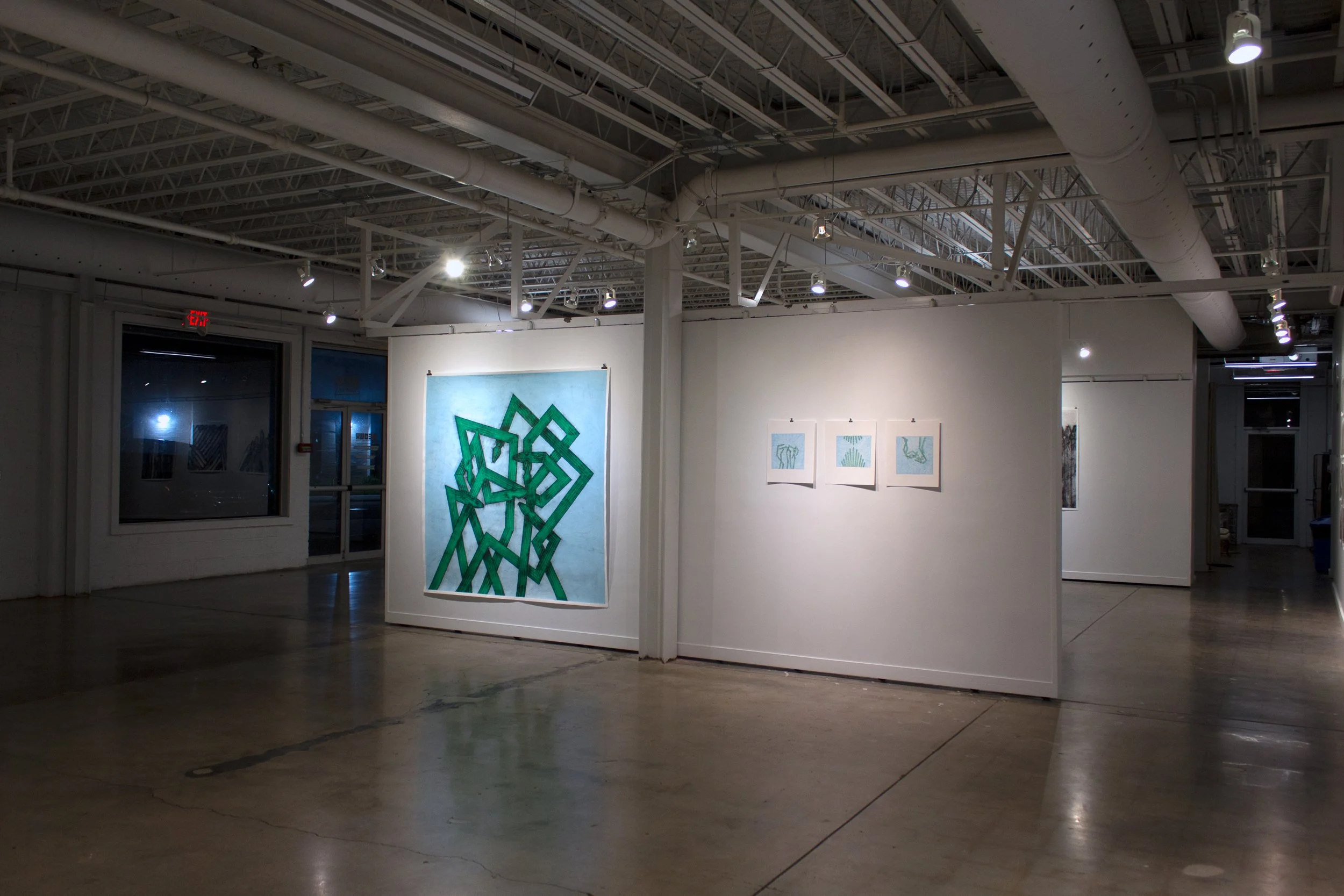
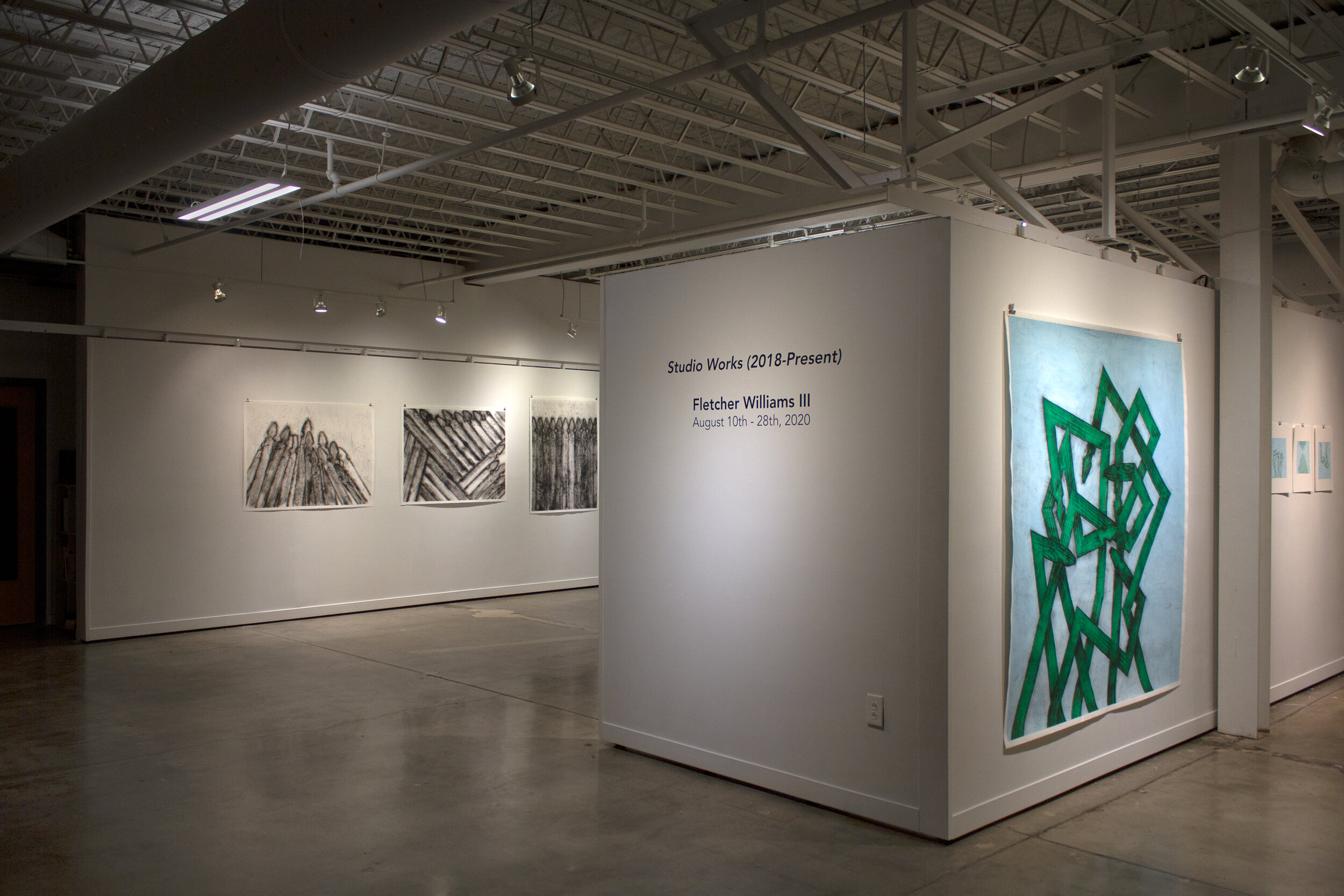
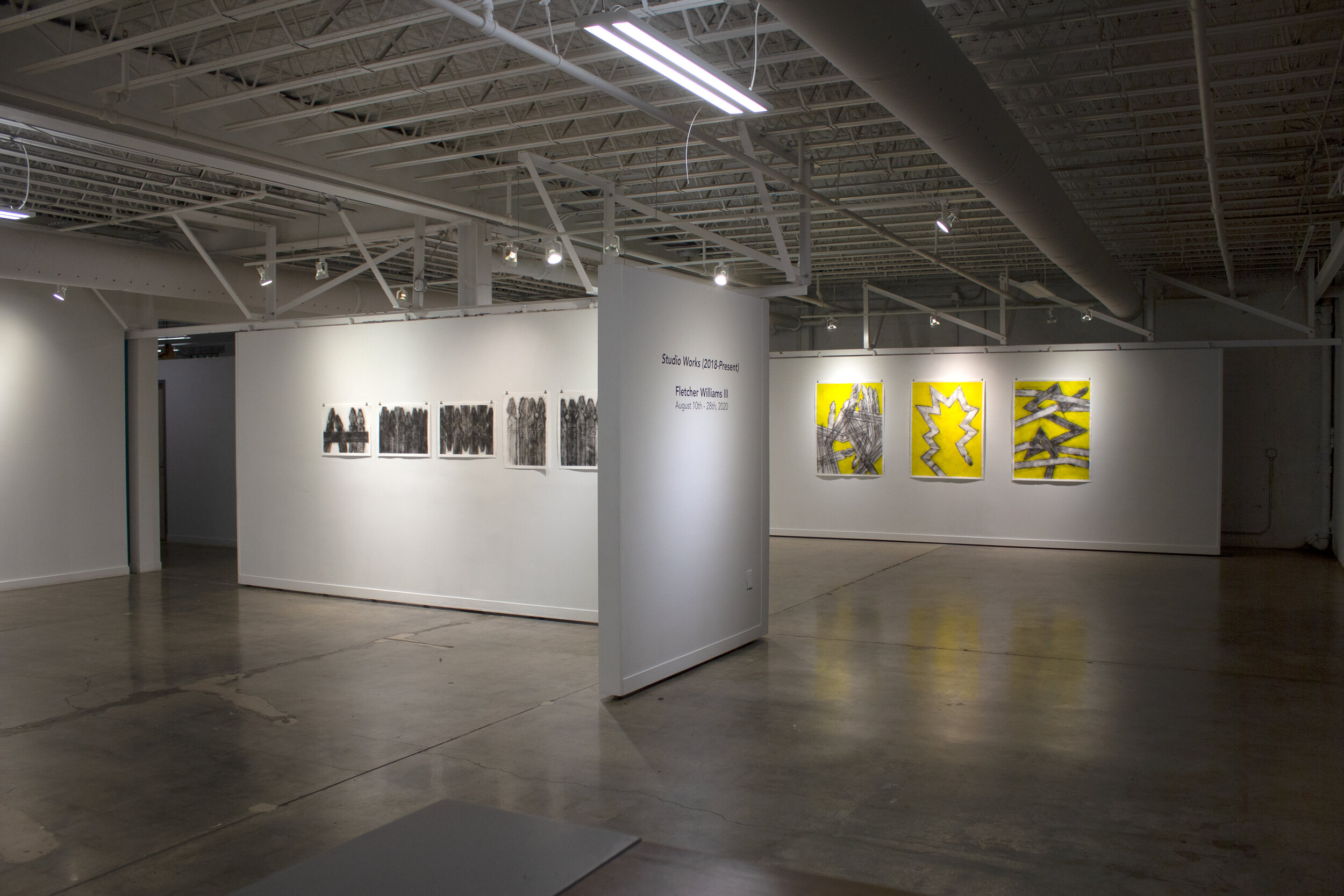
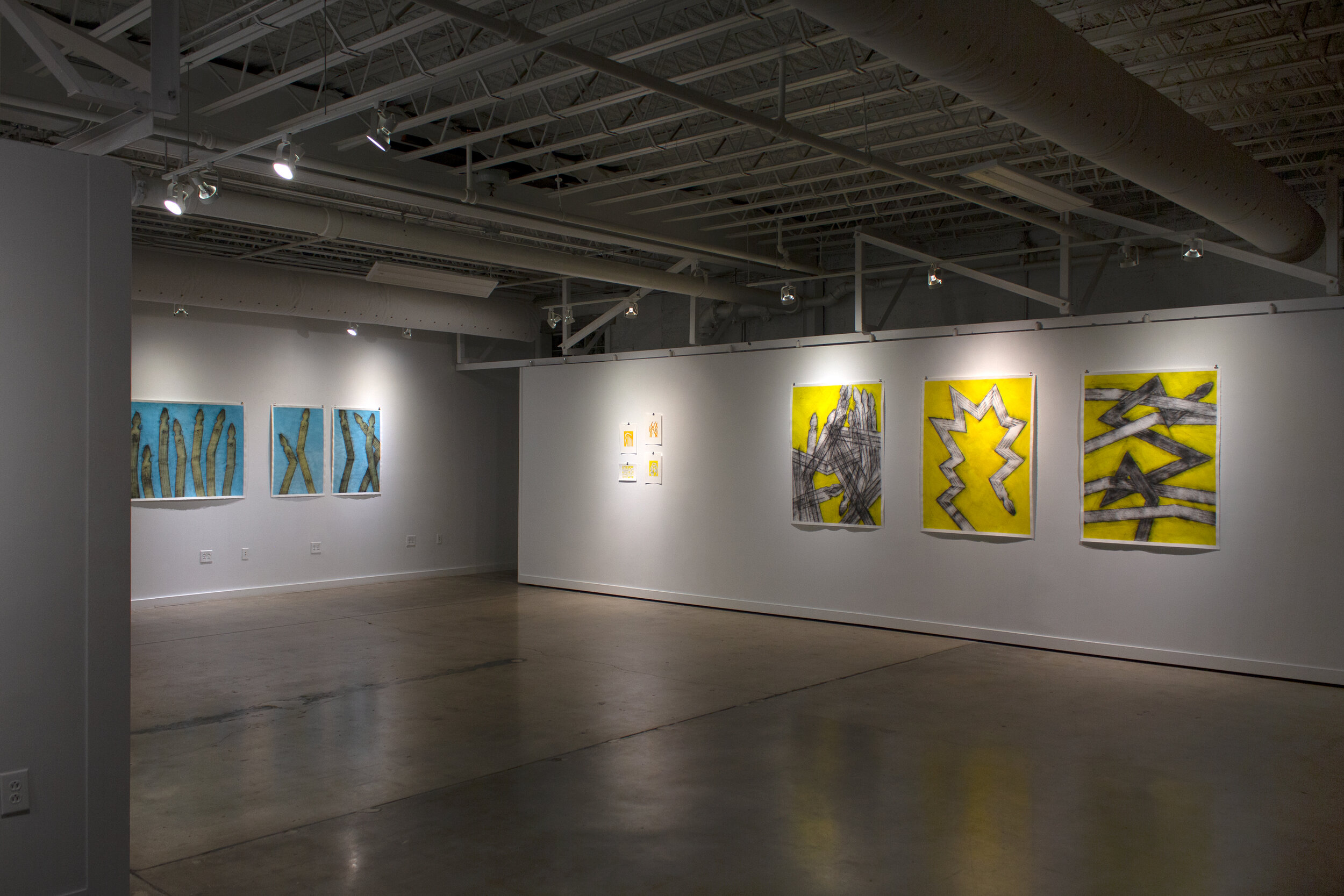
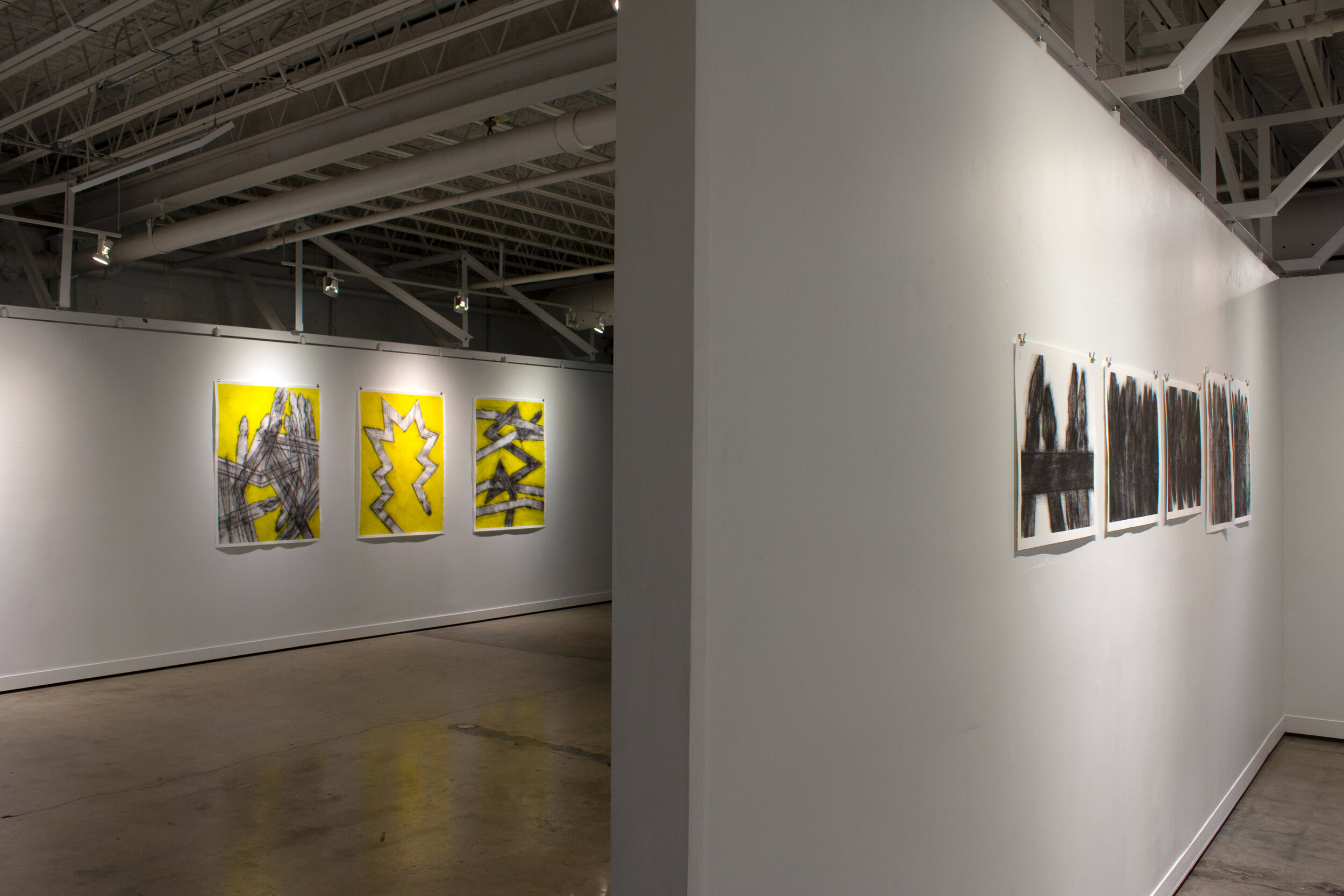
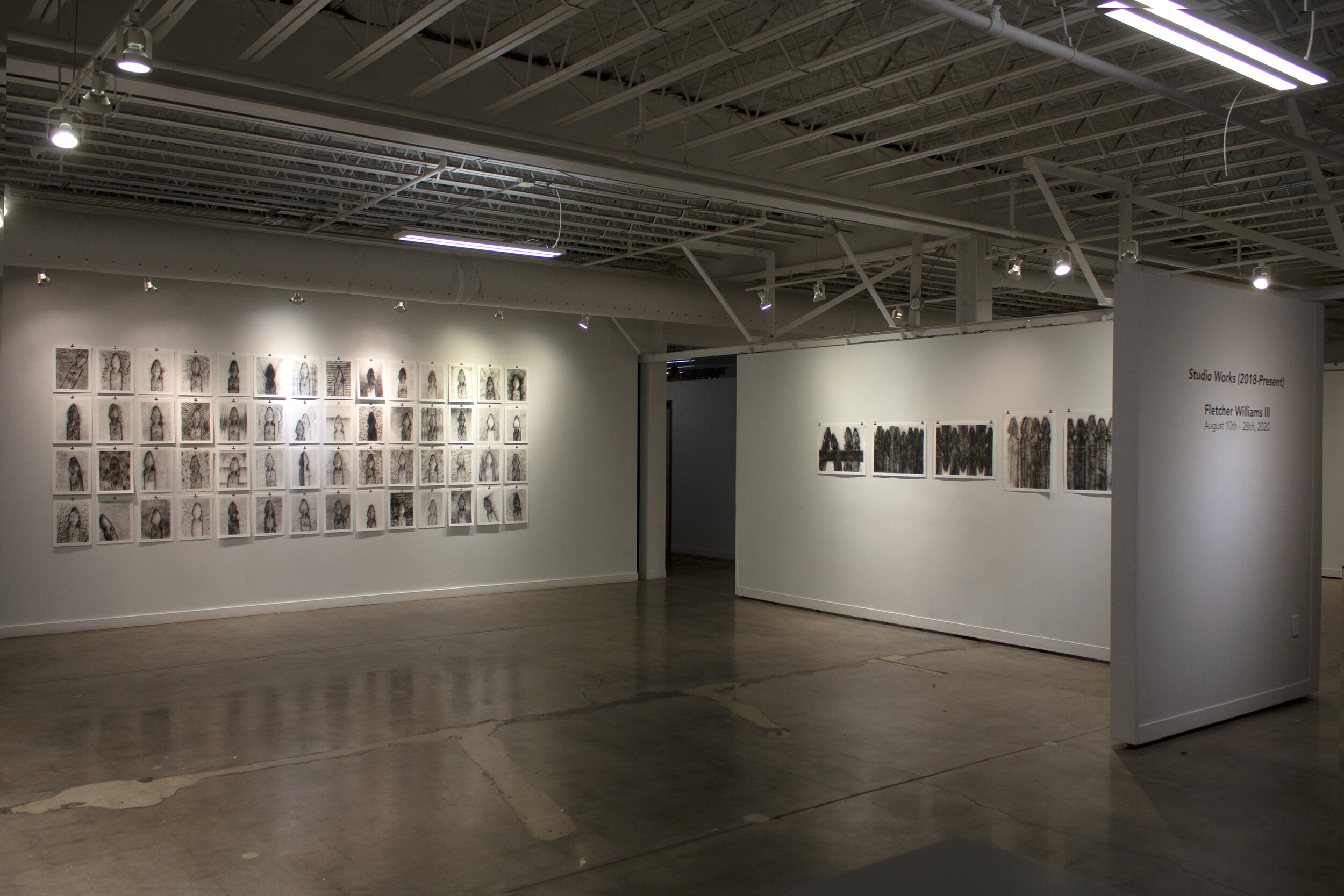
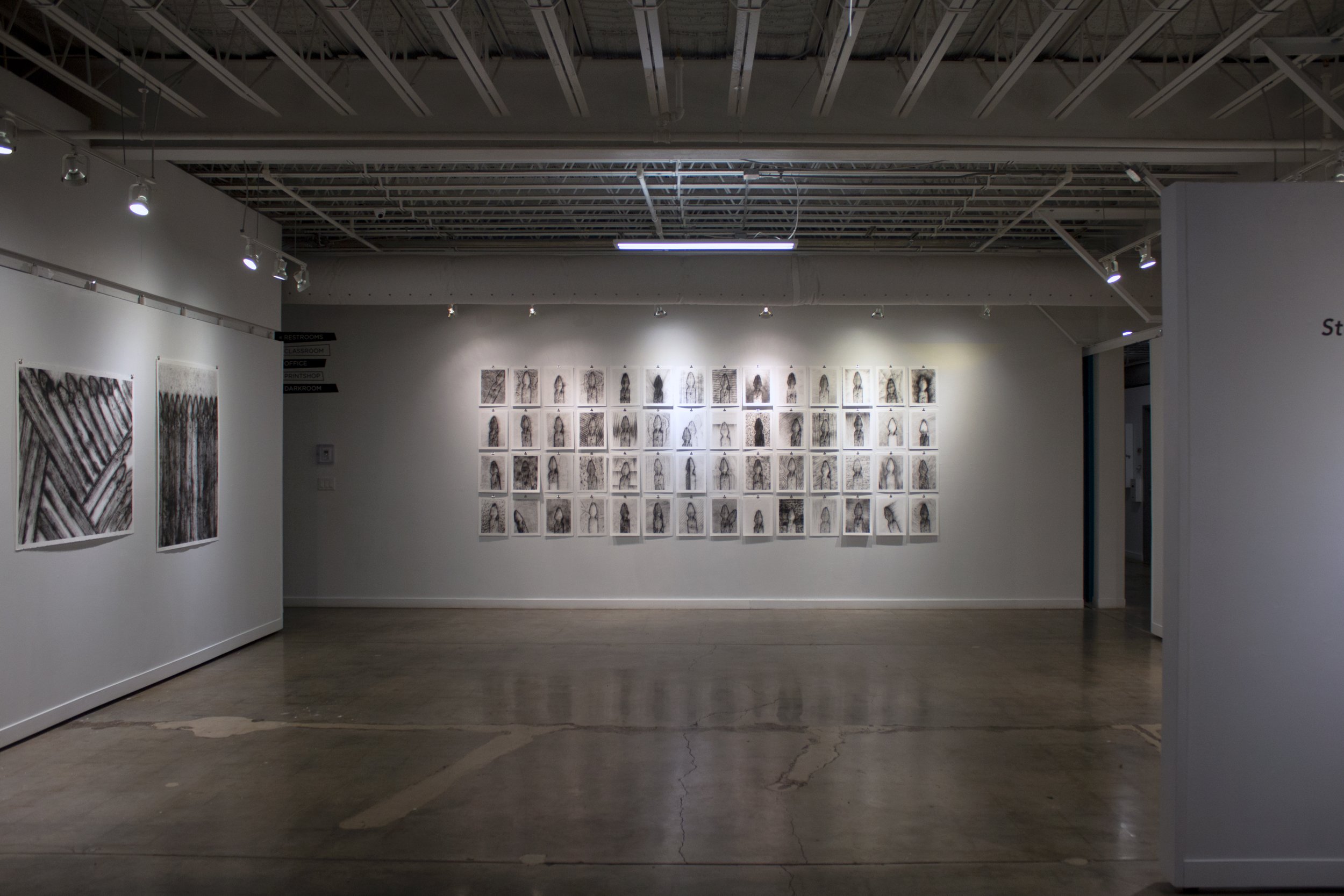
The exhibition’s core visual motif—the picket fence—appears in sculptural and drawn forms throughout the compound. Reclaimed wooden pickets, often bent, stacked, or contorted, are used to create both literal and metaphorical boundaries. This recurring element establishes a consistent visual language that connects works across the work yard, enslaved quarters, dining room, parlors, piazzas, and bed chambers, each context revealing new layers of meaning.
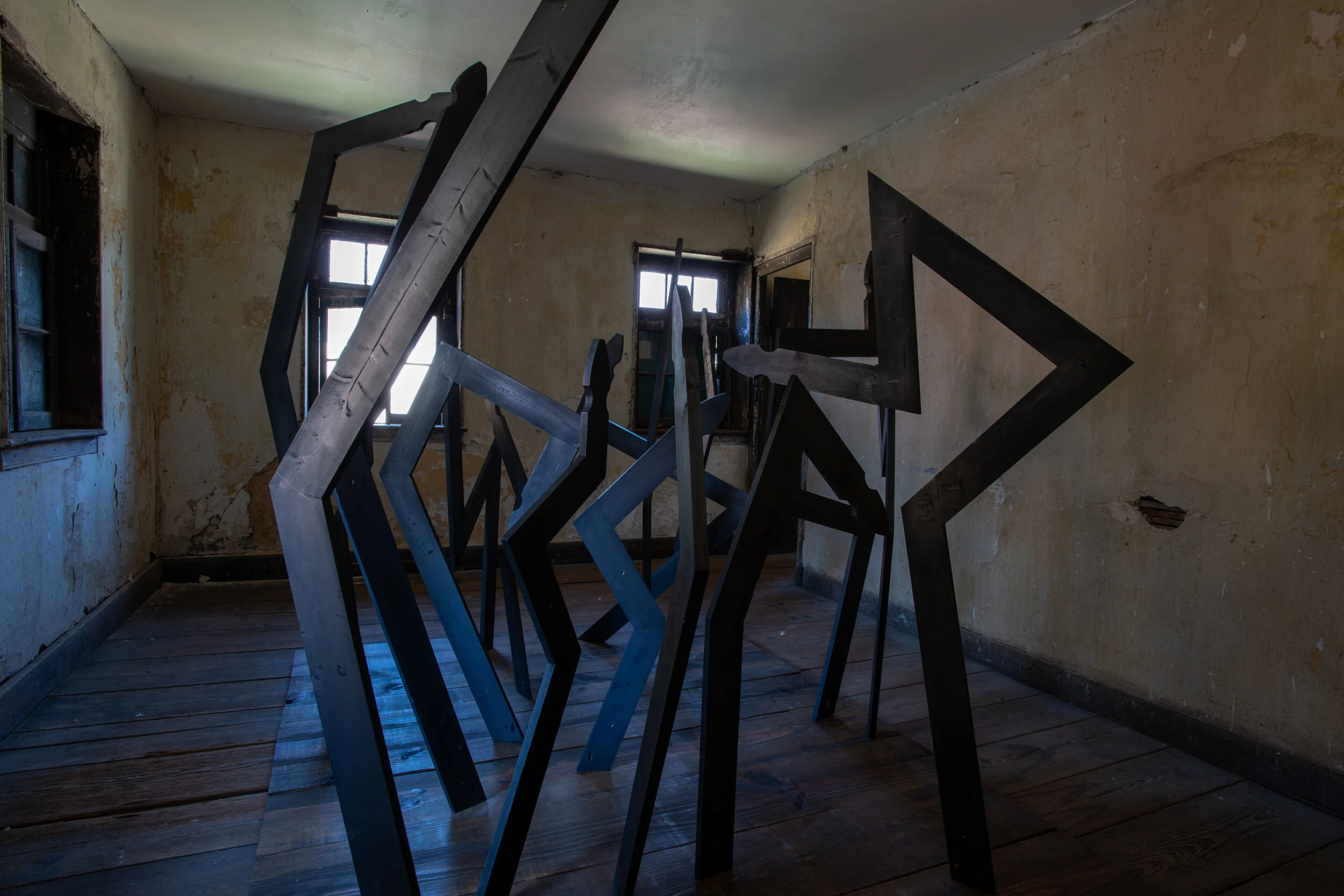
Work Garden anchors the installation in the central work yard. Constructed from salvaged pickets, rebar, tin roofing, and heart pine, the structure echoes vernacular Lowcountry architecture while occupying the operational heart of the former urban plantation. Surrounded by dried palmetto fronds and reclaimed bricks, Work Garden evolves with the weather, its materials shifting in color and texture over time. The yard itself is enclosed by a brick wall, a reference to the barriers constructed throughout Charleston after the Denmark Vesey conspiracy, evoking histories of surveillance and control. Inside the enslaved quarters, the sculpture Pickets fills a cramped, heat-exposed room above the kitchen. Made from reconfigured pine fence posts painted black, the dense, intertwined forms echo both the structure of a fence and the presence of bodies confined within a restrictive space, offering a visceral reminder of the lived realities of those forced to occupy it.
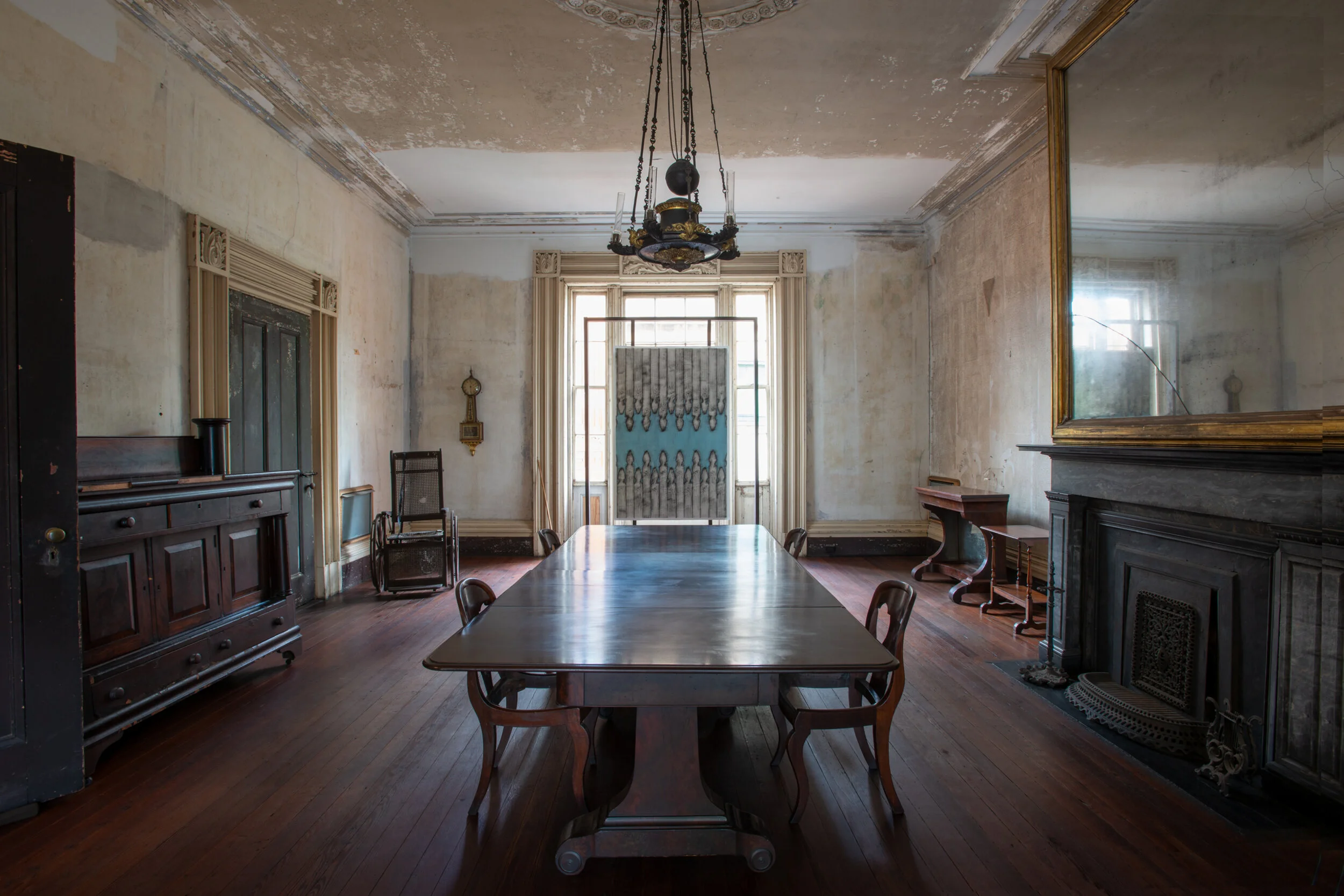
A pair of paintings, Untitled, are hung back to back between the enslaved quarters and the dining room, creating a powerful visual dialogue. The first painting, visible from the window of the enslaved quarters and facing into the dining room, depicts a closed, impenetrable fence—symbolizing the inaccessibility and division enforced upon the enslaved. The reverse side, seen from within the dining room, shows the same picket fence now opened, signaling freedom of passage and unobstructed visibility for those inside. This installation communicates the sharply contrasting experiences of exclusion and privilege within the house, underscoring both the persistent barriers faced by the enslaved and the ease of movement afforded to the elite. The double parlor features two large, Untitled, figurative drawings in black and white, their clustered vertical marks suggesting bodies leaning together for support. Opposite, En Masse presents a dense field of picket forms, blurring the boundary between architectural structure and collective human presence. These works disrupt the ornate interior, introducing the specter of those excluded from the house’s official narrative.
On the first-floor piazza, a drawing of a loose pile of white pickets on blue, Untitled, interrupts the classic veranda view, suggesting disorder and compressed bodies rather than the usual picturesque landscape. In the bed chambers upstairs, the picket motif shifts into portals: one work, Untitled, forms a diamond-shaped opening, another, Untitled, arranges pickets in a circle as if framing the sky, introducing possibilities of escape or transcendence within spaces of confinement. A highlight of the exhibition, Homegoing (formerly Gift to a Gardener), is installed on the upstairs piazza. This ceremonial sculpture combines salvaged tin roofing, an inverted wooden picket base, and a blanket of thousands of handwoven Charleston palmetto roses. Homegoing transforms the porch into a funerary or commemorative environment, honoring generations of Black Charlestonians whose stories remain largely unrecorded. The palmetto rose, crafted by the artist, references the famous Flower Ladies of Charleston, who once sold wildflowers until the practice was restricted, leading to the symbolic palmetto rose.
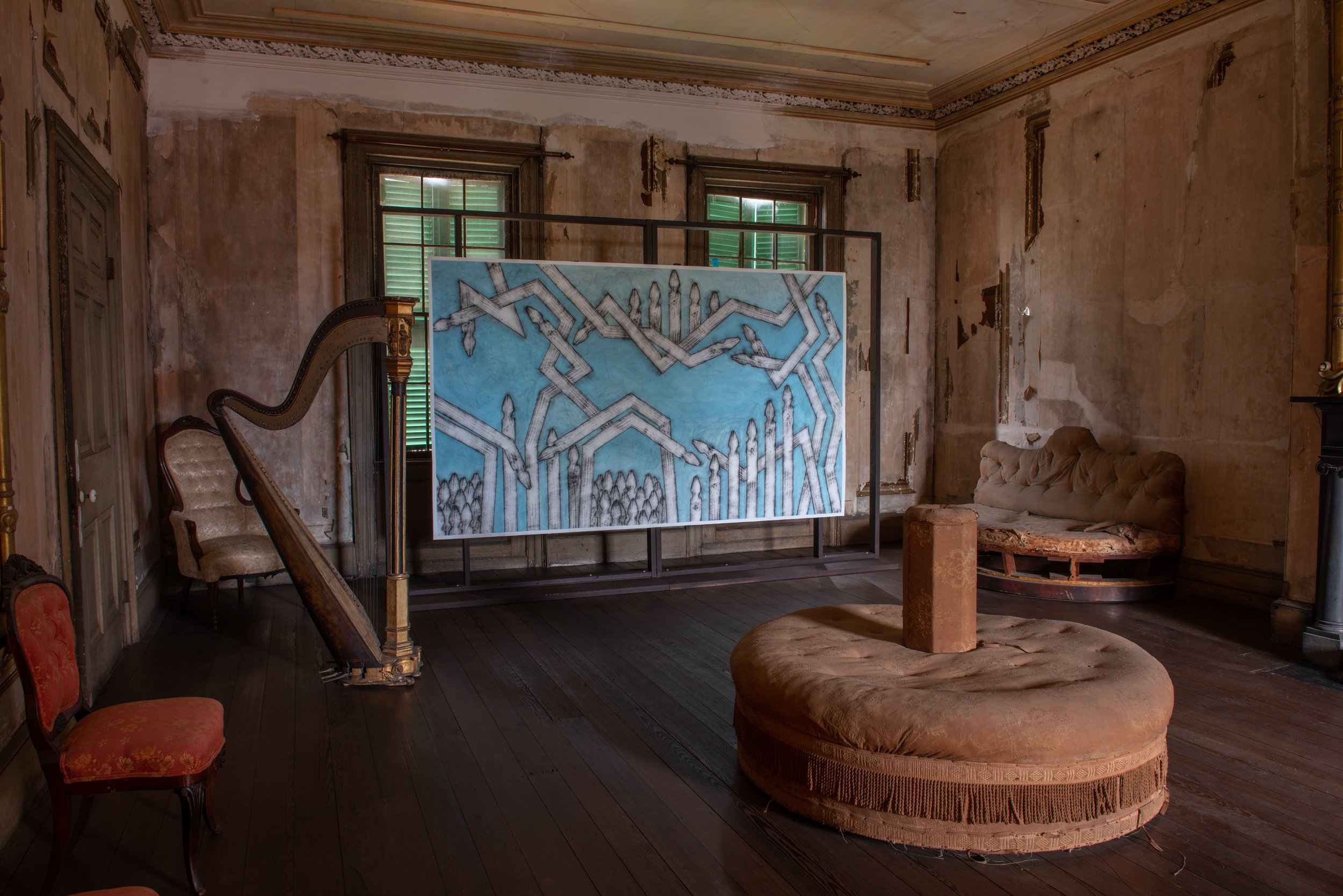
Eden, installed in the drawing room, marks a pivotal moment in the exhibition—a large composition of fragmented picket forms on an expansive blue field. Its evocation of paradise or a promised land underscores the unrealized aspirations of the enslaved people of the Aiken-Rhett House. Eden does not conclude the exhibition; rather, it culminates the theme of "ascension to the promised land," a contradictory framework imposed by Williams. After experiencing Eden, visitors descend the main staircase lined with reclaimed white pickets, Untitled. Each picket occupies a step, physically mapping the path enslaved servants would have taken from the Kitchen House to the Servants Hall and on to the Dining Room and other spaces where their labor was required. This installation highlights the literal and symbolic transitions between spaces of servitude and privilege. The descent—a movement to or from the Servants Hall—compels visitors to confront the physical and social routes navigated by those whose labor sustained the house, grounding the exhibition in the realities of movement, separation, and service.
Through these interconnected works, Promiseland transforms the Aiken-Rhett House into a critical space—one that challenges viewers to confront the tangled histories of property, labor, race, and aspiration in the American South. The exhibition’s material choices—salvaged tin, heart pine, palmetto fronds, Spanish moss, historic bricks—deepen its connection to Charleston’s architectural landscape and its layered past. Each artwork acts as both a commemorative gesture and a pointed intervention, threading together themes of exclusion, resilience, and the ongoing negotiation of history.
Special Thanks and Acknowledgements
Exhibition produced by Fletcher Williams, Ill.
Co-curated with Kelly S. Turner.This exhibition is made possible by lead support from a The Dean Collection 20 Start)ups grant.
Additional Support
Additional support is provided by the South Carolina Arts Commission, which receives support from the National Endowment for the Arts, the Expansion Arts Fund of The Coastal Community Foundation of South Carolina and the Lowcountry Arts Grants Program, administered by the City of Charleston Office of Cultural Affairs and the City of North Charleston Cultural Arts Program.
Williams would also like to thank Historic Charleston Foundation and the Aiken-Rhett House Museum for the use of their site, Datum Workshop, for exhibition mobile-wall fabrication and installation, as well as his dedicated team of friends and family who assisted with the installation, de-installation and documentation of Promiseland.
Historic Charleston Foundation expresses deep appreciation to Kathy Salmanowitz for her most generous financial support of the Aiken-Rhett House Museum and of the Promiseland exhibit and catalog.

Pickets, Portals, and Other Transformations
2020
Redux Contemporary Art Center
Charleston, South Carolina

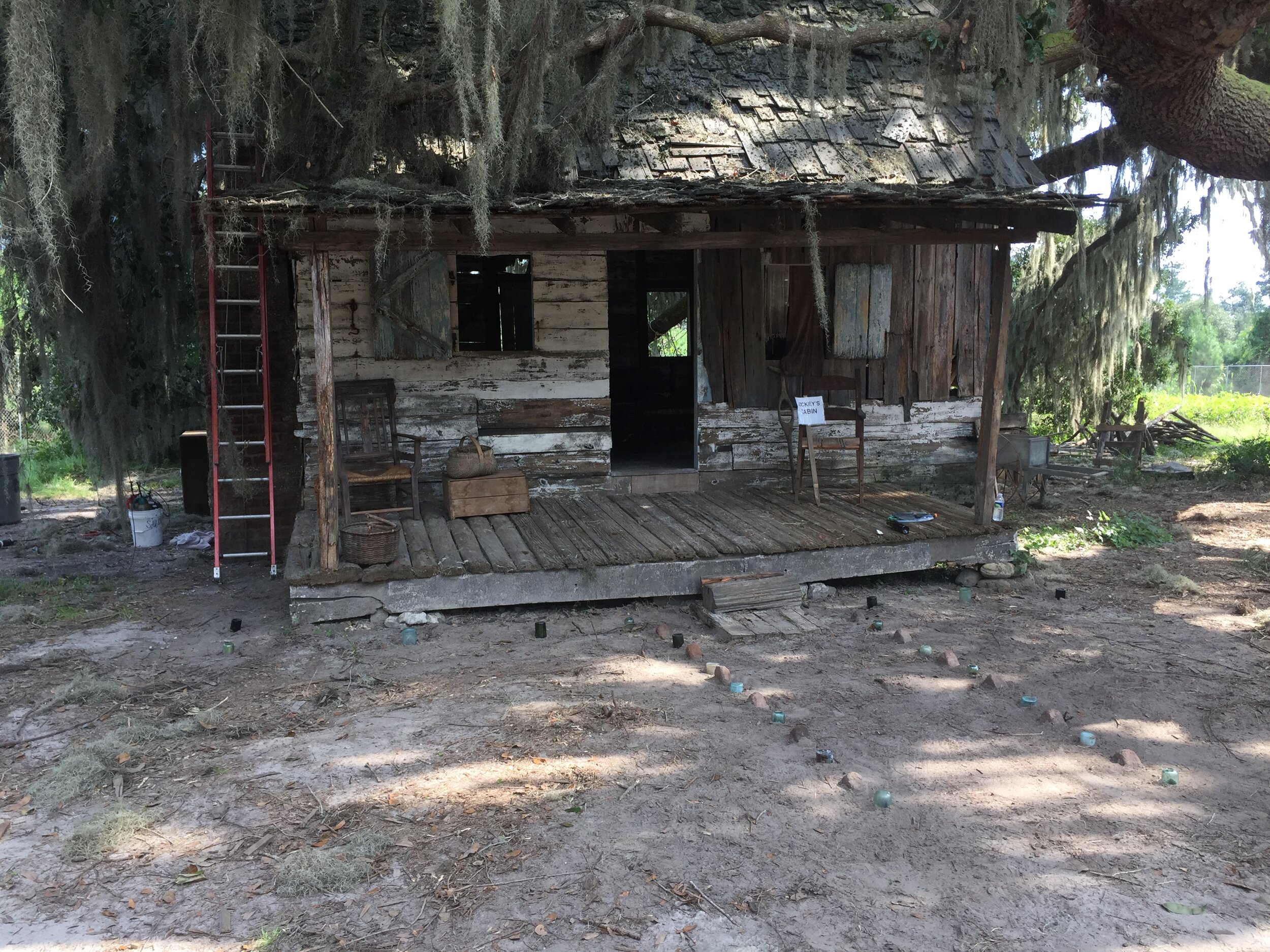
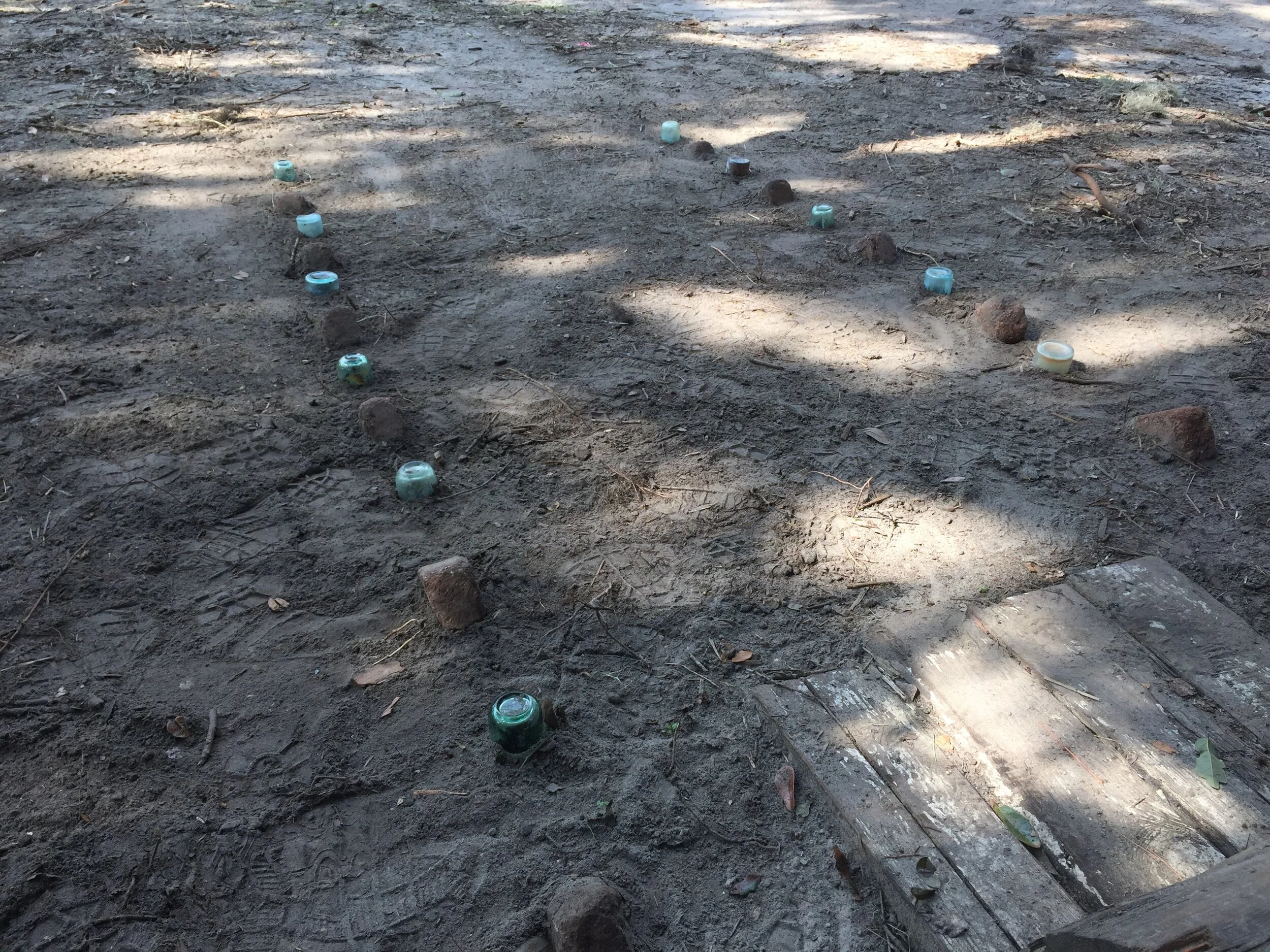
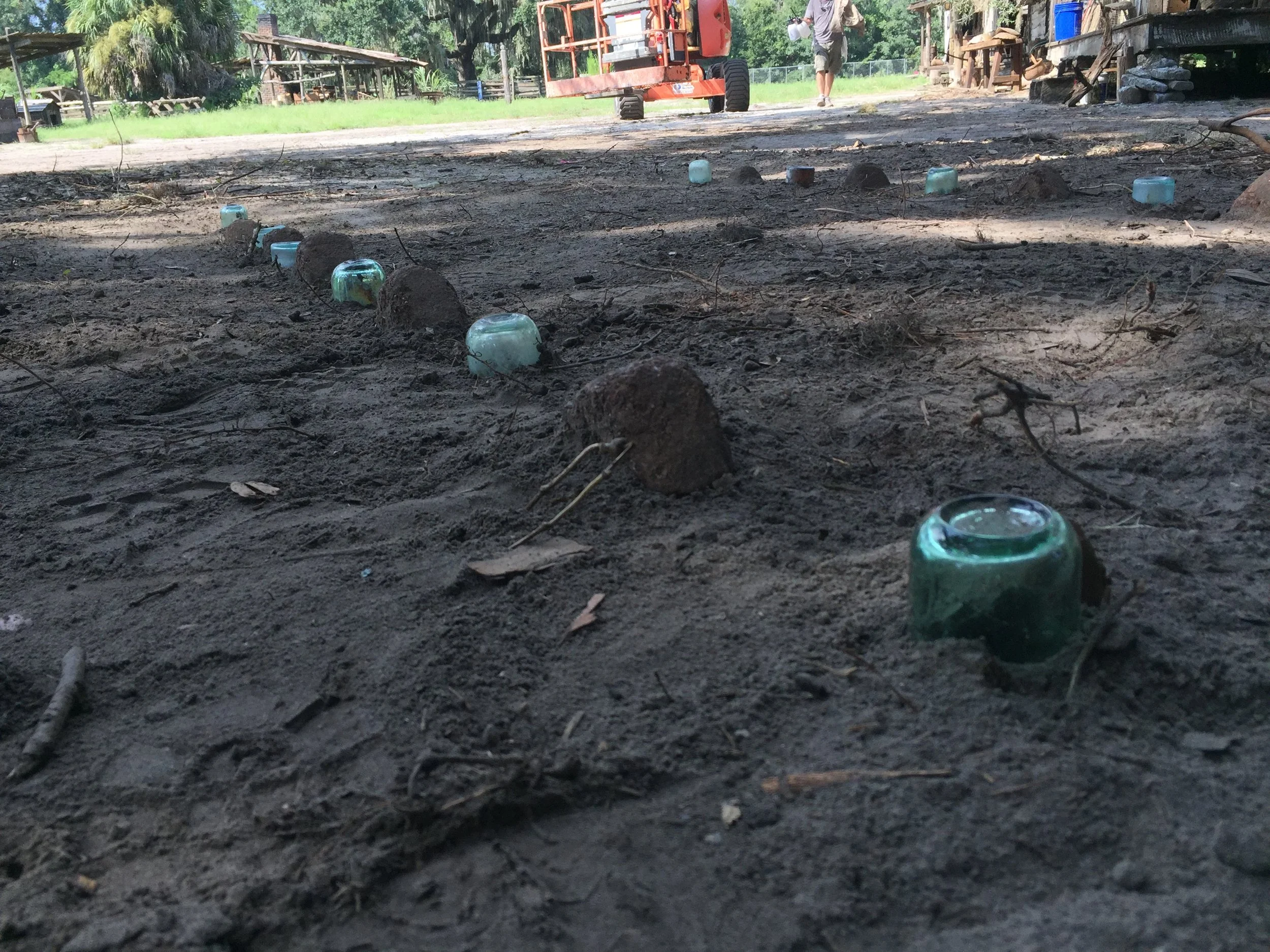
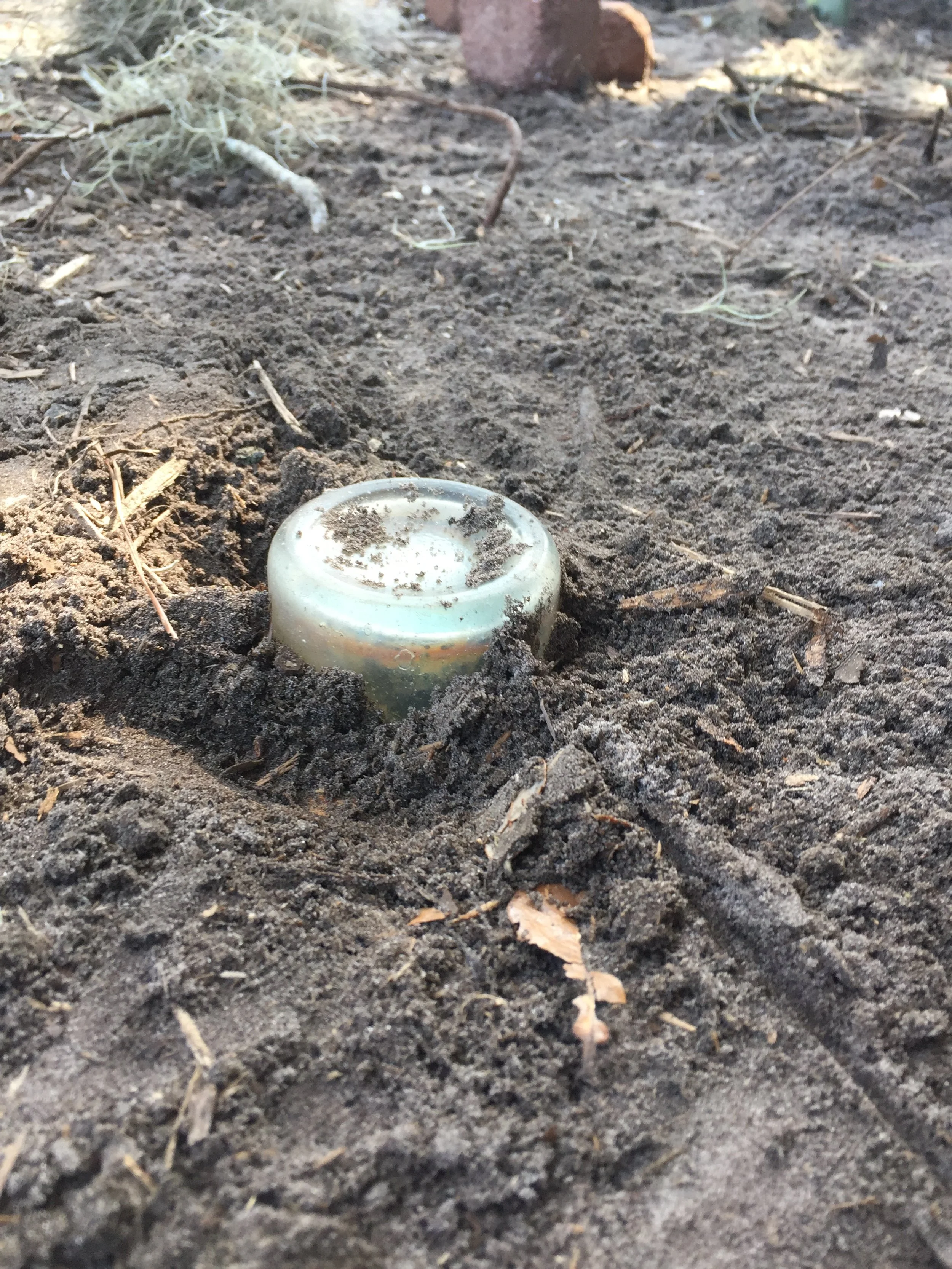


Underground Railroad | SET DECORATION
2019
The Underground Railroad Amazon Prime TV Series
Savannah, Georgia
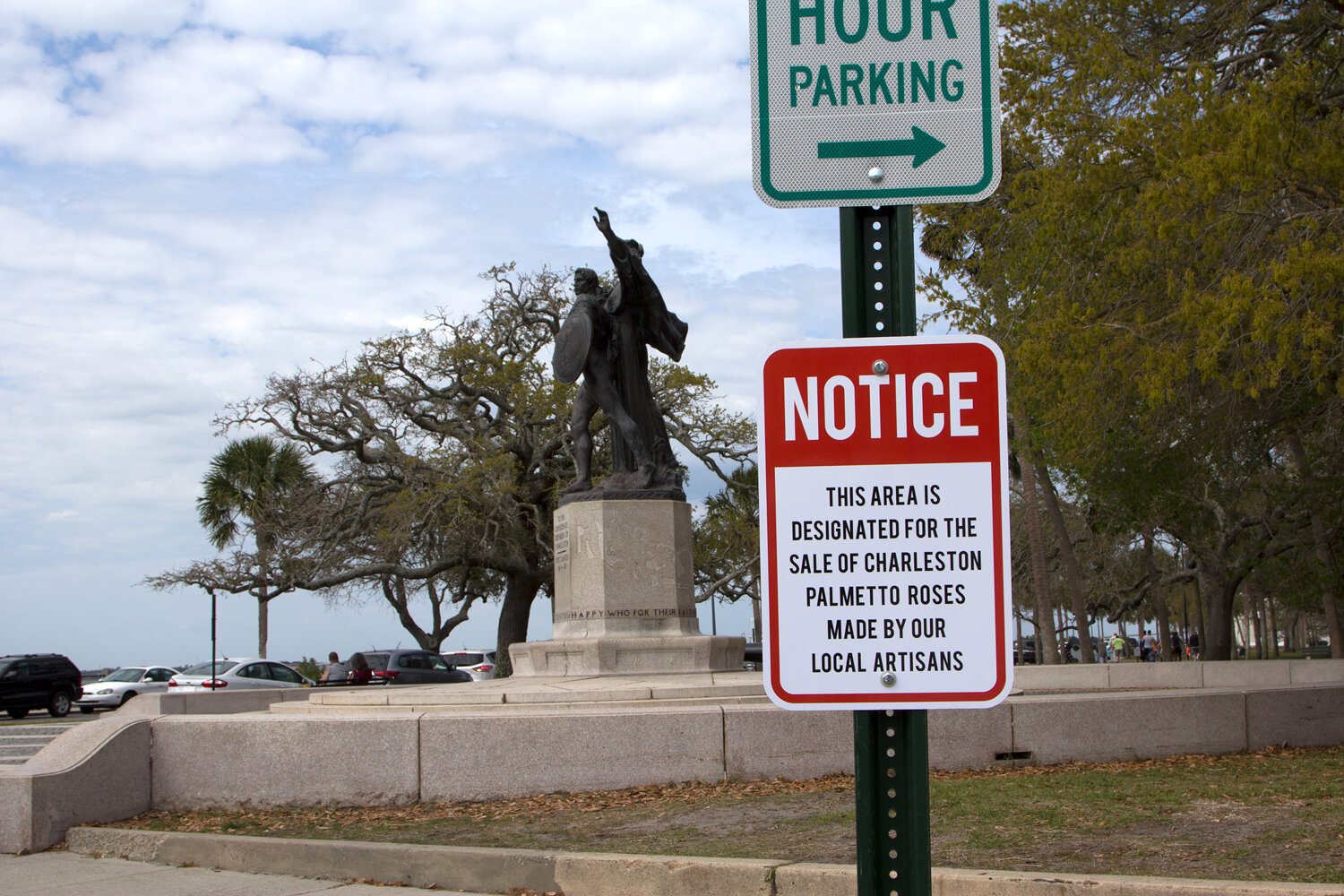
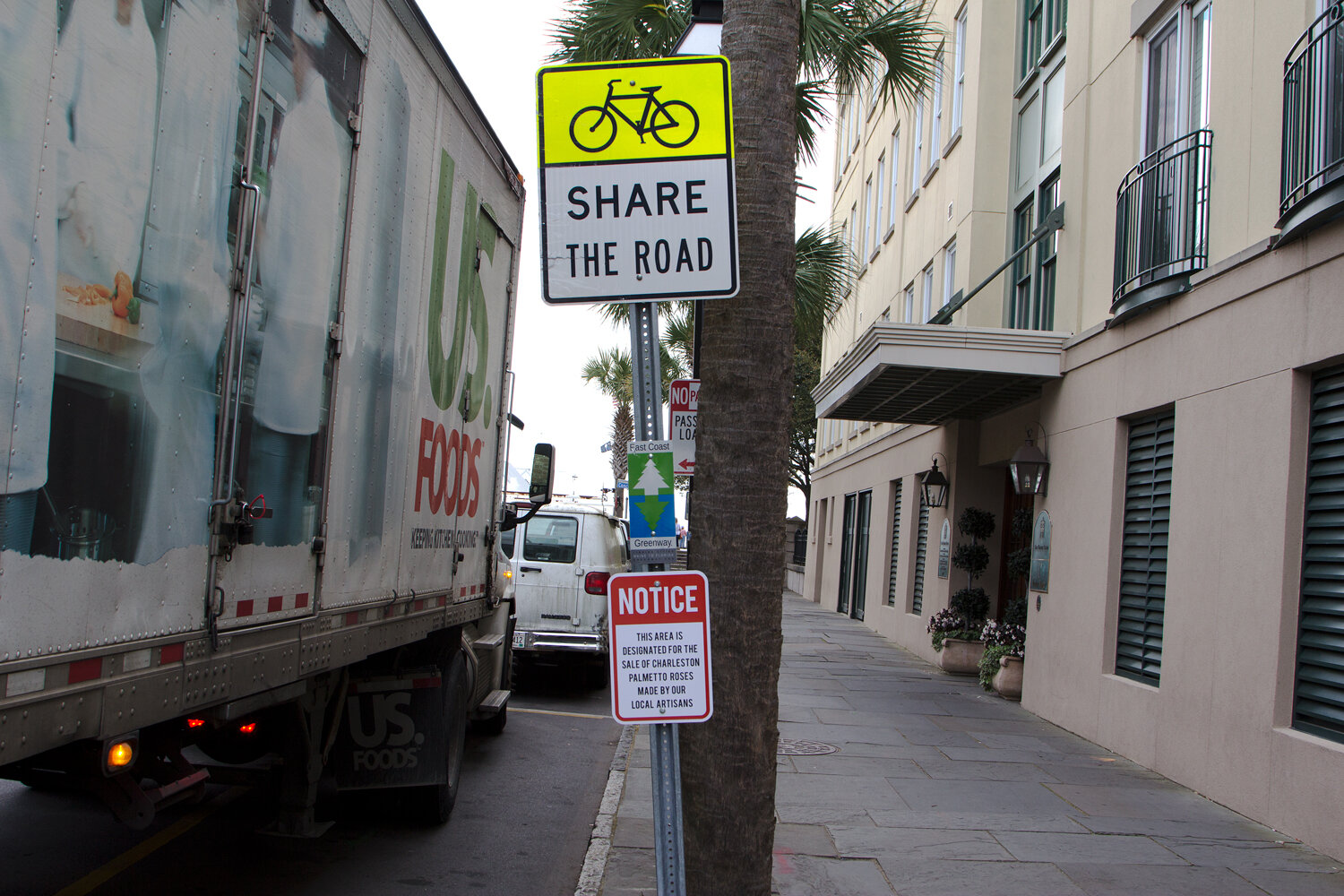
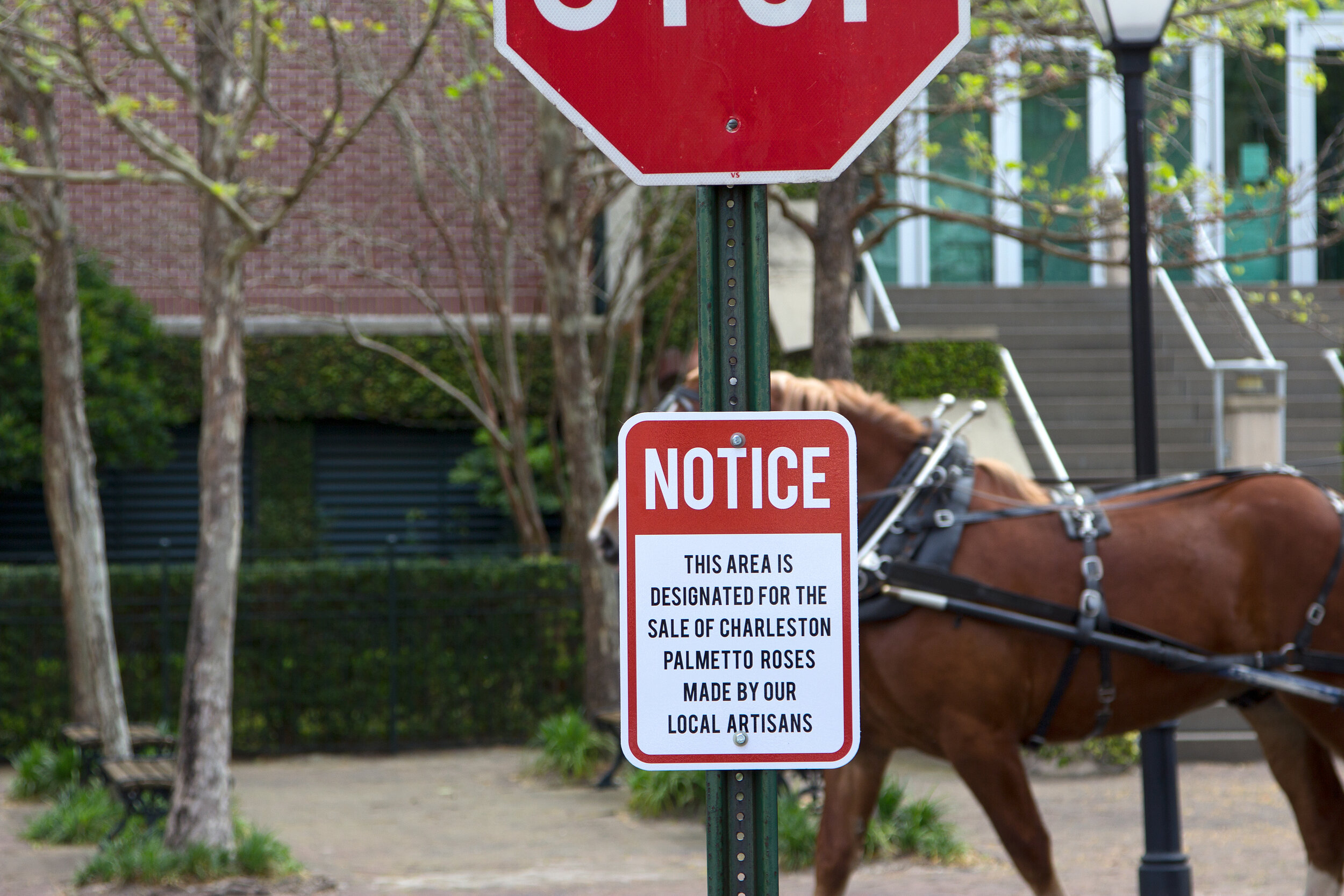
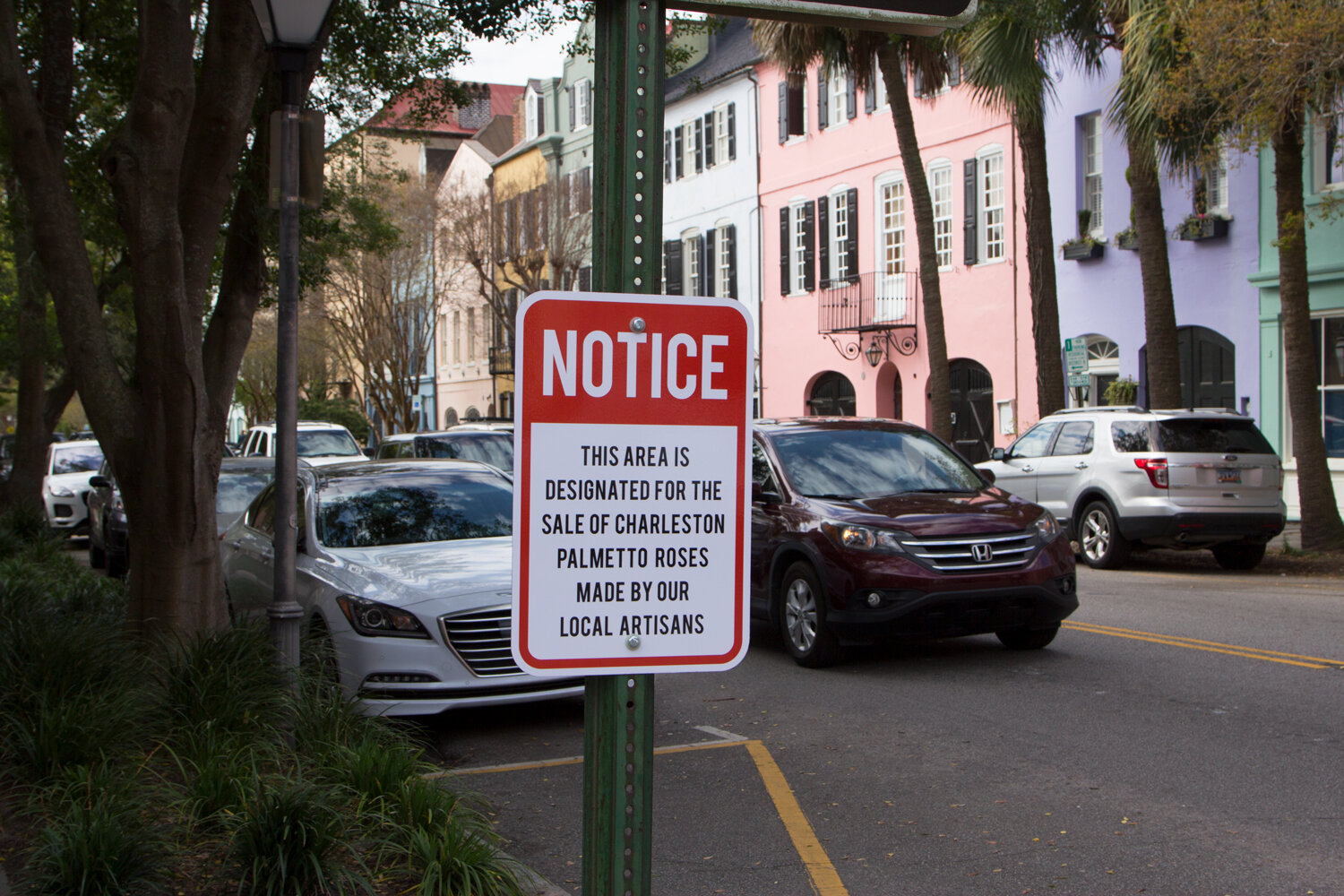
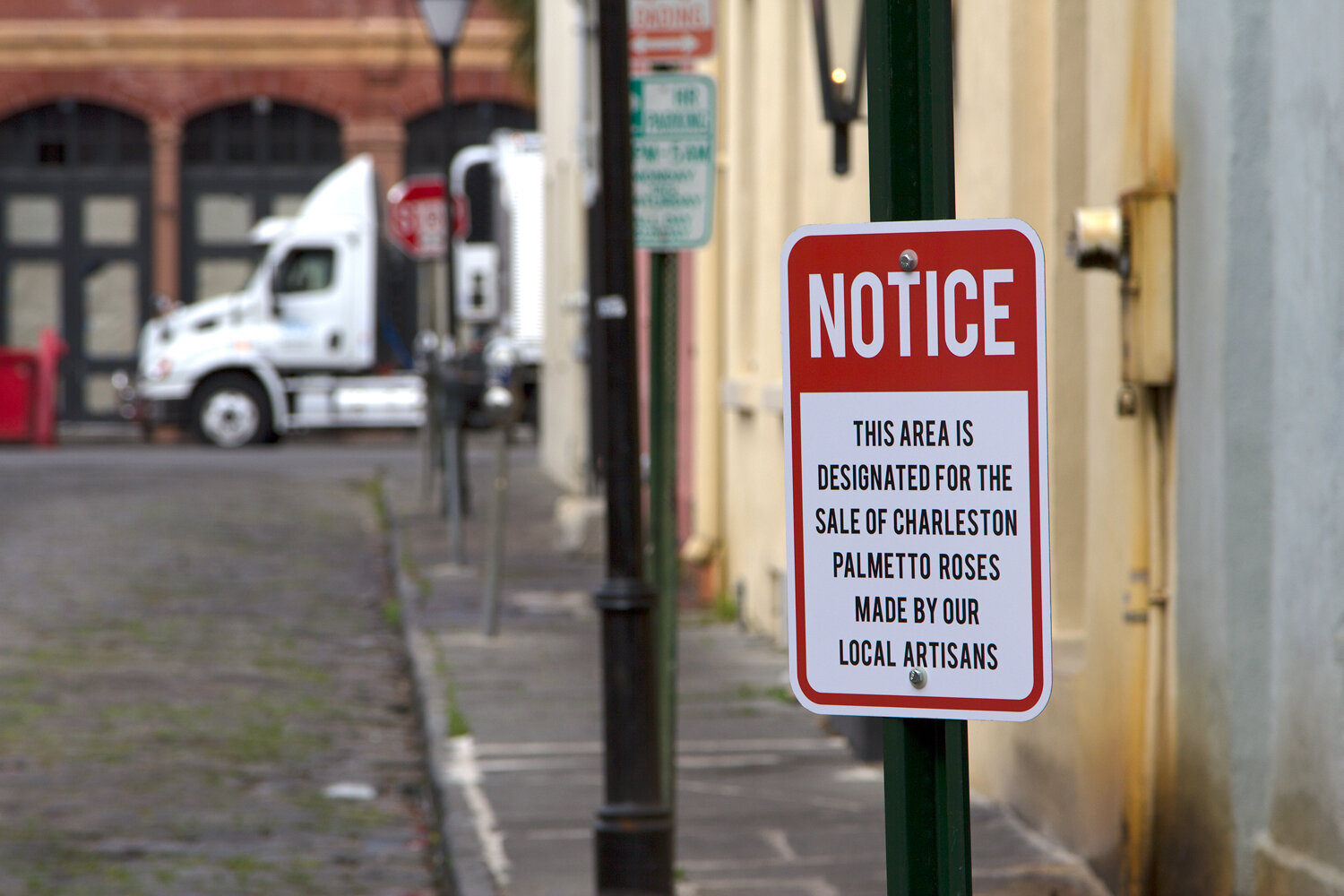
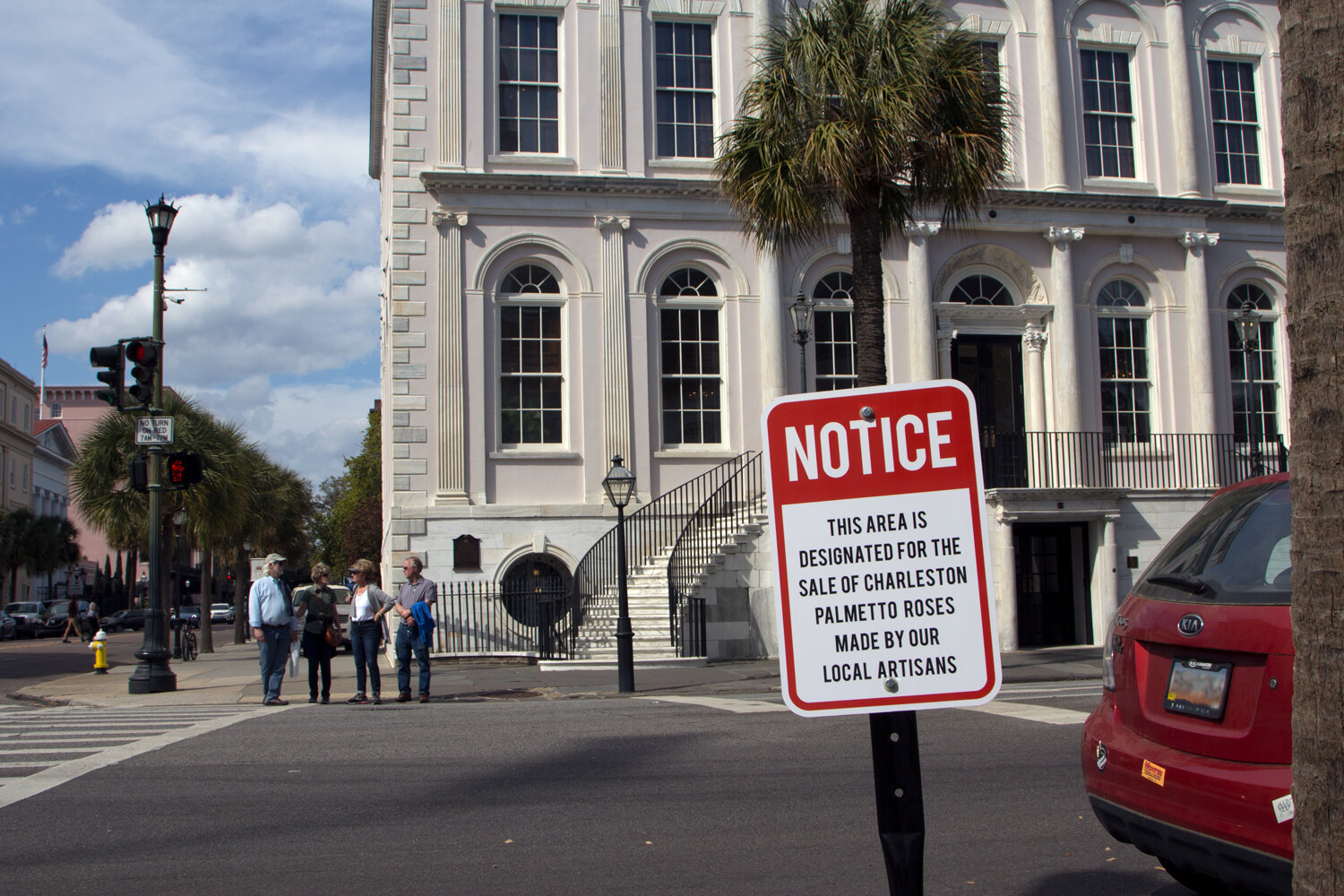
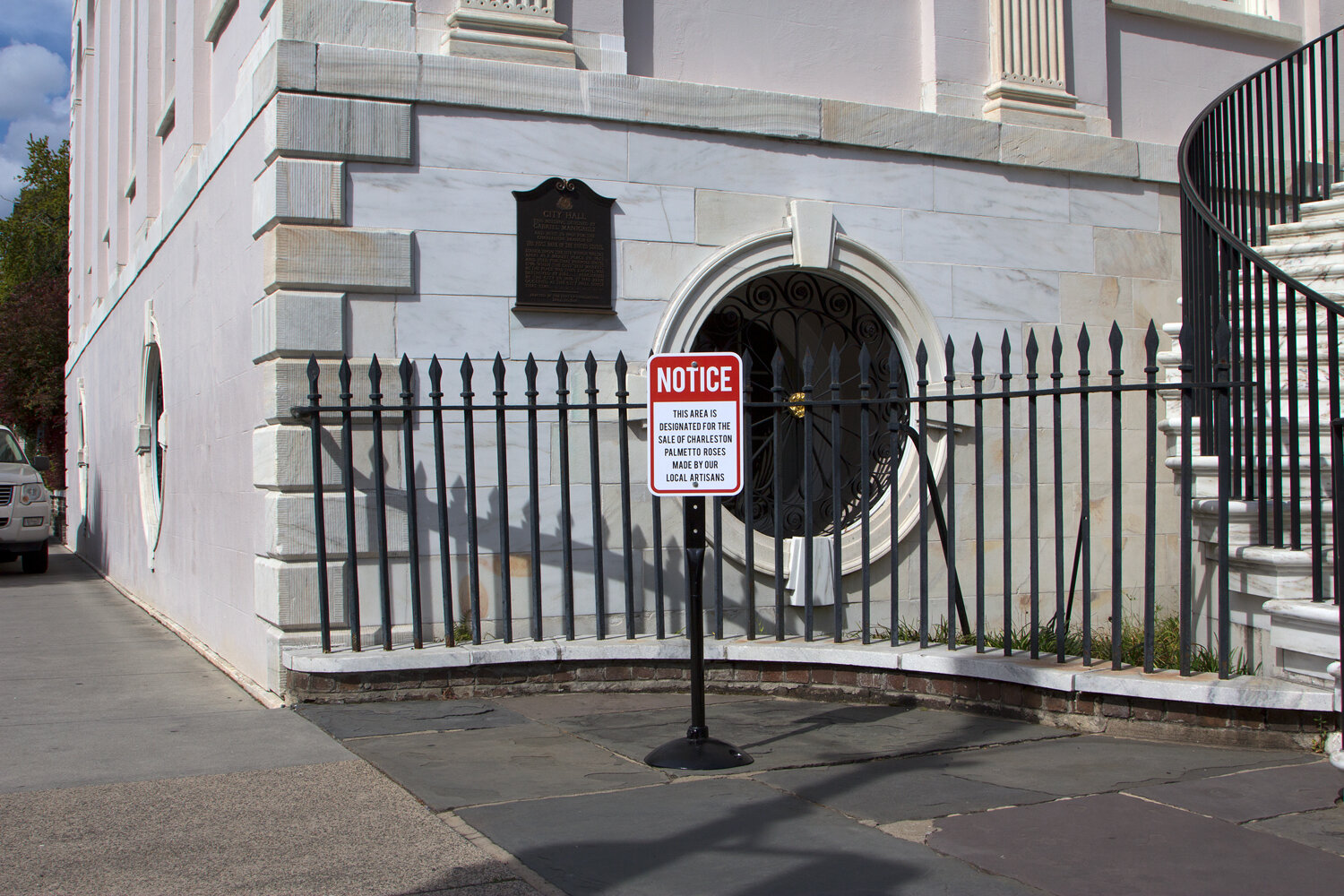
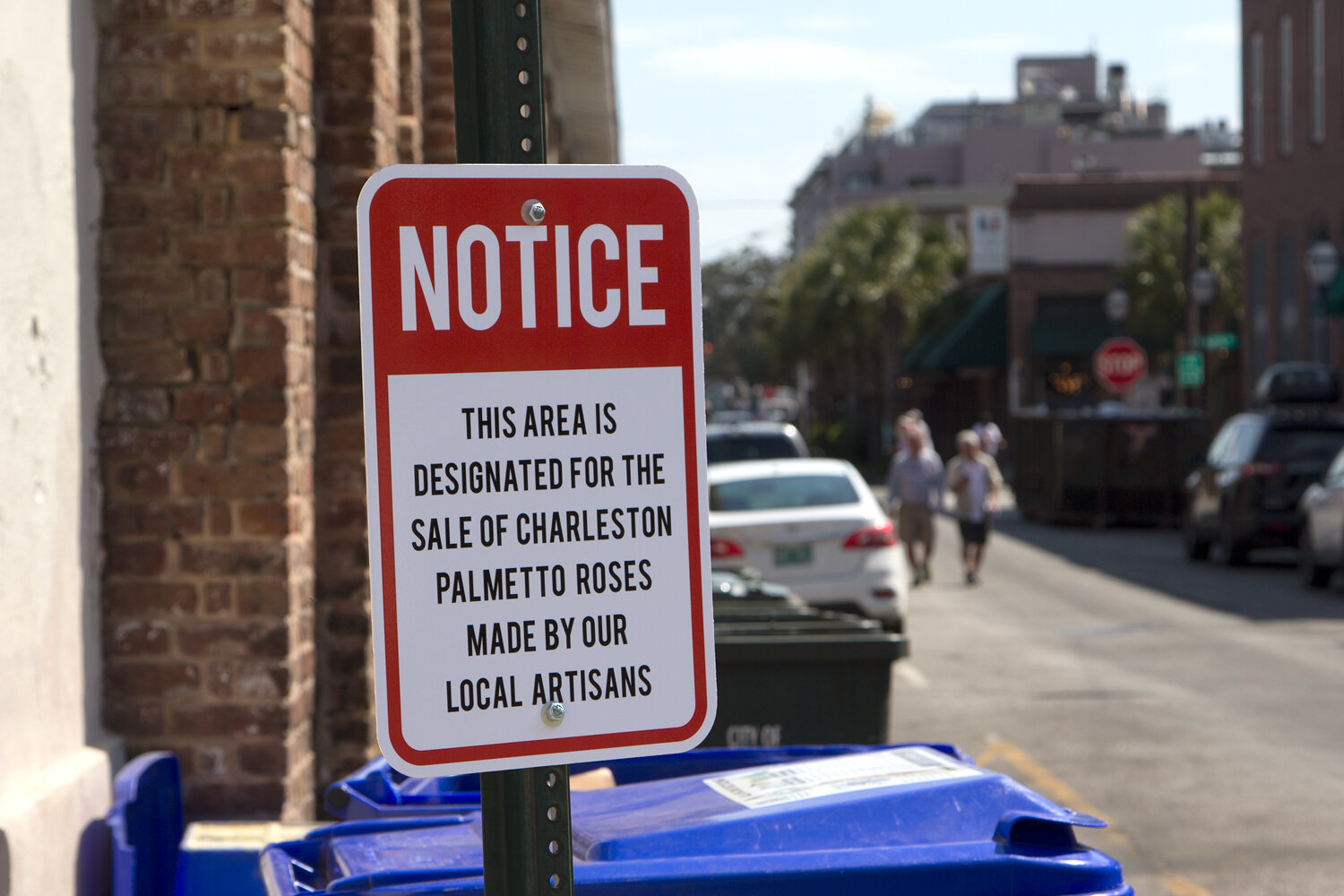
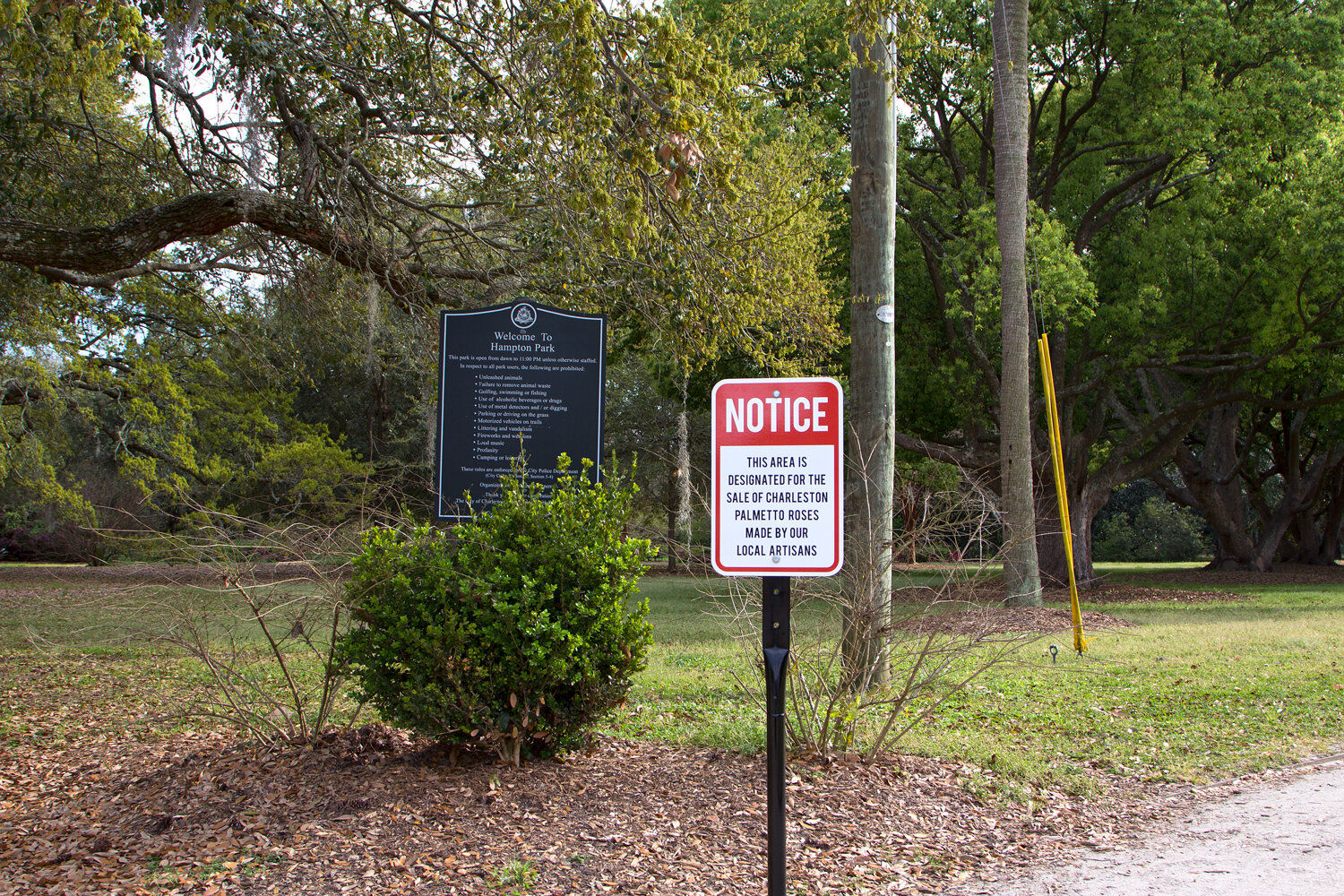
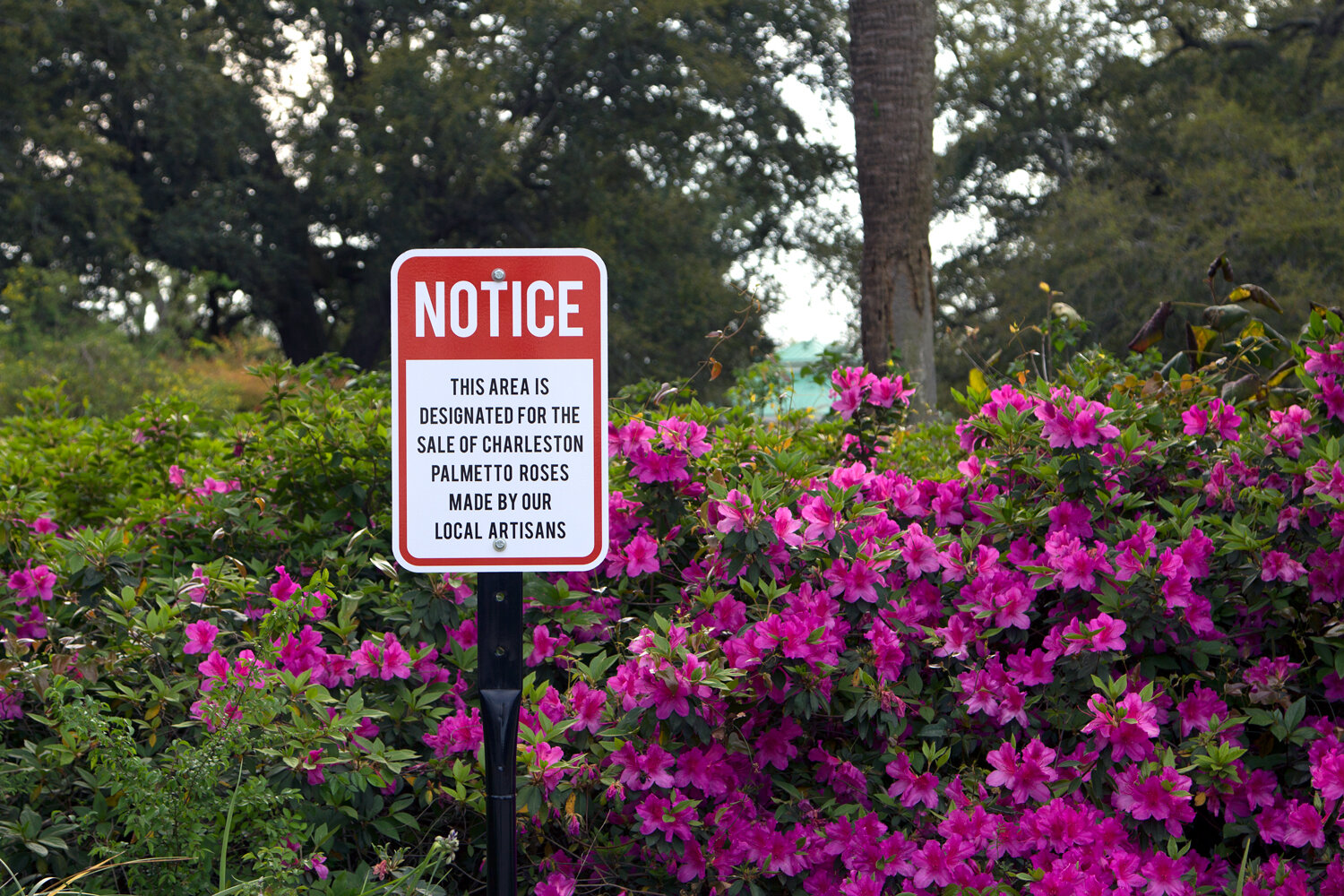
NOTICE
2018
Historic District
Charleston, South Carolina
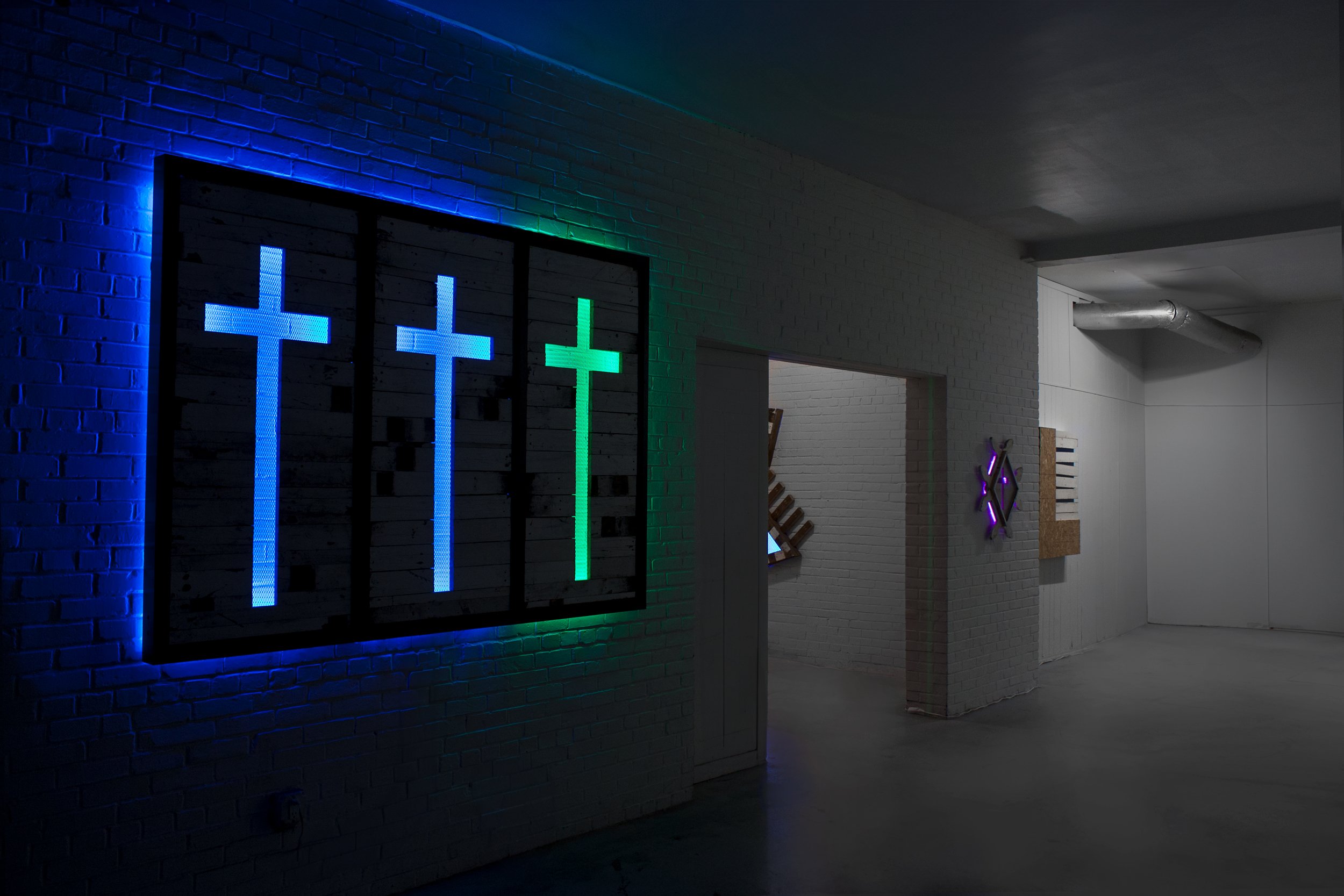
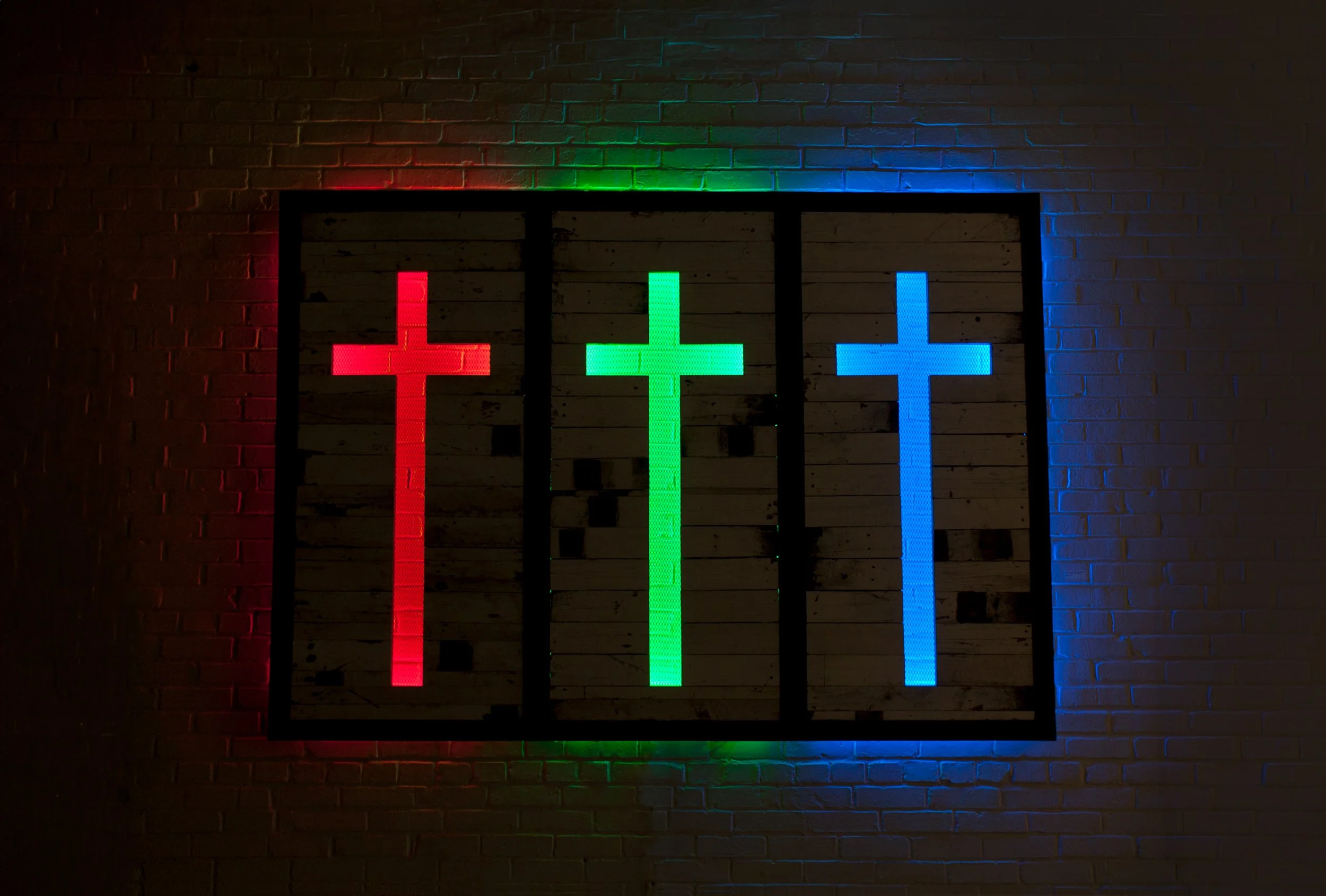
CITY BLOCK
2017
Historic Reynolds Avenue Fire Station
North Charleston, South Carolina
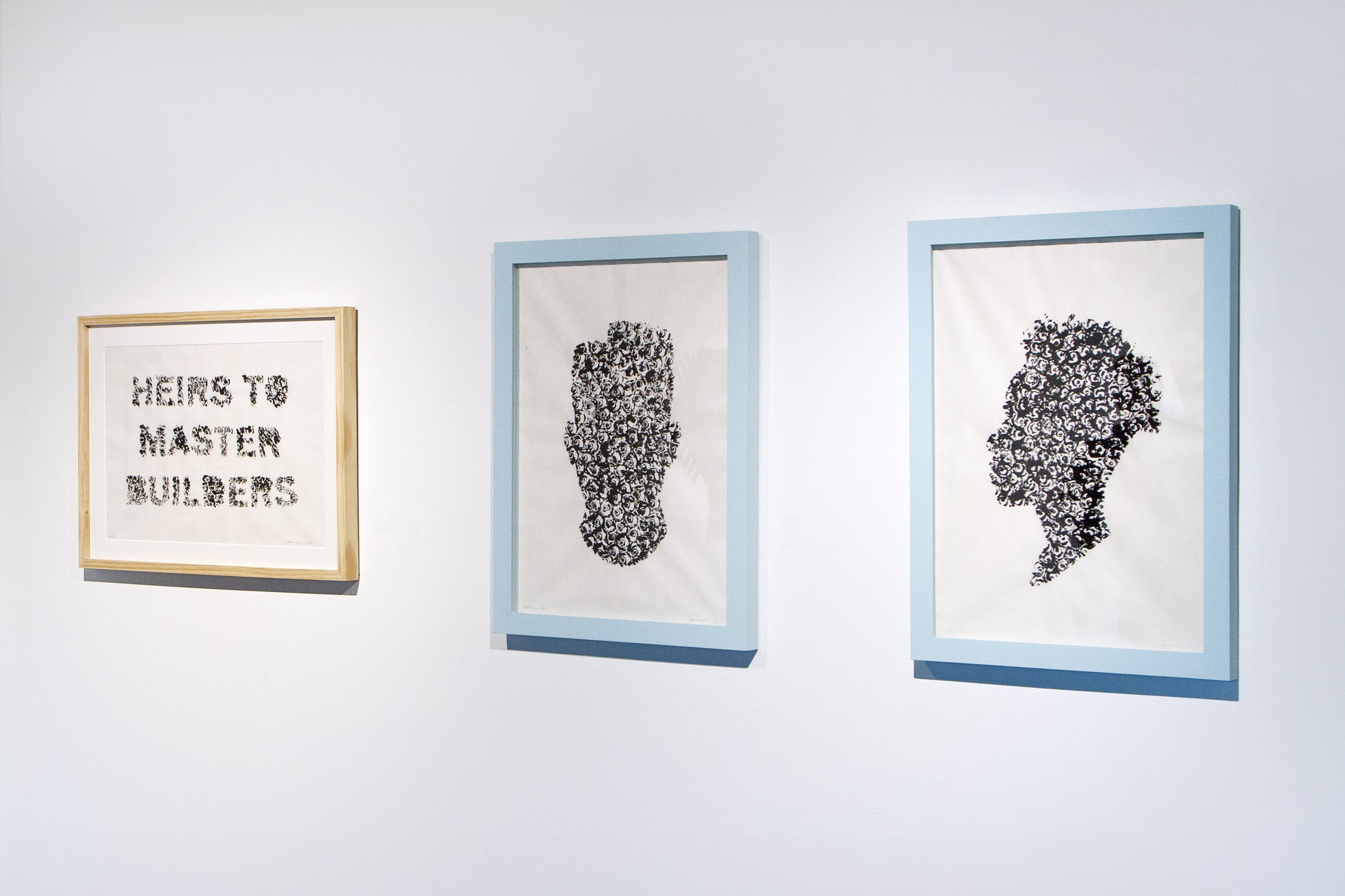
heirs of roses
2017
City Gallery (Posing Possibilities)
Charleston, South Carolina
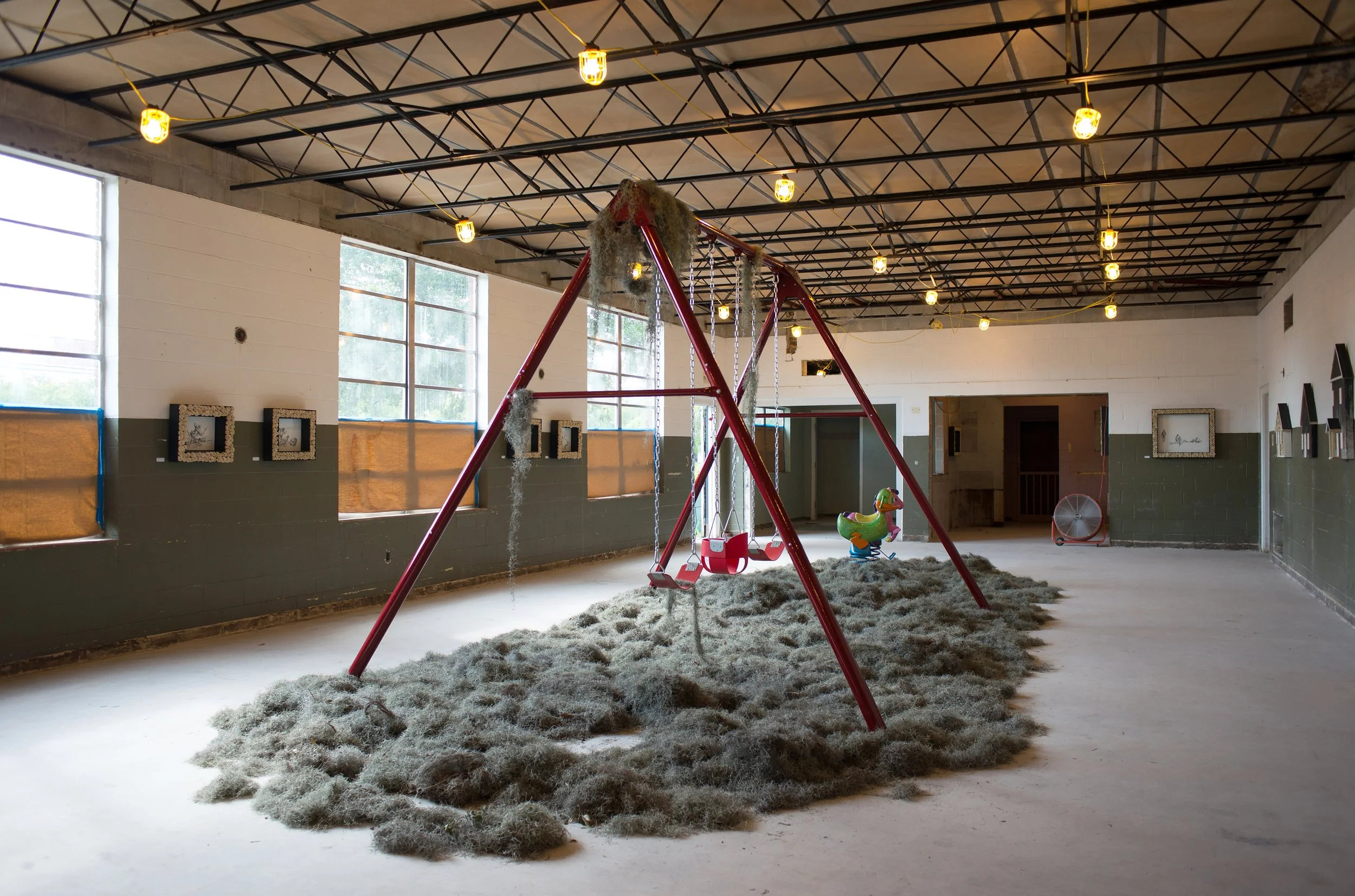
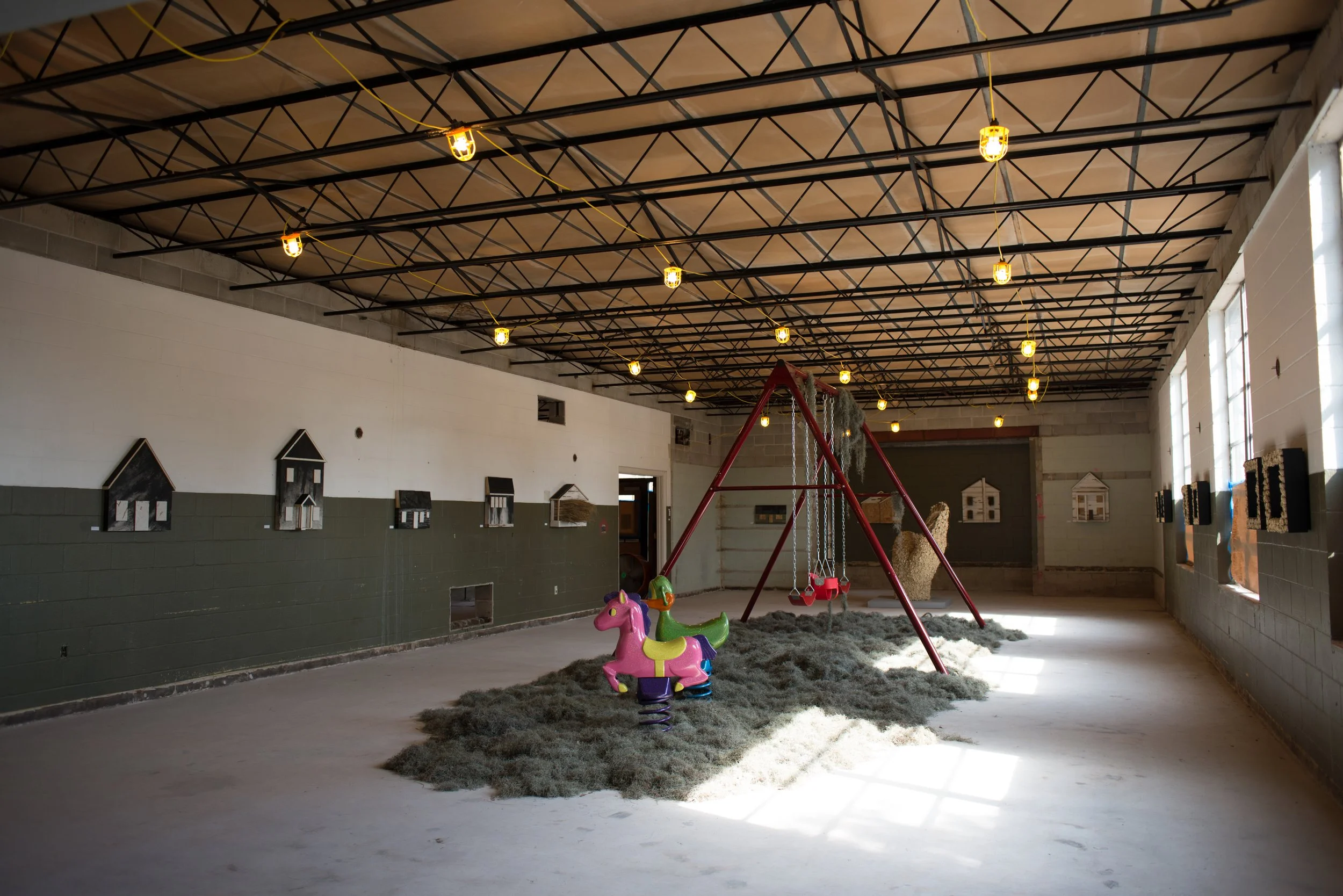
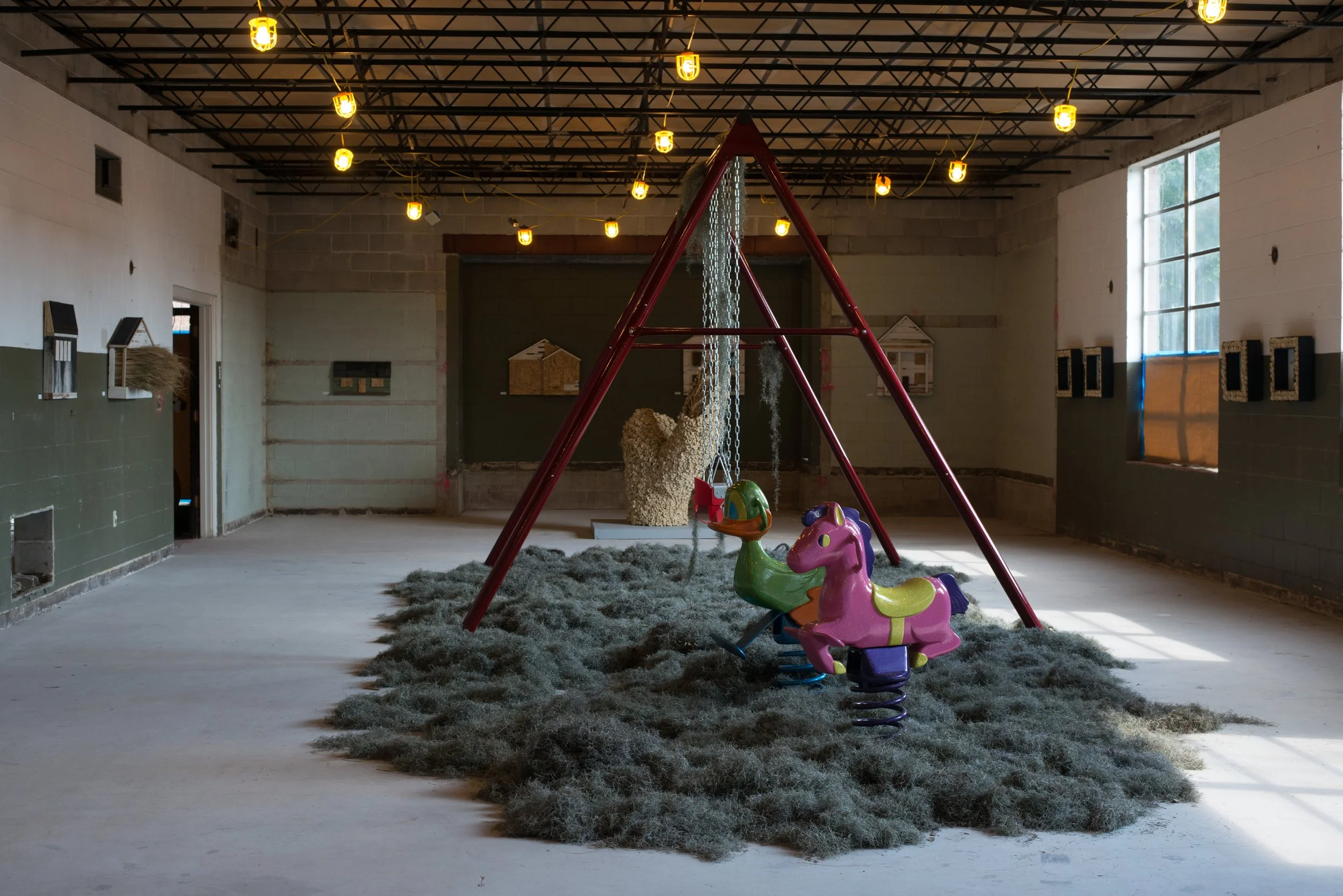

Beyond The Rainbow
2016
Cannon Street Arts Center
Charleston, South Carolina




Souvenir
2015
Alternative Space - Historic District
Charleston, South Carolina
Coruscus
2011
Lower Eastside
New York City, New York


Powers That Be
2010
The Cooper Union
New York City, New York